Level Sensor 12v
Level Sensor 12v
In the landscape of industrial automation and remote monitoring, the requirement for low-voltage instrumentation is increasingly prevalent. A level sensor 12v (12V DC) serves as a critical component in systems where power efficiency, battery operation, or integration with mobile equipment is paramount. Unlike standard 24V DC industrial loops, 12V systems are frequently found in automotive, marine, telecommunications, and remote off-grid water management applications.
Selecting the correct level measurement technology for a 12V environment requires an understanding of both the physical measurement principles and the electrical constraints of low-voltage DC circuits. This guide explores the engineering considerations, technology types, and installation best practices for 12V level sensing and switching.
Understanding 12V DC Level Measurement Principles
Before selecting a specific device, it is essential to distinguish between point-level detection and continuous level measurement.
1. Point Level Detection: These devices, often referred to as Level Switches, are designed to detect the presence or absence of a medium at a specific height. They provide a discrete output (on/off) used for high-level alarms, low-level protection, or pump control logic.
2. Continuous Level Measurement: These sensors provide a constant signal representing the exact level within a tank or vessel. In 12V systems, this output is typically a voltage signal (e.g., 0-5V or 0.5-4.5V) rather than the traditional 4-20mA current loop, as 4-20mA circuits often require a higher compliance voltage to overcome loop resistance.
The choice between a switch and a continuous sensor depends on whether the application requires simple threshold monitoring or precise inventory management.
Key Technologies for 12V Level Detection
Several technologies are adapted for 12V DC operation, each with distinct advantages based on the physical properties of the liquid or solid being measured.
Magnetic Float Switches
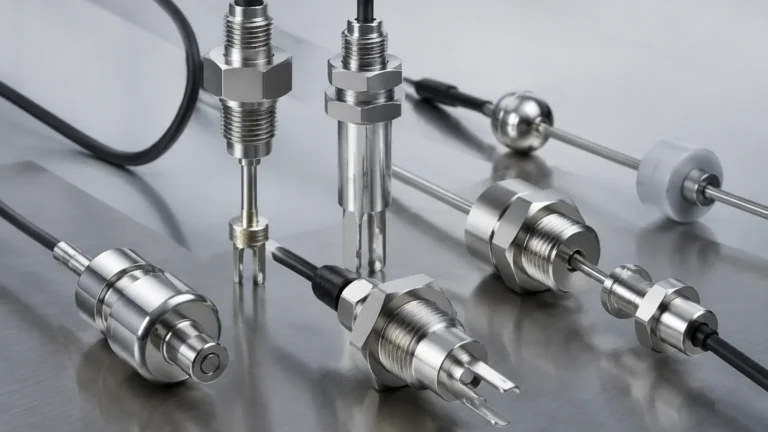
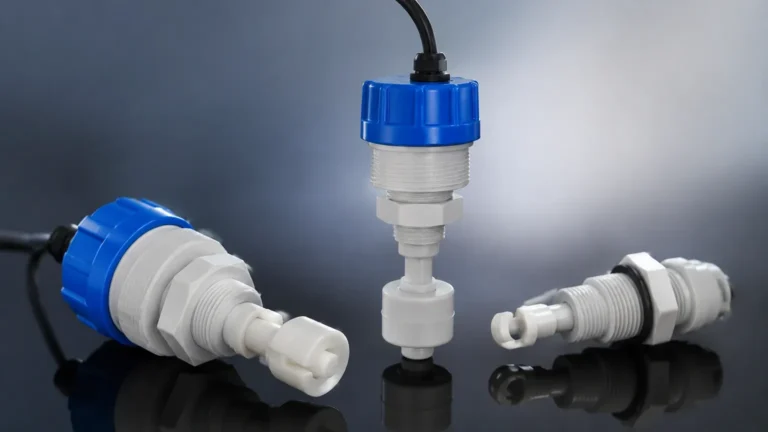
This is the most common technology for simple 12V applications. A float containing a permanent magnet moves up and down a stem. As the float reaches a predetermined point, the magnetic field actuates a hermetically sealed reed switch. These are highly reliable because they require no standby power for the sensing element itself, making them ideal for battery-powered 12V systems.
Optical Level Sensors
Optical sensors utilize an infrared LED and a phototransistor. When the sensor tip is in the air, the infrared light is reflected back within the tip to the detector. When immersed in liquid, the light is refracted into the medium, causing the detector to sense a change in light intensity. These sensors are compact and have no moving parts, though they can be affected by heavy coating or highly reflective liquids.
Ultrasonic Sensors
Ultrasonic level sensors 12v emit high-frequency sound waves that reflect off the surface of the medium. The sensor measures the "time of flight" to calculate the distance. These are non-contact devices, which is advantageous for corrosive or sticky liquids. Many modern 12V ultrasonic sensors are designed with low-power "sleep" modes to conserve energy in remote monitoring stations.
Capacitive Sensors
Capacitive sensing measures the change in capacitance between two electrodes (or one electrode and the tank wall) caused by the presence of the medium. These are effective for both liquids and solids (powders/granules). They are robust but require calibration based on the dielectric constant of the material.
Hydrostatic Pressure Transmitters
For continuous measurement, hydrostatic sensors measure the pressure exerted by the liquid column. Since pressure is directly proportional to the height of the liquid, the sensor can provide an accurate level reading. Low-voltage 12V versions are common in environmental monitoring and well-depth measurement.
Selection Criteria for Level Sensor 12v Applications
When specifying a level sensor 12v, engineers must evaluate several factors to ensure long-term reliability and accuracy.
Media Characteristics
* Viscosity: Highly viscous liquids may cause mechanical floats to stick or coat optical prisms.
* Corrosivity: Ensure the wetted materials (e.g., PP, PVDF, or 316L Stainless Steel) are compatible with the chemical composition.
* Conductivity: Some technologies, like conductive probes, require the liquid to be electrically conductive, whereas capacitive sensors depend on the dielectric constant.
Environmental Conditions
* Temperature: Standard 12V sensors are often rated for -20°C to +80°C (-4°F to 176°F). High-temperature applications may require specialized materials or remote electronics.
* Pressure: Vented tanks are standard, but pressurized vessels require sensors rated for the specific process pressure, often measured in bar or PSI.
* Ingress Protection: For outdoor or wash-down environments, an IP67 or IP68 rating is necessary to prevent moisture ingress into the 12V circuitry.
Electrical Output Requirements
In 12V systems, the output signal must be compatible with the receiving controller (PLC, RTU, or Arduino/Raspberry Pi). Common outputs include:
* NPN/PNP Transistor: Digital outputs for switches.
* Voltage Output (0-5V): Common for analog sensors in 12V circuits.
* I2C/Modbus: Digital communication protocols for high-precision smart sensors.
Installation Guidelines and Electrical Considerations
Proper installation is critical for the performance of 12V level instruments. Because 12V systems are more sensitive to voltage drops than higher-voltage systems, specific electrical precautions should be taken.
Wiring and Voltage Drop
Voltage drop (V = I × R) can be a significant issue if the sensor is located far from the power source. For a 12V system, even a 1V drop represents nearly 10% of the supply voltage, which may cause the sensor to malfunction or provide inaccurate readings. Use appropriate wire gauges (e.g., 18 AWG or 22 AWG depending on distance) to minimize resistance.
Mounting Positions
* Top Mounting: Standard for ultrasonic and top-insert float switches. Ensure there are no internal obstructions (like ladders or agitators) in the signal path for ultrasonic sensors.
* Side Mounting: Common for small-tank float switches or optical sensors. Requires a threaded port or flange in the side of the vessel.
* Submersible: Specifically for hydrostatic sensors lowered to the bottom of a tank or well.
Grounding and Noise
12V DC systems, especially those integrated with motors or pumps, can experience electrical noise. Using shielded cables and ensuring a common ground point can prevent "ghost" switching or signal fluctuations in analog sensors.

Comparison of 12V Level Measurement Technologies
| Technology | Accuracy | Media Type | Moving Parts | Typical Application |
| :— | :— | :— | :— | :— |
| Magnetic Float | ±2 mm (0.08 in) | Clean Liquids | Yes | Fuel tanks, sump pumps |
| Optical | ±1 mm (0.04 in) | Clear Liquids | No | Leak detection, medical equipment |
| Ultrasonic | ±0.25% Range | Various | No | Chemical tanks, wastewater |
| Capacitive | Variable | Liquids/Solids | No | Grain silos, oil-water interface |
| Hydrostatic | ±0.5% FS | Liquids | No | Deep wells, water reservoirs |
Limitations and Common Risks
While 12V level sensors are versatile, they are not without limitations. Understanding these risks helps in designing a more robust system.
1. Power Fluctuations: In 12V battery systems (like those in vehicles), the actual voltage can range from 10V to 14.5V. Sensors must have a wide input voltage tolerance to handle these fluctuations without damage or loss of accuracy.
2. Surface Turbulence: For ultrasonic and float sensors, heavy turbulence or foam on the liquid surface can lead to erratic readings. Stilling wells or software filtering may be required.
3. Coating and Scaling: In wastewater or chemical applications, buildup on the sensor face (optical or ultrasonic) or the float can cause the sensor to "hang" in a specific state. Regular maintenance and cleaning schedules are necessary for these environments.
4. Cable Length: As mentioned, long cable runs in 12V systems are prone to EMI (Electromagnetic Interference). Shielded twisted-pair cabling is recommended for runs exceeding 10 meters (33 feet).
Frequently Asked Questions (FAQ)
Q: Can I use a 24V level switch in a 12V system?
A: Generally, no, unless the manufacturer specifies a wide input range (e.g., 10-30V DC). A sensor designed strictly for 24V will likely fail to actuate or provide a signal at 12V.
Q: How do I choose between an NPN and PNP output for my 12V level switch?
A: This depends on your controller. PNP (sourcing) outputs provide a positive voltage when activated, while NPN (sinking) outputs provide a ground connection. PNP is more common in European and North American industrial controls, while NPN is often used in specialized electronics.
Q: Is a level sensor 12v safe for use with flammable liquids?
A: Only if it is specifically rated as "Intrinsically Safe" (IS) or "Explosion Proof" and used with an appropriate safety barrier. Standard 12V sensors are not inherently safe for hazardous areas just because they are low voltage.
Q: How often should a 12V level sensor be calibrated?
A: Mechanical switches rarely require calibration but should be tested for movement. Continuous sensors like ultrasonic or hydrostatic models should be verified annually, or more frequently if used in critical process control.
Conclusion
Selecting a level sensor 12v involves a balance between the required measurement precision, the physical properties of the media, and the electrical constraints of the 12V DC power supply. Whether utilizing non-contact ultrasonic technology for corrosive chemicals or simple magnetic Level Switches for water tanks, ensuring compatibility with the system's voltage and environmental conditions is the key to industrial reliability. By adhering to proper installation practices and understanding the measurement principles, engineers can implement effective level control in even the most power-constrained applications.