Level Sensor 3d Printer
Level Sensor 3d Printer
In the rapidly evolving landscape of additive manufacturing, precision is the primary determinant of quality. Whether in consumer-grade desktop units or large-scale industrial additive manufacturing (AM) systems, the integration of a reliable level sensor 3d printer setup is essential for maintaining process stability. These sensors serve two critical functions: ensuring the print surface is perfectly aligned (bed leveling) and monitoring the availability of raw materials, such as liquid resins or polymer powders, in the supply reservoirs.
For industrial applications, where downtime results in significant financial loss, the selection of level measurement technology must move beyond hobbyist components toward robust, industrial-grade instrumentation. This guide explores the measurement principles, selection criteria, and practical implementation of level sensing technologies within the 3D printing ecosystem.
Measurement Principles in Additive Manufacturing
Before selecting a sensor, it is imperative to understand the underlying physical principles that govern how these devices detect the presence or distance of a material. In the context of 3D printing, sensors are typically categorized by their interaction with the target material.
Capacitive Sensing
Capacitive sensors operate by detecting changes in the electrical capacitance between the sensor face and the target object. In 3D printing, these are frequently used for non-contact detection of resins through the walls of a VAT or for bed leveling on non-metallic surfaces. As a material enters the sensor's localized electric field, the dielectric constant changes, triggering a signal. This is particularly useful for liquid resins that are chemically aggressive, as the sensor can be mounted outside a plastic or glass container.
Optical and Infrared Sensing
Optical sensors utilize a light source (often infrared) and a receiver. In filament-based printers (FDM), these are used as run-out sensors to detect the presence of the strand. In resin-based systems (SLA/DLP), optical level sensors can detect the surface of the liquid. However, they are susceptible to interference from ambient light or the UV curing lamps used within the printer itself, requiring careful shielding or modulated light frequencies.
Ultrasonic Sensing
Ultrasonic sensors emit high-frequency sound waves and measure the time it takes for the echo to return from the surface of the material. This time-of-flight (ToF) calculation provides a continuous level measurement. In industrial SLS (Selective Laser Sintering) machines, ultrasonic sensors are often employed to monitor the level of bulk powder in the supply hoppers. Because they do not contact the material, they are immune to the abrasive nature of some metal or ceramic powders.
Mechanical and Electromechanical Sensing
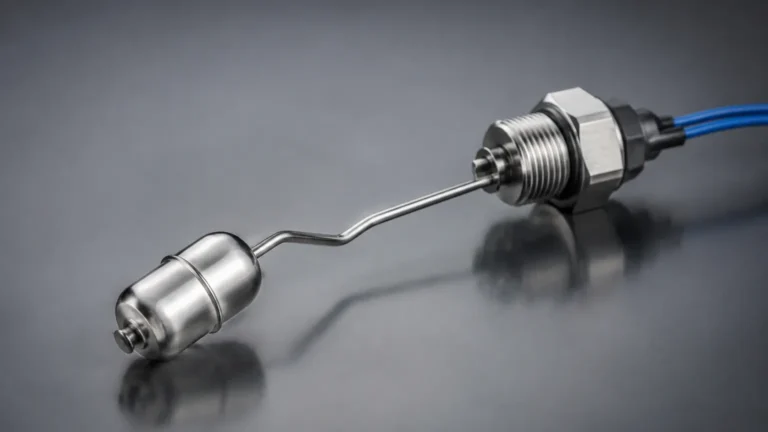
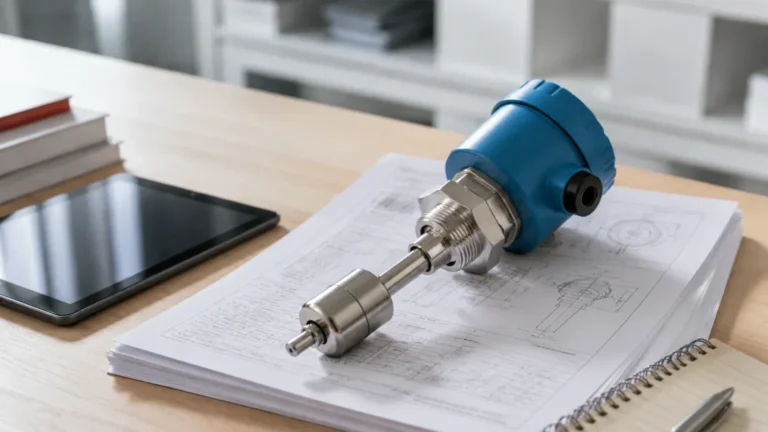
Mechanical sensors, or Level Switches, rely on physical displacement. In the context of 3D printing, these often take the form of microswitches for Z-axis end-stops or float switches in large resin recovery tanks. While simple, their reliability is high, provided the material does not gum up the moving parts. In industrial setups, heavy-duty level switches are used to prevent overflow in waste containers or to trigger automated material replenishment systems.
The Role of Level Switches in Material Management
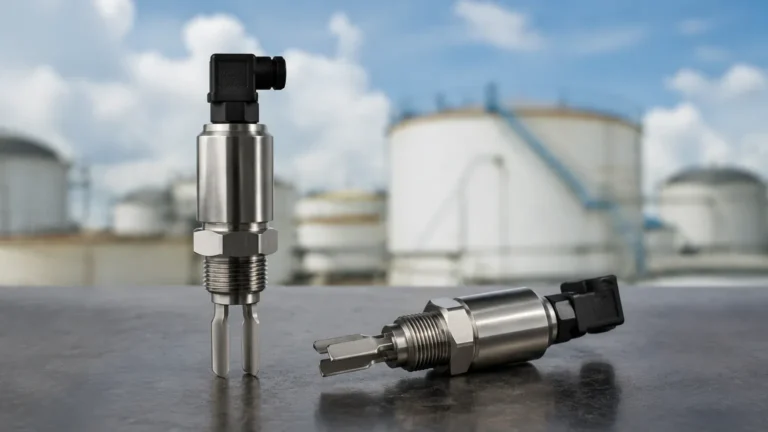
While "level sensor 3d printer" often refers to the probe used for bed calibration, the industrial B2B sector focuses heavily on material volume management. Automated resin or powder delivery systems rely on point-level detection to maintain a constant head of material.
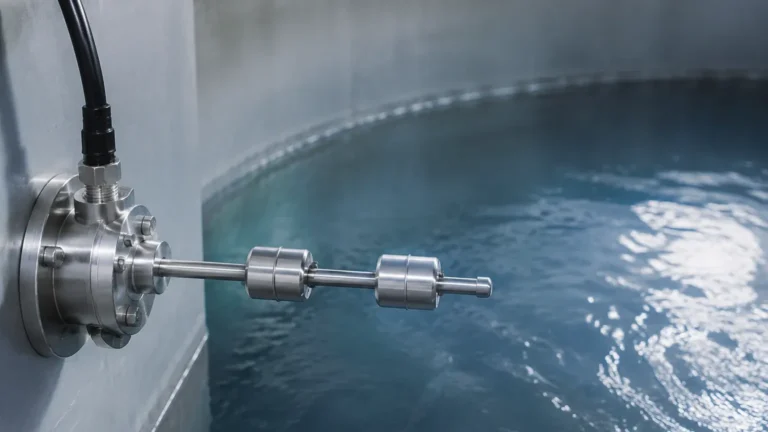
Industrial Level Switches are integrated into the reservoirs of high-volume SLA and SLS machines. When the material level drops below a specific threshold, the switch triggers a pump or a vacuum conveyor to refill the vat. This ensures that a 48-hour print job does not fail due to material exhaustion. Unlike hobbyist sensors, industrial-grade switches are designed to handle the high temperatures and chemical vapors often found inside industrial AM enclosures.
Practical Selection Table for 3D Printing Applications
Choosing the right sensor requires balancing accuracy, material compatibility, and environmental resistance. The following table summarizes common technologies used in industrial additive manufacturing.
| Sensor Technology | Primary Application | Target Material | Pros | Cons |
| :— | :— | :— | :— | :— |
| Capacitive | Bed Leveling / Resin Level | Glass, Metal, Resin | Non-contact, versatile | Sensitive to humidity |
| Inductive | Bed Leveling | Metal (PEI/Steel) | Extremely precise | Only works with metal |
| Ultrasonic | Powder Hopper Level | Polymer/Metal Powder | No moving parts | Affected by dust clouds |
| Optical (ToF) | Resin Surface Level | Liquid Resin | High resolution | Affected by transparency |
| Level Switches | Reservoir Management | Resin / Waste Liquids | Highly reliable, low cost | Requires physical contact |
| Hall Effect | Z-Probe / End-stop | Magnetic trigger | No wear, repeatable | Sensitive to EMI |
Installation and Engineering Considerations
Integrating a level sensor into a 3D printer environment requires more than just electrical connectivity. Engineers must account for the unique stressors of the printing process.
Thermal Stability
Industrial 3D printers often operate with heated chambers reaching temperatures between 60°C and 200°C (140°F to 392°F). Standard consumer sensors will often drift or fail under these conditions. When selecting a level sensor 3d printer component for high-temp environments, ensure the housing and internal electronics are rated for continuous exposure to the operating temperature. Thermal expansion of the mounting hardware must also be calculated, as a 0.1mm shift can ruin a high-precision print.
Chemical Compatibility
Photopolymer resins used in SLA printing can be corrosive to certain plastics and elastomers. If using a contact-based level switch, the wetted parts should be constructed from stainless steel (316L) or chemically resistant polymers like PTFE. For non-contact capacitive sensors, the thickness and material of the tank wall (e.g., acrylic vs. glass) must be consistent to ensure accurate triggering.
Signal Interference and EMI
Industrial printers contain high-power stepper motors, heaters, and sometimes lasers, all of which generate electromagnetic interference (EMI). Sensors should be shielded, and signal cables should be twisted-pair or coaxial to prevent false triggers. In systems using Level Switches for automated refilling, debouncing logic must be implemented in the PLC (Programmable Logic Controller) or firmware to prevent the pump from rapid-cycling due to surface ripples in the resin.
Limitations of Current Technologies
Despite advancements, no single sensor is a "silver bullet" for all 3D printing needs.
1. Transparency Issues: Optical sensors often struggle with clear resins, as the light beam may pass through the liquid rather than reflecting off the surface.
2. Surface Turbulence: In high-speed resin printers, the movement of the build plate creates waves. This can cause intermittent signals in point-level sensors, necessitating the use of averaging algorithms or stilling wells.
3. Powder Density: In SLS printing, the density of the powder can vary based on humidity and grain size. This affects the dielectric constant, which can lead to inaccuracies in capacitive sensors if they are not calibrated to the specific powder batch.
Maintenance and Calibration Protocols
To maintain the accuracy of a level sensor 3d printer setup, a regular maintenance schedule is required.
* Cleaning: For optical and capacitive sensors, any buildup of resin vapor or powder dust on the sensor face will degrade performance. Weekly cleaning with Isopropyl Alcohol (IPA) is generally recommended for optical windows.
* Recalibration: Sensors should be recalibrated whenever the material type is changed. For example, switching from a standard gray resin to a high-wax casting resin will change the dielectric properties, requiring an adjustment of the sensitivity on capacitive switches.
* Mechanical Inspection: For Level Switches used in resin tanks, check for "stiction" caused by partially cured resin around the float or pivot point.
Frequently Asked Questions (FAQ)
Q: Can I use an industrial inductive sensor for bed leveling on a glass bed?
A: No. Inductive sensors require a metallic target to create an eddy current. For glass beds, you must use a capacitive sensor, an optical sensor, or a physical touch probe.
Q: What is the best way to monitor powder levels in a metal 3D printer (DMLS)?
A: Ultrasonic or laser-based non-contact sensors are preferred. Because metal powders are conductive and heavy, they can interfere with capacitive sensors and cause excessive wear on mechanical switches.
Q: How do I prevent false triggers from resin splashes?
A: Implementing a time-delay in the control logic (software debouncing) is the most effective method. Requiring the sensor to maintain a "triggered" state for 2-3 seconds before taking action (like turning on a pump) filters out momentary splashes.
Q: Are level switches better than continuous level sensors for 3D printing?
A: It depends on the goal. For simple "refill needed" alerts, Level Switches are more cost-effective and easier to integrate. For precise tracking of material usage and remaining print time, continuous sensors (like ultrasonic or ToF) are necessary.
Conclusion
The integration of a level sensor 3d printer system is a critical step in transitioning from manual prototyping to automated industrial production. By understanding the physics of the materials being measured—whether they are viscous resins, fine powders, or the print surface itself—engineers can select the appropriate technology to ensure repeatability. For material management and reservoir control, the reliability of industrial-grade switches and sensors remains the backbone of a successful additive manufacturing workflow.