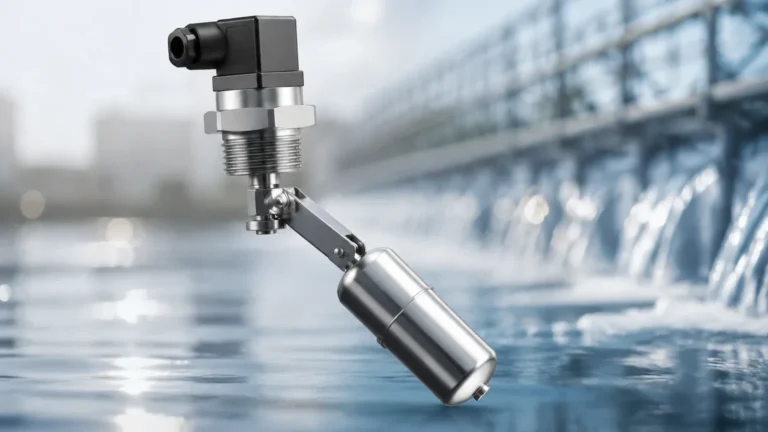
Level Switch Conductivity
Level Switch Conductivity
In the landscape of industrial automation, the reliable detection of liquid levels is fundamental to process safety, inventory management, and operational efficiency. Among the diverse array of point-level detection technologies, conductivity-based systems stand out for their simplicity, durability, and cost-effectiveness. Understanding the relationship between a level switch and the conductivity of the medium it measures is essential for engineers and plant operators tasked with selecting the right instrumentation for challenging environments.
Conductivity level switches are specifically designed to detect the presence or absence of conductive liquids at a predetermined point. This technology is widely utilized in water treatment, chemical processing, and the food and beverage industry. Unlike mechanical float switches, these devices have no moving parts, significantly reducing the risk of mechanical failure and maintenance requirements.
Principles of Conductive Level Measurement
The operation of a conductivity level switch is based on the electrical conductivity of the liquid being monitored. The measurement principle follows a simple electrical circuit logic: the liquid acts as a conductor to close a circuit between two or more electrodes.
The Electrical Circuit
In a typical setup, a low-voltage AC signal is applied to a sensing electrode. When the liquid level rises and makes contact with the electrode, an electrical path is established between the sensing electrode and a reference electrode (or the conductive wall of the tank). This completion of the circuit allows a small current to flow, which is then detected by the integrated or remote controller. The controller subsequently triggers a relay output, providing a signal for alarms, pump control, or PLC integration.
AC vs. DC Current
It is critical to note that professional-grade Level Switches use alternating current (AC) for the sensing circuit. Using direct current (DC) would lead to electrolysis, causing the buildup of ions on the electrodes and resulting in corrosion or the formation of gas bubbles, both of which degrade measurement accuracy and probe longevity. The use of a low-voltage AC signal ensures long-term stability and prevents electrode polarization.
Understanding Level Switch Conductivity Requirements
The most important factor in the success of this technology is the level switch conductivity—specifically, the minimum electrical conductivity of the liquid required to trigger the switch. Conductivity is measured in Microsiemens per centimeter (µS/cm).
Conductivity Thresholds
For a conductivity switch to function reliably, the liquid must have a minimum conductivity level, typically starting from 5 µS/cm to 10 µS/cm. While highly conductive liquids like acids and salt water are easily detected, liquids with very low conductivity, such as deionized water or hydrocarbons, may not provide enough current to trigger the sensor.
| Liquid Type | Typical Conductivity (µS/cm) | Suitability for Conductive Switches |
| :— | :— | :— |
| Deionized Water | 0.5 – 5 | Marginal / Not Recommended |
| Tap Water | 50 – 800 | Excellent |
| Wastewater | 500 – 5,000 | Excellent |
| Sea Water | 50,000 | Excellent |
| Sulfuric Acid (30%) | 700,000+ | Excellent (Requires chemical-resistant probes) |
| Edible Oils / Fuel | < 0.1 | Not Suitable |
Sensitivity Adjustment
Modern conductivity controllers often feature adjustable sensitivity. This allows the user to calibrate the device to distinguish between the actual liquid and residual foam or film buildup on the probes. By adjusting the resistance threshold, the switch can be fine-tuned to ignore high-resistance coatings while still responding to the bulk liquid.
Technical Specifications and Selection Criteria
When selecting a conductivity level switch for an industrial application, several technical parameters must be evaluated to ensure compatibility with the process conditions.
Probe Materials and Construction
Electrodes are typically manufactured from 316L stainless steel for general applications. However, for aggressive chemicals, materials such as Hastelloy C, Titanium, or Tantalum may be required. The insulation material (the part of the probe that prevents short-circuiting at the mounting point) is usually made of PTFE (Teflon), PP (Polypropylene), or PEEK, depending on the temperature and chemical compatibility requirements.
Temperature and Pressure Ratings
While conductivity switches are robust, their mechanical seals and insulation materials have limits. Standard industrial probes can handle temperatures up to 100°C (212°F) and pressures up to 10 bar (145 psi). High-temperature variants are available for steam boiler applications, capable of withstanding over 200°C (392°F) and higher pressures.
Multi-Point Detection
One of the primary advantages of this technology is the ability to monitor multiple levels with a single process connection. A single probe head can house multiple electrodes of different lengths, allowing for the detection of high-high, high, low, and low-low levels simultaneously. This is particularly useful for controlling a pump (start at high level, stop at low level) using a single instrument.
Installation Guidelines for Conductivity Probes
Proper installation is paramount to preventing false triggers and ensuring the longevity of the level switch. Welk recommends adhering to the following engineering practices during installation.
1. Mounting Orientation: Conductivity probes are most commonly mounted vertically from the top of the tank. If horizontal mounting is necessary, the probes must be angled slightly downward to ensure that liquid drains off the electrodes when the level drops, preventing "bridging" caused by residual droplets.
2. Reference Electrode: In non-conductive tanks (such as plastic or fiberglass tanks), a reference electrode (earth electrode) must be installed. This electrode must be the longest probe and must remain in contact with the liquid to provide a return path for the electrical circuit. In conductive metal tanks, the tank wall itself can often serve as the reference ground.
3. Probe Length and Spacing: Ensure that probes are cut to the correct length for the desired switching points. If multiple probes are used, they should be spaced sufficiently or fitted with spacers to prevent them from touching each other due to turbulence or vibration.
4. Avoid Turbulence: Probes should not be installed directly in the path of a tank's fill stream. The resulting turbulence and splashing can cause intermittent switching and premature wear on the relay contacts.
Application Scenarios and Industry Use Cases
Water and Wastewater Management
Conductivity switches are the standard choice for sump pump control and sewage lift stations. Since wastewater is highly conductive, these switches provide a reliable, low-maintenance alternative to float switches, which often get tangled or fouled by solids.
Food and Beverage Processing
In the production of juices, milk, and soft drinks, conductivity level switches are used for high-level alarm detection in storage tanks. The ability to use food-grade materials like 316L stainless steel and PEEK ensures compliance with hygiene standards (e.g., FDA or EHEDG).
Chemical Dosing and Storage
For acids, alkalis, and reagent tanks, conductivity switches offer a simple way to prevent overfills. Because the sensing element is a solid metal rod, it can withstand the corrosive nature of these fluids better than many mechanical or optical sensors.
Limitations and Maintenance of Conductive Level Switches
Despite their versatility, conductivity level switches are not a universal solution. Engineers must be aware of their inherent limitations.
* Non-Conductive Media: These switches cannot detect oils, hydrocarbons, pure alcohols, or pure distilled water. For these applications, technologies such as ultrasonic, radar, or capacitive switches are required.
* Coating and Scaling: If the liquid is prone to leaving heavy deposits, scaling, or non-conductive coatings (like grease or wax), the electrodes may become insulated from the liquid, leading to a failure to switch. Regular cleaning or the use of specialized "anti-coating" electronics may be necessary.
* Foam Interference: While sensitivity adjustments can help, heavy foam can sometimes trigger a conductivity switch if the foam itself is sufficiently conductive. In applications with significant foaming, a tuning fork or radar sensor may be more appropriate.
Maintenance Checklist
* Visual Inspection: Periodically check electrodes for signs of corrosion or heavy scaling.
* Cleaning: Use a soft cloth or appropriate solvent to remove buildup from the probe tips and the insulation area.
* Wiring Check: Ensure that the electrical connections at the terminal head remain tight and free from moisture ingress.
Comparison of Point Level Technologies
To help in the selection process, the following table compares conductivity switches with other common point-level technologies.
| Feature | Conductivity Switch | Float Switch | Tuning Fork (Vibrating) | Ultrasonic Switch |
| :— | :— | :— | :— | :— |
| Moving Parts | None | Yes | None (Vibrates) | None |
| Medium Requirement | Conductive Liquid | Any Liquid | Most Liquids | Most Liquids |
| Maintenance | Very Low | Moderate | Low | Low |
| Cost | Low | Very Low | Moderate | High |
| Reliability | High | Moderate | Very High | High |
| Complexity | Simple | Simple | Moderate | High |
Frequently Asked Questions (FAQs)
Q: Can I use a conductivity level switch for diesel or gasoline?
A: No. Petroleum-based fuels have extremely low conductivity (nearly zero). A conductivity switch will not be able to detect them. For fuels, we recommend using float switches or capacitive level sensors.
Q: How do I know if my liquid is conductive enough?
A: Most water-based liquids have a conductivity well above 50 µS/cm, which is more than enough for a standard switch. If you are unsure, you can measure the liquid's conductivity with a portable conductivity meter or consult the fluid's Material Safety Data Sheet (MSDS).
Q: What happens if the probes touch the side of a metal tank?
A: If a sensing probe touches a conductive tank wall, it will create a permanent short circuit, and the controller will indicate that the liquid is present even if the tank is empty. Proper installation with spacers or ensuring sufficient clearance is vital.
Q: Can these switches be used in pressurized vessels?
A: Yes, provided the probe assembly and the process connection (e.g., NPT or Flange) are rated for the specific pressure of the vessel. Always check the manufacturer's pressure-temperature curve before installation.
By understanding the fundamental relationship between level switch conductivity and the process medium, industrial users can implement robust level control solutions that minimize downtime and maximize safety. For more complex applications involving non-conductive liquids or continuous level monitoring, exploring a broader range of Level Switches and sensors is recommended to find the optimal fit for your specific engineering requirements.