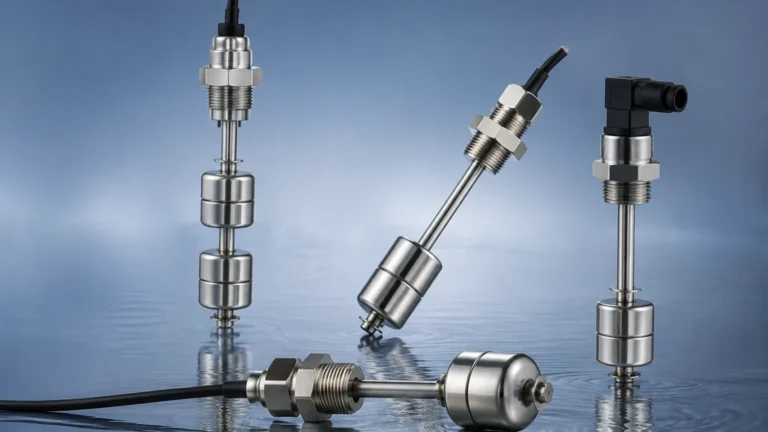
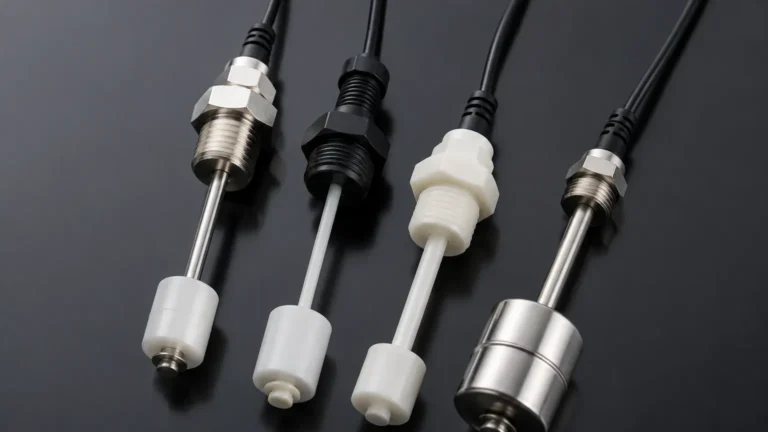
Level Switch Vibrating Fork
Level Switch Vibrating Fork
In the landscape of industrial automation, point level detection serves as a critical safeguard for process stability and equipment protection. Among the various technologies available, the level switch vibrating fork—often referred to as a tuning fork sensor—has emerged as one of the most versatile and reliable solutions for both liquid and solid media. This guide provides a technical deep dive into the principles, selection criteria, and installation best practices for vibrating fork technology within modern B2B processing environments.
Understanding the Vibrating Fork Measurement Principle
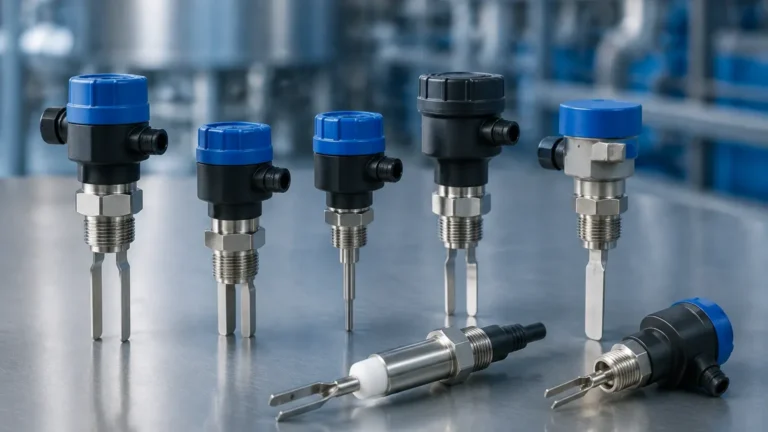
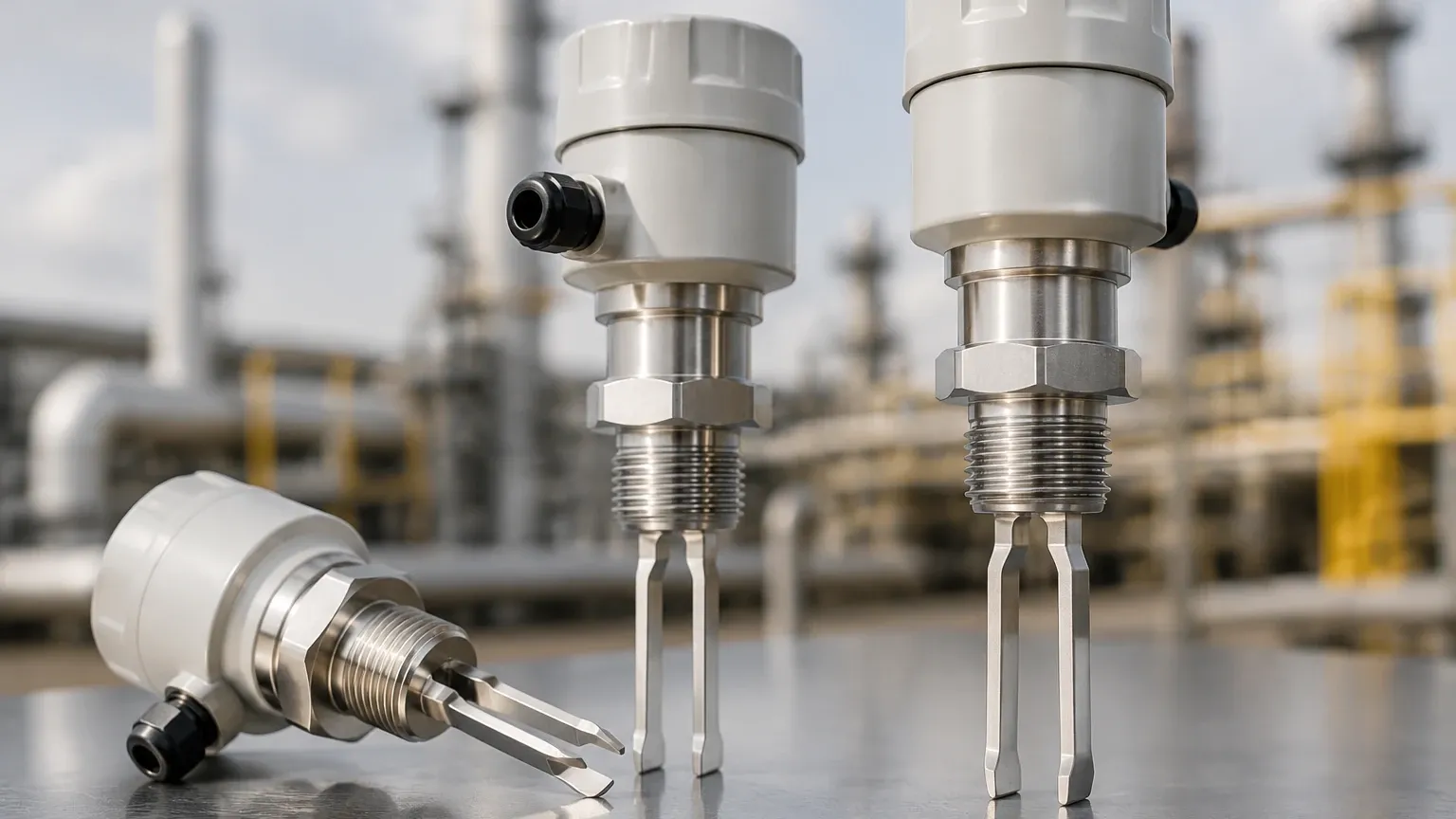
The fundamental operation of a level switch vibrating fork relies on the laws of physics regarding resonant frequency. The sensor head consists of two metal tines (the fork) that are driven to vibrate at their natural resonant frequency by an internal piezoelectric crystal.
When the fork is in the air (the "empty" state), it vibrates at a high, stable frequency—typically around 1,200 Hz to 1,400 Hz for liquid applications and lower for solids. As the process media rises and covers the tines, the physical mass of the liquid or powder dampens the vibration. This contact causes a significant shift in the resonant frequency.
A second piezoelectric crystal detects this frequency change and sends a signal to the internal electronics. The electronics then process this shift and trigger an output change, such as a relay contact or a transistor switch (PNP/NPN). Because this method relies on physical contact and frequency shift rather than electrical properties like conductivity or dielectric constants, it is exceptionally immune to changes in the medium's temperature, pressure, or chemical composition.
Key Advantages in Industrial Applications
Choosing a level switch vibrating fork over alternative technologies like float switches or ultrasonic sensors offers several distinct engineering advantages:
1. Media Independence: Unlike capacitive sensors, vibrating forks are largely unaffected by the dielectric constant of the material. They work equally well with deionized water, oils, and chemical solvents.
2. No Moving Parts: Unlike mechanical float switches, there are no pivots or linkages that can jam, corrode, or wear out over time, significantly reducing maintenance requirements.
3. Resistance to Turbulence and Foam: The high-frequency vibration is not easily disrupted by surface foam or turbulent liquid surfaces, which often cause false readings in ultrasonic or optical sensors.
4. Compact Form Factor: Modern designs allow for very short fork lengths (as small as 40 mm), making them ideal for small-diameter pipes and tight tank spaces.
5. Self-Monitoring: Many professional-grade Level Switches feature internal diagnostics that can detect damage to the fork or electronics failure, providing a fail-safe signal to the control system.
Technical Specifications and Selection Criteria
Selecting the correct level switch vibrating fork requires an evaluation of the process environment and the physical properties of the media. Engineers should consult the following table for baseline selection criteria:
Selection Matrix for Vibrating Fork Sensors
| Feature | Liquid Applications | Solid (Powder/Granule) Applications |
| :— | :— | :— |
| Minimum Density | Typically > 0.5 g/cm³ (0.5 kg/dm³) | Typically > 0.01 g/cm³ for light powders |
| Viscosity Limit | Up to 10,000 mm²/s (cSt) | N/A (Flowability is the key metric) |
| Standard Materials | Stainless Steel 316L, Hastelloy, PFA Coating | Stainless Steel 316L, Tungsten Carbide Coating |
| Pressure Range | Vacuum to 64 bar (standard) | Vacuum to 25 bar |
| Temperature Range | -50°C to +150°C (High temp to 250°C) | -40°C to +150°C |
| Common Outputs | Relay, PNP/NPN, 2-wire AC/DC, NAMUR | Relay, PNP, 4-20mA (Loop powered) |
Material Compatibility
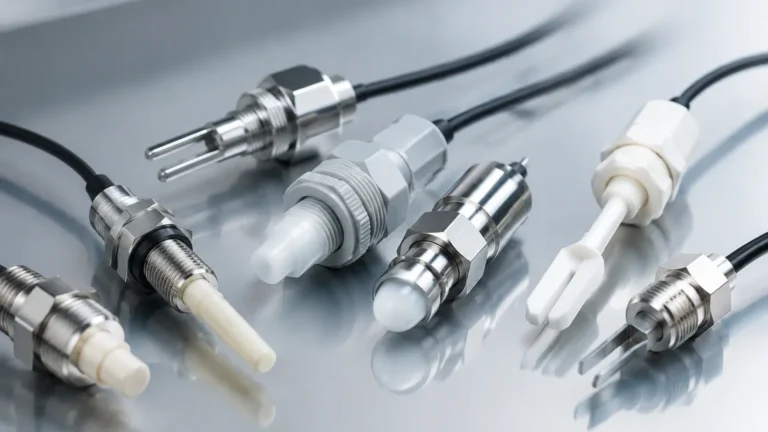
For corrosive environments, such as those found in chemical processing or water treatment, the wetted parts must be compatible. While Stainless Steel 316L is the standard, Welk provides specialized coatings like PFA or ECTFE for highly aggressive acids. In abrasive solid applications, such as sand or gravel, tines may require hardened coatings to prevent thinning of the metal which would eventually shift the resonant frequency permanently.
Installation Best Practices for Optimal Performance
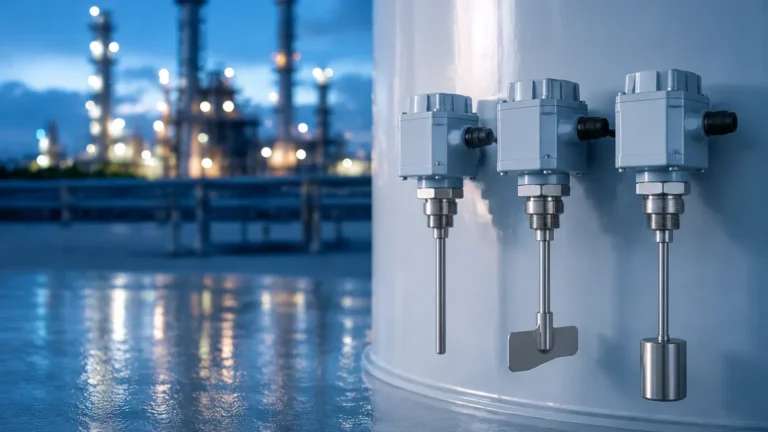
Correct installation is paramount to ensuring the longevity and accuracy of a level switch vibrating fork. While these sensors are robust, they are sensitive to physical orientation relative to the flow of material.
Orientation and Positioning
* Side Mounting: When installing horizontally in a tank, the tines should be oriented vertically (one above the other) if the media is a liquid that might leave a residue. This allows the liquid to drain off the tines easily. If the media is a solid, the tines should be oriented so the flat surface is vertical to prevent material from "bridging" or sitting on top of the fork.
* Flow Considerations: In pipes, the fork should be positioned so that the tines are parallel to the direction of flow. This minimizes the physical impact of the moving liquid on the tines and prevents the accumulation of debris.
* Avoiding the Fill Stream: Never install the sensor directly under the tank's fill inlet. The impact of falling material can cause false triggers or mechanical damage to the fork structure.
Connection Types
Industrial applications typically utilize standard process connections:
* Threaded: G 1/2", G 3/4", or G 1" (BSPP) and NPT equivalents for simple tank or pipe entry.
* Flanged: ANSI or DIN flanges for high-pressure or heavy-duty chemical applications.
* Hygienic: Tri-clamp or Varivent connections for food, beverage, and pharmaceutical industries where CIP (Clean-in-Place) processes are required.
Comparison with Other Point Level Technologies
To understand where the vibrating fork fits in a facility's instrumentation strategy, it is helpful to compare it against other common Level Switches.
| Technology | Vibrating Fork | Float Switch | Capacitive Switch |
| :— | :— | :— | :— |
| Maintenance | Very Low | Moderate (Moving parts) | Low |
| Coating Sensitivity | Low (Small buildup ignored) | High (Can jam float) | High (Requires recalibration) |
| Cost | Mid-range | Low | Mid-range |
| Media Change | No recalibration needed | No recalibration needed | Requires recalibration |
| Application | Liquids, Powders, Slurries | Clean Liquids only | Liquids, Solids, Interfaces |
Limitations and Operational Considerations
While highly versatile, the level switch vibrating fork is not a universal solution. Engineers must be aware of the following limitations:
1. Extreme Buildup: While the fork can ignore light coating, heavy, viscous, or "sticky" media that completely bridges the gap between the two tines will cause a permanent "covered" signal. In such cases, a single-rod vibrating sensor or a high-frequency admittance probe may be more appropriate.
2. Very Low Density: Extremely light powders (like some fumed silicas) may not have enough mass to dampen the vibration of a standard fork. Specialized "high-sensitivity" forks are required for densities below 0.02 g/cm³.
3. Large Granules: In solid applications, if the grain size is larger than the gap between the tines (typically 10-15 mm), the material can become wedged, leading to false positives and potential damage.
4. Aerated Liquids: If a liquid is heavily aerated (essentially a thick foam), the density may drop below the sensor's detection threshold, causing it to fail to switch when covered.
Frequently Asked Questions (FAQ)
Q: Can a vibrating fork be used for overfill protection?
A: Yes, it is one of the most common applications. Due to their high reliability and self-monitoring capabilities, many vibrating forks are certified for use in SIL 2 (Safety Integrity Level) loops for overfill prevention.
Q: How do I handle heavy agitation in the tank?
A: If the tank has an agitator, ensure the fork is installed in a location with minimal mechanical stress. A protective shield or baffle can be installed above the fork to deflect the force of the moving liquid, provided it does not trap material around the tines.
Q: Does the sensor require calibration for different liquids?
A: No. One of the primary benefits of the level switch vibrating fork is that it is "plug-and-play." As long as the liquid density is above the minimum threshold (usually 0.5 g/cm³ or 0.7 g/cm³ depending on the model), the switch will function without adjustment when moving from water to oil or chemicals.
Q: What is the maximum cable length for remote electronics?
A: Most modern vibrating forks have integrated electronics in the housing. However, for high-temperature or high-radiation environments where the electronics must be remote, cable distances can typically reach up to 50 meters depending on the signal type (e.g., NAMUR or PFM).
For engineers seeking to optimize their process control and safety systems, the vibrating fork represents a mature, reliable, and cost-effective technology. By understanding the specific density and viscosity requirements of the media, and following standard installation protocols, these sensors provide years of maintenance-free service in the most demanding industrial environments.