Level Switch Games
Level Switch Games
In the complex landscape of industrial automation, the term "level switch games" does not refer to digital entertainment, but rather to the strategic maneuvers and technical challenges engineers face when selecting, installing, and maintaining point-level detection systems. Choosing the right level switch is a high-stakes game where the prizes are process safety, overflow prevention, and pump protection, while the penalties for a wrong move include equipment damage, environmental hazards, and costly downtime.
Level switches are fundamental components in process control, serving as binary sensors that indicate whether a substance—liquid, powder, or granulate—has reached a specific height within a vessel. Unlike continuous level transmitters that provide a constant stream of data, level switches act as the final line of defense or the primary trigger for automated sequences. Navigating the "games" of industrial level control requires a deep understanding of physics, material science, and mechanical engineering.
Understanding the Principles of Point Level Detection
Before engaging in the selection process, it is essential to understand the underlying physical principles that govern how different Level Switches operate. Each technology interacts with the process media differently, and these interactions determine the switch's reliability in specific environments.
Buoyancy (Float Switches)
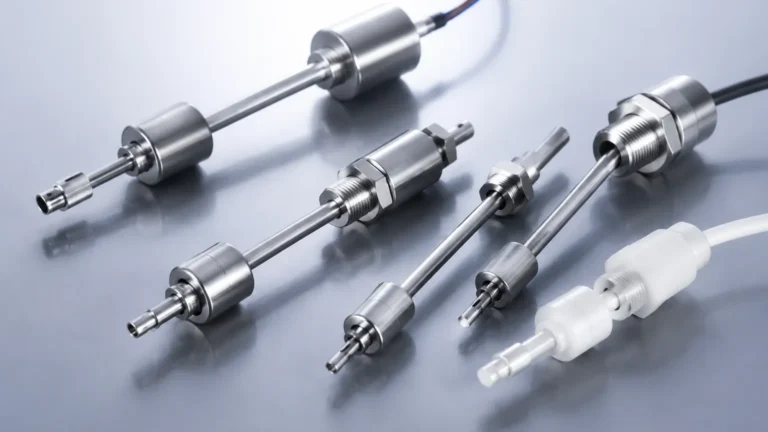
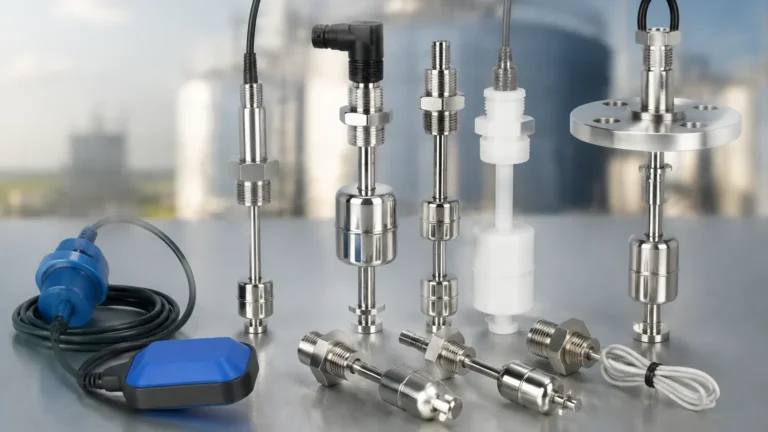
Float switches are the most traditional form of level detection. They rely on Archimedes' principle: an object partially or completely submerged in a fluid is buoyed up by a force equal to the weight of the fluid displaced. As the liquid level rises, a float moves a mechanical arm or slides along a stem, eventually actuating a microswitch or a reed switch. This is a purely mechanical or electro-mechanical process.
Vibration (Tuning Fork Switches)
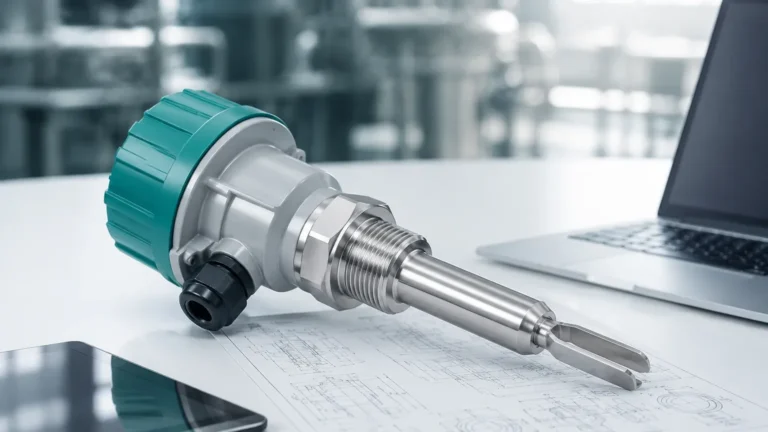
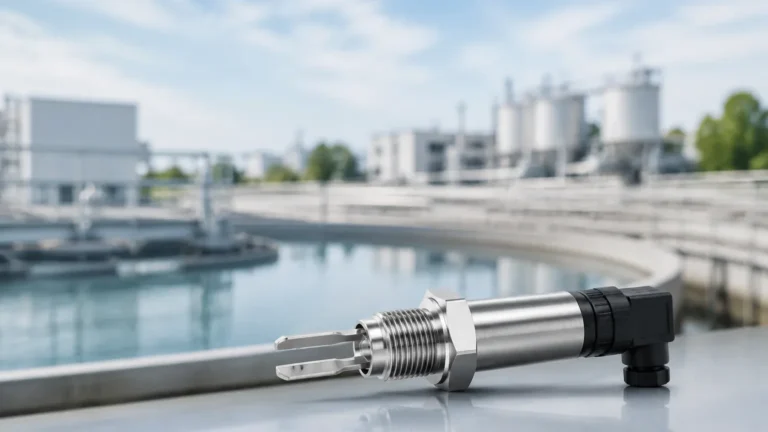
Often referred to as vibrating level switches, these devices utilize a piezoelectric crystal to energize a tuning fork at its natural resonance frequency. When the fork is covered by a liquid or solid, the frequency shifts or the amplitude of vibration is dampened. The internal electronics detect this change and switch the output state. This technology is highly robust and immune to changes in pressure, temperature, and conductivity.
Conductivity
Conductive level switches use the process medium itself as a part of the electrical circuit. Two or more electrodes are placed in the tank. When a conductive liquid reaches the electrodes, a small electrical current flows between them, triggering the sensor. This is common in water treatment but is limited to liquids with a minimum conductivity (usually >10 µS/cm).
Capacitance
Capacitive switches treat the sensor probe and the tank wall as two plates of a capacitor. The process medium acts as the dielectric material. As the level rises and covers the probe, the capacitance of the system changes because the dielectric constant of the material (e.g., oil or water) is higher than that of air. This change is processed to provide a switching signal.
The Strategic "Games" of Selection: Matching Technology to Media
The most critical stage in the level switch games is the selection phase. A mismatch between the sensor technology and the material properties leads to frequent false alarms or, worse, a failure to trigger when needed.
Liquid Applications
For clean liquids like water or refined oils, float switches are cost-effective. However, if the liquid is corrosive, a vibrating fork made of stainless steel or coated with PFA is preferred. In applications involving turbulent surfaces or foaming, ultrasonic or radar-based point level switches may be necessary to filter out the "noise" of the surface agitation.
Bulk Solids and Powders
Detecting levels in silos filled with grain, cement, or plastic pellets introduces different challenges. Rotary paddle switches are a classic choice; a motor rotates a paddle, and when the material covers it, the torque increases, tripping a switch. However, for fine powders that might bridge or clog, vibrating rods or capacitance probes are often more reliable because they have no moving parts that can seize.
High-Pressure and High-Temperature Environments
In steam boilers or chemical reactors, the game changes significantly. Standard materials may fail at temperatures exceeding 150°C or pressures over 40 bar. Here, magnetic level switches—where a float moves a magnet that actuates a switch outside the pressure envelope—provide a safe, hermetically sealed solution.
Technical Selection Table
To simplify the decision-making process, the following table compares common level switch technologies based on their suitability for various process conditions.
| Technology | Media Type | Viscosity Limit | Pressure Range (max) | Temperature Range | Primary Advantage |
| :— | :— | :— | :— | :— | :— |
| Float Switch | Clean Liquids | Low | 40 bar | -40 to 180°C | Low cost, simple operation |
| Vibrating Fork | Liquids/Solids | Up to 10,000 cP | 64 bar | -50 to 250°C | Maintenance-free, versatile |
| Capacitance | Liquids/Solids | Moderate | 100 bar | -50 to 200°C | No moving parts, handles buildup |
| Rotary Paddle | Bulk Solids | N/A | Atmospheric | -20 to 80°C | Robust for heavy solids |
| Conductive | Conductive Liquids| Low | 10 bar | -20 to 100°C | Very inexpensive, multi-point |
Strategic Installation: Avoiding the Pitfalls
Even the best-engineered switch will fail if the installation strategy is flawed. The "level switch games" extend into the physical placement of the device within the vessel.
1. The Fill Stream Rule: Never install a level switch directly in the path of the incoming material. The force of the falling liquid or solid can cause mechanical damage or cause the switch to trigger prematurely due to splashing.
2. Baffles and Stillwells: In tanks with high agitation or mixers, use a stillwell (a pipe surrounding the sensor) to provide a calm surface for measurement. This is particularly important for float and ultrasonic switches.
3. Dead Zones: Every switch has a physical "dead zone" where it cannot accurately detect material. For vibrating forks, ensure the tines are at least 50 mm away from the tank wall to prevent material from becoming trapped between the fork and the wall.
4. Orientation: While many switches can be mounted horizontally or vertically, horizontal mounting is often preferred for high-level alarms to ensure the material falls away from the sensor as the level drops, reducing the risk of buildup.

Common Challenges: The "Games" of Troubleshooting
Operational environments are rarely static. Changes in the process can turn a reliable system into a source of frustration. Understanding these "games" helps in proactive maintenance.
The Buildup Challenge
In applications involving sticky liquids (like resins) or damp powders, material can accumulate on the sensor. This is known as "coating." A vibrating fork might continue to signal "full" even after the tank is empty because the coating dampens the vibration. In these cases, selecting a switch with "active shield" technology or a capacitance probe designed to ignore coating is essential.
The Density Shift
If a process involves different fluids or if the temperature fluctuates significantly, the density of the liquid may change. Float switches are highly sensitive to density. If the liquid becomes less dense than the float's design specification, the float will sink, causing a false low-level signal. Vibrating forks are generally immune to density changes, provided the density remains above a minimum threshold (typically 0.5 g/cm³).
Turbulence and Foam
Foam is the nemesis of many level switches. Some technologies, like ultrasonic, may see the top of the foam as the liquid level, while others, like floats, will sink through the foam to the actual liquid. If the goal is to detect the liquid and ignore foam, a vibrating fork or a conductive probe is usually the winning strategy.
Frequently Asked Questions (FAQs)
Q: Can I use a liquid level switch for dry powders?
A: Generally, no. Liquid vibrating forks are tuned for the viscosity and density of fluids. For powders, you need a "tuning fork" specifically designed for solids, which usually has larger, more robust tines and a different vibration frequency.
Q: How do I test a level switch without filling the tank?
A: Many modern electronic switches, such as vibrating forks or capacitance probes, feature a "test" button or a magnetic test point. Touching a magnet to a specific spot on the housing simulates a covered state, allowing you to verify the wiring and control logic without a wet test.
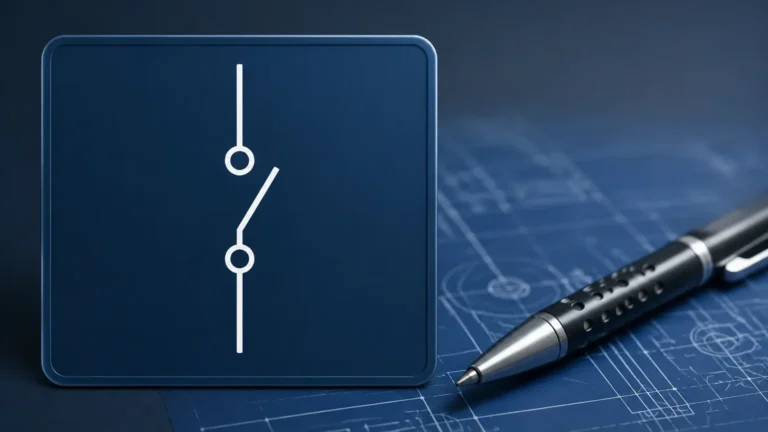
Q: What is the difference between a NORMALLY OPEN (NO) and NORMALLY CLOSED (NC) contact?
A: In the context of level switches, this refers to the state of the switch when the level is "normal" (usually the safe state). For a high-level alarm, you typically want a "fail-safe" configuration where the circuit is closed during normal operation and opens when the level is reached or if power is lost.
Conclusion
Winning the level switch games requires more than just buying a sensor; it requires an engineering approach that accounts for media properties, vessel geometry, and potential process upsets. By understanding the principles of detection and the specific limitations of each technology, process managers can ensure that their point-level systems provide the reliability required for modern industrial operations.
When the safety of a facility and the efficiency of a production line are on the line, the choice of instrument is the most important move you can make. For those seeking to optimize their process, it is advisable to Review product options and application support to ensure the selected hardware matches the specific demands of the application.