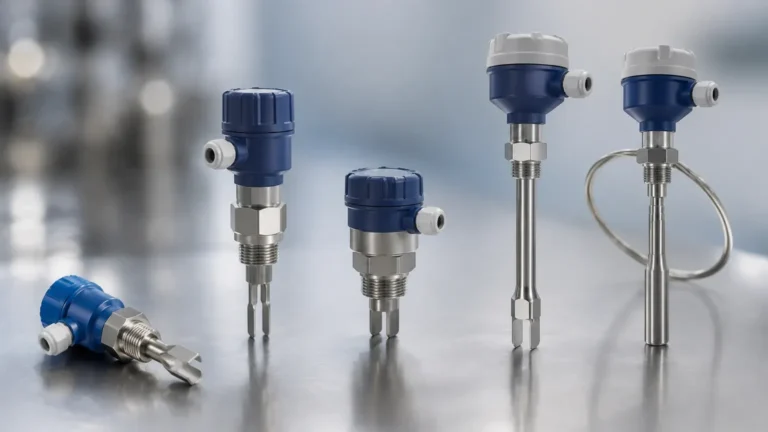
Level Switch Top Mounted
Level Switch Top Mounted
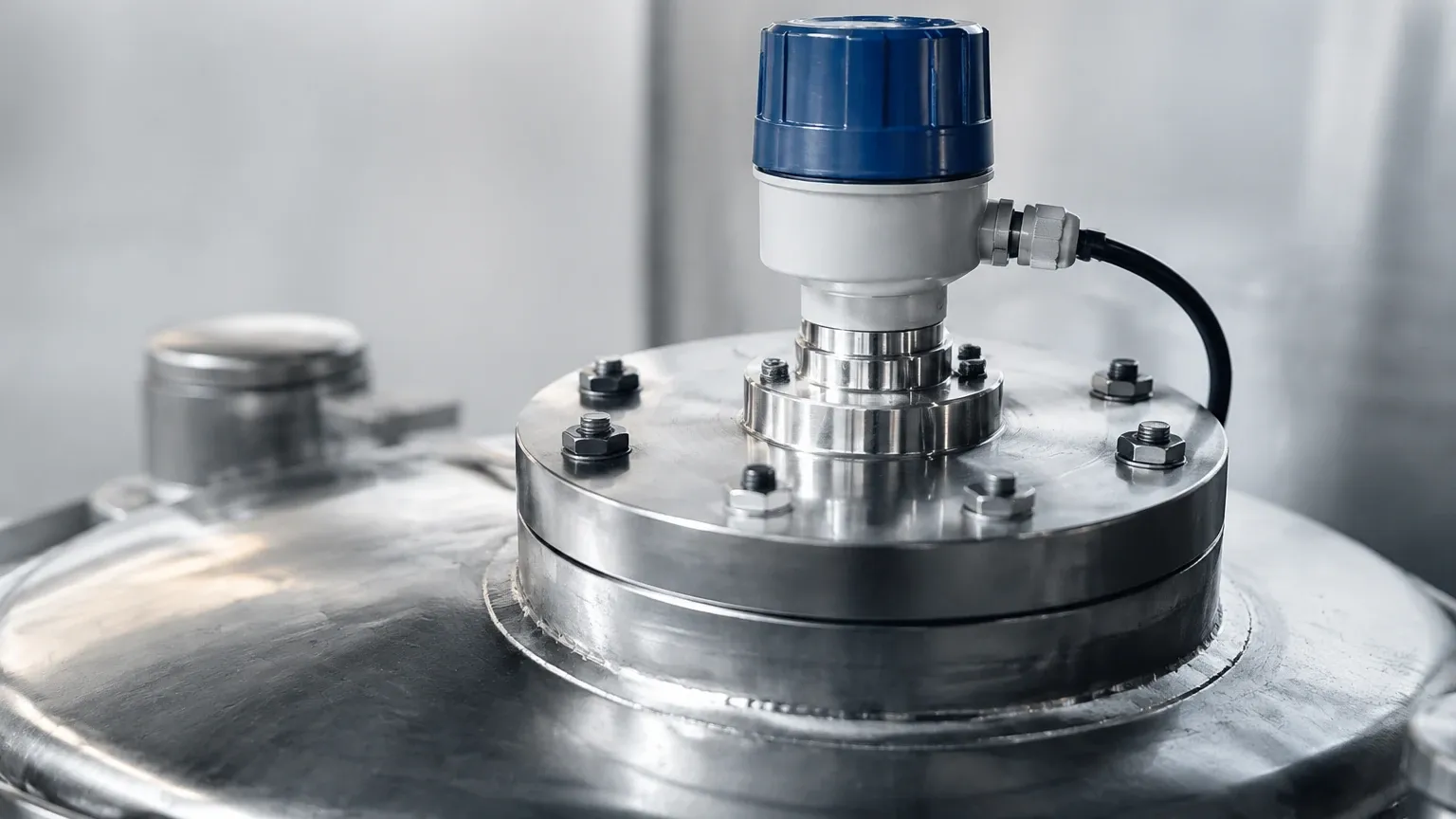
In industrial process control, the reliability of point level detection is a cornerstone of safety and efficiency. A level switch top mounted configuration refers to an instrument installed through the upper nozzle or roof of a vessel, tank, or sump to detect when a substance reaches a specific high or low threshold. Unlike side-mounted switches that penetrate the tank wall at the point of detection, top-mounted units often utilize probes, cables, or non-contact waves to reach the desired switching level.
Selecting the correct Level Switches for top-entry applications requires a deep understanding of the physical properties of the media, the geometry of the vessel, and the specific measurement principle employed. This guide examines the engineering logic behind top-mounted level detection, providing technical insights for selection and installation.
Measurement Principles for Top-Mounted Configurations
Before selecting a device, engineers must evaluate how the instrument perceives the presence or absence of material. Top-mounted switches generally fall into two categories: contact and non-contact.
1. Float and Magnetic Reed Technology
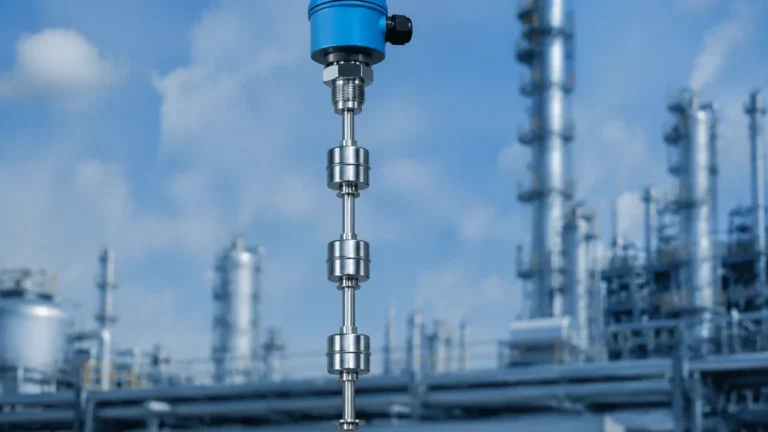
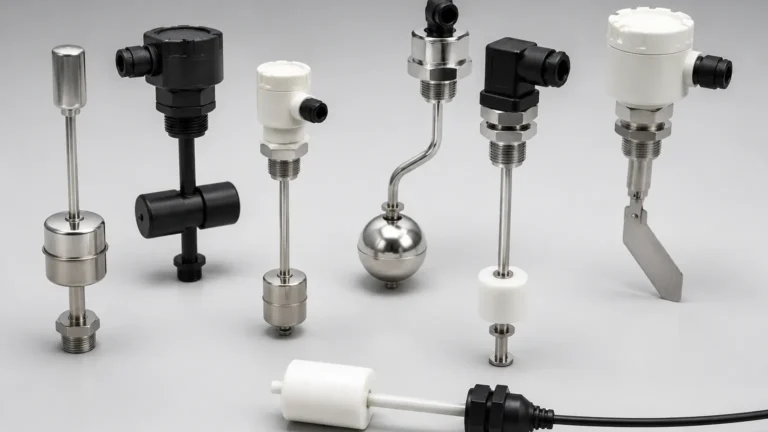
This is one of the most common contact-based methods. A float containing an internal magnet moves along a vertical stem. Inside the stem, hermetically sealed reed switches are positioned at specific heights. As the liquid level rises, the float’s magnetic field closes or opens the reed switch circuit. For top-mounted applications, these stems can be several meters long, often requiring internal bracing or stilling wells if the liquid is agitated.
2. Tuning Fork (Vibrational) Technology
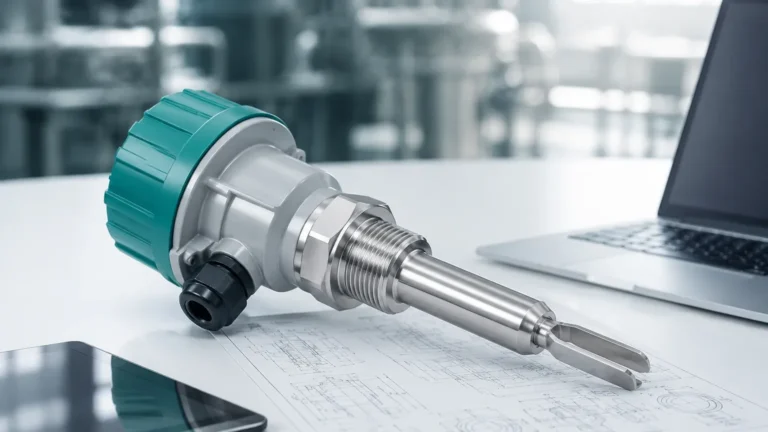
The sensing element consists of two tines that are vibrated at their natural resonant frequency by a piezoelectric crystal. When the tines are submerged in the medium (liquid or solid), the frequency of vibration changes. The electronic circuit detects this shift and converts it into a switching signal. For top-mounted use, the fork is usually attached to an extended pipe to reach the high-alarm point or even deeper for mid-level detection.
3. Displacer Level Switches
Displacer switches operate on Archimedes' Principle. A weighted displacer is suspended from a spring or a torque tube. As the liquid rises and covers the displacer, the buoyant force reduces the apparent weight of the displacer, causing the spring to retract and actuate a switch. This technology is particularly robust for high-pressure and high-temperature applications where standard floats might collapse.
4. Ultrasonic and Radar (Non-Contact)
Non-contact switches emit either sound waves (ultrasonic) or electromagnetic pulses (radar). The device measures the time-of-flight for the signal to reflect off the surface and return. While often used for continuous measurement, these devices are frequently configured as switches where a relay is triggered when the distance measured corresponds to a specific setpoint. Top mounting is the standard for these technologies to ensure a clear line of sight to the material surface.
5. Capacitance and Radio Frequency (RF)
A probe acts as one electrode, and the tank wall (if metallic) acts as the second electrode. The medium between them serves as the dielectric. As the level rises, the capacitance of the system changes. RF admittance technology, an advanced form of capacitance, is particularly effective for top-mounted probes because it can ignore material build-up on the probe, which is a common failure point in sticky or viscous media.
Practical Selection Table
Choosing the right technology involves balancing media characteristics against the physical constraints of the tank.
| Technology | Media Type | Max Depth (Approx.) | Key Advantage | Primary Limitation |
| :— | :— | :— | :— | :— |
| Magnetic Float | Clean Liquids | Up to 6m (20ft) | Simple, no power required | Susceptible to coating/scaling |
| Tuning Fork | Liquids/Solids | Up to 4m (13ft) | Not affected by bubbles/foam | Not for high-viscosity liquids |
| Displacer | Heavy Oils/Water | Up to 15m (50ft) | High pressure/temperature | Moving parts require maintenance |
| Ultrasonic | Liquids/Slurries | Up to 10m (33ft) | Non-contact | Affected by heavy foam/vapor |
| Radar | All Media | Up to 30m+ (100ft) | Extremely accurate, versatile | Higher initial cost |
| Capacitance | Liquids/Powders | Up to 10m (33ft) | No moving parts | Requires calibration to media |
Advantages of Top-Mounted Installation
Engineering teams often prefer top-mounted level switches over side-mounted versions for several operational reasons:
* Leak Prevention: Because the entry point is above the maximum liquid level, there is a significantly lower risk of leaks compared to side-mounted switches, where a seal failure results in immediate product loss.
* Ease of Maintenance: Instruments can often be removed and serviced without draining the tank. This is critical in continuous process industries where downtime is costly.
* Adjustability: Many top-mounted designs, particularly cable-suspended floats or non-contact sensors, allow the switching point to be adjusted from the top of the tank without requiring new penetrations.
* Safety in Hazardous Media: For corrosive or toxic chemicals, minimizing the number of openings below the liquid line is a standard safety protocol.
Installation Considerations and Best Practices
To ensure a level switch top mounted unit functions reliably, several mechanical and environmental factors must be addressed during the design phase.
Nozzle Geometry
The mounting nozzle (the pipe stub on the tank roof) must be sized correctly. If a nozzle is too narrow and too long, it can create "shadows" for ultrasonic or radar waves, or cause mechanical interference for float-based probes. For non-contact sensors, the nozzle should be as short as possible to prevent signal interference from the nozzle walls.
Turbulence and Agitation
In tanks with mixers or high-velocity inflow, a top-mounted probe may be subject to significant lateral forces. For float switches or tuning forks with long extensions, a stilling well (a perforated pipe installed vertically in the tank) is often necessary to protect the probe and provide a stable surface for measurement.
Dead Zones and Blocking Distances
Non-contact sensors like ultrasonic and radar have a "dead zone" directly beneath the sensor face where measurement is impossible. If the high-level switch point is within this zone, the sensor will fail to trigger correctly. Engineers must ensure the nozzle height or sensor position accounts for this distance—typically ranging from 50mm to 500mm (2 to 20 inches) depending on the frequency.
Obstructions
Internal tank structures such as ladders, heating coils, or support beams can cause false reflections for non-contact switches or physical snags for contact-based probes. A clear path must be mapped before finalizing the mounting location.
Limitations and Risks
While highly effective, top-mounted level switches are not universal solutions. Certain conditions can compromise their accuracy:
1. Vapor and Condensation: In closed tanks, heavy condensation on the face of an ultrasonic or radar sensor can attenuate the signal. Some designs utilize PTFE (Teflon) faces to shed moisture, but extreme cases may require a different technology, such as a displacer.
2. Foam Interference: Surface foam can be problematic. Ultrasonic waves may be absorbed by foam, leading to a "loss of echo" error. Radar is generally more resistant but can still be affected by dense, metallic-rich foams. In these scenarios, a mechanical float or a tuning fork is often more reliable.
3. Probe Length and Rigidity: For very deep tanks (e.g., 10 meters/33 feet), a rigid probe becomes impractical for transport and installation. Cable-suspended sensors are used instead, but these are prone to swaying if the tank has internal movement.
Frequently Asked Questions (FAQ)
Q: Can a top-mounted level switch be used for solids?
A: Yes. Tuning forks, rotating paddles, and radar switches are frequently used for top-mounted detection of powders, grains, and pellets. However, the angle of repose (the slope of the material pile) must be considered when determining the switching point.
Q: How do I handle build-up on a top-mounted probe?
A: For sticky media, RF Admittance or Capacitance switches with "active shield" technology are best. They are designed to ignore the electrical signal caused by material coating the probe, only triggering when the bulk material reaches the sensor.
Q: Is a stilling well always necessary for float switches?
A: Not always. If the tank is small and the liquid is static, a stilling well is unnecessary. It is only required when there is significant turbulence, agitation, or if the probe is exceptionally long (over 2 meters/6.5 feet) and needs structural support.
Q: Can I use a top-mounted switch for high-pressure vessels?
A: Yes, but the mounting interface (flange or thread) and the sensor body must be rated for the vessel's design pressure. Displacer switches and high-frequency radar are common choices for high-pressure steam or chemical reactors.
Summary for Project Planning
When integrating a level switch top mounted into a system, the engineering focus should remain on the physical interaction between the sensor and the medium. For clean liquids where cost is a factor, magnetic floats are often sufficient. For complex environments involving foam, high temperatures, or corrosive chemicals, non-contact radar or robust tuning forks offer higher reliability.
Before finalizing a specification, confirm the following:
* The dielectric constant or density of the media.
* The presence of foam, vapor, or agitation.
* The exact distance from the mounting flange to the required switching point.
* The dimensions of the mounting nozzle to ensure clearance for the probe or signal beam.
By matching the measurement principle to the application's specific challenges, operators can ensure long-term accuracy and minimize the risk of overfills or dry-run conditions in industrial processes.