Level Switch Jola
Level Switch Jola
In the landscape of industrial automation and fluid management, point level detection remains a fundamental requirement for safety, efficiency, and process control. Among the various technologies available, the level switch jola—referring to the specialized switching solutions developed by Jola Spezialschalter—has established a significant presence, particularly in applications involving hazardous areas, leak detection, and complex liquid storage.
Choosing the right level switch requires a deep understanding of the physical properties of the media, the environmental conditions of the installation site, and the specific mechanical principles that govern the device's operation. This guide explores the technical foundations of Level Switches, the specific characteristics of Jola-style solutions, and the engineering considerations necessary for successful deployment.
Principles of Point Level Measurement
Level switches are discrete sensors designed to detect the presence or absence of a liquid or solid at a specific height. Unlike continuous level transmitters that provide a constant signal (e.g., 4-20mA), a level switch operates on a binary principle: it is either "on" or "off." This makes them ideal for overfill protection, dry-run prevention for pumps, and high/low-level alarms.
Buoyancy and Mechanical Actuation
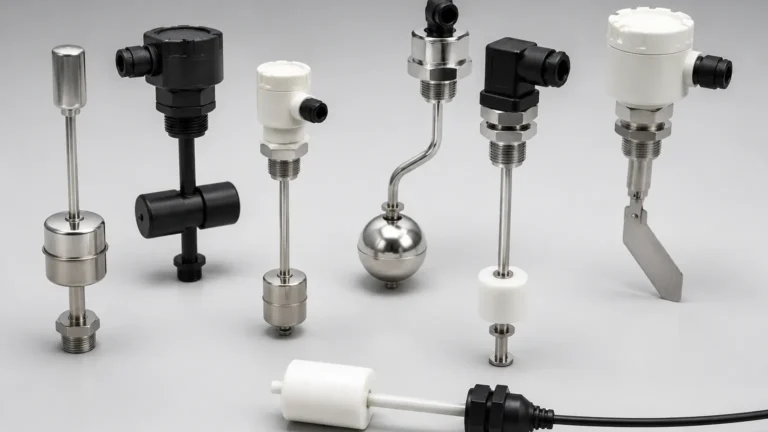
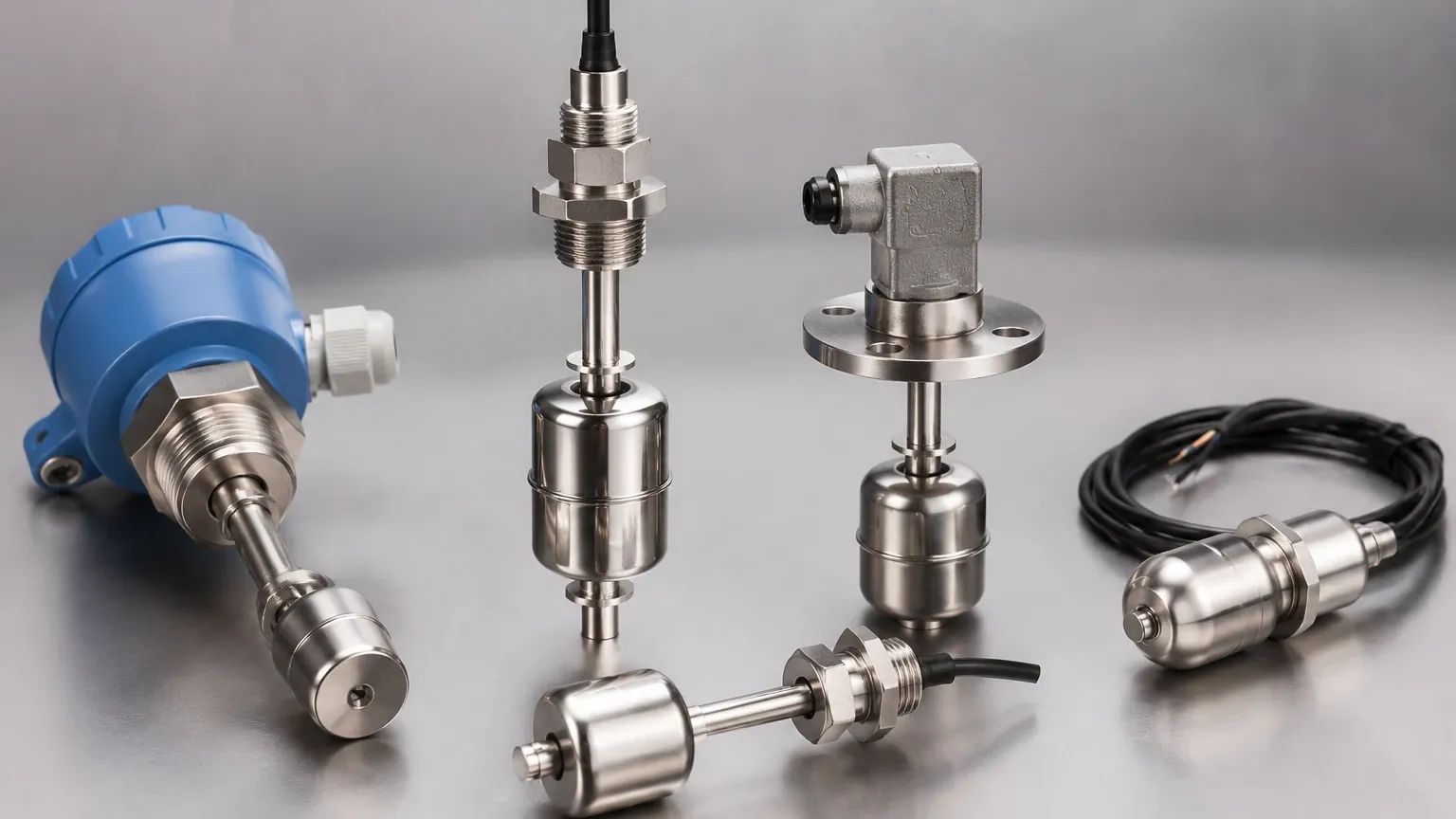
Most traditional level switches, including many in the Jola portfolio, rely on the principle of buoyancy. Archimedes' principle states that any object, wholly or partially immersed in a fluid, is buoyed up by a force equal to the weight of the fluid displaced by the object. In a float-type switch, a buoyant body (the float) moves with the rising or falling liquid level.
Inside the float or the guide tube, a magnet is typically housed. As the float reaches a predetermined position, the magnetic field actuates a reed switch or a microswitch. This mechanical simplicity is a hallmark of the technology, offering high reliability without the need for complex electronics at the sensing point.
Conductive and Capacitive Sensing
Beyond mechanical floats, electronic principles are also common. Conductive level switches utilize the electrical conductivity of the liquid to close a circuit between two electrodes. Capacitive switches, on the other hand, detect changes in the dielectric constant between the sensor probe and the tank wall. While these methods are effective for certain chemicals, they often require the media to have specific electrical properties, whereas mechanical float switches are largely independent of the liquid's dielectric constant or conductivity.
Key Features of the Level Switch Jola Range
Jola is particularly recognized for its innovation in mercury-free tilt switches and suspended float switches. Historically, many level switches utilized mercury tilt contacts because of their high switching capacity and longevity. However, environmental regulations have shifted the industry toward mercury-free alternatives.
Suspended Float Switches
These switches are designed to hang into a tank or pit by their own cable. They are often used in wastewater and sewage applications because they are less prone to clogging than guided float switches. The "pear-shaped" design ensures that as the liquid level rises, the float tilts, causing an internal ball to move and actuate a microswitch.
Leakage Detectors and Plate Sensors
In addition to tank level monitoring, the level switch jola category includes specialized leakage detectors. These are often floor-mounted plate sensors or cable sensors designed to detect the presence of conductive or non-conductive liquids in double-walled tanks or on the floors of computer rooms and chemical warehouses. The ability to detect even a few millimeters of liquid makes them critical for environmental protection and asset safety.
Explosion Protection (ATEX/IECEx)
Because many level switches are installed in environments where flammable vapors are present (such as oil separators or chemical storage), Jola offers a wide range of ATEX-certified equipment. These devices are designed to operate in Zone 0, 1, or 2, using intrinsic safety (Ex i) principles to ensure that any electrical energy in the sensing circuit is insufficient to ignite an explosive atmosphere.
Technical Evaluation and Selection Criteria
Selecting a level switch is not a "one size fits all" process. Engineers must evaluate several parameters to ensure the device performs reliably over its intended lifespan.
1. Media Density (Specific Gravity)
For buoyancy-based switches, the density of the float must be lower than the density of the liquid. If the liquid is too light (e.g., certain hydrocarbons with a density of 0.6 g/cm³), a standard float may sink rather than tilt or rise. Always confirm the minimum density requirement of the switch against the process fluid.
2. Chemical Compatibility
The materials in contact with the medium (wetted parts) must be resistant to corrosion and degradation. Common materials include:
* Polypropylene (PP): Ideal for acids, alkalis, and general water treatment.
* Stainless Steel (316L): Suitable for high temperatures, food-grade applications, and aggressive chemicals.
* PVC/PVDF: Used for specific high-purity or highly corrosive chemical environments.
3. Temperature and Pressure Limits
Mechanical floats have physical limits. High pressure can crush a hollow float, while extreme temperatures can melt plastic components or cause internal switches to fail. Most plastic Jola-style switches are rated for temperatures up to 60°C (140°F) or 80°C (176°F), while stainless steel variants can handle much higher ranges.
Selection Table: Comparing Level Switch Technologies
| Technology | Typical Application | Advantages | Limitations |
| :— | :— | :— | :— |
| Suspended Float | Wastewater, Large Tanks | Low cost, easy installation, handles solids well | Requires space for the float to tilt |
| Guided Float | Small Tanks, Clean Liquids | Precise switching point, compact | Sensitive to buildup and scaling |
| Conductive | Acids, Water, Bases | No moving parts, very compact | Requires conductive liquid; probe fouling |
| Capacitive | Oils, Granulates, Chemicals | Works with non-conductive liquids | Sensitive to coating/buildup on probe |
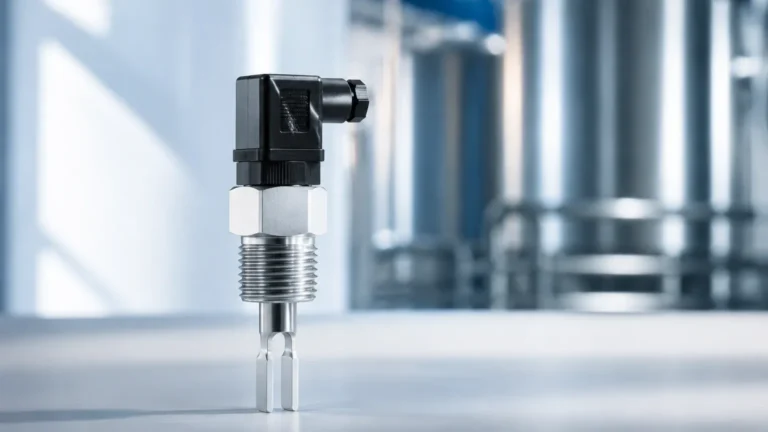
| Vibrating Fork | General Industrial | Highly reliable, independent of media properties | Higher cost; can be affected by heavy aeration |
Installation Guidelines for Industrial Environments
Proper installation is as critical as selecting the right device. Failure to follow engineering best practices often leads to false alarms or premature equipment failure.
Positioning and Clearance
For suspended level switches, ensure there is sufficient clearance from the tank walls and internal structures like agitators or ladders. A minimum clearance of 100 mm (approx. 4 inches) is generally recommended to prevent the float from getting snagged. If the tank has high turbulence due to an inlet pipe, the switch should be installed inside a stilling well (a perforated pipe) to dampen the liquid's movement.
Cable Management
The cable of a suspended switch acts as both the electrical conduit and the mechanical pivot point. It is essential to use a weight or a cable gland to fix the pivot point at the desired height. If the cable is too long, the switching differential (the distance between the "on" and "off" points) will be too large; if it is too short, the switch may not tilt sufficiently to actuate.
Wiring and Signal Integration
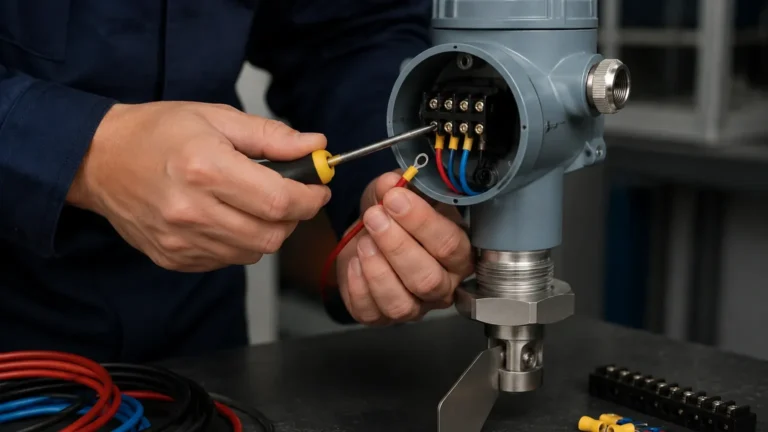
Level switches are often connected to a Control Relay or a PLC (Programmable Logic Controller). When using switches in hazardous areas, they must be wired through an intrinsically safe barrier. It is also good practice to use a "normally closed" (NC) configuration for high-level alarms; this ensures that if a wire breaks, the system fails into an alarm state (fail-safe).
Limitations and Common Risks
While robust, the level switch jola and similar mechanical devices are not suitable for every scenario. Engineers should be aware of the following risks:
* Viscosity and Buildup: In highly viscous liquids (like heavy crude oil or molasses), the mechanical movement of the float can be restricted. Similarly, if the liquid tends to crystallize or form a hard crust, the float may become stuck in one position.
* Mechanical Wear: Because these switches involve moving parts, they have a finite mechanical life. In applications with frequent cycling (e.g., a small sump pump that turns on and off every few minutes), the internal microswitch or the cable flex point may eventually fatigue.
* Turbulence and Foam: Rapidly moving liquid surfaces can cause "chatter"—where the switch rapidly opens and closes. This can damage pumps or cause electrical interference. In such cases, a time-delay relay should be used in the control circuit to stabilize the signal.
Frequently Asked Questions (FAQs)
Q: Can a Jola level switch be used for both high and low-level detection?
A: Yes, depending on the model. Some suspended switches can be configured to actuate when rising (high alarm) or falling (low alarm) by changing the wiring or the orientation of the float. However, for precise control of a pump (start at high, stop at low), two separate switches or a specialized dual-point switch are often used.
Q: What is the difference between a microswitch and a reed switch in these devices?
A: Microswitches are generally capable of handling higher currents (up to several Amps) and are used in larger tilt switches. Reed switches are smaller, hermetically sealed, and usually require an external relay because they can only handle low currents (typically <1A).
Q: How do I maintain a level switch in a wastewater application?
A: Regular inspection is recommended. The float should be cleaned of any fat, oil, or grease (FOG) buildup that could affect its buoyancy. The cable should also be inspected for signs of chemical degradation or mechanical wear at the pivot point.
Q: Are there mercury-free versions of all Jola switches?
A: Yes, modern industrial standards and environmental regulations like RoHS have made mercury-free designs the standard. Jola has transitioned its product line to utilize mechanical ball-actuated microswitches or other environmentally friendly alternatives.
For engineers and procurement professionals seeking reliable point level control, understanding these nuances ensures that the chosen Level Switches will provide long-term service with minimal maintenance. Whether the application involves a simple water tank or a complex chemical process in an ATEX zone, the principles of buoyancy and robust mechanical design remain the foundation of effective level management.