Level Switch Ksr Kuebler
Level Switch Ksr Kuebler
In the landscape of industrial process control, point level detection remains a fundamental requirement for safety, overfill prevention, and pump automation. Among the most recognized names in magnetic float technology is the level switch KSR Kuebler. These instruments are engineered to provide reliable switching signals based on the movement of a float along a guide tube. For engineers and procurement specialists, understanding the operational mechanics, material compatibility, and installation constraints of these switches is essential for ensuring long-term system integrity.
This guide examines the technical foundations of magnetic level switches, compares them with alternative technologies, and provides a framework for selecting the appropriate Level Switches for diverse industrial environments.
Understanding the Principles of Level Switch Technology
Before selecting a specific model, it is critical to understand how magnetic float switches operate compared to other point-level detection methods. The level switch KSR Kuebler primarily utilizes the magnetic reed contact principle.
The Reed Contact Principle
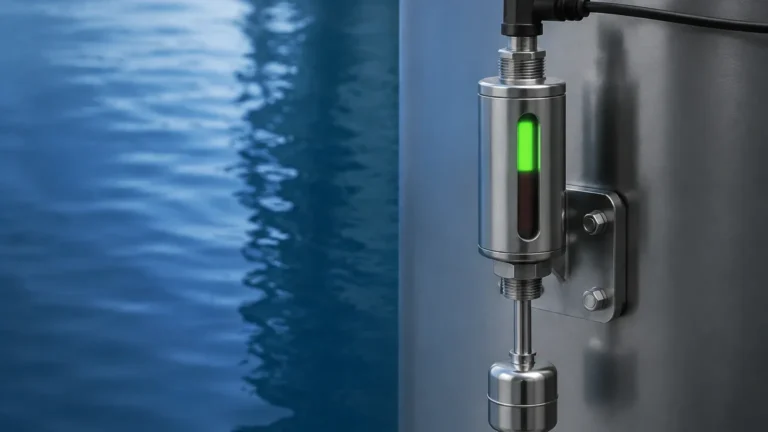
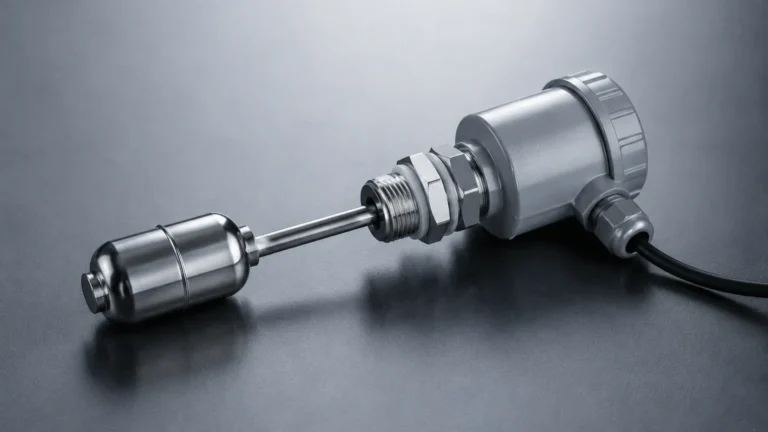
At the core of the device is a hermetically sealed reed contact located within a non-magnetic guide tube. A float, containing a permanent magnet, moves vertically along this tube as the liquid level rises or falls. When the magnetic field of the float reaches the position of the reed contact, the contact blades are drawn together (closing the circuit) or pushed apart (opening the circuit).
Because the reed contacts are sealed in an inert gas atmosphere within the tube, they are protected from oxidation, moisture, and corrosion. This design allows for a high degree of reliability over millions of switching cycles, provided the electrical load limits are respected.
Buoyancy and Density
The operation of any float-based switch is governed by Archimedes' Principle. The float must be less dense than the process media to remain on the surface. When specifying a level switch KSR Kuebler, the "Specific Gravity" (SG) or density of the liquid is the most important physical parameter. If the liquid density is too low (e.g., light hydrocarbons), a standard float may sink, rendering the switch inoperable. Conversely, extremely high-density liquids may require weighted floats to ensure the magnet aligns correctly with the internal sensors.
Technical Characteristics of KSR Kuebler Level Switches
The level switch KSR Kuebler is characterized by its modular design, which allows for significant customization based on the application's mechanical and chemical requirements.
Modular Components
1. Connection Head: Available in aluminum, stainless steel, or plastic (PP/PVDF). These housings protect the electrical terminals and can be rated for hazardous areas (ATEX/IECEx).
2. Guide Tube: The vertical pipe that houses the reed contacts. Standard diameters often range from 8 mm to 18 mm, with lengths customizable up to several meters.
3. The Float: Available in various shapes (cylindrical, spherical, or egg-shaped) and materials to match the pressure and density requirements of the media.
4. Process Connection: Options include threaded connections (G or NPT) and various flange standards (DIN, ANSI, or JIS).
Material Selection
For corrosive chemical applications, KSR Kuebler and similar high-end manufacturers offer wetted parts in materials such as:
* Stainless Steel (316L/1.4404): The standard for water, oil, and mild chemicals.
* Titanium or Hastelloy: For highly aggressive acids or high-temperature saline environments.
* Plastics (PP, PVC, PVDF): Ideal for metal-free requirements in the semiconductor or plating industries.
Key Evaluation Criteria for Industrial Applications
Selecting a level switch involves more than matching a part number. Engineers must evaluate the specific stresses the instrument will face during its service life.
Pressure and Temperature Ratings
Pressure ratings for magnetic float switches are determined by the float's ability to resist collapsing. While guide tubes can often handle high pressures, a standard thin-walled stainless steel float might only be rated for 15 bar (1.5 MPa). High-pressure variants can extend this to 40 bar or higher. Temperature limits are typically dictated by the internal wiring and the expansion coefficients of the materials, with standard ranges often spanning from -40°C up to +200°C.
Switching Functionality
It is important to define the switching logic required for the control system:
* Normally Open (NO): The contact closes when the float rises to the switch point.
* Normally Closed (NC): The contact opens when the float rises to the switch point.
* Change-over (SPDT): Provides both an open and closed signal, useful for redundancy or complex logic.
Practical Selection Table for Level Switches
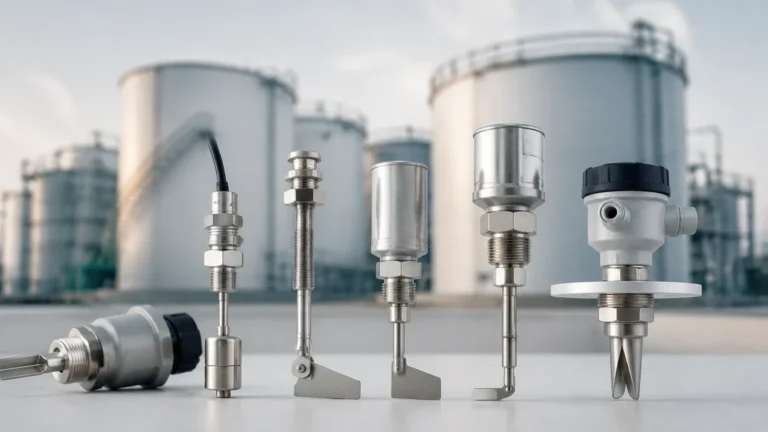
The following table compares the magnetic float technology found in the level switch KSR Kuebler against other common industrial Level Switches.
| Feature | Magnetic Float Switch | Vibrating Tuning Fork | Ultrasonic Level Switch | Capacitance Switch |
| :— | :— | :— | :— | :— |
| Measurement Principle | Buoyancy / Magnetism | Frequency Damping | Sound Wave Reflection | Dielectric Change |
| Media Type | Clean Liquids | Liquids or Solids | Clean Liquids | Liquids, Slurries, Solids |
| Moving Parts | Yes (Float) | No (Vibration) | No | No |
| Density Sensitivity | High (Requires SG > 0.5) | Low | None | None |
| Viscosity Limit | Low (< 500 cSt) | Medium | High | High |
| Foam Influence | Minimal | High | High | Moderate |
| Cost Profile | Economical | Mid-Range | High | Mid-Range |

Installation and Maintenance Considerations
Proper installation is the primary factor in preventing premature failure of a level switch KSR Kuebler.
Mounting Orientation
Most magnetic float switches are designed for vertical installation (top-mounted or bottom-mounted). If the tank has significant internal structures or agitators, the switch must be positioned to avoid physical impact. For side-mounting, specialized horizontal float switches are required, which operate on a pivot mechanism rather than a sliding guide tube.
Avoiding Magnetic Interference
Because the device relies on a permanent magnet, it should not be installed in close proximity to strong external magnetic fields, such as those generated by large motors or transformers. Furthermore, if the liquid contains ferromagnetic particles (iron filings, etc.), these particles will adhere to the float, eventually increasing its weight and causing it to sink or jam.
Maintenance Intervals
While reed contacts are maintenance-free, the mechanical assembly requires periodic inspection:
* Cleaning: In applications where crystallization or scaling occurs, the float and guide tube should be cleaned to ensure free movement.
* Contact Testing: Use a multimeter to verify the switching state by manually moving the float along the tube during scheduled shutdowns.
Limitations and Common Risks
Despite their reliability, magnetic float switches are not universal solutions. Users should be aware of the following limitations:
1. Turbulence: High-velocity inflow or surface agitation can cause the float to bounce, leading to "chatter" in the electrical signal. This can be mitigated by using a stilling well (a bypass pipe that stabilizes the liquid around the float).
2. Coating and Buildup: If the media is highly viscous or prone to coating (like heavy resins), the float may become stuck to the guide tube. In these instances, a non-contact technology or a vibrating fork might be more appropriate.
3. Electrical Overload: Reed contacts have specific voltage and current ratings (e.g., 230V / 1A / 50VA). Switching inductive loads like large pump motors directly through the reed contact will cause the contacts to weld together. Always use an intermediate relay or contactor protection.
Frequently Asked Questions (FAQ)
Q: Can a level switch KSR Kuebler be used in hazardous areas?
A: Yes, many models are available with ATEX, IECEx, or CSA certifications. These versions use intrinsically safe wiring or explosion-proof housings to prevent ignition in flammable atmospheres.
Q: What is the minimum liquid density required for these switches?
A: Standard floats typically require a density of at least 0.7 g/cm³. However, specialized high-buoyancy floats can operate in media with densities as low as 0.4 g/cm³.
Q: How many switch points can be placed on a single guide tube?
A: Depending on the length of the tube and the size of the floats, a single instrument can often accommodate up to 5 or 6 independent switch points, allowing for low-low, low, high, and high-high level alarms in one tank penetration.
Q: Are these switches compatible with food and beverage applications?
A: Yes, provided they are specified with polished stainless steel (Ra < 0.8 μm) and food-grade process connections like Tri-Clamp or DIN 11851.
Conclusion
The level switch KSR Kuebler represents a time-tested solution for point level monitoring, offering a balance of simplicity, durability, and cost-effectiveness. By carefully considering the fluid density, chemical compatibility, and electrical requirements, engineers can implement a detection system that requires minimal intervention over many years of service. For applications involving high viscosity, extreme turbulence, or non-liquid media, exploring the broader range of modern Level Switches is recommended to ensure the most robust process control strategy.