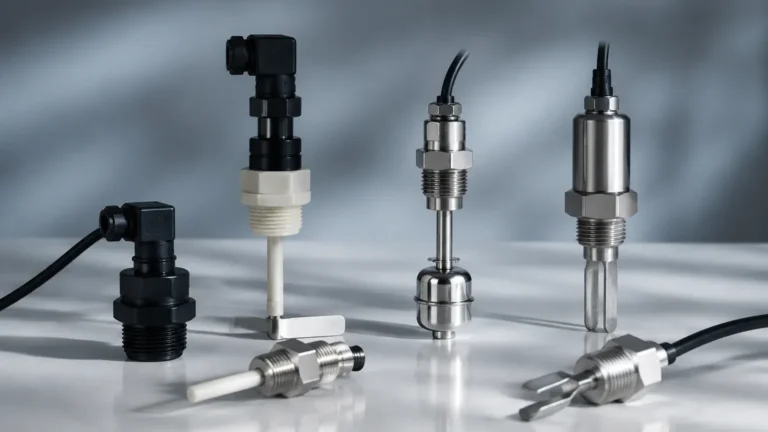
Level Switch Krohne
Level Switch Krohne
In the landscape of industrial automation, point level detection serves as a critical safety and process control mechanism. Among the industry leaders providing these solutions, the level switch Krohne portfolio—specifically the OPTISWITCH series—is recognized for its engineering precision and reliability in demanding environments. This guide examines the technical principles, selection criteria, and application nuances of these instruments, providing engineers with the data needed to integrate them into complex process loops.
Fundamental Measurement Principles
Before selecting a specific model, it is essential to understand the physical principles that govern level switching. Level switches are designed to provide a discrete output (on/off) when a material reaches a specific height in a vessel. Unlike continuous level transmitters, these devices are primarily used for overfill protection, dry-run prevention, and high/low-level alarms.
Vibrating Fork (Tuning Fork) Principle
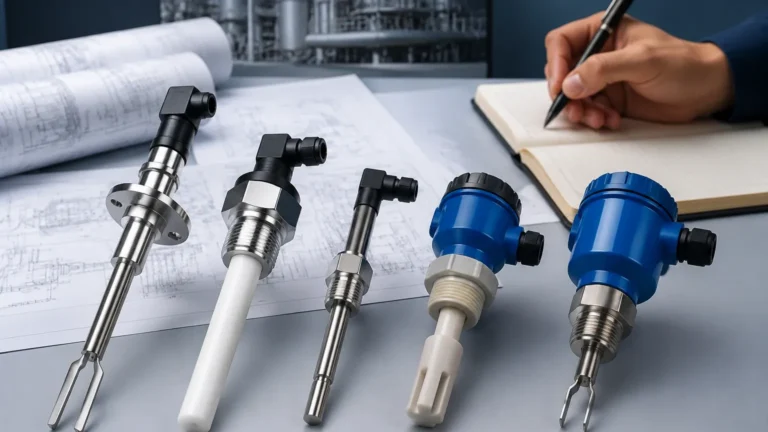
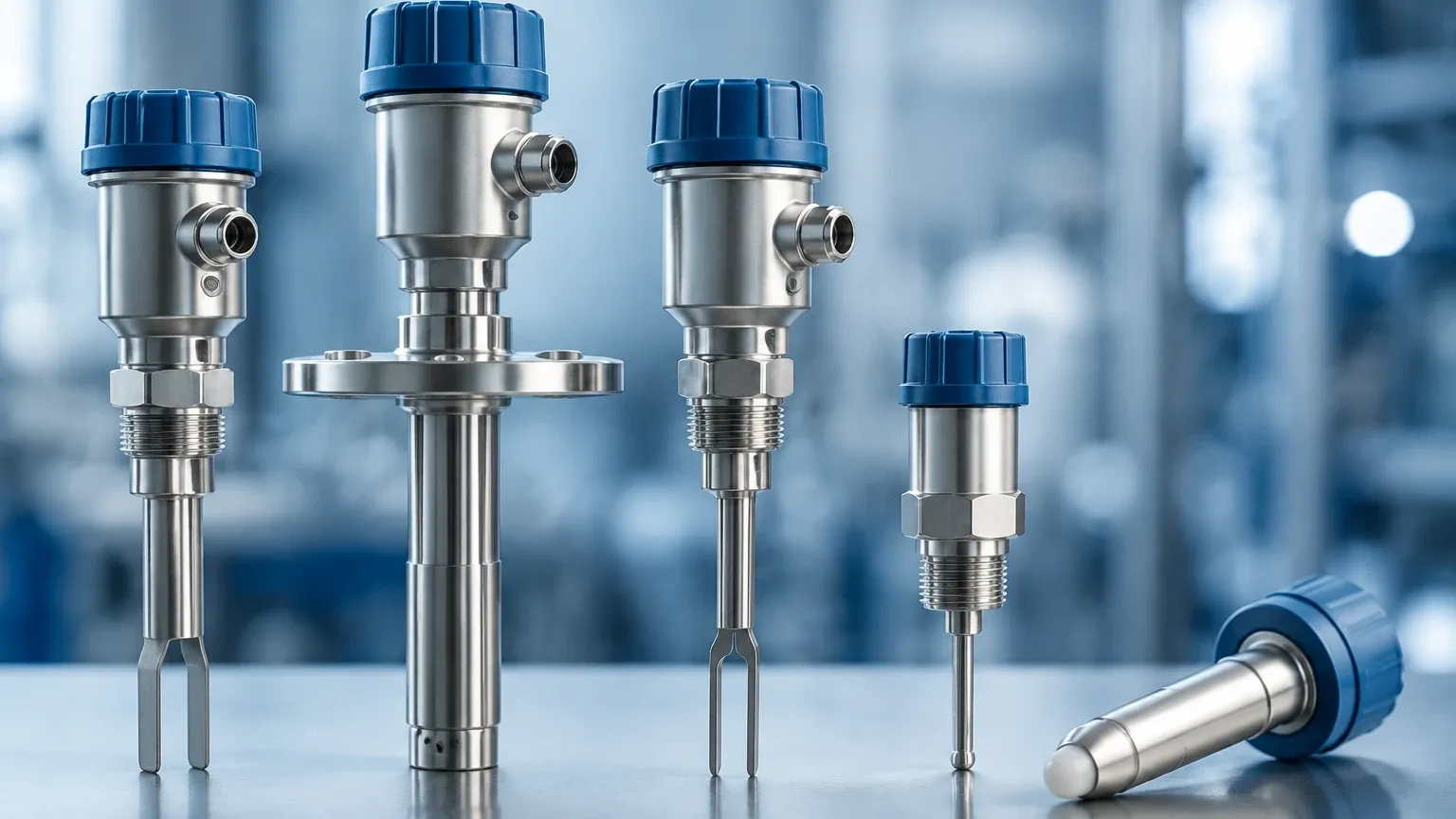
Most modern vibrating level switches, such as the OPTISWITCH 4000 and 5000 series, utilize a tuning fork design. A piezoelectric crystal drives the fork to vibrate at its natural resonance frequency in the air. When the medium (liquid or solid) covers the fork, the frequency shifts or the amplitude of vibration is dampened. The internal electronics detect this change and trigger the switching output. This method is highly resistant to changes in pressure, temperature, and foam.
Capacitance and Impedance
Capacitance level switches operate based on the electrical properties of the medium. The sensor and the tank wall (or a second electrode) form a capacitor. As the level rises and displaces air (low dielectric constant) with the process medium (higher dielectric constant), the capacitance changes. Advanced versions, often referred to as RF (Radio Frequency) or impedance switches, can compensate for material build-up on the probe, making them suitable for sticky or conductive liquids.
Microwave Barrier
For non-contact point level detection, microwave barriers are employed. A transmitter sends a microwave beam to a receiver. When the material interrupts the beam, the switch is activated. This is particularly useful for highly abrasive or extremely hot materials where physical contact would damage the sensor.
The Krohne OPTISWITCH Portfolio
Krohne categorizes its level switches under the OPTISWITCH brand, tailored for specific industrial requirements. Understanding these designations helps in matching the right technology to the application.
OPTISWITCH 4000 & 5000: Liquid Applications
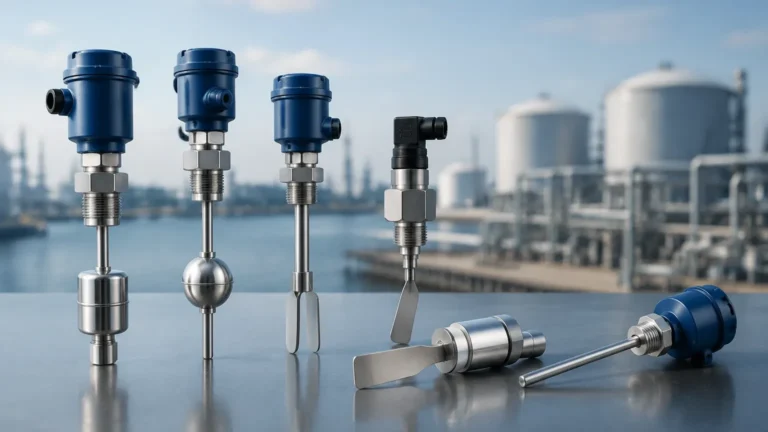
The 4000 and 5000 series are the workhorses for liquid level detection. The OPTISWITCH 4000 is often used for simple, cost-effective applications, while the 5000 series offers more robust options for hazardous areas (Ex-zones) and high-temperature environments. These switches are immune to turbulence and air bubbles, making them ideal for pump protection in water treatment and chemical processing.
OPTISWITCH 3000: Bulk Solids
Detecting the level of powders, grains, or gravel requires a different mechanical approach. The OPTISWITCH 3000 utilizes a robust vibrating fork designed to handle the mechanical stress of bulk solids. It is frequently used in silos to prevent overfilling of materials like cement, flour, or plastic pellets.
OPTISWITCH 6000: Capacitance and Beyond
For applications where vibrating forks might be prone to clogging or where the medium is extremely viscous, the OPTISWITCH 6000 capacitance series provides a viable alternative. These are often used in the food and beverage industry where hygienic connections and CIP (Clean-in-Place) compatibility are mandatory.
Technical Selection Criteria
Selecting a level switch requires a thorough analysis of the process environment. The following table provides a generalized comparison of common technologies used in Level Switches and specialized brands like Krohne.
Level Switch Selection Matrix
| Technology | Suitable Media | Max Temperature | Max Pressure | Key Advantage |
| :— | :— | :— | :— | :— |
| Vibrating Fork | Liquids, Solids | Up to 250°C (482°F) | Up to 64 bar (928 psi) | Maintenance-free; no calibration required. |
| Capacitance | Liquids, Pastes | Up to 200°C (392°F) | Up to 40 bar (580 psi) | Handles sticky media; build-up compensation. |
| Microwave | Solids, Opaque Liquids | Up to 1000°C+ (with windows) | Process dependent | Non-contact; detects through non-metallic walls. |
| Float Switch | Clean Liquids | Up to 150°C (302°F) | Up to 25 bar (362 psi) | Simple; no power required for some models. |
Installation and Engineering Considerations
Proper installation is paramount to the longevity and accuracy of a level switch. When integrating a level switch Krohne or similar industrial-grade device, engineers must account for the following:
1. Nozzle Length: For vibrating fork switches, the fork must extend fully into the vessel. If the nozzle is too long, material may trap inside, causing a false "high" reading even when the tank is empty.
2. Orientation: In liquid applications, switches are typically mounted horizontally or vertically from the top. For solids, a side-mount at a 20-degree downward angle is often recommended to prevent material from resting on the top of the probe.
3. Turbulence and Agitation: If the vessel contains an agitator, the switch should be positioned away from the blades and the resulting vortex. In some cases, a protective shield or a stilling well may be necessary.
4. Electrical Integration: Most level switches offer multiple output options, including 2-wire (AC/DC), Relay (DPDT), or Transistor (NPN/PNP). Ensure the power supply and control system (PLC/DCS) are compatible with the chosen electronic module.
Limitations and Practical Constraints
While highly reliable, no single technology is universal.
* Build-up: In extremely sticky media, even vibrating forks can fail if the material bridges the gap between the two tines. In these cases, capacitance switches with active shield technology are preferred.
* Density Requirements: Vibrating switches have a minimum density requirement (typically >0.5 g/cm³ or 31.2 lb/ft³). For very light powders or aerated liquids, the vibration might not be sufficiently dampened to trigger the switch.
* Chemical Compatibility: The wetted parts (usually 316L stainless steel, Hastelloy, or PFA coating) must be compatible with the process fluid to prevent corrosion and premature failure.
Comparison with Welk Level Measurement Solutions
While Krohne provides a high-end specialized range, manufacturers like Welk offer a broad spectrum of industrial Level Switches that cater to similar industrial needs with a focus on cost-effectiveness and rapid customization. Welk’s portfolio includes radar, ultrasonic, and hydrostatic sensors that complement point-level switches to provide a complete level management system. For many standard water treatment and industrial automation applications, Welk’s vibrating and magnetic switches provide the necessary accuracy and durability required by international standards.
Maintenance and Troubleshooting
Modern level switches are largely maintenance-free due to the lack of moving parts (in vibrating and capacitance models). However, a routine inspection schedule should include:
* Visual Inspection: Check for corrosion on the housing and wetted parts.
* Functional Testing: Most Krohne switches include a test magnet or a button on the electronics module to simulate a covered state, allowing for a loop check without filling the tank.
* Cable Glands: Ensure cable entries are tight to prevent moisture ingress, which is a leading cause of electronic failure in outdoor installations.
Frequently Asked Questions (FAQ)
Q: Can a vibrating fork switch be used in foaming liquids?
A: Yes. Vibrating fork switches are generally unaffected by foam, as the density of foam is usually too low to dampen the vibration of the forks. They will only trigger when the liquid phase reaches the sensor.
Q: What is the difference between a 2-wire and a 3-wire level switch?
A: A 2-wire switch is connected in series with the load (like a solenoid or relay) and draws its operating power through the load. A 3-wire switch has separate wires for power supply and the switching output, offering more flexibility for PLC inputs.
Q: Is calibration required for a Krohne OPTISWITCH?
A: For most liquid applications using vibrating fork technology, no calibration is required. The device is "plug-and-play." Capacitance switches, however, may require a simple calibration to set the empty and full dielectric references.
Q: How do I handle high-pressure applications?
A: Ensure the process connection (flange or thread) and the sensor body are rated for the maximum possible system pressure. Standard models often handle up to 64 bar (928 psi), but specialized high-pressure versions are available for oil and gas applications.
Conclusion
The integration of a level switch Krohne into an industrial process provides a layer of security and automation that is vital for modern manufacturing. By understanding the underlying physics—whether vibrating, capacitive, or microwave—and carefully considering the mechanical and chemical constraints of the application, engineers can ensure long-term operational stability. For those seeking versatile and reliable alternatives or complementary measurement technologies, exploring the wider market of Level Switches ensures that every specific process requirement is met with the most appropriate and cost-effective solution.