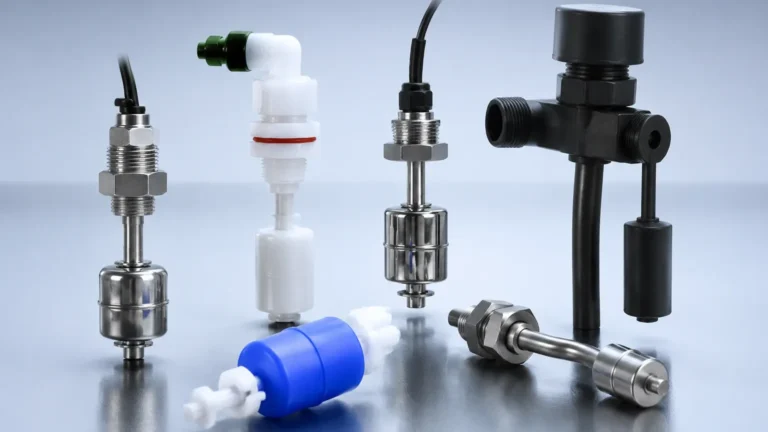
Level Switch Uwt
Level Switch Uwt
In the landscape of industrial automation, point level detection serves as a critical fail-safe and process control mechanism. Whether managing bulk solids in a silo or liquids in a processing tank, the selection of a reliable level switch is paramount to preventing overfills, protecting pumps from running dry, and ensuring consistent inventory management. Among the specialized solutions in this sector, the level switch uwt range is frequently cited for its robustness in handling challenging bulk materials.
For engineers and procurement specialists, understanding the underlying measurement principles and the specific application requirements is the first step toward selecting the right instrument. This guide explores the technical foundations of Level Switches, compares common technologies, and provides practical selection criteria for industrial environments.
Measurement Principles of Industrial Level Switches
Level switches operate on various physical principles to detect the presence or absence of a medium at a specific height. Unlike continuous level transmitters that provide a constant data stream (e.g., 4-20mA), a switch provides a discrete output—typically a relay or transistor signal—when the material reaches the sensor's position.
Rotating Paddle Switches
Often associated with the level switch uwt portfolio for solids, the rotating paddle principle is a mechanical method for detecting bulk materials. A low-speed synchronous motor drives a paddle. When the material reaches the paddle, the rotation is impeded. This resistance triggers a microswitch that flips the output contact and stops the motor to prevent internal wear. Once the material level drops, a spring pulls the motor back into its starting position, and rotation resumes.
Vibrating Level Switches (Tuning Forks)
These sensors utilize piezoelectric crystals to vibrate a fork or a single rod at its natural resonance frequency (typically around 100 Hz to 1200 Hz depending on the design). When the vibrating element is covered by a liquid or solid, the frequency shifts or the vibration is dampened. The electronic circuit detects this change and converts it into a switching signal. Vibrating forks are highly versatile because they are largely unaffected by the chemical properties of the medium, such as conductivity or dielectric constant.
Capacitive Level Switches
Capacitive sensors treat the probe and the tank wall (or a second reference probe) as two plates of a capacitor. As the material fills the space between them, the capacitance changes based on the dielectric constant ($ε_r$) of the medium. This technology is excellent for detecting interface levels (e.g., oil over water) and is often used in liquids, though it can be sensitive to material buildup on the probe if not equipped with active shield technology.
Conductive Level Switches
This is a simple, low-cost solution for conductive liquids. Two or more electrodes are placed in the tank. When a conductive liquid touches the electrodes, an electrical circuit is completed. While effective for water-based applications, it is unsuitable for oils, hydrocarbons, or materials that may coat the electrodes and cause false triggers.
Technical Comparison Table
Selecting the correct technology requires balancing the physical properties of the media with the environmental conditions of the vessel.
| Technology | Primary Media | Density Range | Pressure Limit | Key Advantage |
| :— | :— | :— | :— | :— |
| Rotating Paddle | Bulk Solids | >100 g/l | Up to 10 bar (145 psi) | Unaffected by dust/buildup |
| Vibrating Fork | Liquids/Solids | >5 g/l | Up to 64 bar (928 psi) | Maintenance-free, no moving parts |
| Capacitive | Liquids/Solids | N/A | Up to 100 bar (1450 psi) | High temperature/pressure capability |
| Conductive | Conductive Liquids | N/A | Up to 25 bar (362 psi) | Simple, cost-effective for water |
Evaluating Level Switch Uwt for Bulk Solids
When searching for a level switch uwt, the focus is often on the "Rotonivo" (rotating paddle) or "Vibranivo" (vibrating fork) series. These instruments are engineered specifically for the rigors of the solids industry, where factors like material density, grain size, and abrasiveness play a major role.
In silos containing grain, cement, or plastic pellets, the mechanical force exerted on a sensor can be significant. A level switch uwt is typically designed with reinforced shafts and specialized seals to prevent fine dust from entering the motor housing. For very light powders (e.g., fumed silica), vibrating forks with high sensitivity are preferred, as the mechanical resistance of the material may not be sufficient to stop a rotating paddle.
Key Selection Criteria for Engineering Projects
Before specifying a level switch, the following parameters must be confirmed to ensure long-term reliability:
1. Material Density: For solids, density is measured in kg/m³ or g/l. Vibrating switches have a minimum density threshold. If the material is too light, the sensor will not "feel" the damping effect.
2. Process Temperature: Standard switches often handle up to 80°C (176°F). For high-heat applications like fly ash or molten plastics, specialized high-temperature versions with cooling fins or ceramic insulators are required to reach 250°C (482°F) or higher.
3. Chemical Compatibility: The wetted parts (the parts touching the material) must be compatible. 304 or 316L stainless steel is standard, but aggressive chemicals may require coatings like PFA or PTFE.
4. Mechanical Load: In tall silos, the downward pull (traction) of the material during discharge can bend or snap sensor probes. In these cases, flexible cable extensions or heavy-duty protective baffles are necessary.

Installation Best Practices
Proper installation is as critical as selecting the right technology. Even the highest quality level switch uwt will fail if positioned incorrectly.
* Avoid the Inflow Stream: Never install a level switch directly under the material inlet. The constant impact of falling material will cause premature mechanical failure and false switching.
* Nozzle Length: Ensure the active part of the sensor (the paddle or the fork) extends fully into the vessel. If the sensor is recessed inside a long mounting nozzle, material can bridge or pack into the nozzle, causing the sensor to stay in the "covered" state even when the tank is empty.
* Lateral Mounting: For high-level alarms, side-mounting is common. The sensor should be angled slightly downward (about 20 degrees) or protected by a baffle plate to prevent material from sitting on top of the probe.
* Cable Glands: Always point cable entries downward to prevent moisture from traveling along the cable and entering the housing via capillary action.
Limitations and Common Risks
While industrial level switches are robust, they are not immune to specific process challenges:
* Buildup and Bridging: Sticky materials (like wet clay or certain food powders) can create a "bridge" over the sensor. Vibrating forks are generally better at shedding buildup than paddles, but extreme cases may require a capacitive switch with active shield technology.
* Abrasiveness: In mining or glass production, abrasive materials can wear down the metal of the probe. Hardened coatings or thicker probe walls are required for these environments.
* False Triggers from Dust: In bulk solid applications, heavy dust clouds can sometimes be interpreted as a solid level by high-sensitivity ultrasonic or optical switches. This is why mechanical (paddle) or resonance-based (vibrating) switches are preferred for silos.
Frequently Asked Questions (FAQ)
Q: Can a rotating paddle switch be used for liquids?
A: Generally, no. The torque required to trigger the switch is calibrated for the resistance of solids. Liquids do not provide enough mechanical resistance to reliably stop the paddle.
Q: What is the difference between a PNP/NPN output and a Relay output?
A: A relay output is a mechanical switch (dry contact) that can handle higher voltages and currents (e.g., 250VAC, 5A). PNP/NPN are solid-state transistor outputs used for high-speed switching and direct connection to PLCs (Programmable Logic Controllers), typically at 24VDC.
Q: How do I test if my level switch is working?
A: Most modern switches include a "test" button or a magnetic test point on the housing that allows you to simulate a covered state without filling the tank. For vibrating forks, you can manually touch the fork (safely) to see if the LED status changes.
Conclusion
Selecting a level switch uwt or a comparable industrial alternative requires a deep dive into the physical properties of the media and the mechanical constraints of the vessel. By prioritizing measurement principles—such as the mechanical reliability of a rotating paddle for heavy solids or the versatility of a vibrating fork for liquids—engineers can significantly reduce maintenance intervals and prevent costly process interruptions.
For those seeking customized solutions or specific technical data sheets, it is advisable to consult with manufacturers who offer a broad range of Level Switches tailored to international safety and quality standards. Proper specification today ensures the safety and efficiency of the industrial process for years to come.