Level Switch Meaning
Level Switch Meaning
In the landscape of industrial process control, understanding the fundamental level switch meaning is essential for ensuring operational safety, environmental compliance, and process efficiency. At its most basic level, a level switch is a point-level detection device used to monitor the presence or absence of liquids, powders, or granulated solids at a specific height within a vessel, tank, or pipe. Unlike continuous level transmitters that provide a constant stream of data regarding the exact volume or height of a substance, a level switch operates on a binary logic: it is either "on" or "off."
For engineers and plant managers, the meaning of a level switch extends beyond simple detection; it represents the primary line of defense against tank overfills (High-High alarms) and pump cavitation (Low-Low alarms). These devices are integral components of Safety Instrumented Systems (SIS) and automated inventory management across industries such as water treatment, chemical processing, and oil and gas.
Defining the Role of Level Switches in Industrial Automation
To grasp the full level switch meaning, one must distinguish between its physical operation and its functional output. A level switch is designed to trigger an electrical circuit when a predefined material level is reached. This trigger can perform several actions:
1. Alarming: Notifying operators of critical levels.
2. Control: Starting or stopping pumps and opening or closing valves to maintain a specific level range.
3. Interlocking: Shutting down equipment to prevent damage or hazardous spills.
4. Logic Signaling: Providing input to a Programmable Logic Controller (PLC) or Distributed Control System (DCS).
The "meaning" of the switch's state depends on its configuration: Normally Open (NO) or Normally Closed (NC). In a fail-safe design, the choice between NO and NC is critical. For example, a high-level alarm is often configured as Normally Closed so that a power failure or wire break simulates a high-level state, prompting an immediate safety check.
Core Measurement Principles and Technologies
Before selecting a device, it is vital to understand the physics behind the various types of Level Switches. Each technology interacts differently with the process media.
1. Float Level Switches (Buoyancy Principle)
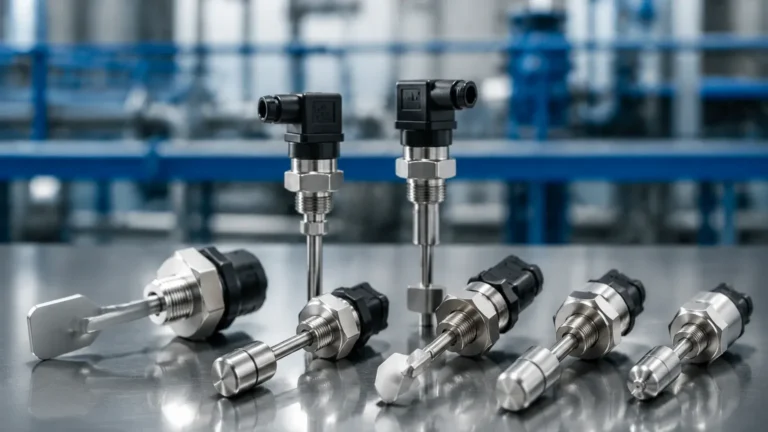
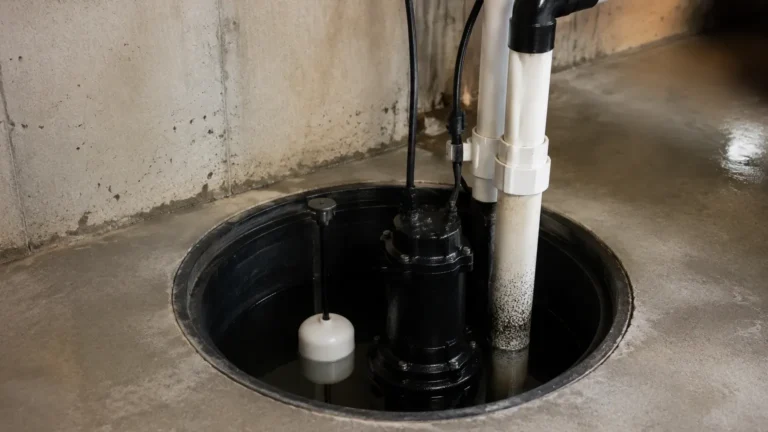
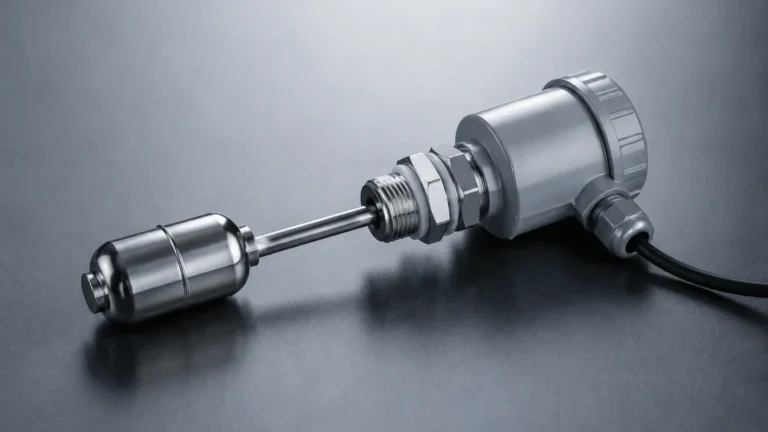
Float switches utilize the principle of buoyancy. A float containing a magnet moves with the liquid level. When the float reaches a certain point, the internal magnet actuates a reed switch or a microswitch. These are highly reliable for clean liquids and require no external power to operate the sensing element itself.
2. Tuning Fork (Vibrating) Level Switches
Vibrating switches use piezoelectric crystals to vibrate a metal fork at its natural resonance frequency (typically around 1,200 Hz). When the fork is submerged in liquid or covered by solids, the frequency changes or the vibration is dampened. The internal electronics detect this change and switch the output. This technology is excellent for detecting foam and is largely unaffected by the physical properties of the liquid, such as turbulence or bubbles.
3. Capacitance Level Switches
Capacitance switches treat the sensor probe and the tank wall as two plates of a capacitor. The material being measured acts as the dielectric. As the level rises and covers the probe, the capacitance increases. Once the capacitance crosses a calibrated threshold, the switch changes state. These are versatile but require calibration based on the dielectric constant of the media.
4. Ultrasonic Level Switches
These switches use high-frequency sound waves. In a "gap" style ultrasonic switch, a signal is sent across a small gap in the sensor head. When liquid fills the gap, the sound waves travel efficiently to the receiver, triggering the switch. Because they have no moving parts, they are preferred for corrosive or high-viscosity fluids where mechanical floats might stick.
5. Rotary Paddle Switches
Used primarily for bulk solids and powders, a small motor slowly rotates a paddle. When the material reaches the paddle, it creates mechanical resistance. The motor then tilts on its shaft, hitting a microswitch that cuts the power to the motor and signals a level alert.
Technical Comparison of Level Switch Types
Selecting the correct technology requires a comparison of media compatibility and environmental factors. The following table provides a general reference for engineering selection.
| Technology | Media Type | Key Advantages | Primary Limitations |
| :— | :— | :— | :— |
| Float | Clean Liquids | Low cost, no power needed for sensing | Moving parts, prone to scaling |
| Tuning Fork | Liquids/Solids | Reliable in foam, no calibration | Potential for material build-up in forks |
| Capacitance | Liquids/Solids | No moving parts, high temp/pressure | Requires dielectric constant > 1.5 |
| Ultrasonic | Liquids | Non-contact options, no moving parts | Sensitive to heavy foam and vapors |
| Rotary Paddle | Bulk Solids | Robust, simple mechanical logic | Mechanical wear, not for liquids |
| Hydrostatic | Liquids | Accurate for heavy liquids | Sensitive to density changes |
Key Selection Criteria for Engineering Projects
To ensure the level switch meaning translates into accurate field performance, engineers must verify several technical parameters during the specification phase:
* Process Temperature and Pressure: Standard switches may handle up to 80°C and 10 bar (145 psi), but specialized chemical or steam applications may require stainless steel or ceramic housings capable of exceeding 250°C and 40 bar.
* Media Density (Specific Gravity): Float switches must be specifically weighted to float in the target liquid. If the liquid density is lower than the float's design (e.g., < 0.7 g/cm³), the switch will fail to rise.
* Viscosity and Coating: For sticky fluids like resins or wastewater, non-contact ultrasonic or "coat-rejecting" capacitance switches are necessary to prevent false triggers caused by material build-up on the sensor.
* Chemical Compatibility: Wetted parts (the parts of the sensor that touch the liquid) must be compatible with the process. Common materials include 316L Stainless Steel, PP, PVDF, and PTFE (Teflon).
* Output Type: Depending on the control system, you may require a Relay (SPDT/DPDT), Transistor (PNP/NPN), or a 2-wire loop-powered output.
Installation Guidelines and Best Practices
Proper installation is as critical as technology selection. Even the most advanced switch will provide incorrect data if mounted improperly.
Mounting Position
Switches can be mounted from the top or the side of a vessel. Top-mounted switches are often used for high-level alarms, while side-mounted switches are ideal for point-level control at specific heights. Ensure the switch is not located directly under a fill pipe, as the falling material can cause false triggers or mechanical damage.
Turbulence and Agitation
In tanks with agitators or high turbulence, use a stilling well (a pipe surrounding the sensor) to stabilize the level around the switch. This prevents "chattering," where the switch rapidly flips on and off due to waves.
Electrical Wiring and Grounding
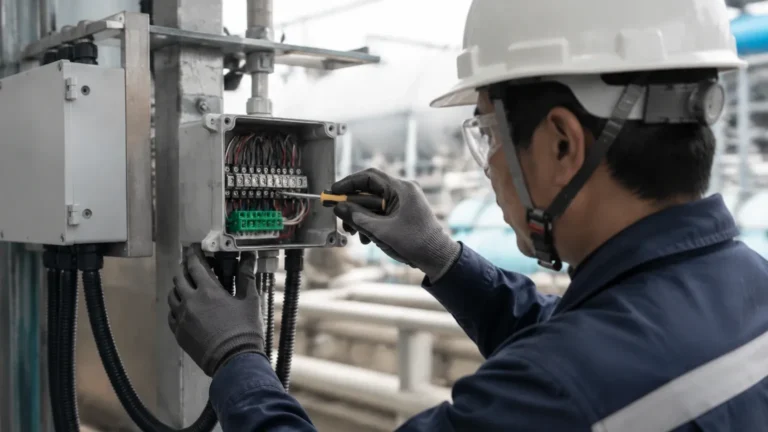
For capacitance and ultrasonic switches, proper grounding to the metal tank wall is essential for a stable signal. In non-metallic tanks (plastic or fiberglass), a ground reference rod or plate must be installed. Always use shielded cables for signal lines to prevent electromagnetic interference (EMI) from nearby motors or pumps.
Dead Zones and Hysteresis
Every switch has a "dead zone" or a minimum distance it cannot measure. Additionally, consider the hysteresis—the difference between the point where the switch turns on and the point where it turns off. A small amount of hysteresis is usually desirable to prevent the switch from oscillating when the level is right at the setpoint.
Limitations and Operational Risks
While level switches are robust, they are not infallible. Understanding their limitations is part of the broader level switch meaning for maintenance teams.
* Material Build-up: In vibrating fork or capacitance sensors, a thick layer of dried material can "bridge" the sensing elements, making the switch think it is permanently submerged.
* Gas Bubbles and Foam: Ultrasonic and float switches can struggle with heavy foam. Foam may be too light to move a float but dense enough to reflect an ultrasonic signal prematurely.
* Mechanical Fatigue: In rotary paddles and float switches, mechanical parts will eventually wear out. Regular inspection intervals (typically every 6 to 12 months) are recommended for these technologies.
* Environmental Interference: Extreme ambient temperatures can affect the electronics of ultrasonic sensors, which rely on the speed of sound—a variable that changes with air temperature.
Frequently Asked Questions (FAQ)
Q: What is the difference between a level switch and a level transmitter?
A: A level switch provides a binary signal at a specific point (e.g., "tank is 90% full"). A level transmitter provides a continuous signal (e.g., 4-20mA or RS485) representing the exact level from 0% to 100%.
Q: Can a level switch be used for both liquids and solids?
A: Some technologies, like tuning forks and capacitance, can be used for both. However, float switches are strictly for liquids, and rotary paddles are strictly for solids.
Q: What does "Fail-Safe" mean in the context of a level switch?
A: Fail-safe refers to the wiring configuration where the switch reverts to a "safe" state (usually triggering an alarm) if power is lost or a wire is cut. This prevents a system from continuing to fill a tank when the sensor is offline.
Q: How do I calibrate a level switch?
A: Most modern switches, like Welk's tuning fork models, are factory-calibrated and "plug-and-play." Capacitance switches may require a simple one-touch calibration when the tank is empty and again when the probe is covered.
Conclusion
Mastering the level switch meaning involves more than knowing a definition; it requires an integrated understanding of fluid mechanics, electrical logic, and process safety. By selecting the appropriate measurement principle—whether it be the simplicity of a float or the precision of a vibrating fork—and adhering to strict installation standards, industrial facilities can significantly reduce the risk of spills and equipment failure. For complex applications, consulting with a manufacturer like Welk ensures that the chosen level switch is perfectly matched to the chemical and physical demands of the environment.