Level Switch Untuk Apa
Level Switch Untuk Apa
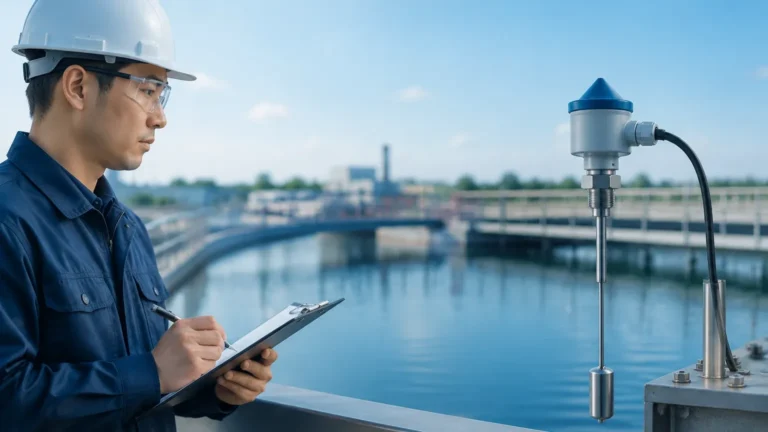
In industrial process control, the question of "level switch untuk apa" (what is a level switch for) is fundamental to ensuring plant safety and operational efficiency. A level switch is a point-level detection device designed to monitor the presence or absence of liquids, powders, or granulated solids at a specific height within a tank, silo, or pipe. Unlike continuous level transmitters that provide a constant stream of data regarding the exact level, a level switch acts as a binary trigger—sending an electrical signal only when the material reaches a predetermined set point.
Understanding the specific roles these devices play is essential for engineers and plant managers. From preventing catastrophic tank overfills to protecting expensive pumping equipment from running dry, Level Switches are the unsung heroes of industrial automation. This guide explores the principles, applications, and selection criteria for these critical instruments.
Core Principles of Level Measurement
Before determining which switch is right for an application, it is necessary to understand the physical principles that govern their operation. Level switches utilize various technologies to detect the interface between air and the process media.
Buoyancy (Float Switches)
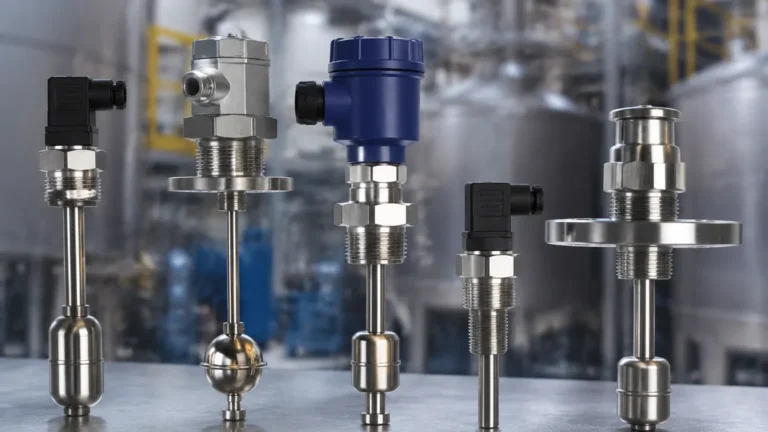
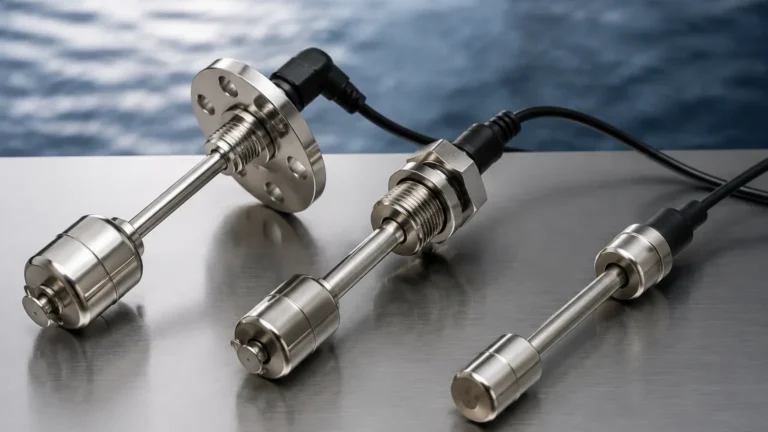
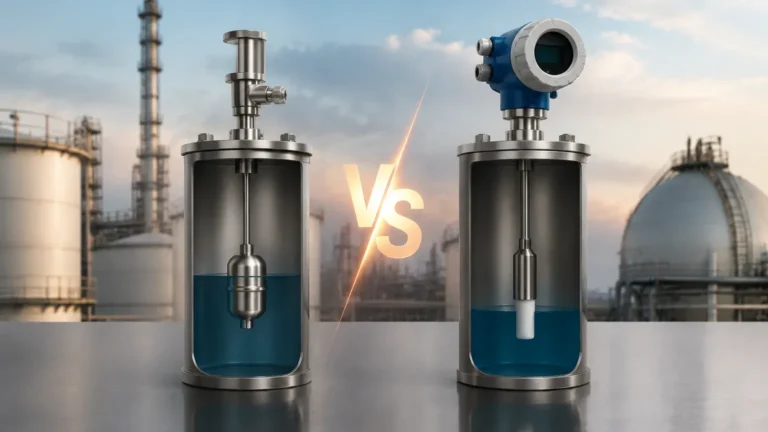
Perhaps the most traditional method, float switches rely on a buoyant body that moves with the liquid level. When the liquid rises, the float moves an internal magnet or mechanical linkage, which then actuates a reed switch or microswitch. These are highly reliable for clean liquids but can struggle with viscous or coating-heavy materials.
Vibration (Tuning Fork Switches)
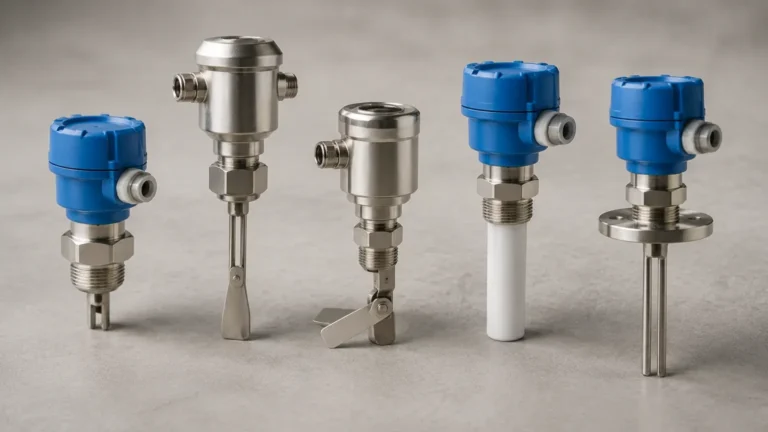
The sensor consists of two tines that vibrate at their natural resonant frequency in the air. When the tines are covered by the medium (liquid or solid), the frequency shifts or the vibration is dampened. An electronic circuit detects this change and switches the output. This technology is popular because it is largely unaffected by flow, turbulence, bubbles, or foam.
Capacitance
These switches measure the change in electrical capacitance between the sensor probe and the tank wall (or a reference probe). As the medium displaces air around the probe, the dielectric constant changes, triggering the switch. Capacitance switches are versatile but require calibration based on the specific dielectric properties of the material.
Conductivity
Used specifically for conductive liquids, these switches use a low-voltage electrode. When the liquid touches the electrode, it completes a circuit back to the tank wall or a ground electrode, signaling that the level has been reached. This is a cost-effective solution for water and acid-based applications.
Ultrasonic and Optical
Ultrasonic switches use high-frequency sound waves to detect the presence of a medium, while optical switches use the refraction of an infrared light beam within a prism. Both are non-mechanical and useful in specialized chemical or high-purity environments.
Primary Functions: Level Switch Untuk Apa?
The practical application of these devices, or "level switch untuk apa," can be categorized into three primary industrial needs: safety, process automation, and equipment protection.
1. Overfill Protection (High-Level Alarm)
One of the most critical uses is preventing tanks from overflowing. In chemical plants or oil refineries, an overflow can lead to environmental contamination, fire hazards, and significant financial loss. A level switch installed at the top of a tank acts as a "High-High" alarm, which can independently trigger an emergency shutdown of the filling pump or close an inlet valve.
2. Pump Control (Auto-Fill and Auto-Empty)
Level switches are frequently used in pairs to automate pump cycles. For example, in a wastewater sump, a "Low" level switch turns the pump off, while a "High" level switch turns the pump on. This hysteresis prevents the pump from "short-cycling," which would otherwise lead to motor burnout and premature wear.
3. Dry Run Protection (Low-Level Alarm)
Pumps and heaters can be severely damaged if they operate without sufficient fluid. A level switch installed near the bottom of a tank or in a suction line ensures that the equipment is only powered when a minimum level of liquid is present. This is particularly vital for centrifugal pumps, which rely on the fluid for cooling and lubrication.
4. Interface Detection
In some processes, such as oil-water separators, specialized level switches are used to detect the boundary between two immiscible liquids. By adjusting the sensitivity or using different physical principles (like capacitance), the switch can tell the difference between the oil layer and the water layer, allowing for precise drainage of the correct fluid.
Technical Selection Table
Choosing the right technology depends on the physical properties of the media and the environmental conditions. The following table provides a quick reference for common industrial scenarios.
| Technology | Best For | Media State | Major Advantage | Limitation |
| :— | :— | :— | :— | :— |
| Float | Clean water, fuels | Liquid | Low cost, no power needed | Moving parts can jam |
| Tuning Fork | General purpose, sticky liquids | Liquid / Solid | Maintenance-free, reliable | Not for very high viscosity |
| Capacitance | Powders, grains, chemicals | Liquid / Solid | No moving parts, adjustable | Sensitive to dielectric changes |
| Conductive | Acids, wastewater | Liquid | Extremely simple, low cost | Only for conductive liquids |
| Optical | High-purity, small spaces | Liquid | Very small footprint | Sensitive to coating/dirt |
Installation Considerations
Proper installation is as important as selecting the right technology. When installing Level Switches, engineers must consider the following factors:
* Mounting Orientation: Most switches can be mounted horizontally (through the side of the tank) or vertically (from the top). Side mounting is common for point-level detection at specific heights, while top mounting is preferred for deep tanks or when side access is restricted.
* Nozzle Length: If the switch is installed in a nozzle, the sensing element (such as the tines of a tuning fork) must extend far enough into the tank to avoid being influenced by the nozzle walls or stagnant material trapped in the neck. Typically, an extension of at least 20 mm to 50 mm (0.8 to 2 inches) into the main tank volume is recommended.
* Turbulence and Agitation: If the tank contains an agitator or high-velocity inflow, the switch should be shielded or located in a stilling well. Mechanical stress from moving liquid can damage float arms or cause false trips in vibration-based sensors.
* Wiring and Cable Entry: Always ensure that cable entries point downwards to prevent moisture from entering the housing via the conduit. In hazardous areas, explosion-proof housings and intrinsically safe barriers are mandatory.

Limitations and When to Use Continuous Measurement
While level switches are highly effective for point detection, they have inherent limitations. They cannot tell you how much material is in the tank at any given moment—only that it is "above" or "below" a certain point.
If your application requires inventory management, precise volume calculation, or monitoring the rate of change, you should opt for a continuous level transmitter, such as a radar or ultrasonic sensor. However, even in systems with advanced continuous transmitters, it is standard engineering practice to install independent level switches as redundant safety backups for high-level and low-level conditions.
Frequently Asked Questions (FAQ)
Q: Can a level switch be used for both liquids and solids?
A: Some technologies, like tuning fork and capacitance switches, are designed to handle both. However, the density and particle size of the solids must be matched to the sensor's sensitivity. Float switches and conductive switches are strictly for liquids.
Q: How do I handle buildup or coating on the sensor?
A: For materials that tend to coat the sensor (like chocolate, heavy oil, or wet powders), tuning fork switches with "active shield" technology or specialized capacitance switches are the best choice. These are designed to ignore the coating and only trigger when the bulk material is present.
Q: What is the typical lifespan of a level switch?
A: Electronic switches (vibration, capacitance) typically last 10 years or more because they have no moving parts. Mechanical float switches may have a shorter lifespan in aggressive or dirty environments due to wear on the pivot points and seals.
Q: Do level switches require regular calibration?
A: Most modern tuning fork and float switches are "plug-and-play" and require no calibration. Capacitance switches may require a one-time calibration during commissioning to "teach" the sensor the difference between an empty and a full state.
Conclusion
When asking "level switch untuk apa," the answer lies in the specific needs of your process. Whether you are automating a simple water pump or protecting a multi-million dollar chemical reactor, selecting the correct level switch is a vital engineering decision. By understanding the measurement principles—from simple buoyancy to advanced vibration—and considering the physical properties of your media, you can ensure a reliable, safe, and efficient operation. For those seeking robust and cost-effective solutions, exploring a wide range of Level Switches is the first step toward optimized industrial automation.