Level Switch Ul
Level Switch Ul
In industrial automation and process control, point level detection serves as a critical safeguard for preventing tank overflows, protecting pumps from dry running, and managing inventory. When selecting these components, engineers often prioritize a "level switch UL" designation to ensure compliance with North American safety standards and global quality benchmarks. Underwriters Laboratories (UL) certification indicates that a level switch has undergone rigorous testing for electrical safety, fire risk, and, in many cases, performance in hazardous environments.
Selecting the right Level Switches requires a deep understanding of both the underlying measurement principles and the specific regulatory requirements of the installation site. This guide explores the technical foundations of level switching technology and the importance of UL certification in industrial applications.
Measurement Principles of Level Switches
Before evaluating certification levels, it is essential to understand how different technologies detect the presence or absence of a medium. Level switches operate on various physical principles, each suited to specific liquid or solid characteristics.
Float and Magnetic Level Switches
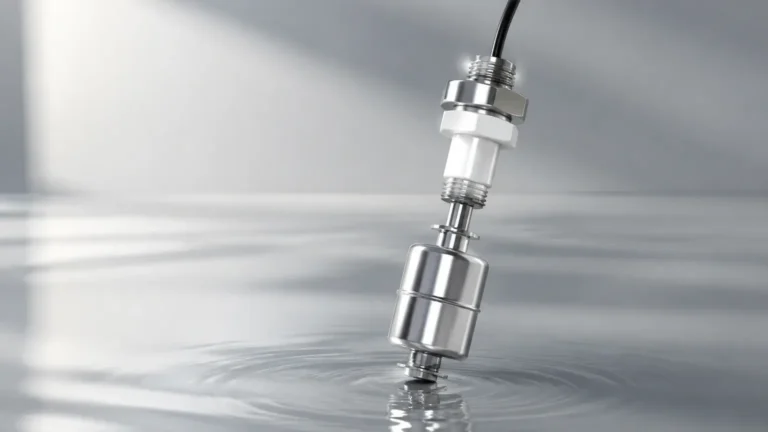
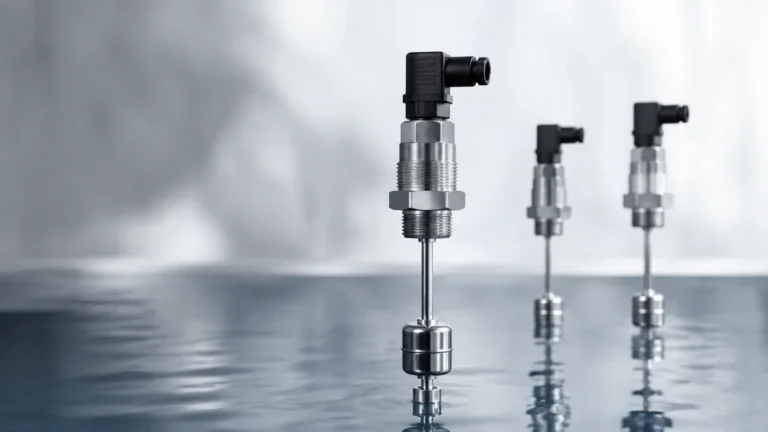
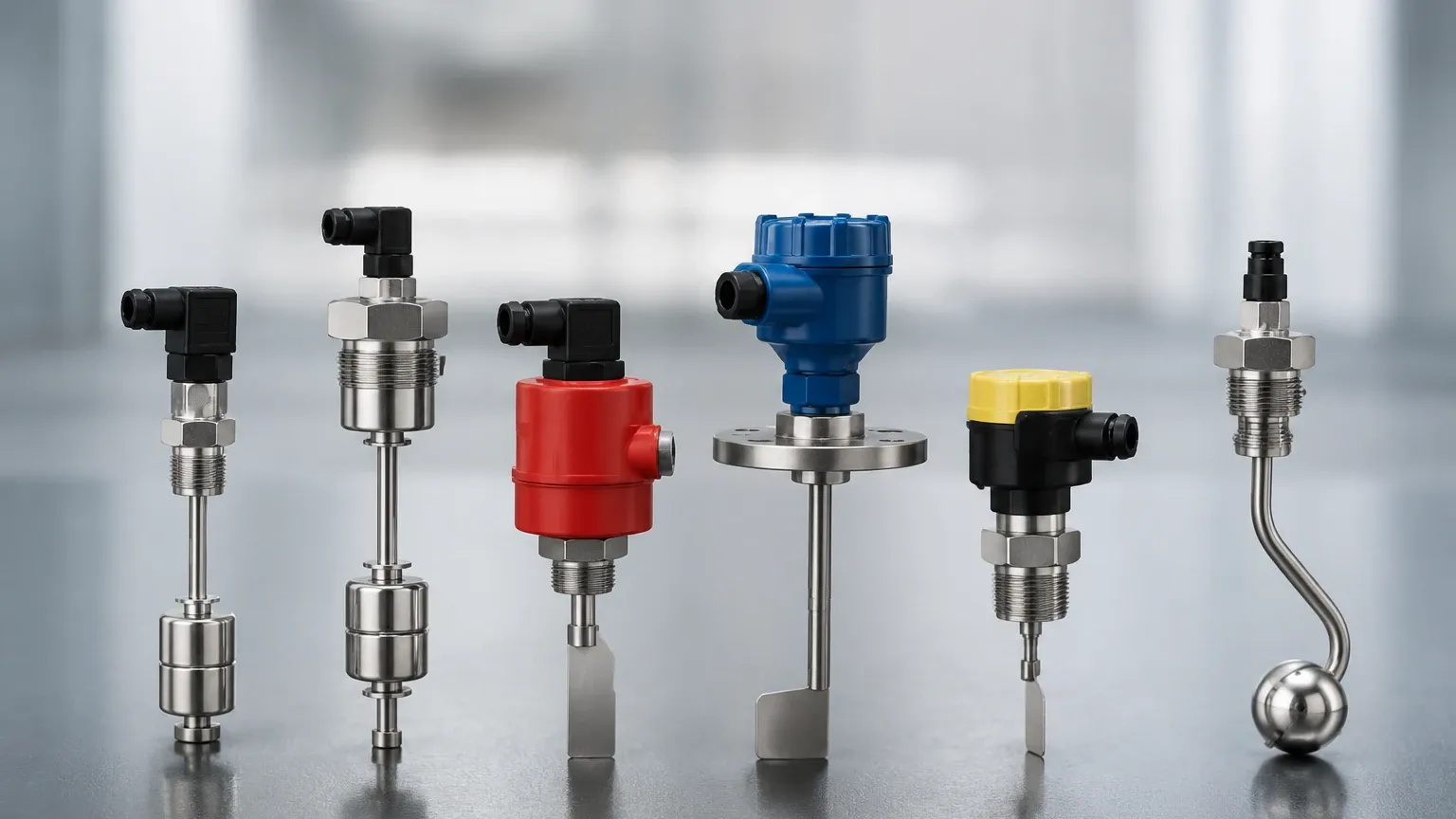
Float switches are among the most established technologies. They rely on the principle of buoyancy. A float, containing an internal magnet, moves with the liquid level along a stem. When the float reaches a predetermined point, the magnetic field actuates a reed switch or a microswitch located inside the stem or housing. These are ideal for clean liquids and simple high/low alarms.
Vibrating Tuning Fork Switches
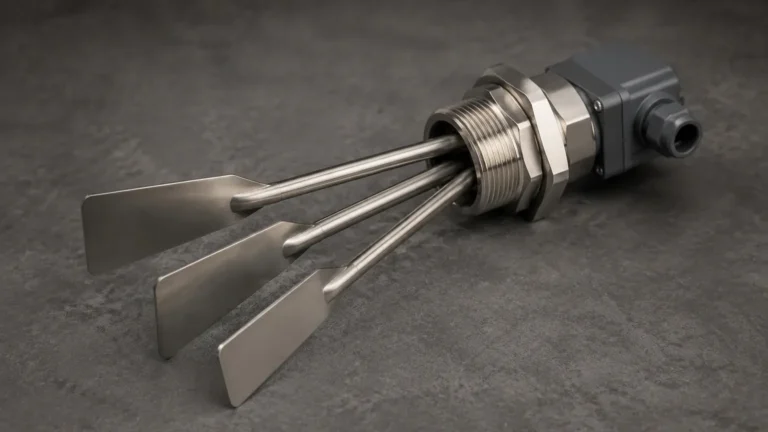
The tuning fork principle involves a sensor element vibrated at its resonant frequency by a piezoelectric crystal. When the fork is immersed in a medium (liquid or powder), the frequency of vibration shifts. An internal electronic circuit detects this change and toggles the output state. These switches are highly versatile, as they are largely unaffected by flow, turbulence, bubbles, or foam.
Capacitive Level Switches
Capacitive sensors treat the probe and the tank wall (or a reference electrode) as two plates of a capacitor. As the medium rises and covers the probe, the dielectric constant changes, increasing the measured capacitance. This technology is effective for both liquids and solids, though it may require calibration to account for the specific dielectric properties of the material.
Ultrasonic Level Switches
Ultrasonic point level switches use a gap sensor. An ultrasonic signal is transmitted across a small gap in the sensor head. When the gap is filled with liquid, the signal is transmitted efficiently; when the gap is empty (filled with air or gas), the signal is attenuated. This non-contact-sensing-element approach is useful for chemically aggressive media where moving parts are undesirable.
The Significance of UL Certification for Level Switches
A "level switch UL" listing is more than a quality mark; it is a verification of the device's electrical architecture and housing integrity. In B2B procurement, especially for the North American market, UL 508 (Industrial Control Equipment) and UL 61010-1 (Safety Requirements for Electrical Equipment for Measurement, Control, and Laboratory Use) are standard requirements.
Hazardous Location Standards
For industries involving volatile chemicals, oil, or gas, level switches must often meet stricter UL standards for hazardous locations:
- UL 913: Standards for intrinsically safe apparatus. These switches limit the energy available to a level that cannot ignite a flammable atmosphere.
- UL 1203: Standards for explosion-proof and dust-ignition-proof electrical equipment. These devices feature heavy-duty enclosures designed to contain an internal explosion and prevent it from igniting the surrounding environment.
Selection Criteria and Practical Engineering Considerations
Choosing a level switch involves matching the technology to the process conditions while ensuring the device meets the necessary safety certifications. Use the following table as a preliminary selection guide.
Level Switch Selection Table
| Technology | Media Type | Pressure Range (Max) | Temp Range (Max) | UL Relevance |
| :— | :— | :— | :— | :— |
| Float | Clean Liquids | 40 bar (4.0 MPa) | 200°C | Standard for general purpose pump control. |
| Tuning Fork | Liquids/Solids | 64 bar (6.4 MPa) | 150°C | Critical for SIL2/UL safety loops. |
| Capacitance | Acids/Slurries | 25 bar (2.5 MPa) | 125°C | UL-listed versions for corrosive environments. |
| Ultrasonic | Viscous Liquids | 10 bar (1.0 MPa) | 100°C | Common in UL-rated wastewater panels. |
| Hydrostatic| Liquids | N/A (Submersible) | 80°C | Often requires UL 913 for pit sensing. |
Media Characteristics
The physical properties of the medium—such as viscosity, density, and corrosivity—dictate the material of construction. For example, a 316L stainless steel tuning fork is preferred for food-grade applications, while PTFE-coated probes are necessary for strong acids. If a level switch is UL listed, the listing typically applies to the electrical assembly; engineers must still verify that the wetted parts are chemically compatible with the process fluid.
Process Conditions
Temperature and pressure are the primary limiters of level switch performance. High-pressure tanks (e.g., those exceeding 10 bar / 145 psi) require robust mechanical seals. In steam applications, the internal electronics of the level switch must be thermally isolated from the process connection to prevent premature failure of UL-certified components.
Installation and Wiring Best Practices
Proper installation is vital to maintaining the validity of a UL certification and ensuring the long-term reliability of the instrument.
1. Orientation: Tuning fork switches should be installed so that the forks are oriented vertically (if possible) or at an angle that prevents material buildup between the tines. Float switches require sufficient clearance to move freely throughout their travel range.
2. Conduit Seals: In hazardous locations, UL 1203 requires the use of certified conduit seals within 450 mm (18 inches) of the switch housing to prevent the passage of gases through the wiring system.
3. Grounding: Ensure the instrument housing is properly grounded to the vessel or the plant's common ground. This is particularly important for capacitive switches, which rely on a stable reference ground for accurate measurement.
4. Cable Entry: Use cable glands that match the NEMA or IP rating of the switch. A UL-rated enclosure loses its environmental protection if an incorrect or unsealed gland is used.
Limitations and Common Risks
While level switches are robust, they are not universal solutions. Engineers should be aware of the following limitations:
- Build-up and Coating: Capacitive and tuning fork switches can sometimes be affected by heavy coating or scaling. While many modern switches feature "active shield" technology or coating rejection algorithms, extreme buildup can still cause false triggering.
- Turbulence: High-velocity inflow can cause mechanical fatigue in float stems or cause tuning forks to vibrate erratically. Installing a stilling well or a baffle can mitigate these effects.
- Dielectric Shifts: Capacitive switches may require re-calibration if the process fluid changes significantly (e.g., switching from an oil-based to a water-based liquid), as the dielectric constant will shift.
- Certification Boundaries: It is a common mistake to assume a "UL recognized" component is the same as a "UL listed" device. Recognition usually applies to components within a larger system, whereas listing applies to the standalone product ready for field installation.
Frequently Asked Questions (FAQ)
Q: Can I use a general-purpose UL-listed level switch in a Class I, Div 1 area?
A: No. For hazardous locations, the switch must specifically carry a UL 913 (Intrinsically Safe) or UL 1203 (Explosion Proof) certification. A standard UL 508 listing is insufficient for explosive atmospheres.
Q: How often should I test my level switch?
A: For safety-critical applications (high-level alarms), a proof test should be conducted at least annually. This involves manually raising the liquid level or using a test magnet (on some models) to verify the switch toggles and the control system responds correctly.
Q: Does the tank material affect the level switch?
A: For capacitive switches, the tank material is a factor. If the tank is non-metallic (plastic or fiberglass), a reference electrode or a grounding rod must be used to complete the circuit. For most other technologies, the tank material is irrelevant to the sensing principle.
Q: What is the difference between NEMA 4X and UL listing?
A: NEMA 4X refers to the enclosure's ability to resist corrosion and water ingress. While UL often tests to NEMA standards, a NEMA rating alone does not constitute a full UL electrical safety certification.
Conclusion
Integrating a level switch UL certified device into your process ensures that the equipment meets high safety and performance standards. By understanding the measurement principles—whether it be the mechanical simplicity of a float or the advanced frequency analysis of a tuning fork—and adhering to strict installation guidelines, industrial operators can achieve reliable point level detection. Always consult the specific product data sheet and the UL certification file to confirm that the instrument is rated for your specific pressure, temperature, and environmental conditions.