Level Switch for Diesel Tanks
Level Switch for Diesel Tanks
Diesel fuel remains a critical energy source for industrial operations, providing the necessary power for backup generators, heavy machinery, marine vessels, and heating systems. Effective management of diesel inventory requires precise monitoring to prevent operational downtime caused by dry runs and to mitigate the environmental and safety risks associated with overfills. A reliable level switch for diesel tanks is the primary line of defense in these systems, offering automated control and alarm functions that ensure the integrity of the fuel supply chain.
Selecting the appropriate instrumentation requires a deep understanding of diesel’s physical properties, the specific geometry of the storage vessel, and the regulatory requirements for handling flammable liquids. This guide examines the engineering principles, selection criteria, and installation best practices for Level Switches in diesel applications.
Measurement Principles for Diesel Level Detection
Level switches operate as point-level sensors, meaning they detect the presence or absence of liquid at a specific height within a tank. For diesel applications, several physical principles are commonly employed, each with distinct advantages depending on the environment.
Float-Based Level Switches
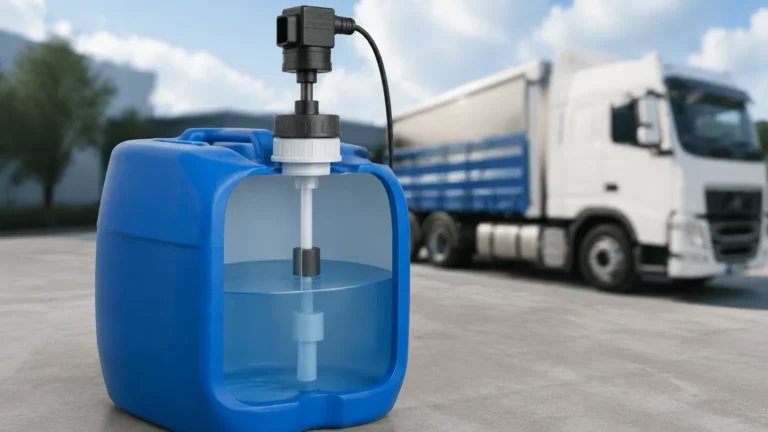
Float switches operate on the principle of buoyancy. A float, typically made of stainless steel or high-density polymers, contains an internal magnet. As the diesel level rises or falls, the float moves along a vertical stem or pivots on a hinge. When the float reaches a predetermined point, the magnetic field triggers a reed switch or a microswitch.
In diesel tanks, magnetic float switches are valued for their simplicity and the fact that they do not require external power to operate the switch contact itself. However, because they involve moving parts, they are susceptible to mechanical wear and can be affected by the buildup of paraffin wax or contaminants found in lower-grade diesel fuel.
Vibrating Tuning Fork Switches
Vibrating level switches use an electronic circuit to energize a tuning fork at its natural resonant frequency. When the fork is immersed in diesel, the frequency changes due to the increased density of the medium compared to air. The internal electronics detect this frequency shift and toggle the output state.
This technology is highly robust because it has no moving parts to wear out or jam. It is particularly effective for diesel because it is largely unaffected by changes in the fluid's dielectric constant or conductivity. Vibrating forks are often the preferred choice for high-level overfill protection in mission-critical diesel storage.
Capacitance Level Switches
Capacitance switches treat the sensor probe and the tank wall (or a reference electrode) as two plates of a capacitor. Diesel acts as the dielectric material between these plates. Since diesel has a different dielectric constant (typically around 2.1) than air (1.0), the capacitance changes when the probe is submerged.
While effective, capacitance sensors require calibration to the specific dielectric property of the fuel. They are useful in applications where a non-contacting or flush-mounted sensor is required, though they can be sensitive to moisture content in the diesel, which significantly alters the dielectric constant.
Optoelectronic Level Switches
Optical switches use an infrared LED and a light receiver housed within a prism. When the sensor is in air, the infrared light is reflected within the prism back to the receiver. When diesel covers the prism, the light is refracted into the liquid, and the receiver detects the loss of signal. These sensors are extremely compact and provide fast response times, making them suitable for leak detection in double-walled diesel tanks or small day tanks.
Key Selection Criteria for Diesel Tank Level Switches
When specifying a level switch for diesel tanks, engineers must account for the specific characteristics of the fuel and the operational environment. Diesel is a hydrocarbon with specific density, viscosity, and flammability profiles that dictate material and certification requirements.
Media Compatibility and Density
Diesel fuel typically has a specific gravity ranging from 0.82 to 0.85 kg/L. If using a float-based switch, the float must be engineered with a buoyancy that allows it to float reliably in this density range. A float designed for water (1.0 kg/L) may sink in diesel, failing to trigger the switch. Materials such as 316L stainless steel are standard for diesel applications due to their excellent chemical resistance and durability.
Temperature and Viscosity
While diesel is generally a low-viscosity fluid, its viscosity increases as temperatures drop. In extremely cold climates, paraffin wax can precipitate out of the fuel (the "cloud point"), potentially coating mechanical sensors. In these environments, non-mechanical technologies like vibrating forks or heated capacitance probes are often superior. Standard industrial diesel switches are usually rated for temperatures between -40°C and +80°C.
Hazardous Area Certifications
Because diesel fuel is combustible, the storage area is often classified as a hazardous zone (e.g., ATEX Zone 0, 1, or 2). Any level switch installed in these areas must carry the appropriate explosion-proof or intrinsically safe certifications. This ensures that the electrical components of the switch cannot provide an ignition source in the event of a vapor buildup.
Tank Geometry and Pressure
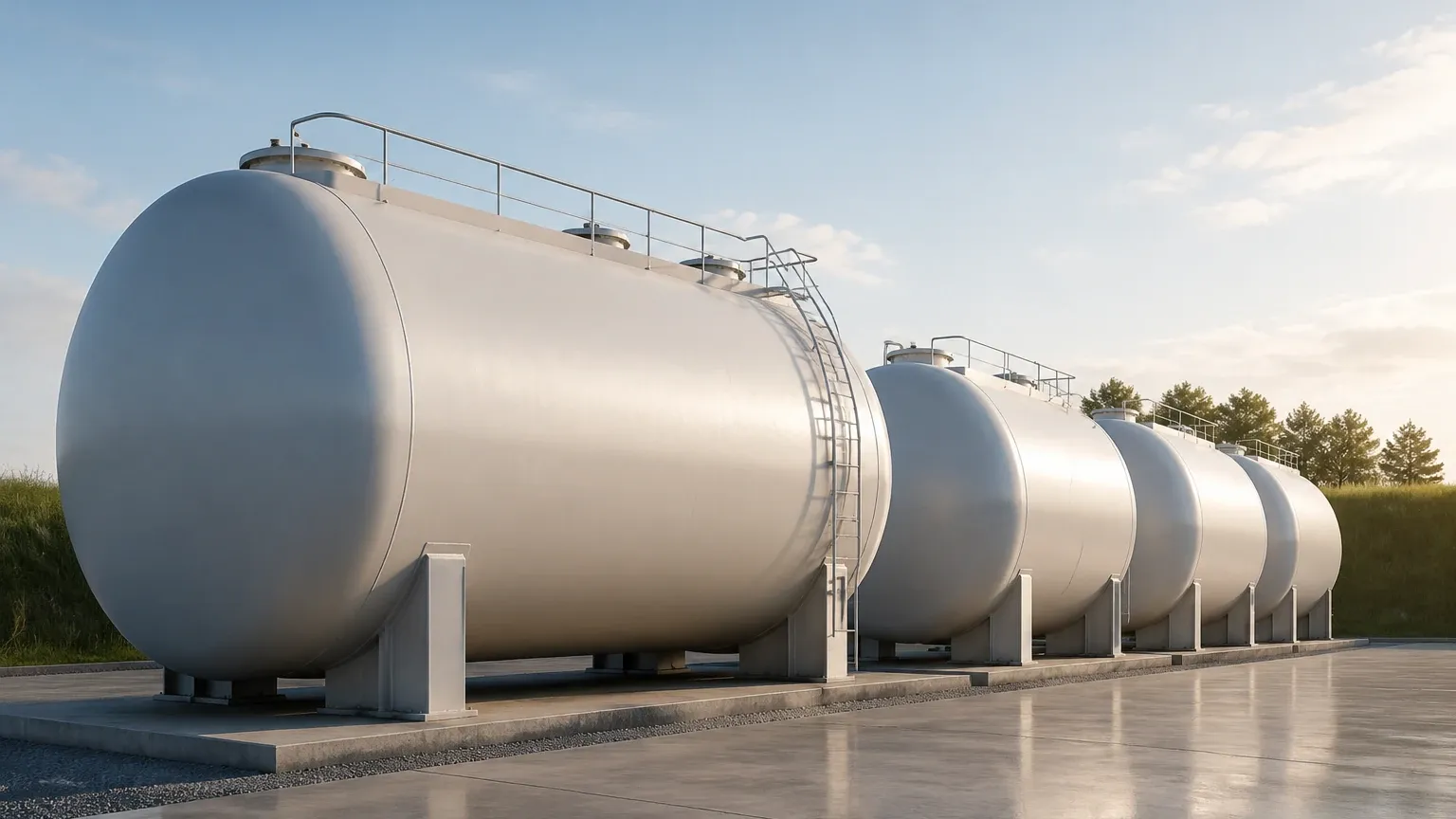
Small day tanks used for local generator supply may only require a single-point side-mounted switch. In contrast, large bulk storage tanks (which can exceed 10 meters in height) often require multi-point vertical switches or top-mounted probes that can be serviced without draining the tank. Furthermore, if the tank is pressurized or under vacuum, the switch must be rated for the maximum operating pressure of the vessel.
Installation and Engineering Best Practices
The reliability of a level switch is often determined by its installation. Improper placement can lead to false alarms or, more dangerously, a failure to trigger during a critical overfill event.
1. Avoid Turbulence: Diesel tanks, especially those with high-volume fill lines or return lines from engines, can experience significant internal turbulence. Level switches should be installed away from fill pipes or protected by a stilling well (a perforated pipe that surrounds the sensor) to dampen the liquid's movement.
2. Mounting Orientation: Side-mounted switches are convenient for existing tanks but require a hole in the side wall, which can be a potential leak point. Top-mounted switches are generally preferred for bulk storage as they keep all penetrations above the liquid level.
3. Dead Zones: Every level switch has a "dead zone" near the mounting thread where it cannot detect liquid. Engineers must account for this distance when calculating the exact alarm point to ensure the switch triggers before the tank reaches 100% capacity.
4. Electrical Integration: For diesel systems, it is standard practice to use "normally closed" (NC) circuits for high-level alarms. This ensures that if a wire is cut or power is lost, the system fails into an alarm state, alerting operators to a potential fault.
Comparison of Technologies for Diesel Applications
| Technology | Best Use Case | Advantages | Limitations |
| :— | :— | :— | :— |
| Magnetic Float | General purpose, low-cost monitoring | No power required for switch; simple installation | Moving parts can stick; sensitive to density changes |
| Vibrating Fork | High-level overfill prevention | No moving parts; unaffected by foam or bubbles | Higher initial cost; requires power supply |
| Capacitance | High-temperature or high-pressure tanks | No moving parts; can be used for continuous-ish point logic | Requires calibration; sensitive to water in fuel |
| Optical | Leak detection / Small day tanks | Very compact; extremely fast response | Prism must be kept clean; not for dark/opaque fluids |
Maintenance and Operational Reliability
While modern level switches are designed for long-term industrial use, a regular maintenance schedule is essential for diesel systems, particularly those used for emergency backup power.
Routine Inspection
For mechanical switches, periodic cleaning is necessary to remove any sludge or varnish buildup that could impede the movement of the float. For electronic switches like vibrating forks, a visual inspection of the tines is usually sufficient to ensure no debris has become lodged between them.
Proof Testing
In safety-critical applications, such as environmental protection against diesel spills, the level switch should undergo regular "proof testing." This involves manually raising the liquid level or using a test lever (available on some Welk models) to verify that the switch triggers the expected alarm or pump-stop sequence. Many modern electronic switches include a self-test button that simulates a covered state to check the internal circuitry.
Managing Condensation
Diesel tanks are prone to condensation, which leads to water accumulation at the bottom of the tank. Since water is denser than diesel, it will settle at the lowest point. If a low-level switch is positioned too close to the bottom, it may eventually be submerged in water rather than diesel, which can cause corrosion or incorrect readings depending on the technology used. Regular tank bottom drainage is a necessary part of maintaining the accuracy of the level instrumentation.
Frequently Asked Questions
Q: Can I use a standard water level switch for a diesel tank?
A: Generally, no. Diesel has a lower density than water (approx. 0.85 vs 1.0 kg/L), so a float designed for water may not float in diesel. Additionally, the materials must be chemically compatible with hydrocarbons, and the switch may require hazardous area certification (ATEX/IECEx) which standard water switches often lack.
Q: How do I prevent false alarms caused by diesel foam?
A: Diesel can foam during high-speed filling. Vibrating tuning fork switches are excellent at ignoring foam and only triggering when the actual liquid level reaches the sensor. Alternatively, installing the switch inside a stilling well can help isolate the sensor from surface foam.
Q: What is the best level switch for a double-walled diesel tank?
A: For the interstitial space (the gap between the inner and outer walls), a compact optical or small float-based leak detection switch is ideal. These are designed to trigger at the first sign of liquid, indicating a breach in the primary tank.
Q: Does the color of the diesel affect optical level switches?
A: Standard clear or dyed diesel (red diesel) typically does not interfere with infrared optical switches, as the principle relies on the refractive index of the liquid rather than its color. However, very dark or heavily contaminated oils may require a different technology like a vibrating fork.
For industrial operators seeking to optimize their fuel management, Welk provides a comprehensive range of Level Switches engineered to meet the rigorous demands of diesel storage and distribution. By selecting the correct measurement principle and following established installation guidelines, facilities can ensure safe, efficient, and uninterrupted energy availability.