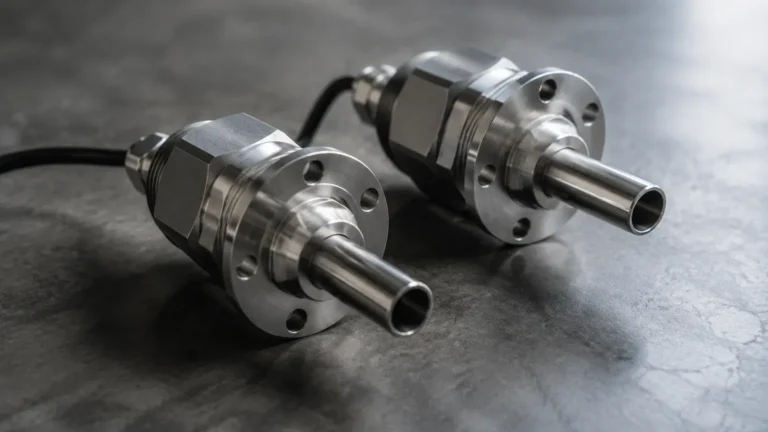
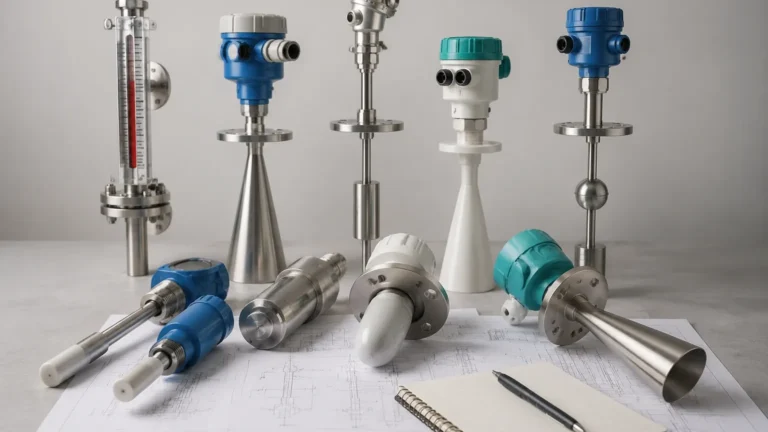
Microwave Level Switches
Microwave Level Switches
Microwave level switches, often referred to as microwave barriers or microwave sensors, represent a sophisticated class of point level detection technology. Unlike mechanical or contact-based sensors, these devices utilize electromagnetic waves in the microwave frequency range to detect the presence or absence of materials. This non-contact approach makes them particularly valuable in heavy industrial environments where dust, high temperatures, or corrosive materials would quickly degrade traditional instrumentation.
As a critical component within the broader category of Level Switches, microwave technology offers a unique solution for bulk solids and liquid level monitoring, especially when the sensor must be isolated from the process medium.
Measurement Principles of Microwave Level Switches
The operation of a microwave level switch is based on the principle of a microwave barrier. The system typically consists of two primary components: a transmitter (sender) and a receiver. These are mounted opposite each other on a vessel, silo, or conveyor belt.
Signal Transmission and Attenuation
The transmitter emits a low-power microwave signal—typically in the 24 GHz frequency band—directed toward the receiver. In an empty state, the receiver detects the full strength of this signal. When the process material (such as cement, grain, or ores) rises and enters the path between the two units, the microwave beam is attenuated, absorbed, or reflected by the material.
The degree of attenuation depends on the dielectric constant and the density of the medium. Once the signal strength falling on the receiver drops below a pre-defined threshold, the internal electronics trigger a switching state change (e.g., from "normally open" to "normally closed").
Sensitivity and Calibration
Modern microwave level switches are equipped with adjustable sensitivity. This allows engineers to calibrate the device to ignore certain environmental factors, such as thin coatings on the sensor face or the presence of a non-metallic vessel wall, while still reliably detecting the main product. This capability is essential for distinguishing between a full silo and a light dusting of material on the interior walls.
Key Applications and Industry Suitability
Microwave level switches are engineered for versatility, but they excel in specific scenarios where other technologies fail. Their primary strength lies in their ability to perform non-contact measurement through non-conductive materials.
1. Bulk Solids and Powders: In industries like mining, cement production, and agriculture, dust is a constant challenge. Microwave signals penetrate heavy dust clouds that would otherwise scatter ultrasonic waves or obscure optical sensors.
2. Chute Blockage Detection: These switches are frequently used to detect blockages in transfer chutes. By mounting the transmitter and receiver across the chute, operators receive an immediate alert if material stops flowing and begins to pile up.
3. Harsh Chemical Environments: Because the microwave beam can pass through non-metallic windows (such as PTFE, ceramic, or glass), the electronic components can be completely isolated from corrosive or high-pressure environments.
4. High-Temperature Processes: By utilizing ceramic windows and mounting the sensors at a distance from the heat source, microwave level switches can monitor materials in furnaces or kilns where the internal temperature exceeds the operating limits of standard electronics.
Technical Selection Criteria
When selecting microwave level switches for an industrial project, several technical parameters must be evaluated to ensure long-term reliability. Unlike simple float switches, microwave barriers require a more nuanced understanding of the installation environment.
Frequency and Range
Most industrial microwave switches operate at approximately 24 GHz. This frequency provides a good balance between signal penetration and beam focus. The operating range can vary significantly, with high-performance models capable of spanning distances up to 100 meters (approx. 328 feet). It is vital to select a model that matches the diameter of the silo or the width of the conveyor.
Housing and Protection Ratings
Given their use in outdoor or heavy industrial sites, the housing should typically meet IP66 or IP67 standards for ingress protection. For explosive environments, such as grain elevators or chemical plants, ATEX or IECEx certified explosion-proof housings are mandatory.
Output Options
Integration into a PLC (Programmable Logic Controller) or DCS (Distributed Control System) is standard. Common output types include:
* Relay Outputs: For direct control of pumps or alarms.
* PNP/NPN Transistor Outputs: For high-speed switching in automated lines.
* 4-20 mA Loop: Some advanced switches provide a current signal indicating signal strength, which can be used for predictive maintenance.
Comparison with Alternative Technologies
To assist in the selection process, the following table compares microwave level switches with other common point level technologies used in similar applications.
| Feature | Microwave Level Switch | Ultrasonic Level Switch | Capacitive Level Switch | Rotary Paddle Switch |
| :— | :— | :— | :— | :— |
| Measurement Type | Non-contact Barrier | Non-contact Reflective | Contact / Proximity | Contact (Mechanical) |
| Dust Resistance | Excellent | Poor to Moderate | Moderate | Moderate |
| Through-Wall Sensing | Yes (Non-metallic) | No | No | No |
| Max Temperature | Very High (with windows) | Moderate | High | Moderate |
| Typical Medium | Bulk Solids / Liquids | Liquids | Liquids / Solids | Bulk Solids |
| Maintenance | Very Low | Low | Moderate | High (Moving parts) |

Installation and Engineering Considerations
Successful deployment of microwave level switches depends heavily on correct installation. While the technology is robust, electromagnetic waves are subject to physical laws that can impact performance if ignored.
Alignment and Positioning
The transmitter and receiver must be accurately aligned. For long-range applications, even a few degrees of misalignment can lead to signal loss. Most manufacturers provide mounting brackets that allow for fine-tuning after the units are bolted into place.
Avoiding Interference (Cross-Talk)
If multiple microwave barriers are installed in close proximity, there is a risk of "cross-talk," where a receiver picks up a signal from a neighboring transmitter. This is mitigated by using different frequency channels (if supported) or by staggering the mounting heights and angles so that the beams do not overlap.
Mounting Through Windows
If the vessel is metallic, a "window" must be cut into the tank and replaced with a microwave-transparent material.
* PTFE (Teflon): Excellent for chemical resistance and temperatures up to 250°C.
* Ceramic: Ideal for high-abrasion and high-temperature applications (up to 1000°C or more).
* Glass: Suitable for standard industrial applications where chemical exposure is limited.
Build-up and Coating
While microwave switches are more resistant to buildup than capacitive sensors, a thick layer of conductive or moisture-rich material on the sensor face can still attenuate the signal. In such cases, the sensitivity must be adjusted, or a "flush mount" installation should be used to prevent material accumulation in the mounting nozzle.
Limitations and Potential Risks
No technology is universal. Engineers should be aware of the following limitations when specifying microwave barriers:
* Metallic Obstructions: Microwave signals cannot pass through metal. Internal structures like baffles, ladders, or agitators must not intersect the beam path.
* Low-Density Materials: Extremely light materials (e.g., very low-density plastic flakes or fine fumed silica) may not provide enough attenuation to trigger the switch reliably. In these cases, high-sensitivity models or alternative technologies like vibrating forks may be required.
* Conductive Coatings: If the material being measured is highly conductive and forms a continuous moist film over the mounting window, it may act as a shield, preventing the signal from reaching the receiver.
Maintenance and Troubleshooting
Microwave level switches are generally low-maintenance due to the lack of moving parts. However, a routine inspection schedule is recommended to ensure system integrity.
1. Visual Inspection: Check the mounting windows for excessive wear or physical damage, especially in abrasive environments like mining.
2. Signal Strength Monitoring: Many modern units feature an LED display or a test point to measure the received signal strength. A gradual decline in signal strength over months may indicate a buildup on the window or a shifting of the silo structure causing misalignment.
3. Cable Integrity: Ensure that cable glands remain sealed and that there is no moisture ingress into the electronic housing, which is a common cause of intermittent signal failure.
Frequently Asked Questions (FAQs)
Q: Are microwave level switches safe for personnel?
A: Yes. The power levels emitted by industrial microwave switches are extremely low—significantly lower than those of a mobile phone or a household microwave oven. They do not pose a health risk when used according to manufacturer guidelines.
Q: Can microwave switches detect liquid levels?
A: Yes, they are highly effective for liquid level detection, especially for corrosive or toxic liquids where non-contact through-wall sensing is preferred. However, they are most commonly associated with bulk solids due to their superior performance in dusty environments.
Q: How do I choose the right window material for a metal tank?
A: The choice depends on the process temperature, pressure, and chemical compatibility. PTFE is the standard for most chemical applications, while ceramic is preferred for high-temperature or abrasive solids like clinker or coal.
Q: Is it possible to use a microwave switch for continuous level measurement?
A: No. Microwave level switches are point level devices (on/off). For continuous measurement, a radar level meter (which uses similar microwave technology but measures time-of-flight) should be used.
For engineers seeking reliable point level solutions, microwave technology provides a robust, non-contact alternative that minimizes downtime and maintenance costs in the most challenging industrial environments. By understanding the dielectric properties of the medium and the physical constraints of the installation site, microwave barriers can be integrated into a comprehensive process control strategy alongside other Level Switches and continuous transmitters.