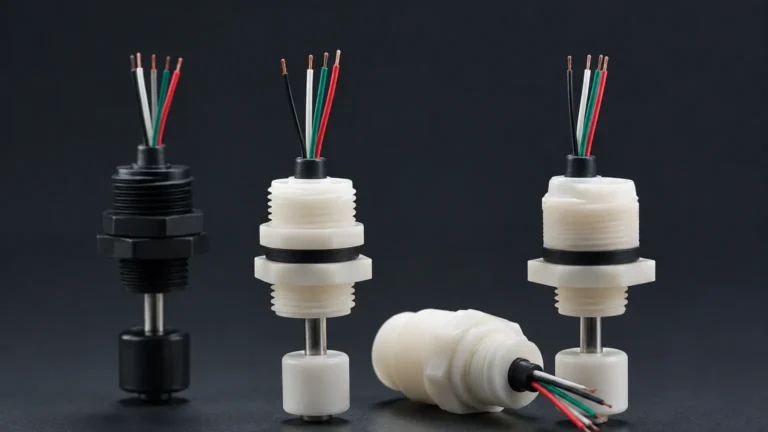
Point Level Switches
Point Level Switches
In industrial process control, point level switches serve as the fundamental "binary" sensors of a system. Unlike continuous level transmitters that provide a constant stream of data regarding the exact level of a substance, point level switches are designed to detect whether a material has reached a specific, predetermined height in a tank, silo, or pipe. These devices are the primary line of defense in overfill protection, leak detection, and pump control across industries ranging from water treatment to chemical manufacturing.
Selecting the appropriate technology for point level detection requires a deep understanding of the physical properties of the media, the environmental conditions of the process, and the specific mechanical constraints of the vessel. This guide explores the principles of operation, selection criteria, and installation best practices for various Level Switches.
Measurement Principles of Point Level Switches
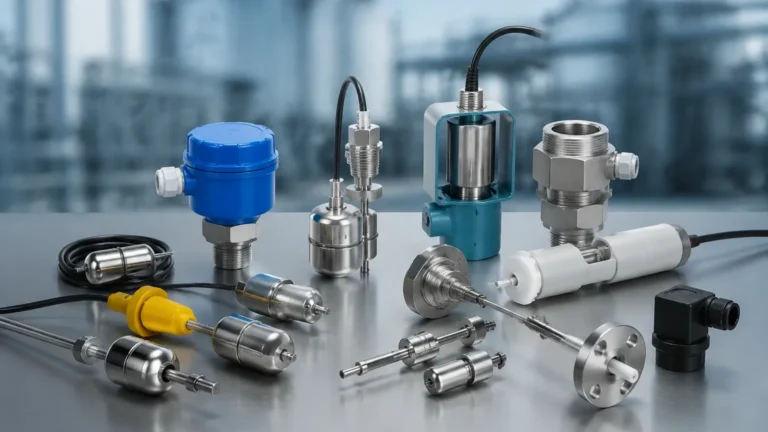
To choose the right sensor, engineers must first understand how different technologies interact with the process media. Each principle offers distinct advantages depending on whether the substance is a liquid, a solid, or a slurry.
1. Vibrating Fork (Tuning Fork) Technology
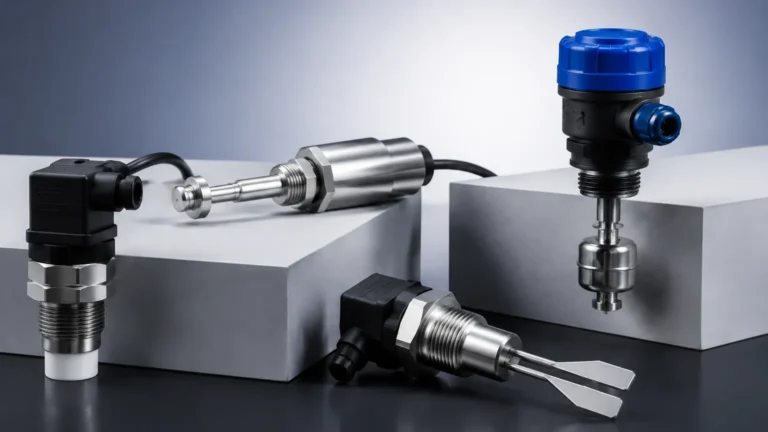
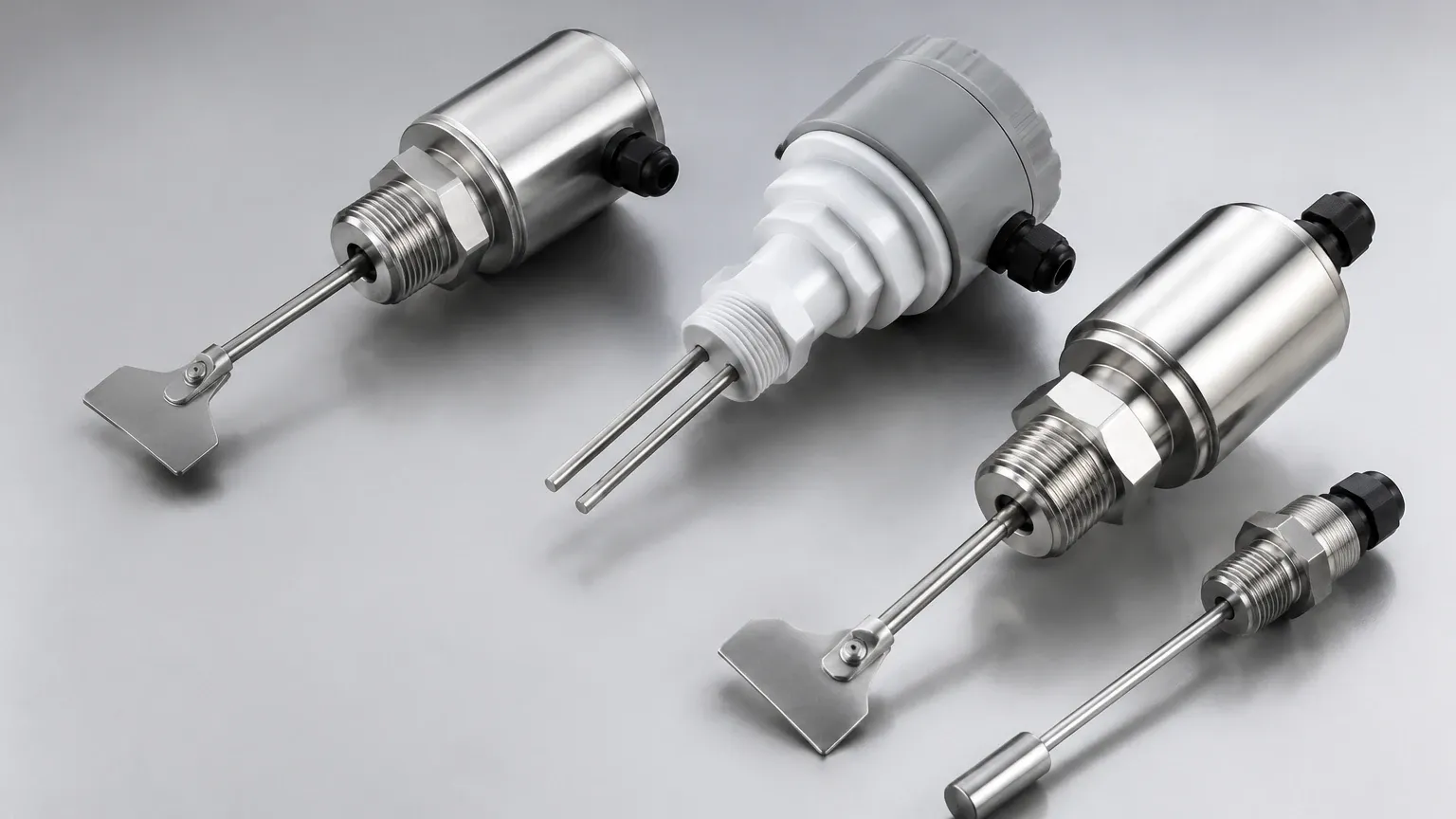
Vibrating fork switches utilize a sensing element in the shape of a tuning fork that is piezoelectrically energized to vibrate at its natural resonance frequency in the air. When the fork is immersed in a liquid or covered by a solid, the frequency of vibration shifts or the amplitude is dampened. The internal electronics detect this change and trigger a switch output.
* Best for: General-purpose liquid detection, powders, and granulates.
* Advantages: Highly reliable, unaffected by bubbles, turbulence, or foam. It requires no calibration and has no moving parts to wear out.
2. Capacitance Level Switches
Capacitance sensors operate on the principle of electrical capacitance. The sensor probe and the vessel wall (or a second probe) act as the two plates of a capacitor. As the level of the media rises and displaces the air around the probe, the dielectric constant changes, thereby changing the capacitance. Once the capacitance reaches a set threshold, the switch is activated.
* Best for: Liquids and solids with consistent dielectric properties.
* Advantages: Can be used in high-pressure and high-temperature environments. Advanced versions include "active shield" technology to ignore material buildup on the probe.
3. Float and Displacement Switches
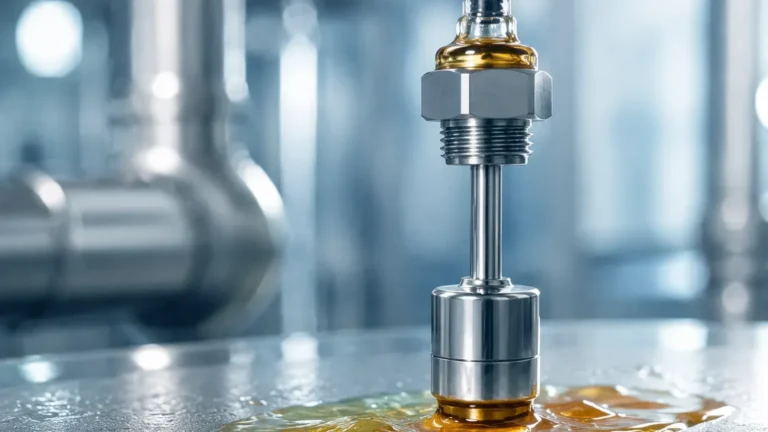
These are among the oldest and most straightforward technologies. A float switch uses a buoyant object containing a magnet. As the liquid level rises, the float moves along a stem, and the magnet actuates a reed switch. Displacement switches use a weighted sensor that becomes lighter when submerged in liquid (based on Archimedes' principle), triggering a spring-loaded switch mechanism.
* Best for: Clean, non-coating liquids.
* Advantages: Simple, low-cost, and requires no power for the basic reed switch operation.
4. Ultrasonic Point Level Switches
Ultrasonic switches use a pair of piezoelectric crystals separated by a small gap. One crystal transmits an ultrasonic signal, and the other receives it. When the gap is filled with air, the signal is too weak to reach the receiver. When liquid fills the gap, the signal is transmitted efficiently, triggering the switch.
* Best for: Highly viscous liquids or applications where physical contact with moving parts must be avoided.
* Advantages: No moving parts and generally resistant to changes in density or conductivity.
1
5. Conductivity (Electrode) Switches
Conductivity switches use a low-voltage, low-current circuit that is completed when a conductive liquid touches the sensing electrode and the reference electrode (or the tank wall).
* Best for: Conductive liquids like water, acids, and alkalis.
* Advantages: Extremely cost-effective and simple to install in multi-point configurations.
Technical Selection Criteria
When specifying point level switches for an industrial application, engineers must evaluate several variables to ensure long-term reliability and accuracy.
Media Properties
* State: Is it a liquid, solid, or slurry? Vibrating forks are excellent for both, while floats are strictly for liquids.
* Viscosity: High-viscosity fluids can cause "clinging" on capacitance probes or jam mechanical floats.
* Conductivity: Required for electrode-type switches but irrelevant for vibrating forks or ultrasonic sensors.
* Corrosivity: Ensure the wetted materials (316L Stainless Steel, PTFE, PP, or Hastelloy) are compatible with the chemical makeup of the media.
Process Conditions
* Temperature: Standard switches often handle up to 80°C (176°F), but high-temperature variants can exceed 250°C (482°F).
* Pressure: High-pressure reactors may require robust capacitance probes or heavy-duty displacement switches capable of withstanding 64 bar (928 psi) or more.
* Turbulence and Foam: If the tank has an agitator, mechanical floats may bounce and cause false triggers. In such cases, vibrating forks or ultrasonic switches are preferred.
Selection Table: Technology vs. Application
| Technology | Liquid Detection | Solid Detection | Viscous Media | High Temp/Pressure | Cost Profile |
| :— | :— | :— | :— | :— | :— |
| Vibrating Fork | Excellent | Good | Moderate | Moderate | Mid-range |
| Capacitance | Good | Excellent | Good (with Shield) | Excellent | High |
| Float | Excellent | N/A | Poor | Moderate | Low |
| Conductivity | Excellent | N/A | Poor | Moderate | Very Low |
| Ultrasonic | Good | N/A | Excellent | Moderate | Mid-range |
Installation Considerations and Best Practices
Correct installation is as critical as selecting the right technology. Even the most advanced sensor will fail if placed incorrectly within a vessel.
1. Avoid the Fill Stream: Never install a point level switch directly beneath the inlet pipe. The falling material will cause false triggers and may physically damage the sensor over time.
2. Orientation:
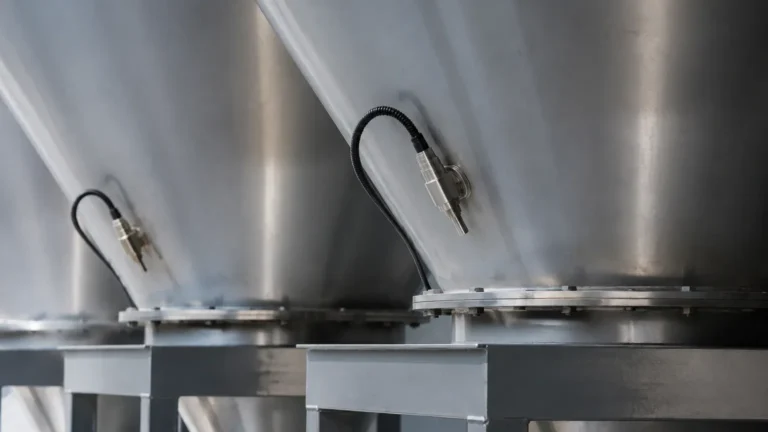
* *Horizontal Mounting:* Common for side-entry high/low alarms. Ensure the cable entry points downward to prevent moisture ingress through the conduit.
* *Vertical Mounting:* Ideal for top-entry applications. If using a vibrating fork, ensure the tines are oriented so that the material can flow through them rather than getting trapped.
3. Stilling Wells: In tanks with heavy turbulence or agitation, install float or ultrasonic switches inside a stilling well (a perforated pipe) to provide a stable surface for measurement.
4. Nozzle Length: Ensure the sensing element (the fork tines or the capacitance probe) extends sufficiently into the tank. If the nozzle is too long and the sensor is recessed, material may build up in the nozzle and cause a "dead zone" or false positive.
5. Grounding: For capacitance and conductivity switches, proper grounding to the metal tank wall is essential. In plastic tanks, a ground reference electrode must be provided.
Limitations and Common Risks
While point level switches are generally robust, certain conditions can lead to measurement errors:
* Material Buildup (Coating): In sticky applications like wastewater or syrup, material can dry on the sensor. If the sensor cannot differentiate between the coating and the actual level, it will remain in the "alarm" state. Capacitance switches with coating rejection or vibrating forks with high-frequency electronics are the best defenses against this.
* Density Changes: Float switches rely on buoyancy. If the liquid density changes significantly (e.g., switching from water to an oil-based chemical), the float may no longer sit at the correct level or may fail to float entirely.
* Dielectric Fluctuations: Capacitance switches are sensitive to the dielectric constant. If the media composition changes frequently, the switch may require recalibration.
* Mechanical Wear: Any switch with moving parts (floats, paddles) is subject to fatigue and mechanical failure, especially in abrasive or corrosive environments.
Frequently Asked Questions (FAQ)
Q: Can a point level switch be used for continuous level monitoring?
A: No. A point level switch only provides a binary signal (on/off). To monitor the level across the entire height of the tank, you would need a radar, ultrasonic, or hydrostatic level transmitter. However, multiple point switches can be installed at different heights to provide stepped level indication (e.g., 25%, 50%, 75%, 100%).
Q: What is the difference between NPN and PNP outputs in electronic switches?
A: These refer to the type of transistor output used to communicate with a PLC. PNP (Source) outputs provide positive voltage when triggered, while NPN (Sink) outputs connect the load to the negative/ground. The choice depends on the input requirements of your control system.
Q: How do I test a point level switch without filling the tank?
A: Most modern electronic switches, such as vibrating forks, include a magnetic test point or a local test button. Touching a magnet to the housing simulates a "covered" state, allowing you to verify the wiring and PLC logic without a full process cycle.
Q: Are point level switches suitable for explosive atmospheres?
A: Yes, many models are available with ATEX, IECEx, or FM certifications for use in hazardous areas. These typically use "Intrinsically Safe" (Ex i) or "Flameproof" (Ex d) protection methods.
Conclusion
Point level switches are indispensable components in modern industrial automation, providing the critical data needed to prevent accidents and optimize production. By matching the measurement principle—whether it be vibrating fork, capacitance, or float—to the specific needs of the media and process environment, engineers can ensure high system availability and safety. For those seeking specific hardware solutions, exploring a comprehensive range of Level Switches is the recommended next step in the engineering design process.