RF Level Switch 550
RF Level Switch 550
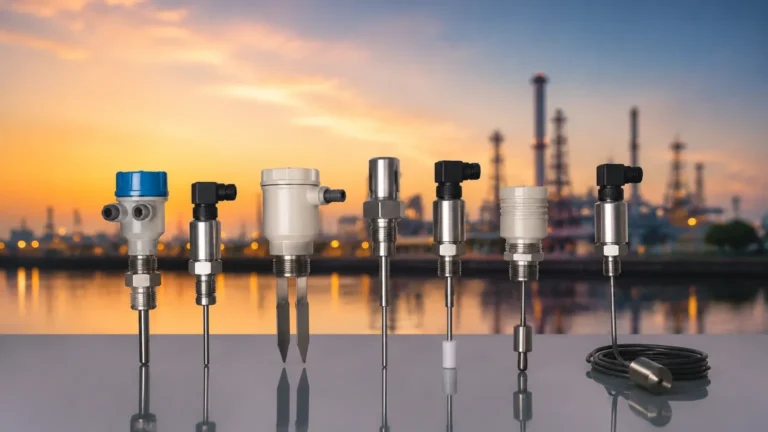
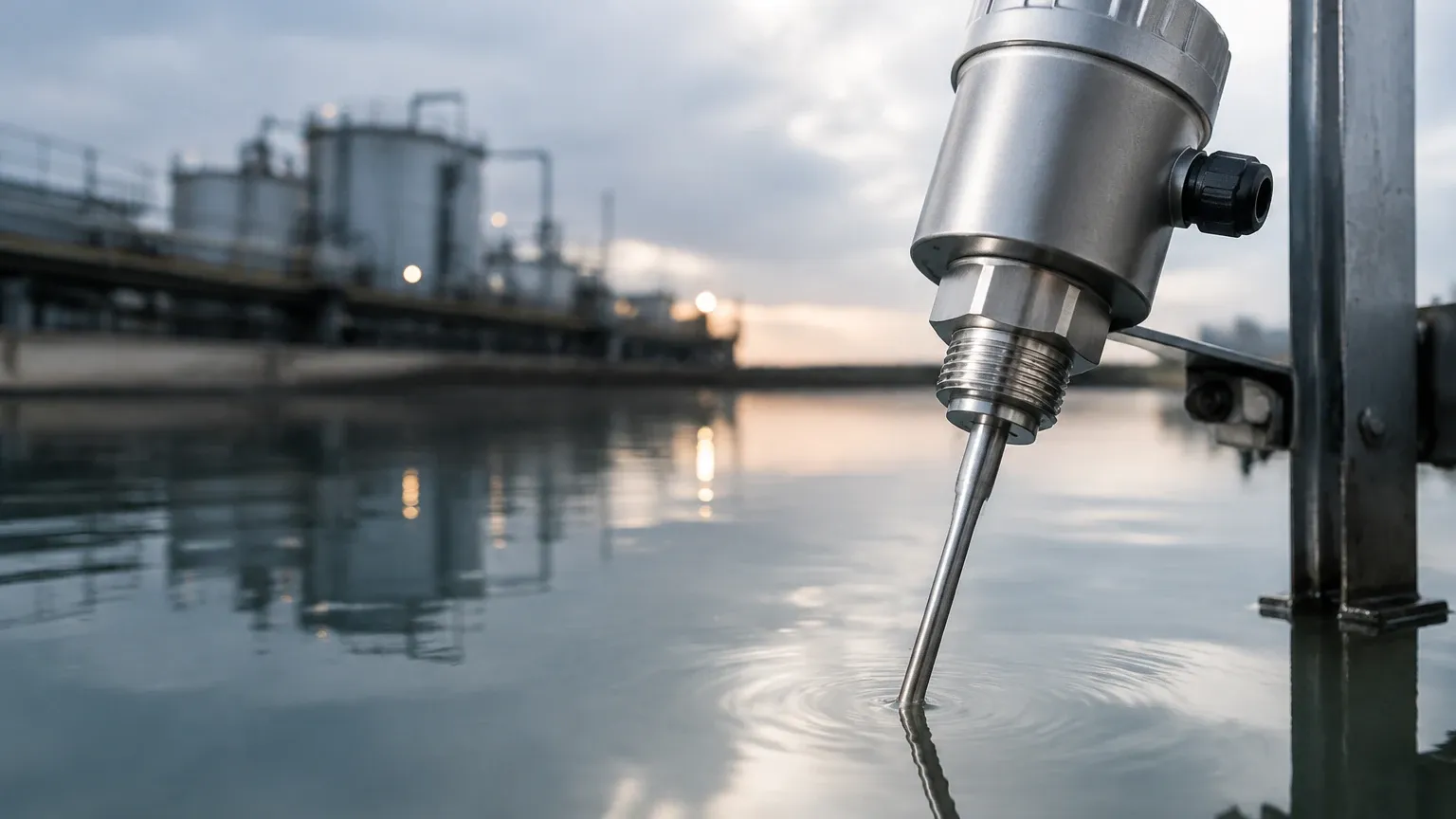
In the landscape of industrial process control, point level detection serves as a fundamental safeguard for vessel overfill prevention, pump protection, and inventory management. The RF level switch 550 is a specialized instrument designed to address the limitations of traditional capacitance and mechanical switches. By utilizing radio frequency (RF) admittance technology, this device provides a reliable solution for monitoring liquids, slurries, and granular solids, even in environments prone to material buildup or coating on the sensor probe.
As industrial processes become more automated and demanding, the selection of robust Level Switches becomes critical. The RF level switch 550 is engineered to maintain accuracy where other technologies fail, particularly in high-temperature, high-pressure, or highly corrosive applications. This guide explores the engineering principles, selection criteria, and installation best practices for this technology.
Measurement Principles: RF Admittance Technology
To understand the performance of the RF level switch 550, one must first understand the concept of RF admittance. While traditional capacitance switches measure the ability of a medium to store an electrical charge, RF admittance technology measures the total complex impedance, which includes both capacitive reactance (susceptance) and resistive components (conductance).
The Admittance Equation
In electrical terms, admittance (Y) is the reciprocal of impedance (Z). It is expressed by the formula:
Y = G + jB
Where:
* G (Conductance): Represents the resistive component, often influenced by the conductivity of the material and any coating on the probe.
* B (Susceptance): Represents the capacitive component, primarily influenced by the dielectric constant of the material.
* j: The imaginary unit.
By measuring both components, the RF level switch 550 can distinguish between the actual level of the material in the tank and the residual material coating the probe. This is achieved through a "driven shield" or "guard" circuit.
The Role of the Guard Section
The probe of an RF level switch 550 typically consists of three elements: the active sensing element, the guard (shield) element, and the ground (usually the tank wall). The electronics drive the guard element at the same frequency and potential as the sensing element. Because there is no potential difference between the sensor and the guard, no current flows through the coating attached to the probe. The instrument only measures the current flowing from the sensor to the tank wall through the bulk material, effectively "ignoring" the coating and preventing false alarms.
Key Features and Technical Specifications
The RF level switch 550 is characterized by its versatility and durability. Unlike vibration switches that may be dampened by thick slurries or float switches that can jam due to debris, the RF switch has no moving parts and relies on electronic sensing.
Performance Parameters
* Sensitivity: Capable of detecting materials with dielectric constants (εr) as low as 1.5.
* Temperature Range: Standard models typically handle -40°C to 80°C, while high-temperature versions with ceramic insulators can withstand up to 250°C (482°F) or higher.
* Pressure Rating: Designed for vacuum applications up to 4.0 MPa (approx. 580 PSI) depending on the flange or thread specification.
* Output Options: Typically features DPDT (Double Pole Double Throw) relay outputs, allowing for simultaneous control of an alarm and a pump or valve.
Material Compatibility
The wetted parts of the RF level switch 550 are usually constructed from 316 Stainless Steel, often with PTFE (Teflon) or PFA insulation. For highly abrasive or extremely high-temperature environments, ceramic insulation is utilized to ensure long-term structural integrity.
Practical Selection Table
When specifying an RF level switch 550 for a project, engineers must match the instrument's capabilities to the specific process conditions. The following table provides a reference for common selection criteria.
| Selection Factor | Specification/Option | Engineering Consideration |
| :— | :— | :— |
| Media Phase | Liquid, Solid, or Slurry | Determines probe length and sensitivity settings. |
| Dielectric Constant | Low (εr < 2.0) to High (εr > 20) | Lower dielectric materials require higher sensitivity electronics. |
| Process Temperature | -40°C to +250°C | High-temp models require cooling fins or ceramic seals. |
| Process Pressure | Vacuum to 4.0 MPa | Flange rating must exceed maximum vessel surge pressure. |
| Probe Length | 100 mm to 3000 mm+ | Longer probes are used for top-mounting high/low alarms. |
| Coating Severity | Light to Heavy (Sticky) | Requires active guard technology to prevent false trips. |
| Hazardous Area | ATEX / IECEx / SIL2 | Essential for oil, gas, and chemical environments. |
Application Environments
The RF level switch 550 is a preferred choice in several heavy industries due to its immunity to dust, vapor, and moderate turbulence.
1. Water and Wastewater Treatment
In wastewater applications, probes are often subjected to grease, oil, and organic buildup. The RF admittance principle allows the switch to accurately detect the water level even when the probe is coated in a thick layer of sludge. It is frequently used in lift stations and chemical feed tanks.
2. Chemical and Petrochemical Processing
Many chemical reagents are corrosive or have varying dielectric properties. The 550 series, with its PFA-coated probes, provides excellent chemical resistance. It is used for high-level alarms in storage tanks containing acids, bases, and hydrocarbons.
3. Food and Beverage
In the production of chocolate, syrups, or dairy products, material adherence to the sensor is a constant challenge. The RF level switch 550 can be configured with sanitary tri-clamp connections and polished probes to meet hygiene standards while ignoring the sticky residue left after the tank is drained.
4. Mining and Power Generation
For fly ash hoppers or mineral slurries, the abrasive nature of the material can destroy fragile sensors. The robust construction of the RF probe, combined with its ability to ignore dust clouds, makes it superior to ultrasonic or optical sensors in these dusty, high-vibration environments.
Installation Considerations
Proper installation is paramount to the longevity and accuracy of the RF level switch 550. Engineers should adhere to the following guidelines during the design and commissioning phases:
1. Mounting Orientation: The switch can be mounted horizontally (side-mount) or vertically (top-mount). For horizontal mounting, the probe should be angled slightly downward (approx. 10-20 degrees) to allow liquid to drain off the probe surface.
2. Avoid the Inflow Stream: Never install the probe directly in the path of the material falling into the tank. The impact force can damage the probe, and the constant flow will cause erratic readings. Use a baffle or relocate the sensor if necessary.
3. Grounding: Since the measurement is made relative to the tank wall, the vessel must be properly grounded. If the tank is non-metallic (e.g., plastic or fiberglass), a ground rod or a large metal flange must be used as a reference point.
4. Inactive Length (Dead Zone): Ensure that the active sensing part of the probe extends beyond the mounting nozzle. If the active section remains inside a long nozzle, material can collect there and cause a permanent "full" signal.
5. Cable Routing: Use shielded cables for signal transmission and ensure that the cable entry points are sealed with appropriate glands to prevent moisture ingress into the electronics housing.
Limitations and Challenges
While the RF level switch 550 is highly versatile, it is not a universal solution for every application. Understanding its limitations prevents misapplication.
* Extreme Dielectric Changes: If a process involves switching between two liquids with vastly different dielectric constants (e.g., oil and water), the switch may require recalibration to ensure it trips at the correct point for both media.
* Homogeneity Requirements: In some cases, highly aerated liquids or foams may have a dielectric constant too close to that of air, making detection difficult. In such instances, a specialized foam-detection calibration may be required.
* Probe Abrasion: In extremely high-velocity abrasive flows (like pneumatic conveying of sand), even reinforced probes will eventually wear down. Protective shields or non-contact methods might be considered for these specific niches.
Frequently Asked Questions (FAQs)
Q: How does the RF level switch 550 compare to a tuning fork (vibration) switch?
A: Tuning fork switches are excellent for clean liquids and powders but can fail if the material is viscous enough to "bridge" the forks or dampen the vibration without the tank being full. The RF switch is generally better suited for sticky, coating-prone media because of its guard circuit.
Q: Can the RF level switch 550 be used for interface detection?
A: Yes. Because it measures admittance, it can be calibrated to detect the interface between two immiscible liquids, such as oil and water, provided there is a sufficient difference in their dielectric constants and conductivities.
Q: Does the probe need to be fully insulated?
A: For conductive liquids (like water or acids), the probe must be insulated (e.g., with PTFE) to prevent a direct short circuit to the tank wall. For non-conductive solids or oils, a bare metal probe can sometimes be used, though insulation is often preferred for added protection and consistency.
Q: What maintenance is required for these switches?
A: Due to the lack of moving parts, maintenance is minimal. Periodic visual inspections of the probe for physical damage and a functional test of the relay output are recommended during scheduled plant shutdowns.
Conclusion
The RF level switch 550 is a high-performance instrument that bridges the gap between simple level detection and complex process environments. Its ability to ignore material buildup through RF admittance technology makes it an essential component for modern industrial automation. By carefully considering the dielectric properties of the media, the physical constraints of the vessel, and the thermal demands of the process, engineers can implement these Level Switches to achieve high reliability and reduced maintenance costs.
When selecting a level measurement solution, it is vital to confirm the chemical compatibility of the wetted materials and the electrical requirements of the control system. The RF level switch 550 remains a primary choice for engineers who require a "fit and forget" solution for the most challenging point level applications.