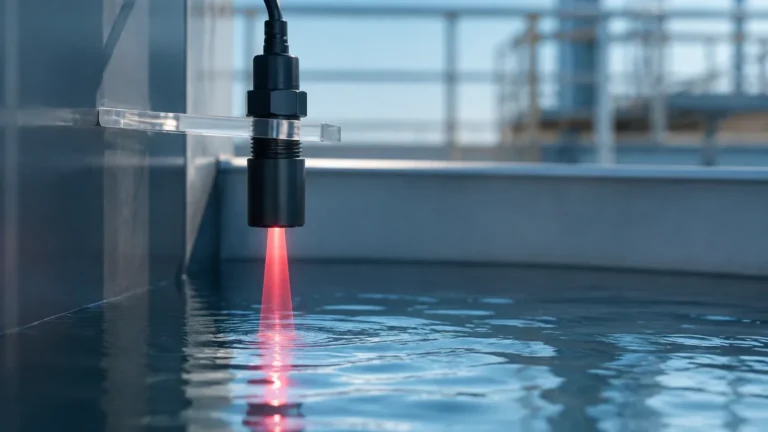
Leveling Jack Switch
Leveling Jack Switch
In industrial automation and heavy machinery operations, the precise positioning of stabilization equipment is a fundamental safety and operational requirement. A leveling jack switch serves as the primary feedback mechanism for ensuring that hydraulic or mechanical jacks have reached their intended deployment state, whether that is fully retracted for transport or extended to achieve a stable, level base. While often categorized under position sensing, these devices share significant technological overlap with industrial Level Switches, utilizing point-detection principles to confirm the presence or absence of a target at a specific threshold.
For engineers and site managers, selecting the correct leveling jack switch requires an understanding of diverse sensing technologies, environmental stressors, and the integration of these components into broader control systems. This guide examines the technical foundations of leveling jack switches, their application in industrial environments, and the criteria for selecting the most reliable solution.
Measurement Principles of Leveling Jack Switches
Leveling jack switches operate on the principle of discrete state detection. Unlike continuous sensors that provide a range of values, these switches provide a binary output (on/off) when a specific physical condition is met. Several distinct technologies are employed depending on the mechanical design of the jack and the operating environment.
Mechanical Limit Sensing
Mechanical limit switches are the most traditional form of leveling jack detection. They consist of an internal contact block actuated by a physical plunger, lever, or roller. When the leveling jack reaches its limit, it physically depresses the actuator, breaking or completing an electrical circuit. These are valued for their simplicity and high current-carrying capacity, though they are subject to mechanical wear over time.
Inductive Proximity Sensing
Inductive switches are non-contact sensors used to detect metallic objects. In a leveling jack application, the sensor emits an electromagnetic field. When the metal foot or shaft of the jack enters this field, eddy currents are induced, causing the sensor to trigger. Because there is no physical contact, these switches offer a significantly longer operational life in high-cycle applications and are resistant to dust and oil.
Pressure-Based Detection
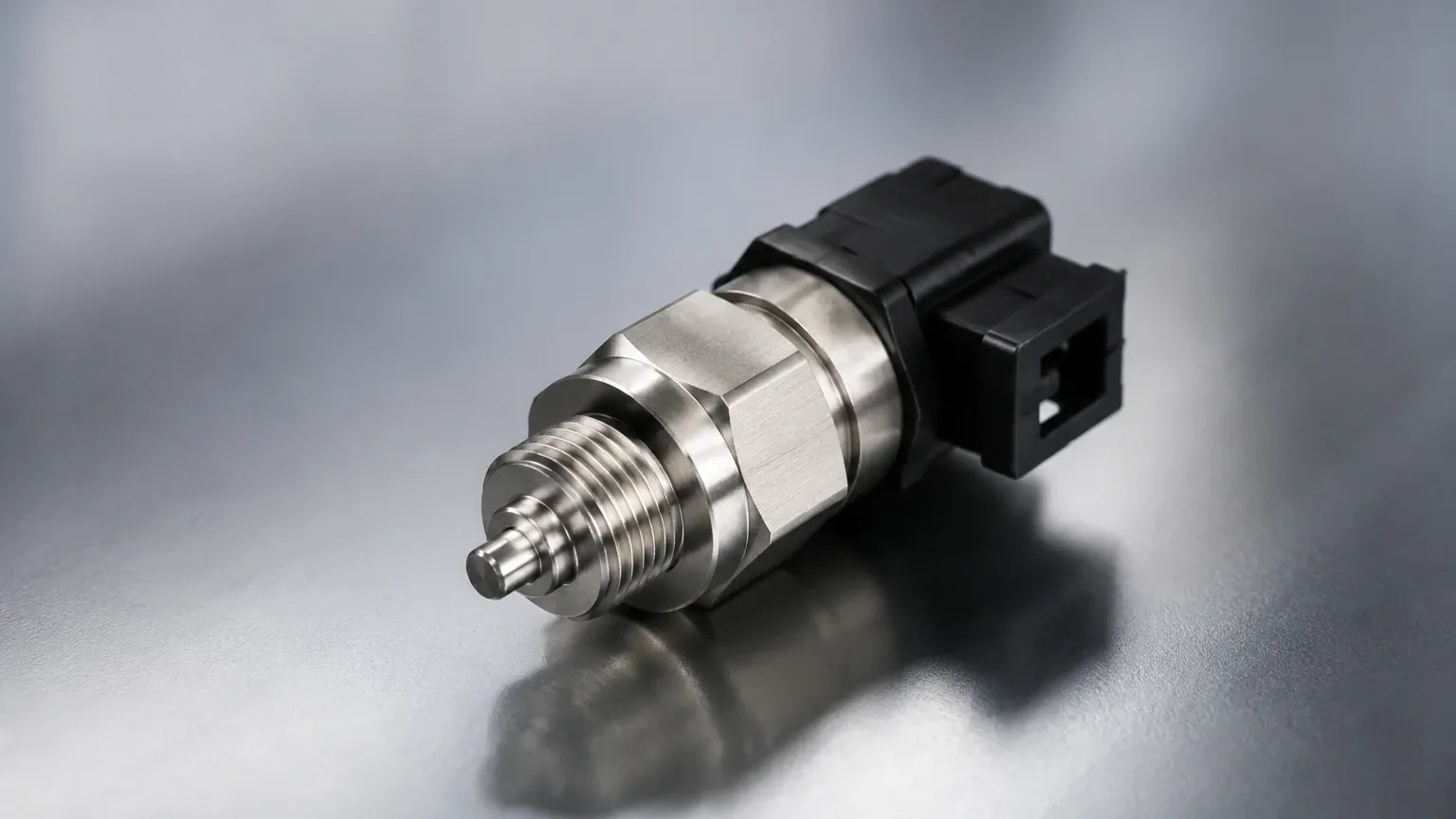
In hydraulic leveling systems, a pressure switch is often used as a proxy for a leveling jack switch. Instead of detecting the physical position of the jack, the switch monitors the hydraulic fluid pressure. When the jack makes contact with the ground and begins to take on the weight of the structure, the pressure in the cylinder spikes. The switch detects this threshold and signals that the "leveling" state has been achieved. This method is particularly effective for confirming ground contact rather than just extension length.
Ultrasonic and Capacitive Variations
While less common in standard mechanical leveling, ultrasonic sensors can be used to measure the distance between the equipment chassis and the ground. Capacitive switches may be used if the leveling jack is interacting with non-metallic surfaces or if the detection of specialized composite materials is required. These technologies align closely with the sensors used in liquid and solid Level Switches, where non-contact measurement is preferred to avoid contamination or corrosion.
Technical Integration in Industrial Systems
The integration of a leveling jack switch into an industrial control logic (such as a PLC or SCADA system) involves defining the electrical output characteristics. Most modern switches utilize one of the following configurations:
1. Normally Open (NO): The circuit is open until the jack reaches the switch, at which point it closes.
2. Normally Closed (NC): The circuit is closed during normal operation and opens when the jack reaches the limit. This is often preferred for safety-critical "fail-safe" applications, as a broken wire will trigger the same signal as a deployed jack.
3. PNP vs. NPN: In DC systems, the choice between Positive-Negative-Positive (sourcing) and Negative-Positive-Negative (sinking) outputs must match the input requirements of the controller.
Selection Criteria for Leveling Jack Switches
Choosing the appropriate switch requires a detailed analysis of the application's physical and electrical constraints. The following table provides a comparison of the primary switch types used in leveling jack applications.
Comparison Table: Leveling Jack Switch Technologies
| Feature | Mechanical Limit Switch | Inductive Proximity Switch | Hydraulic Pressure Switch |
| :— | :— | :— | :— |
| Sensing Method | Physical Contact | Electromagnetic Field | Fluid Pressure |
| Durability | Moderate (Mechanical Wear) | High (Non-contact) | High |
| Environmental Resistance | IP65/IP66 | IP67/IP69K | IP67 |
| Typical Application | Manual machinery, low cycle | Automated platforms, high cycle | Hydraulic stabilization legs |
| Response Time | 10–20 ms | < 1 ms | 5–15 ms |
| Maintenance | Periodic contact cleaning | Minimal | Seal inspection |
Environmental Factors
Industrial leveling jacks are frequently exposed to harsh conditions. A switch mounted on a mobile crane or a portable chemical storage tank must withstand:
* Vibration and Shock: Mechanical switches must be rated for high G-forces to prevent false triggers.
* Ingress Protection (IP): For outdoor or wash-down environments, a minimum rating of IP67 is recommended to prevent moisture from entering the housing.
* Temperature Extremes: Standard industrial switches typically operate from -25°C to +70°C (-13°F to 158°F). Specialized high-temperature versions are required for foundry or glass manufacturing applications.
Installation and Calibration Considerations
The reliability of a leveling jack switch is heavily dependent on the precision of its installation. Even the most accurate sensor will fail to provide safety if it is misaligned or improperly mounted.
Mounting and Alignment
For inductive and mechanical switches, the "hysteresis" or differential travel must be accounted for. This is the distance between the point where the switch activates and the point where it resets. If a leveling jack vibrates near the trigger point, a switch with too little hysteresis may "chatter," sending rapid on/off signals to the controller. Secure, rigid mounting brackets are essential to prevent the switch from shifting due to the mechanical force of the jack's movement.
Wiring and Signal Integrity
In environments with high electromagnetic interference (EMI), such as near large motors or variable frequency drives (VFDs), shielded cabling is necessary for electronic switches. For hydraulic pressure switches, the installation should include a snubber to protect the switch from pressure spikes or "water hammer" effects within the hydraulic lines.
Calibration of the "Null" Point
In leveling applications, the "null" or zero point is the position where the equipment is perfectly level. The leveling jack switch must be calibrated so that it triggers exactly when this state is reached. In systems using multiple jacks, the timing of these switch triggers is synchronized by the central controller to ensure the structure is raised evenly.
Limitations and Operational Risks
While leveling jack switches are robust, they are not without limitations. Understanding these risks is vital for developing a comprehensive maintenance strategy.
* Mechanical Fatigue: In mechanical switches, the internal spring or the external actuator can fatigue over thousands of cycles, leading to delayed triggers or total failure.
* Target Material Sensitivity: Inductive switches have different sensing distances based on the metal type. For example, a switch calibrated for a steel jack may have a reduced sensing range if the jack is replaced with an aluminum component.
* Accumulation of Debris: In mining or construction applications, mud or ice can accumulate on the switch or the jack. This can physically prevent a mechanical switch from depressing or cause an inductive switch to trigger prematurely if the debris contains metallic particles.
Frequently Asked Questions (FAQ)
Q: Can a standard liquid level switch be used as a leveling jack switch?
A: Generally, no. While the electronic logic may be similar, liquid Level Switches (like float or tuning fork types) are designed for fluid immersion and lack the mechanical housing required to withstand the physical impact or pressure associated with leveling jacks.
Q: What is the benefit of using a non-contact inductive switch over a mechanical one?
A: The primary benefit is longevity. Because there are no moving parts and no physical contact with the jack, there is no friction-related wear. This makes them ideal for automated systems that deploy and retract many times per day.
Q: How do I handle a switch failure in a safety-critical application?
A: Implementing redundancy is the standard engineering approach. Using two switches (e.g., one mechanical and one inductive) in a 1-out-of-2 (1oo2) or 2-out-of-2 (2oo2) voting logic ensures that a single switch failure does not result in an unsafe condition.
Q: Are there wireless leveling jack switches available?
A: Yes, wireless limit switches are becoming more common in B2B industrial applications to reduce wiring costs on large-scale mobile equipment. However, they require careful battery management and must be checked for signal latency in time-sensitive leveling operations.
Conclusion
The leveling jack switch is a small but critical component in the ecosystem of industrial stabilization. By selecting a switch technology that aligns with the mechanical demands and environmental realities of the application—whether it be a rugged mechanical limit switch or a high-precision inductive sensor—operators can ensure the safety and accuracy of their leveling processes. For those managing complex fluid or solid storage systems, integrating these position-based switches with high-quality tank Level Switches creates a holistic approach to industrial monitoring and control. Proper installation, regular calibration, and a clear understanding of the switch's operational limits are the keys to long-term reliability in any leveling application.