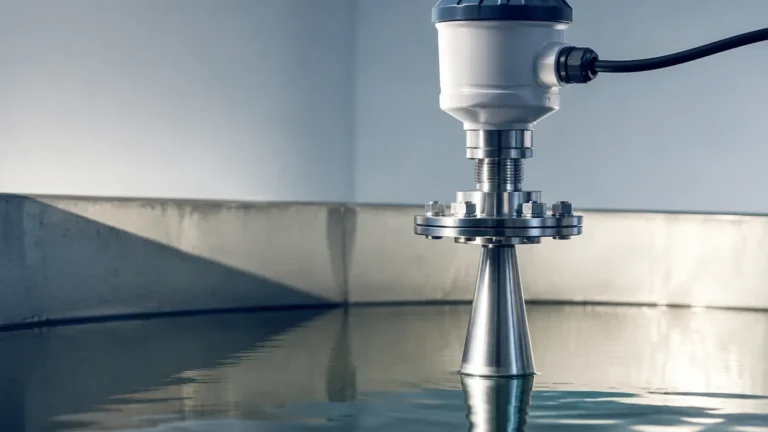
What Are Level 3 Switches
What Are Level 3 Switches
In the context of industrial process control and automation, the term "level 3 switches" can often lead to confusion between two very different fields: information technology (IT) and industrial instrumentation. While IT professionals use the term to describe Layer 3 network switches capable of routing, engineers in the process industries typically use the term to refer to three-stage level control systems or instruments rated for Safety Integrity Level 3 (SIL 3).
For a plant manager or instrumentation engineer, understanding the nuances of Level Switches and their hierarchical application in safety and control is essential for ensuring operational efficiency and environmental compliance. This guide focuses on the industrial application of level switches, their measurement principles, and how "Level 3" functionality is implemented in modern process environments.
Understanding Level Switches in Industrial Automation
A level switch is a sensor designed to detect the presence or absence of a substance (liquid, powder, or granulated solid) at a specific point in a tank or vessel. Unlike continuous level transmitters that provide a constant stream of data regarding the exact level, a switch provides a discrete output—typically a relay or transistor signal—when the material reaches a predetermined threshold.
In industrial hierarchies, "Level 3" often refers to the third tier of a protection layer strategy. For example:
1. Level 1: Primary control (Continuous measurement for process regulation).
2. Level 2: High/Low alarms (Alerting operators to deviations).
3. Level 3: Emergency shutdown (ESD) or overfill protection (Automatic safety interlock).
When searching for "what are level 3 switches," professionals are usually looking for high-reliability instruments capable of serving as the final line of defense in a safety instrumented system (SIS).
Measurement Principles of Level Switch Technologies
Before selecting a switch for a three-stage control system, it is vital to understand the underlying physics of the different technologies available. Each principle has specific strengths depending on the media's properties, such as density, conductivity, and viscosity.
1. Vibrating Tuning Fork (Vibronic)
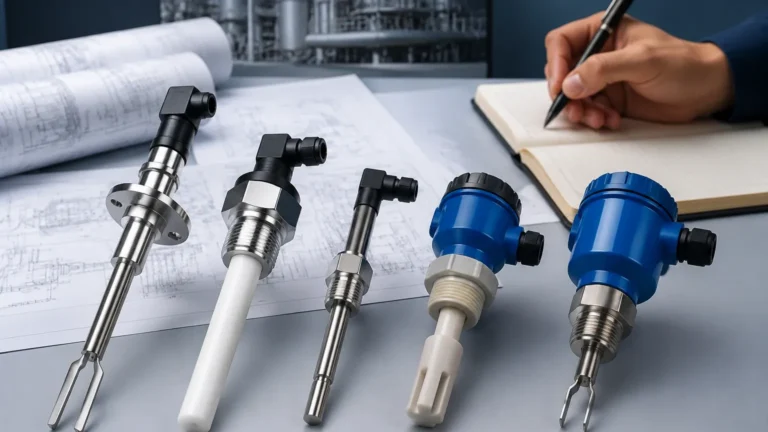
This is one of the most common technologies for high-reliability applications. The switch consists of a two-pronged fork that vibrates at its natural resonant frequency in air. When the fork is submerged in liquid or solids, the frequency shifts. An electronic circuit detects this shift and triggers the output.
* Advantages: Not affected by flow, turbulence, bubbles, or foam. No moving parts to wear out.
* Common Use: Overfill protection and pump dry-run prevention.
2. Float and Magnetic Switches
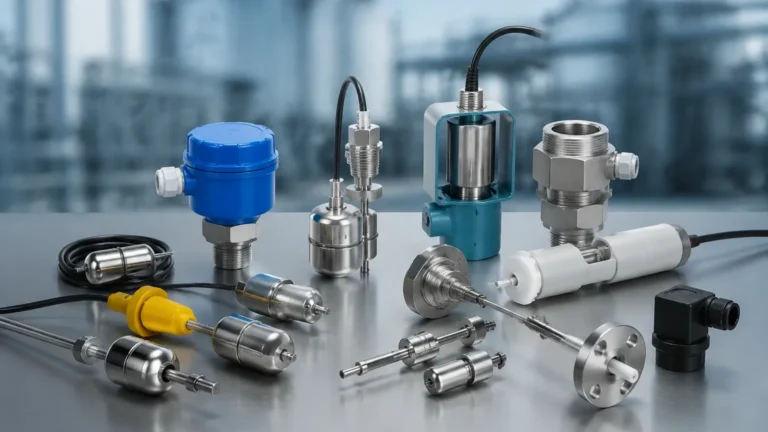
Float switches operate on the principle of buoyancy. A float containing a magnet moves with the liquid level. When it reaches a reed switch or microswitch within the stem or housing, the magnetic field opens or closes the circuit.
* Advantages: Simple, low cost, and requires no power to operate the sensing element itself.
* Common Use: Water treatment tanks and fuel storage.
3. Capacitance Level Switches
These switches measure the change in electrical capacitance between a probe and the tank wall (or a reference probe). As the medium displaces air, the dielectric constant changes, altering the capacitance.
* Advantages: Can be used for both liquids and solids; capable of detecting interfaces between different liquids.
* Common Use: Chemical processing and food/beverage silos.
4. Ultrasonic Level Switches
Ultrasonic switches utilize a pair of piezoelectric crystals separated by a gap. One crystal emits an ultrasonic pulse; if the gap is filled with liquid, the pulse reaches the receiver. If the gap contains air or gas, the signal is attenuated.
* Advantages: Non-contact options available; highly accurate for clean liquids.
* Common Use: High-purity water and pharmaceutical applications.
Defining "Level 3" Functionality: Multi-Point and Safety Systems
In practical engineering, a "Level 3" switch configuration typically implies one of two scenarios: multi-point detection or Safety Integrity Level (SIL) 3 compliance.
Multi-Point Level Switching
In many applications, a single instrument is used to monitor three distinct points within a tank. This is often referred to as a multi-point level switch. These points are typically configured as:
* Low-Low (L1): Prevents pump cavitation by ensuring the pump stops before the tank is empty.
* High (L2): Signals the control system to stop the filling process under normal operating conditions.
* High-High (L3): An emergency stop point that triggers if the High alarm fails, preventing a catastrophic overflow.
SIL 3 Rated Switches
Safety Integrity Level (SIL) is a measure of the reliability of a safety function. SIL 3 is a high-demand rating often required in the oil and gas or chemical industries. A switch rated for SIL 3 must have an extremely low Probability of Failure on Demand (PFD). Achieving this often requires redundant hardware (e.g., using two or three switches in a 2oo3—two out of three—voting logic).
Selection Criteria for Industrial Level Switches
Choosing the right instrument requires a detailed analysis of the process conditions. The table below provides a comparison of common technologies used in multi-stage level detection.
| Technology | Media Type | Temp. Range | Pressure Range | Viscosity Limit | Best For |
| :— | :— | :— | :— | :— | :— |
| Tuning Fork | Liquids/Solids | -50 to 250°C | Up to 10 MPa | Up to 10,000 cP | Overfill protection |
| Float | Clean Liquids | -20 to 150°C | Up to 4 MPa | Low viscosity | Sumps and water tanks |
| Capacitance | Liquids/Solids | -40 to 200°C | Up to 6 MPa | Medium viscosity | Aggressive chemicals |
| Conductivity | Conductive Liquids | -20 to 100°C | Up to 2 MPa | Low viscosity | Boiler water level |
| Ultrasonic | Clean Liquids | -40 to 135°C | Up to 4 MPa | Low viscosity | Hazardous chemicals |
Key Evaluation Factors
1. Chemical Compatibility: The wetted parts (e.g., 316L Stainless Steel, PTFE, or Hastelloy) must be resistant to the process medium.
2. Process Conditions: High-pressure environments (above 5 MPa / 725 psi) or extreme temperatures require specialized heavy-duty housings.
3. Media Characteristics: If the liquid is prone to foaming, tuning fork or hydrostatic switches are preferred over ultrasonic or capacitance types.
4. Hazardous Areas: For environments with explosive gases or dust, switches must be certified as Intrinsically Safe (Ex i) or Explosion-Proof (Ex d).

Installation Guidelines and Best Practices
Proper installation is as critical as selecting the right technology. Even the highest quality Level Switches will fail if positioned incorrectly.
* Avoid the Inlet Stream: Never install a switch directly under a fill pipe. The turbulence and force of the incoming material can cause false triggering or mechanical damage.
* Distance from Walls: For ultrasonic and capacitance switches, maintain a minimum distance (typically 50mm to 100mm) from the tank wall to prevent interference.
* Orientation: Vibrating forks can be installed horizontally or vertically. However, if installed horizontally in a viscous liquid, the prongs should be oriented vertically (side-by-side) so the liquid can drain easily from between them.
* Still Wells: In tanks with heavy agitation or splashing, installing the switch inside a stilling well (a vertical pipe) can provide a stable surface for accurate measurement.
* Wiring and Sealant: Ensure that cable glands are pointed downwards to prevent moisture from entering the housing via the conduit. Use appropriate thread sealant for NPT or G-thread connections to maintain pressure integrity.
Limitations and Operational Challenges
While level switches are robust, they are not infallible. Engineers must account for several common limitations:
1. Build-up and Coating: In applications involving sticky resins or wastewater, material can accumulate on the sensor probe. While tuning forks are somewhat resistant to this, capacitance switches may require "active shield" technology to ignore the coating.
2. Specific Gravity Changes: Float switches rely on the density of the liquid. If the process involves different liquids with varying densities, a float calibrated for water may not rise in a light oil.
3. Turbulence and Foam: Mechanical switches and ultrasonic sensors can struggle in highly turbulent environments or where thick foam layers are present. In these cases, vibrating forks or conductivity probes are more reliable.
4. Maintenance Requirements: Mechanical switches (floats) have moving parts that can stick due to scale or debris. They require more frequent inspection than solid-state vibronic or ultrasonic switches.
Frequently Asked Questions (FAQs)
Q: Can a level switch be used for continuous level measurement?
A: No. A level switch only provides a "point" measurement (On/Off). For continuous monitoring (0-100%), you would need a radar, ultrasonic, or hydrostatic level transmitter.
Q: What is the difference between a NORMALLY OPEN (NO) and NORMALLY CLOSED (NC) switch?
A: A Normally Open switch completes the circuit when the level reaches the setpoint. A Normally Closed switch breaks the circuit when the level reaches the setpoint. For safety-critical "Level 3" applications, NC is often preferred because a wire break will trigger an alarm (fail-safe).
Q: How do I test a SIL 3 rated level switch?
A: SIL-rated switches require periodic "Proof Testing." This involves manually raising the liquid level or using a built-in test button to verify that the electronics and the relay output are functioning correctly according to the safety manual.
Q: Can level switches handle high-viscosity materials?
A: Yes, but technology choice is vital. Vibrating forks are excellent for liquids up to 10,000 cP. For extremely thick materials like peanut butter or heavy sludges, a rotating paddle switch or a heavy-duty capacitance probe is usually required.
By understanding the specific requirements of your process—whether it is simple pump control or a complex SIL 3 safety loop—you can select the most appropriate level switch technology to ensure long-term reliability and safety.