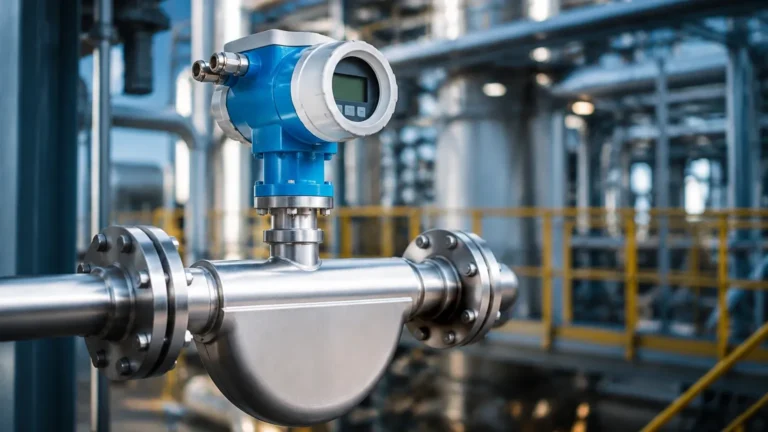
Dn40 Hygienic Flow Sensor
Dn40 Hygienic Flow Sensor
In the precision-driven sectors of food and beverage, pharmaceuticals, and biotechnology, the DN40 hygienic flow sensor serves as a critical component for process control. DN40, which corresponds to a nominal diameter of 40mm (approximately 1.5 inches), is a standard pipe size for medium-scale processing lines. A hygienic flow sensor in this category must not only provide accurate measurement but also adhere to stringent sanitary design standards to prevent bacterial growth and product contamination.
Selecting the right DN40 hygienic flow sensor requires an understanding of the underlying measurement principles, the specific requirements of the media being processed, and the environmental conditions of the facility. This guide provides a factual engineering overview of the technologies and selection criteria relevant to these instruments.
Measurement Principles for Hygienic Flow Sensors
Before selecting a sensor, it is essential to understand how different technologies interact with the fluid and the process piping. For hygienic applications, non-intrusive or minimally intrusive designs are preferred to maintain a smooth internal surface (Ra < 0.8 µm).
Electromagnetic Flow Measurement (Magmeters)
Electromagnetic sensors operate based on Faraday’s Law of Induction. When a conductive liquid flows through a magnetic field generated by the sensor, it induces a voltage proportional to the velocity of the liquid.
* Advantages: No moving parts, no pressure drop, and highly resistant to changes in viscosity or density.
* Requirement: The liquid must have a minimum conductivity (typically >5 µS/cm).
Coriolis Mass Flow Measurement
Coriolis sensors measure mass flow directly by detecting the inertia caused by fluid flowing through oscillating tubes. As the fluid moves, it causes a slight twist in the tubes, which is measured by sensors and converted into a mass flow rate.
* Advantages: Extremely high accuracy (up to 0.1%), measures density and temperature simultaneously, and is independent of fluid conductivity.
* Requirement: Higher initial cost and potentially higher pressure drop due to tube geometry.
Ultrasonic (Transit-Time) Measurement
Ultrasonic sensors use sound waves to determine flow velocity. Transit-time sensors send pulses across the pipe; the time difference between pulses traveling with the flow and against the flow is used to calculate velocity.
* Advantages: Can be designed as "clamp-on" sensors for zero contact with the media, or inline with a full-bore design.
* Requirement: Sensitive to entrained air or high concentrations of suspended solids.
Key Technical Specifications for DN40 Sensors
A DN40 hygienic flow sensor is designed to fit into a 40mm process line. In the context of industrial automation and liquid management, these sensors must meet specific mechanical and electrical benchmarks.
Material and Surface Finish
To comply with 3-A, EHEDG, or FDA standards, the wetted parts of the sensor—those in direct contact with the product—must be made from corrosion-resistant materials. The standard is typically 316L stainless steel. The internal surface must be polished to a roughness average (Ra) of less than 0.8 µm, often reaching 0.4 µm for high-purity pharmaceutical applications, to ensure that no microorganisms can adhere to the walls.
Flow Range and Pressure
For a DN40 pipe, typical flow rates range from 1.5 m³/h to 60 m³/h, depending on the velocity limits (usually kept between 0.5 m/s and 10 m/s to prevent cavitation or excessive pressure drop). Most hygienic sensors are rated for pressures up to 10 bar (145 psi) or 16 bar (232 psi), though high-pressure variants exist.
Process Connections
The DN40 designation often implies specific connection types used in sanitary environments:
* Tri-Clamp (ISO 2852): The most common in North America and the UK.
* DIN 11851: Common in European dairy and food processing.
* SMS 1145: Often used in international beverage applications.
Selection Criteria and Practical Selection Table
Choosing between electromagnetic, Coriolis, or ultrasonic technology for a DN40 line depends on the physical properties of the fluid and the required precision. Engineers should consult a comprehensive Main Page to review specific product options and application support before finalizing a purchase.
| Feature | Electromagnetic (Magmeter) | Coriolis Mass Flow | Ultrasonic (Transit-Time) |
| :— | :— | :— | :— |
| Best For | Water, Milk, Juice, Acids | Oils, Syrups, High-Precision | Purified Water, Chemicals |
| Conductivity | Required (>5 µS/cm) | Not Required | Not Required |
| Accuracy | ±0.5% of rate | ±0.1% to 0.2% of rate | ±1.0% of rate |
| Moving Parts | None | None | None |
| CIP/SIP Capable | Yes | Yes | Yes |
| Relative Cost | Moderate | High | Moderate |
Installation Guidelines for Sanitary Environments
Proper installation is vital to ensure the accuracy of a DN40 hygienic flow sensor and to maintain the sanitary integrity of the system.
1. Orientation: Sensors should ideally be installed in a vertical pipe with the flow moving upward. This ensures the pipe is always full and prevents air pockets from forming at the sensor head, which would cause measurement errors.
2. Straight Pipe Runs: Most flow technologies require a "straight run" of pipe before and after the sensor to stabilize the flow profile. For a DN40 sensor, a common rule is 5D (5 x 40mm = 200mm) of straight pipe upstream and 2D (80mm) downstream.
3. Grounding: For electromagnetic flow meters, proper grounding is essential to eliminate electrical noise. In hygienic systems where plastic piping might be used, grounding rings are necessary.
4. CIP/SIP Integration: The sensor must be able to withstand Clean-in-Place (CIP) chemicals and Steam-in-Place (SIP) temperatures, which can reach 140°C (284°F). Ensure the sensor electronics are thermally isolated or rated for these temperatures.

Limitations and Common Challenges
While DN40 hygienic flow sensors are robust, they are not universal solutions. Engineers must account for the following limitations:
* Entrained Air: Air bubbles in the liquid can cause significant errors in both electromagnetic and ultrasonic sensors. In Coriolis meters, excessive aeration can cause the tubes to stop oscillating (stalling).
* Non-Conductive Fluids: If using a magmeter, fluids like deionized water, oils, or alcohols will not provide a signal. In these cases, Coriolis or ultrasonic sensors are required.
* Viscosity Extremes: While magmeters are largely unaffected by viscosity, very high-viscosity fluids (like peanut butter or heavy pastes) may cause excessive pressure drops in Coriolis meters or non-linear flow profiles that affect ultrasonic accuracy.
* Scaling and Coating: If the media tends to leave a film on the pipe walls (e.g., chocolate or certain proteins), it can insulate the electrodes of a magmeter or attenuate the signal of an ultrasonic sensor.
Frequently Asked Questions
Q: Can a DN40 sensor be used on a DN50 pipe?
A: Yes, using reducers. This is often done to increase the flow velocity through the sensor to improve accuracy, especially if the process flow is typically at the lower end of the DN50 range. However, this will increase pressure drop.
Q: What is the difference between a flow meter and a flow sensor?
A: In B2B contexts, "sensor" often refers to the primary element that detects the flow, while "meter" refers to the complete system including the transmitter and display. For a DN40 hygienic flow sensor, the transmitter is often integrated into the head of the unit.
Q: How often should a hygienic flow sensor be calibrated?
A: In regulated industries like pharmaceuticals, annual calibration is standard. In food and beverage, calibration intervals are usually determined by the facility's Quality Management System (QMS) based on the criticality of the measurement.
Q: Are these sensors compatible with vacuum conditions?
A: Some hygienic liners (like PFA used in magmeters) can collapse under vacuum if not properly specified. Always confirm the vacuum rating if the sensor is located near a pump inlet or in a system subject to vacuum cleaning.
Conclusion
The DN40 hygienic flow sensor is a versatile tool for ensuring process efficiency and product safety. Whether utilizing electromagnetic induction for conductive liquids or Coriolis forces for mass flow precision, the choice must be guided by the physical properties of the media and the mechanical requirements of the sanitary environment. By adhering to proper installation practices and understanding the limitations of each technology, operators can achieve reliable, long-term measurement accuracy. For further technical details on industrial measurement solutions, engineers are encouraged to visit the Main Page for additional resources.