Flowlink Cipher
Flowlink Cipher
In the modern industrial landscape, the management of fluid levels and flow rates has transitioned from simple local monitoring to complex, data-driven ecosystems. At the heart of this evolution is the need for secure, reliable, and accurate data transmission—a requirement that has led to the development of sophisticated software and communication protocols. Understanding the integration of level measurement hardware with data management platforms like Flowlink Cipher is essential for engineers and facility managers in water treatment, chemical processing, and industrial automation.
This guide explores the technical foundations of level measurement, the role of secure data encryption in industrial telemetry, and how to select the appropriate instrumentation to ensure seamless integration with advanced monitoring systems.
The Role of Secure Data Communication in Industrial Level Measurement
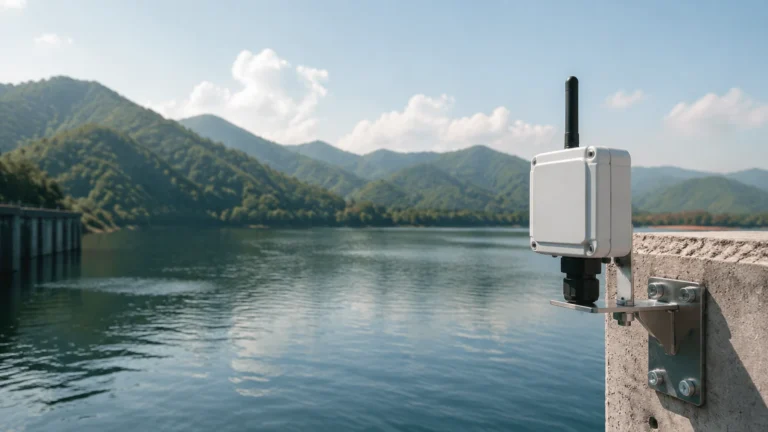
Industrial level measurement is no longer an isolated process. Sensors installed in remote pump stations, chemical storage tanks, or wastewater treatment plants must communicate data to centralized control rooms or cloud-based platforms. This is where the concept of a "cipher"—or encrypted data protocol—becomes critical.
Flowlink Cipher represents the intersection of hydraulic engineering and cybersecurity. As industrial internet of things (IIoT) devices become more prevalent, the risk of data interception or tampering increases. A secure communication framework ensures that the level data used for billing, environmental compliance, and process safety remains untampered. For B2B stakeholders, choosing instruments that are compatible with secure data management software is a prerequisite for long-term operational stability.
Core Principles of Level Measurement Technologies
Before integrating sensors into a digital monitoring platform, it is necessary to understand the physics behind the measurement. Different technologies offer varying levels of compatibility with high-speed data logging and encryption protocols.
Radar Level Measurement (Time of Flight)
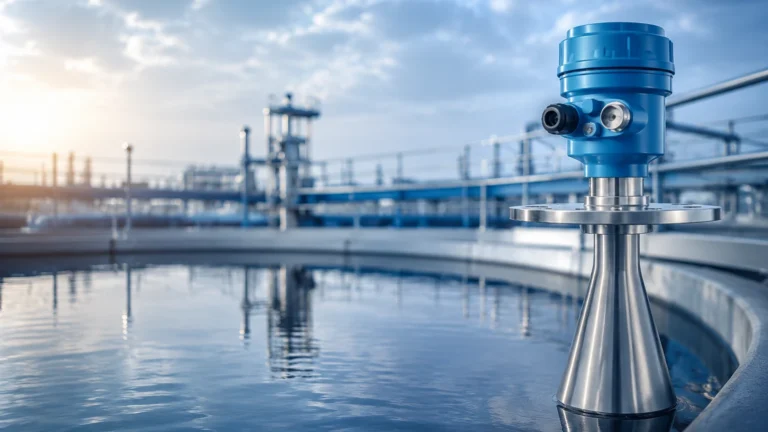
Radar level meters operate on the Time of Flight (ToF) principle. The sensor emits a high-frequency electromagnetic wave (typically in the 26GHz or 80GHz range) toward the product surface. The wave is reflected back to the antenna, and the device calculates the distance based on the time interval between transmission and reception.
* Advantages: Non-contact, unaffected by temperature fluctuations, vacuum, or high pressure.
* Data Characteristics: Provides high-resolution digital outputs (4-20mA HART, Modbus, or Profibus), which are ideal for encryption within a Flowlink Cipher environment.
Ultrasonic Level Sensors
Ultrasonic sensors utilize sound waves rather than electromagnetic waves. The transducer emits an ultrasonic pulse that bounces off the liquid surface. The distance is calculated based on the speed of sound.
* Advantages: Cost-effective for open-channel flow and standard water tank monitoring.
* Limitations: Sensitive to air temperature, heavy foam, and turbulence. Most modern ultrasonic units include temperature compensation to maintain data accuracy for remote logging.
Hydrostatic Level Transmitters
Hydrostatic measurement relies on the relationship between liquid height and the pressure exerted at the bottom of the vessel. The formula $P = \rho \cdot g \cdot h$ (where $P$ is pressure, $\rho$ is density, $g$ is gravity, and $h$ is height) allows for precise level calculation.
* Advantages: Excellent for deep wells, boreholes, and vented tanks.
* Data Characteristics: Typically provides a continuous analog signal that is converted to digital data for secure transmission.
Integrating Level Sensors with Flowlink Cipher Systems
Integration involves more than just physical wiring. To leverage the full capabilities of a secure data platform, the hardware must support specific communication standards. When reviewing product options, engineers should focus on the following integration layers:
1. The Physical Layer: RS-485 or Ethernet connections are standard for high-bandwidth data transmission. For remote sites, low-power cellular gateways are often employed.
2. The Protocol Layer: Modbus RTU/TCP is a common language for industrial sensors. However, to implement a "cipher" or secure layer, these protocols are often wrapped in TLS (Transport Layer Security) or transmitted via VPN tunnels.
3. The Software Layer: This is where Flowlink Cipher functions, aggregating data from multiple sensors, applying calibration curves (such as flume or weir equations), and ensuring that the data is encrypted for storage and analysis.
For a comprehensive overview of compatible hardware, professionals can Review product options and application support to ensure their sensors meet the necessary digital output standards.
Technical Selection Criteria for Level Measurement Instruments
Selecting the right instrument requires a balance between environmental conditions and data requirements. Use the following criteria to evaluate sensors for a secure monitoring network.
Media Properties
The chemical composition of the liquid determines the sensor material. For corrosive acids, PTFE-lined radar antennas or PVDF ultrasonic transducers are required. If the media is prone to buildup, non-contact radar is preferred over contact-based hydrostatic probes.
Accuracy and Resolution
In billing applications (such as municipal water custody transfer), a high degree of accuracy is mandatory. Radar sensors often provide accuracy within ±2 mm (±0.08 in), whereas ultrasonic sensors may vary by ±0.25% of the range.
Power Consumption
Remote monitoring sites often rely on battery or solar power. In these cases, the sensor's "warm-up time" and power draw during transmission are critical. Hydrostatic transmitters and low-power pulsed radar are frequently chosen for these applications.

Comparison of Level Measurement Technologies
The following table provides a practical engineering reference for comparing common technologies used in conjunction with digital data management systems.
| Technology | Measurement Range | Accuracy | Best For | Data Compatibility |
| :— | :— | :— | :— | :— |
| 80GHz Radar | Up to 120m (393 ft) | ±2 mm | Narrow tanks, chemical reactors | High (Digital/HART) |
| Ultrasonic | 0.3m – 15m (1 – 49 ft) | ±0.25% | Open channels, sumps | Medium (Analog/Modbus) |
| Hydrostatic | 1m – 200m (3 – 656 ft) | ±0.1% FS | Deep wells, water towers | High (Stable Analog) |
| Magnetic Gauge | 0.3m – 6m (1 – 20 ft) | ±5 mm | High-pressure boilers | Low (Visual/Reed Switch) |
| Level Switch | Point Level | N/A | Overfill protection | Low (Relay Output) |
Installation Considerations for Data Integrity
Even the most advanced Flowlink Cipher setup cannot compensate for poor sensor installation. To ensure data integrity, follow these engineering guidelines:
* Avoid Obstructions: For radar and ultrasonic sensors, ensure the signal beam is clear of ladders, pipes, or agitators. Obstructions create "false echoes" that can corrupt the data stream.
* Stilling Wells: In turbulent tanks, use a stilling well to provide a calm surface for measurement. This is particularly important for radar sensors in low-dielectric liquids.
* Signal Shielding: Use shielded twisted-pair cabling for all digital communications to prevent electromagnetic interference (EMI) from motors or VFDs. EMI is a leading cause of data packets dropping in encrypted systems.
* Mounting Position: Sensors should generally be mounted at least 200mm (8 in) from the tank wall to prevent side-wall reflections.
Limitations and Security Risks in Automated Level Monitoring
While digital systems offer immense benefits, they are not without limitations. Practitioners must be aware of the following:
1. Signal Latency: In encrypted systems, the overhead of encryption and decryption can introduce minor latency. While usually negligible for level monitoring, it should be considered in high-speed control loops.
2. Cybersecurity Vulnerabilities: Any internet-connected gateway is a potential entry point. Utilizing a robust cipher for data transmission is only one part of the solution; regular firmware updates and secure password management are also required.
3. Environmental Interference: Heavy steam or dust can attenuate ultrasonic and even some radar signals, leading to intermittent data loss. In these specific environments, hydrostatic or guided wave radar (GWR) may be more reliable.
Frequently Asked Questions
Q: Can I use Flowlink Cipher with older analog sensors?
A: Yes, but you will need a data logger or RTU (Remote Terminal Unit) that can convert the 4-20mA analog signal into a digital, encrypted format compatible with the software.
Q: What is the difference between a standard protocol and a ciphered protocol?
A: A standard protocol (like Modbus) sends data in "plain text," which can be read by anyone on the network. A ciphered protocol encrypts the data using a key, ensuring that only authorized users can view the level readings.
Q: How does temperature affect digital level data?
A: Temperature primarily affects the speed of sound (ultrasonic) and the density of the liquid (hydrostatic). High-quality sensors include internal sensors to compensate for these changes before the data is sent to the management platform.
Q: Is radar always better than ultrasonic for remote monitoring?
A: Not necessarily. While radar is more versatile, ultrasonic is often more cost-effective for simple water applications. However, radar is increasingly preferred for its superior reliability in varying atmospheric conditions.
For more detailed technical specifications and to explore the full range of industrial measurement solutions, visit the Main Page of our engineering resource. Selecting the right hardware is the first step in building a secure and resilient level monitoring infrastructure.