Fuel Tank High Level Alarm
Fuel Tank High Level Alarm
In industrial fuel management, preventing the overfill of storage tanks is a critical safety and environmental requirement. A fuel tank high level alarm serves as the primary defense against accidental spills, which can lead to significant financial loss, environmental contamination, and fire hazards. These systems are designed to monitor the liquid level within a tank and trigger an audible or visual alert—and often an automated shut-off sequence—when the fuel reaches a predetermined maximum height.
Selecting the appropriate technology for a fuel tank high level alarm requires an understanding of the physical properties of the fuel, the tank's environment, and the specific regulatory standards governing the facility. This guide examines the measurement principles, selection criteria, and installation best practices for these essential safety instruments.
Measurement Principles for High-Level Detection
High-level alarms utilize various sensing technologies to detect the presence of liquid at a specific point. Each principle offers distinct advantages depending on the fuel type and storage conditions.
1. Float-Based Sensing (Mechanical/Magnetic)
Float switches are among the most common methods for point-level detection in fuel tanks. The principle relies on buoyancy; a float containing a magnet moves along a stem as the liquid level rises. When the float reaches a specific point, the magnetic field closes or opens a reed switch inside the stem, completing a circuit that triggers the alarm.
* Advantages: Simple, cost-effective, and does not require complex calibration.
* Limitations: Moving parts can become stuck if the fuel contains heavy waxes or debris. They are generally unsuitable for highly viscous liquids.
2. Vibrating Tuning Fork (Frequency Shift)
The sensor consists of a tuning fork that vibrates at its natural resonance frequency in the air. When the fuel reaches the fork and submerges it, the frequency of vibration changes due to the increased density of the medium. The electronics detect this shift and switch the output state.
* Advantages: Highly reliable, unaffected by bubbles, foam, or vibration in the tank. It is a "fail-safe" technology often used in SIL-rated safety systems.
* Limitations: While resistant to most coatings, extreme buildup on the tines can eventually affect performance.
3. Ultrasonic Level Sensing (Non-Contact)
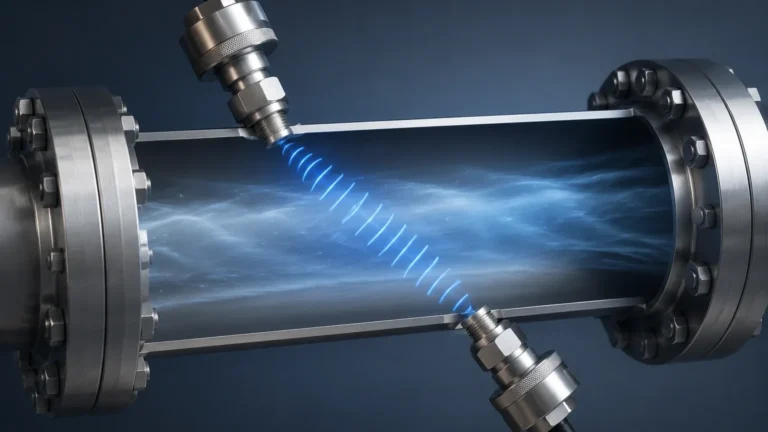
Ultrasonic sensors emit high-frequency sound waves that reflect off the fuel surface. For high-level alarm applications, these can be used as continuous transmitters that trigger an alarm relay at a setpoint, or as dedicated gap sensors that detect the presence of liquid when the gap between two crystals is filled.
* Advantages: Non-contact measurement reduces maintenance needs.
* Limitations: Performance can be degraded by heavy vapors, foam on the fuel surface, or extreme turbulence during filling.
4. Radar Level Measurement (Guided and Non-Contact)
Radar sensors use electromagnetic pulses to measure the distance to the fuel surface. In high-level alarm configurations, they provide high precision and are largely unaffected by the vapor space's temperature, pressure, or chemical composition.
* Advantages: Extremely accurate and reliable in volatile organic compound (VOC) environments. Suitable for both small day tanks and large bulk storage.
* Limitations: Higher initial cost compared to mechanical switches.
5. Capacitance Point Level Detection
This method measures the change in electrical capacitance between the sensor probe and the tank wall (or a reference probe). As fuel replaces the air around the probe, the dielectric constant changes, triggering the alarm.
* Advantages: No moving parts; suitable for high-temperature or high-pressure applications.
* Limitations: Requires calibration for the specific dielectric constant of the fuel being stored.
Technical Selection Criteria
Choosing the right fuel tank high level alarm involves more than just selecting a sensor. Engineers must evaluate the following factors to ensure long-term reliability.
| Criteria | Consideration |
| :— | :— |
| Fuel Type | Diesel, gasoline, aviation fuel, or heavy fuel oil (HFO). Viscosity and dielectric constant are key. |
| Tank Geometry | Vertical, horizontal, or underground tanks. Internal obstructions (ladders, agitators) may affect radar or ultrasonic paths. |
| Hazardous Area Rating | Fuel storage often requires ATEX, IECEx, or UL certifications for explosive atmospheres. |
| Output Requirements | Does the system need a simple dry contact (SPDT), a 4-20mA signal, or a digital protocol like Modbus? |
| Redundancy | Critical applications often require a secondary, independent high-high level alarm (HHLA) for emergency shutdown. |
For a comprehensive overview of the hardware options available for these applications, engineers can visit the Main Page of specialized instrument manufacturers to compare technical specifications.
System Components and Integration
A functional fuel tank high level alarm system typically consists of three integrated components:
1. The Sensor/Transmitter: The primary device installed on the tank that detects the fuel level.
2. The Alarm Controller/Panel: A control unit that receives the signal from the sensor. It provides power to the sensor and manages the logic for the alarm state.
3. Annunciators: Audible sirens and visual strobe lights that alert operators to the high-level condition. In many B2B industrial settings, this signal is also integrated into a SCADA or PLC system for remote monitoring.
Automated Overfill Protection
Beyond a simple alert, many modern systems integrate an Emergency Shut Down (ESD) function. When the high-level alarm is triggered, the controller sends a signal to a solenoid valve on the inlet pipe, immediately halting the flow of fuel. This is particularly important for unmanned facilities or high-flow loading stations.
Installation Considerations
Proper installation is as important as the choice of technology. Faulty installation is a leading cause of false alarms or, more dangerously, a failure to alarm.
* Mounting Position: The sensor should be installed away from the fill pipe to avoid "splashing" or turbulence, which can cause premature triggering.
* Dead Zones: Non-contact sensors (ultrasonic and radar) have a "dead zone" or "blocking distance" near the sensor face. The sensor must be mounted high enough that the maximum fuel level does not enter this zone.
* Stilling Wells: In tanks with significant turbulence or foam, installing the sensor inside a stilling well (a vertical pipe) can provide a calm surface for more accurate measurement.
* Wiring and Conduits: In fuel applications, all wiring must be installed according to local electrical codes for hazardous locations, typically using explosion-proof conduits or intrinsically safe barriers.

Limitations and Operational Risks
While highly effective, fuel tank high level alarm systems are not infallible. Users should be aware of the following risks:
* Coating and Buildup: In heavy fuel oil applications, paraffin or bitumen can build up on probes, potentially insulating the sensor and preventing a reading. Tuning forks or high-frequency capacitance probes are often preferred here.
* Vapor Interference: High concentrations of fuel vapors can change the speed of sound, affecting ultrasonic sensor accuracy. Radar is the preferred alternative for high-vapor environments.
* Power Failure: A safety-critical alarm should be designed as "normally closed" or "fail-safe," meaning the circuit opens and triggers the alarm if power is lost or a wire is cut.
Maintenance and Proof Testing
Regulatory bodies often require periodic "proof testing" of high-level alarms. This involves manually triggering the sensor to ensure the entire loop—from the probe to the siren and the shut-off valve—is functioning correctly.
1. Visual Inspection: Check for corrosion on the housing and ensure cable glands are tight.
2. Functional Test: If using a float switch, many models include a manual test lever that allows the operator to lift the float without filling the tank. For electronic sensors, a controlled immersion test or a simulation via the controller is necessary.
3. Calibration Check: For continuous transmitters used as alarms, verify that the 4-20mA output matches the physical level in the tank.
Frequently Asked Questions (FAQ)
Q: At what level should the high-level alarm be set?
A: Typically, a high-level alarm is set at 90% of the tank capacity, while a high-high (emergency) alarm is set at 95%. This allows sufficient reaction time for the operator or the automated system to stop the flow before an overflow occurs.
Q: Can I use the same sensor for level monitoring and the high-level alarm?
A: While a single continuous transmitter can provide both functions, many safety standards (such as API 2350) recommend an independent, dedicated point-level switch for the high-level alarm to ensure redundancy in case the primary transmitter fails.
Q: Are wireless high-level alarms reliable for fuel tanks?
A: Wireless systems are increasingly common in remote locations. However, they must be designed with robust heartbeat signals to ensure the connection is active and have a high update rate to catch rapidly rising levels during high-flow filling.
Conclusion
Implementing a robust fuel tank high level alarm is a fundamental requirement for any industrial facility handling liquid fuels. By understanding the strengths and limitations of different sensing technologies—from simple mechanical floats to advanced radar systems—engineers can design a safety loop that minimizes risk and ensures regulatory compliance. Regular maintenance and proper installation remain the cornerstones of a reliable overfill protection strategy.