Liquid Level Probes
Liquid Level Probes
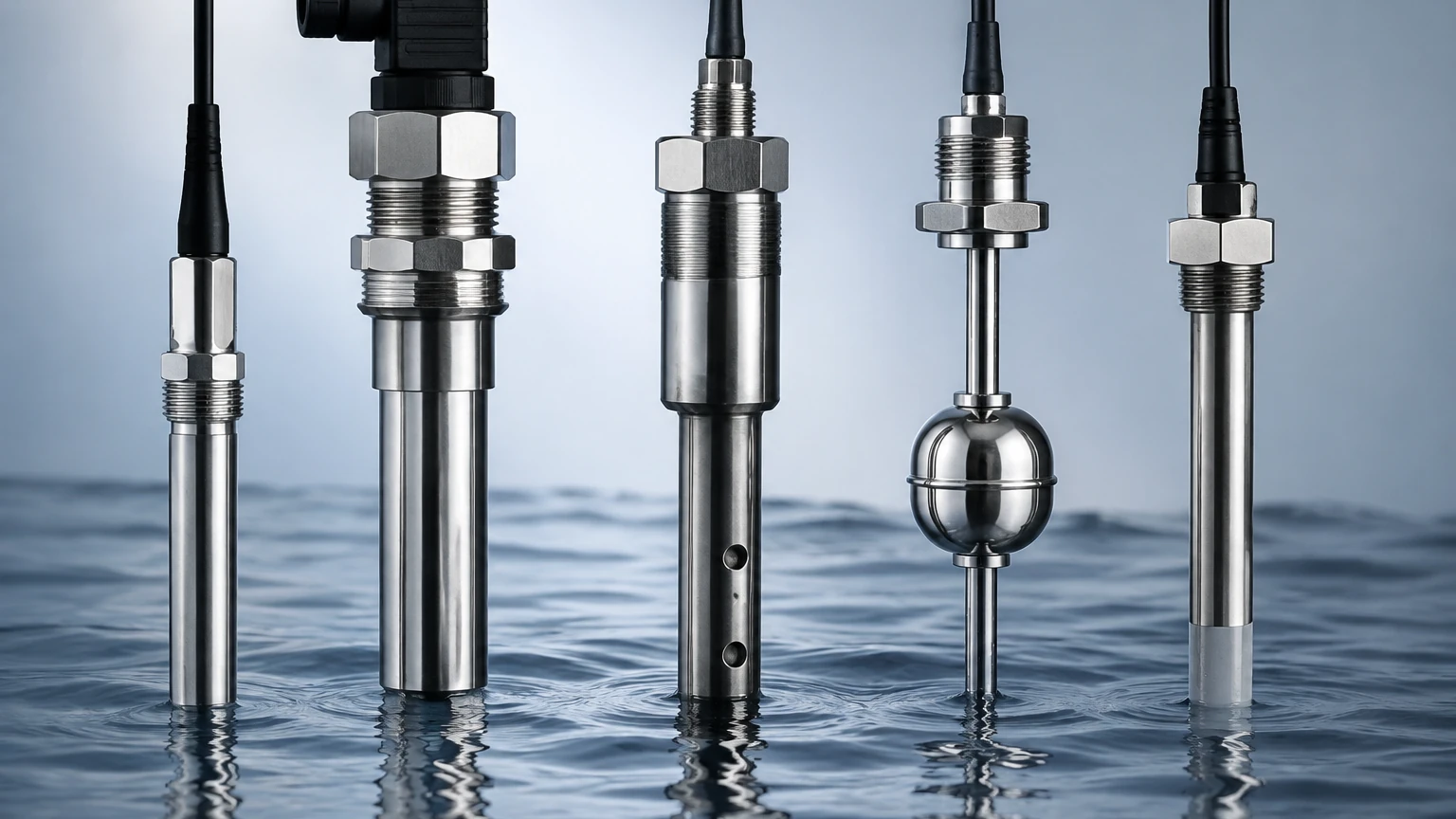
In the landscape of industrial process control, liquid level probes serve as the primary interface between physical media and automated monitoring systems. These instruments are essential for maintaining operational safety, optimizing inventory management, and ensuring the precision of chemical dosing or water treatment processes. As a professional manufacturer, Welk provides a diverse range of instrumentation designed to meet the rigorous demands of modern industry. Selecting the appropriate probe requires a deep understanding of the underlying physical principles, the chemical properties of the liquid, and the environmental constraints of the installation site.
This guide provides a technical overview of liquid level measurement technologies, selection strategies, and engineering best practices for implementing liquid level probes in B2B environments.
Fundamental Measurement Principles
Before selecting a probe, engineers must evaluate which physical principle best suits the application. Liquid level measurement is generally categorized into continuous measurement and point level detection.
Hydrostatic Pressure Principle
Hydrostatic liquid level probes operate on the principle that the pressure at a specific point in a static liquid is proportional to the height of the liquid column above it. This relationship is expressed by the formula:
P = ρ × g × h
Where *P* is the pressure, *ρ* (rho) is the density of the liquid, *g* is the gravitational constant, and *h* is the height of the liquid.
In practice, a submersible pressure transducer is lowered to the bottom of a tank or well. The probe contains a diaphragm that senses the pressure. To ensure accuracy, these probes often include a vented cable that allows the internal side of the diaphragm to be exposed to atmospheric pressure, thereby compensating for changes in barometric pressure that could otherwise skew the reading.
Capacitance Principle
Capacitive liquid level probes treat the tank and the probe as a capacitor. The probe acts as one electrode, and the tank wall (or a reference rod) acts as the second electrode. The liquid between them acts as the dielectric material. As the liquid level rises, the total capacitance of the system changes because the dielectric constant of the liquid is significantly higher than that of the air or gas it replaces.
For non-conductive liquids (like oils), an insulated or non-insulated probe can be used. For conductive liquids (like water or acids), the probe must be coated with an insulating material (such as PTFE or PFA) to prevent a short circuit. The electronics convert the measured capacitance into a linear level signal.
Conductivity Principle
Conductive probes are primarily used for point level detection (high or low-level alarms). The principle relies on the electrical conductivity of the liquid. A low-voltage AC signal is applied to the probe. When the liquid touches the probe, the electrical circuit between the probe and the tank wall (or a ground electrode) is completed. This change in state triggers a relay or a digital input in a PLC. These probes are simple and cost-effective but require the liquid to have a minimum conductivity, typically >10 μS/cm.
Guided Wave Radar (GWR)
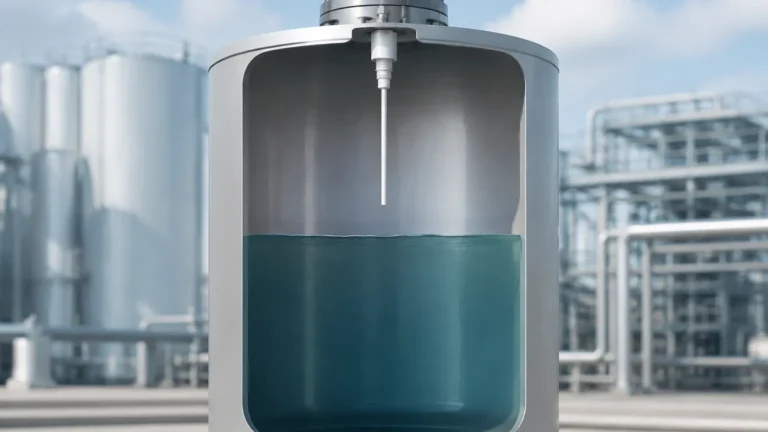
Guided Wave Radar probes utilize Time Domain Reflectometry (TDR). Low-energy electromagnetic pulses are sent along a physical probe (a rod or cable). When these pulses hit the surface of the liquid, a portion of the energy is reflected back up the probe to the electronics. By measuring the time it takes for the pulse to travel down and back, the device calculates the distance to the liquid surface. Because the pulse is "guided" by the probe, this technology is less affected by foam, dust, or tank internal obstructions compared to free-space radar.
Detailed Technology Comparison
Choosing between different liquid level probes involves balancing accuracy, compatibility, and budget. The following table provides a comparative analysis of common probe technologies.
| Technology | Accuracy | Ideal Media | Max Temperature | Relative Cost |
| :— | :— | :— | :— | :— |
| Hydrostatic | ±0.1% to 0.5% | Water, fuels, chemicals | Up to 80°C (standard) | Moderate |
| Capacitive | ±0.5% to 1.0% | Oils, solids, liquids | Up to 200°C+ | Moderate |
| Conductive | N/A (Point) | Water, acids, alkalis | Up to 150°C | Low |
| Guided Radar | ±2 mm to 5 mm | Hydrocarbons, solvents | Up to 450°C | High |
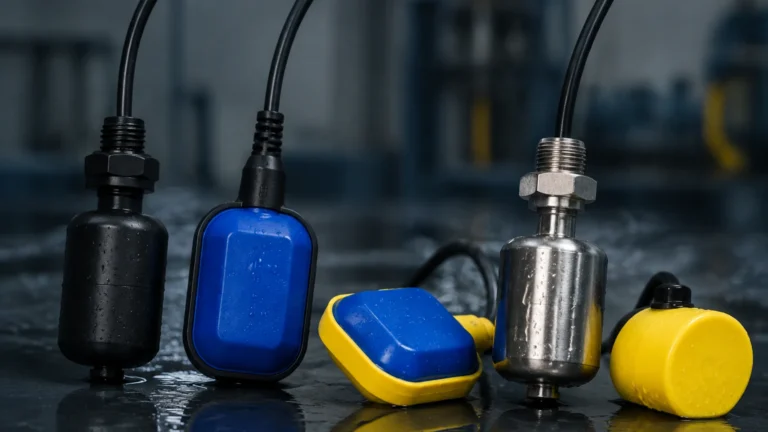
| Magnetic Float | ±5 mm to 10 mm | Clean liquids | Up to 150°C | Moderate |
For more detailed technical specifications on these technologies, engineers are encouraged to visit the Main Page for comprehensive product documentation.
Selection Criteria for Liquid Level Probes
To ensure long-term reliability, the selection process must account for the following factors:
1. Media Characteristics
* Corrosivity: For aggressive chemicals like sulfuric acid or sodium hypochlorite, probes must be constructed from or coated with resistant materials such as PVDF, PTFE, or Hastelloy.
* Viscosity and Coating: Highly viscous liquids or those that tend to crystallize (like bitumen or heavy syrups) can coat a probe, leading to false readings in capacitive or conductive models. In such cases, hydrostatic or non-contact methods may be preferred.
* Dielectric Constant (εr): Capacitive and GWR probes rely on the dielectric constant. Materials with a low εr (e.g., liquid gases or pure hydrocarbons) require more sensitive electronics or specific probe geometries (like coaxial probes).
2. Vessel Geometry and Environment
* Tank Height: Submersible hydrostatic probes are excellent for deep wells (up to 200m+), whereas rigid rod probes are typically limited to 3-6 meters due to shipping and installation constraints.
* Pressure and Temperature: High-pressure reactors require probes with specialized process seals (e.g., ceramic-to-metal) to prevent leaks and withstand thermal expansion.
* Turbulence and Agitation: In tanks with mixers, probes can be subjected to significant mechanical stress. Guided wave radar cables or hydrostatic probes may require stilling wells or anchoring to prevent damage.
Installation Considerations and Best Practices
Proper installation is as critical as selecting the right technology. Failure to follow engineering guidelines often results in signal instability or premature sensor failure.
Mechanical Placement
* Avoid the Inflow: Probes should never be installed directly beneath a fill pipe. The turbulence and air entrainment from the incoming liquid will cause erratic readings.
* Stilling Wells: In applications with heavy surface foam or extreme agitation, installing the probe inside a stilling well (a vertical pipe with vent holes) can provide a calm surface for accurate measurement.
* Dead Zones: All liquid level probes have a "dead zone" or "blocking distance" at the top (and sometimes bottom) of the probe where measurement is not possible. Ensure the tank's operational range falls within the probe's active measurement length.
Electrical and Wiring
* Grounding: For capacitive probes, a solid electrical ground to the metal tank wall is essential. In plastic tanks, a ground reference rod must be used to complete the circuit.
* Signal Interference: B2B industrial environments are often rife with electromagnetic interference (EMI) from VFDs and large motors. Use shielded twisted-pair cabling and ensure the shield is grounded at the control cabinet end only to avoid ground loops.
* Venting: For hydrostatic submersible probes, the vent tube in the cable must remain unobstructed. Use a bellows or a specialized vent filter to prevent moisture from entering the tube, which can lead to internal condensation and sensor drift.
Limitations and Common Risks
While modern liquid level probes are highly advanced, they are not universal solutions. Engineers must be aware of specific limitations:
1. Density Fluctuations: Hydrostatic probes are calibrated for a specific liquid density. If the media density changes (e.g., due to temperature shifts or mixing different chemicals), the level reading will be inaccurate unless compensated by a PLC or a secondary temperature sensor.
2. Vapor Space Composition: In GWR or ultrasonic applications, heavy vapors or high-pressure steam can slow down the signal pulse, leading to a measurement error. GWR is generally more robust in these conditions than ultrasonic sensors.
3. Build-up and Fouling: Conductive and capacitive probes are sensitive to build-up. If a conductive bridge forms between the probe and the tank wall due to residue, the sensor may indicate a "full" state even when the tank is empty.
4. Mechanical Fatigue: In deep-water applications, the weight of the cable and the probe itself can cause stretching over years of service. Periodic recalibration is recommended for high-precision requirements.
Frequently Asked Questions (FAQs)
Q: Can I use a hydrostatic probe in a pressurized tank?
A: Standard submersible hydrostatic probes are designed for vented (atmospheric) tanks. For pressurized vessels, a differential pressure (DP) transmitter is required, which measures the difference between the bottom pressure and the top vapor space pressure.
Q: How do I choose between a rod and a cable probe for Guided Wave Radar?
A: Rod probes are easier to clean and are ideal for shorter distances (up to 3-6m) and liquids that may cause build-up. Cable probes are used for tall tanks (up to 30m or more) where a rigid rod would be impossible to install.
Q: What is the maintenance schedule for liquid level probes?
A: Maintenance depends on the media. For clean water, an annual inspection is usually sufficient. For wastewater or corrosive chemicals, quarterly cleaning of the probe face or diaphragm may be necessary to remove debris or scaling.
Q: Are these probes compatible with Industry 4.0 systems?
A: Yes. Most modern probes offer 4-20mA HART, RS485 Modbus, or Profibus outputs, allowing for seamless integration into SCADA and IIoT platforms for remote monitoring and data analytics.
Conclusion
Liquid level probes are indispensable tools in the industrial sector, providing the data necessary for efficient and safe operations. By understanding the physics of hydrostatic pressure, capacitance, and wave reflection, engineers can select the most reliable instrumentation for their specific application. Whether dealing with volatile chemicals in a refinery or treated water in a municipal facility, the correct probe selection minimizes downtime and maximizes process transparency.
For assistance with complex applications or to explore our full range of measurement solutions, please refer to the technical resources available on our Main Page.