Metering Station
Metering Station
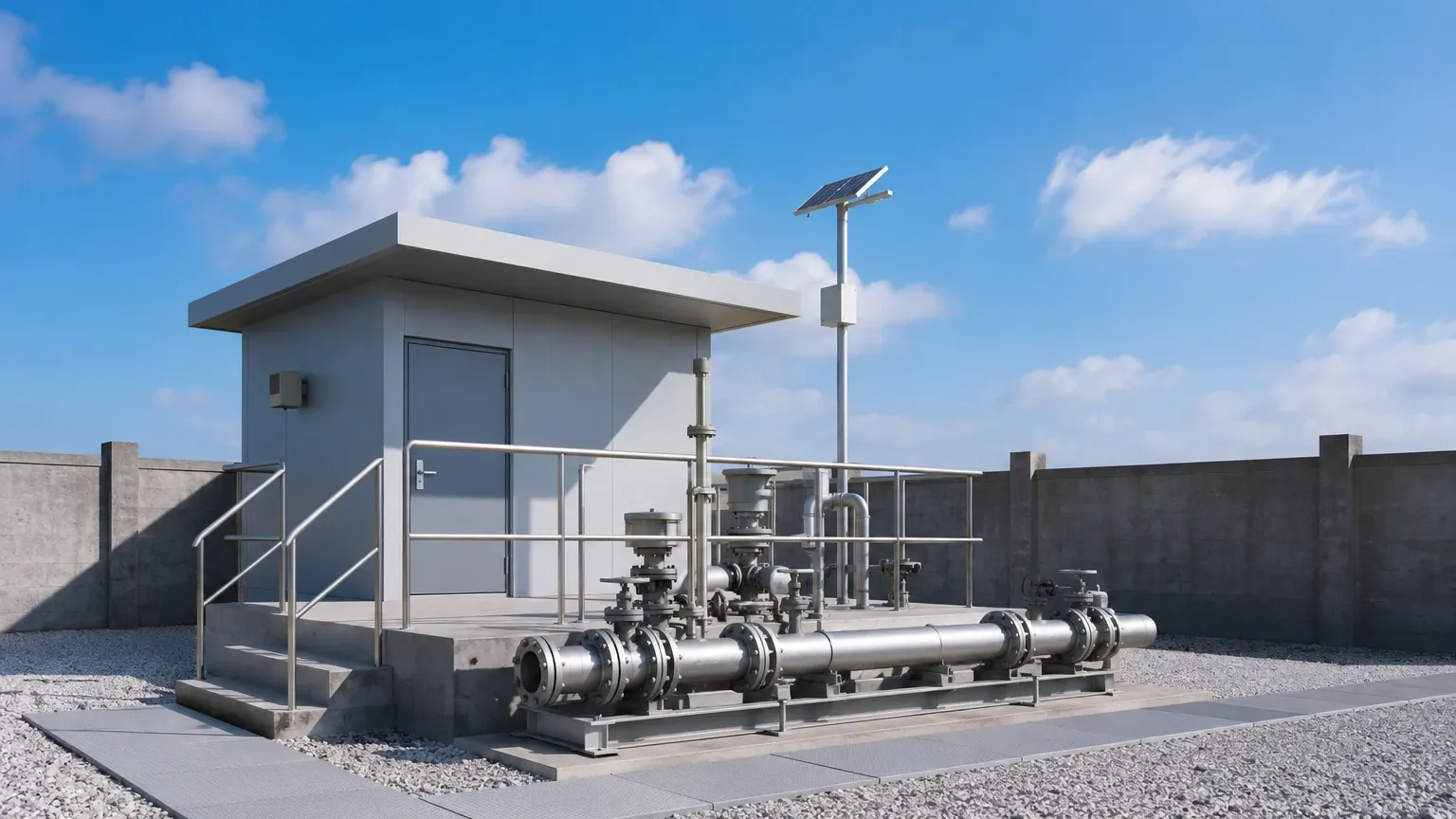
A metering station is a specialized facility or assembly within an industrial process designed to measure the flow rate, pressure, temperature, and volume of fluids (liquids or gases) as they move through a pipeline or are transferred between storage units. Often referred to as the "cash register" of the oil, gas, and chemical industries, a metering station ensures that the quantity of product being moved is recorded with high precision. This is critical not only for fiscal accounting and custody transfer but also for maintaining process efficiency and safety in water treatment and industrial automation.
In the context of level measurement, a metering station often incorporates surge tanks, separator vessels, or storage tanks where precise level monitoring is required to calculate volumes or manage flow buffers. Selecting the appropriate instrumentation for these stations requires a deep understanding of measurement principles, fluid characteristics, and environmental conditions.
Measurement Principles in Metering Station Applications
To ensure the accuracy of a metering station, engineers must deploy sensors that correlate physical properties to volume or level. The most common technologies used in these environments include radar, ultrasonic, and hydrostatic measurement.
Radar Level Measurement
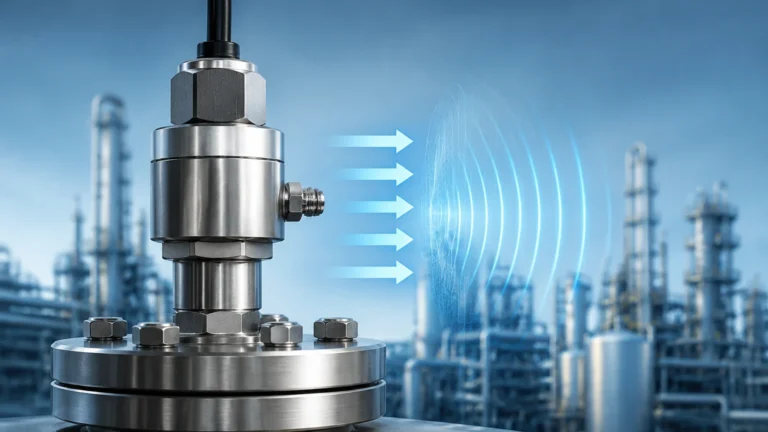
Radar level meters operate on the Time of Flight (ToF) principle. The sensor emits high-frequency electromagnetic waves (typically in the 26 GHz or 80 GHz range) toward the surface of the medium. These waves reflect off the surface and return to the sensor. The distance is calculated based on the time taken for the signal to travel to the surface and back.
* Non-Contact Radar: Ideal for metering stations handling corrosive or volatile chemicals, as the sensor does not touch the medium. 80 GHz radar is particularly effective in narrow tanks or vessels with internal obstructions due to its narrow beam angle.
* Guided Wave Radar (GWR): Uses a physical probe to guide the microwave signal. This is highly effective in metering stations where low dielectric constants or heavy foam might dissipate a non-contact signal.
Ultrasonic Level Measurement
Ultrasonic sensors function similarly to radar but use sound waves instead of electromagnetic waves. The transducer emits an ultrasonic pulse that bounces off the liquid surface. The time interval between emission and reception determines the distance.
In a metering station, ultrasonic sensors are often used for water and wastewater applications. However, they are sensitive to air temperature, pressure changes, and heavy vapors, which can alter the speed of sound. Most modern units include integrated temperature compensation to mitigate these effects.
Hydrostatic Level Measurement
Hydrostatic transmitters measure the pressure exerted by a liquid column at a specific point. The principle follows the formula: $P = \rho \cdot g \cdot h$, where $P$ is pressure, $\rho$ is the density of the fluid, $g$ is gravity, and $h$ is the height of the liquid.
In metering stations where tanks are vented to the atmosphere, a simple pressure transmitter at the base of the tank provides a reliable level reading. For pressurized vessels, a differential pressure (DP) approach is required to subtract the overhead gas pressure from the total pressure at the bottom.
The Role of Level Instrumentation in Metering Operations
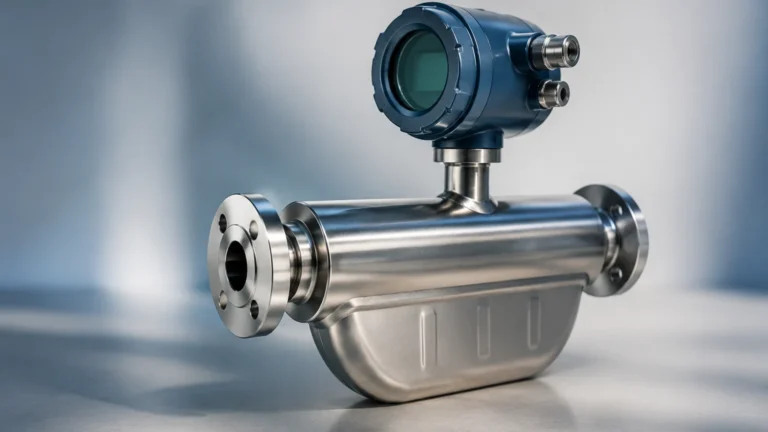
While flow meters (such as Coriolis or ultrasonic flow meters) are the primary tools in a metering station, level instruments perform several supporting roles:
1. Inventory Verification: Level sensors in storage tanks provide a secondary check against flow meter data to detect leaks or discrepancies in the metering station.
2. Surge Management: Metering stations often include surge tanks to handle fluctuations in pipeline pressure. Level sensors ensure these tanks do not overfill or run dry, which could damage downstream pumps.
3. Phase Separation: In oil and gas metering stations, separators divide gas, oil, and water. Level sensors are critical for identifying the interface between these fluids to ensure each phase is metered correctly.
4. Overfill Protection: High-level switches act as a safety redundancy, triggering emergency shutdowns if the primary metering controls fail.
For engineers designing these systems, reviewing comprehensive product options and application support on a professional Main Page is essential for matching the instrument to the specific fluid properties of the station.
Practical Selection Table for Metering Station Sensors
Choosing the right technology depends on the specific requirements of the metering station. The following table compares common technologies based on typical industrial criteria.
| Technology | Accuracy | Media Compatibility | Best Use Case | Limitations |
| :— | :— | :— | :— | :— |
| 80 GHz Radar | ±1 mm | Corrosive, volatile, high-temp | Small vessels, high-precision custody transfer | Higher initial cost |
| Guided Wave Radar | ±2 mm | Low dielectric liquids, foam | Interface measurement in separators | Probe can be fouled by viscous media |
| Ultrasonic | ±0.25% of range | Water, wastewater, non-volatile | Open channels, atmospheric sumps | Sensitive to foam, steam, and vacuum |
| Hydrostatic | ±0.1% to 0.5% | Stable density liquids | Deep tanks, underground reservoirs | Errors occur if fluid density changes |
| Magnetic Gauges | Visual + ±5 mm | Hazardous, high-pressure | Visual verification on-site | Mechanical parts may require cleaning |
Installation Considerations for Metering Stations
Accuracy in a metering station is as much a result of proper installation as it is of sensor quality. Engineers should adhere to the following guidelines:
Avoiding Obstructions
For radar and ultrasonic sensors, the "beam path" must be clear of internal tank structures like ladders, heating coils, or agitators. Even a small obstruction can create a false echo that the sensor might interpret as the liquid level. Using 80 GHz radar with a narrow beam (e.g., 3°) can help bypass these obstacles.
Dead Zone (Blocking Distance)
Every top-mounted sensor has a "dead zone" immediately below the transducer where measurement is impossible. In a metering station where tank capacity must be maximized, sensors with small dead zones should be selected, or the sensor should be mounted on a nozzle that lifts it above the maximum fill line.
Nozzle Design
The height and diameter of the mounting nozzle can affect signal quality. If the nozzle is too narrow or too long, it can create "ringing" or signal interference. Manufacturers typically provide a maximum nozzle height-to-width ratio to ensure optimal performance.
Stilling Wells and Bypass Chambers
In metering stations where the liquid surface is turbulent due to high flow rates or agitation, sensors should be installed in a stilling well or a bypass chamber. This provides a calm surface for the sensor to measure, significantly increasing the stability of the reading.
Limitations and Environmental Constraints
No single measurement technology is universal. A metering station must be designed with the following limitations in mind:
* Vapor and Gas Blanketing: In chemical metering, tanks are often blanketed with nitrogen. Ultrasonic sensors are unsuitable here because the speed of sound in nitrogen differs from air. Radar is unaffected by gas blankets.
* Temperature Extremes: High-temperature fluids can damage sensor electronics. In these cases, remote-mounted electronics or specialized cooling fins are necessary.
* Build-up and Coating: For viscous fluids like heavy crude oil, sensors that contact the media (like GWR probes or hydrostatic diaphragms) may suffer from build-up, leading to drift. Non-contact radar is the preferred solution for such environments.
* Ambient Noise: In high-pressure gas metering stations, acoustic noise from valves can interfere with ultrasonic flow and level meters. Shielding or frequency-shifting may be required.
Maintenance and Calibration for Metering Stations
To maintain the integrity of a metering station, a rigorous maintenance schedule is required. This typically includes:
1. Zero-Point Verification: Periodically checking the sensor's reading against a manual dip-tape measurement when the tank is at a known level.
2. Signal Strength Monitoring: Modern digital transmitters provide a "signal-to-noise" ratio. A declining ratio often indicates build-up on the sensor face or probe.
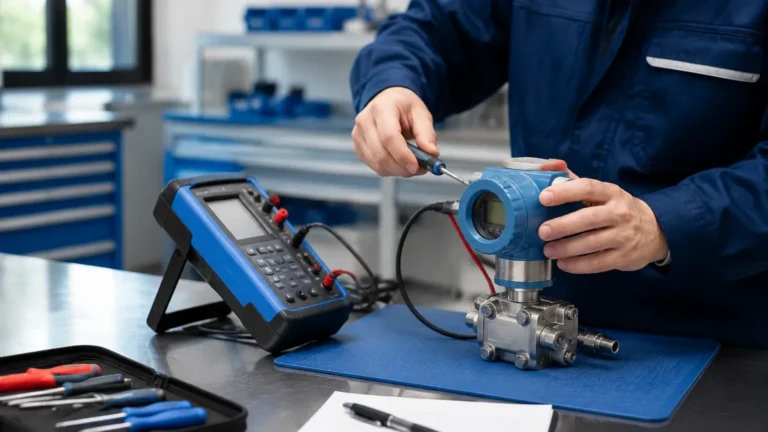
3. Diagnostic Alerts: Utilizing HART or Modbus protocols allows the metering station's central control system to receive real-time health alerts from the sensors.
4. Annual Calibration: For custody transfer applications, sensors often require third-party calibration to ensure they meet the legal accuracy requirements for trade.
Frequently Asked Questions (FAQs)
Q: What is the difference between a fiscal and a non-fiscal metering station?
A: A fiscal metering station is used for commercial transactions (custody transfer) and must meet strict regulatory accuracy standards. A non-fiscal station is used for internal process control and monitoring, where slightly higher tolerances are acceptable.
Q: Can one sensor measure both level and flow in a metering station?
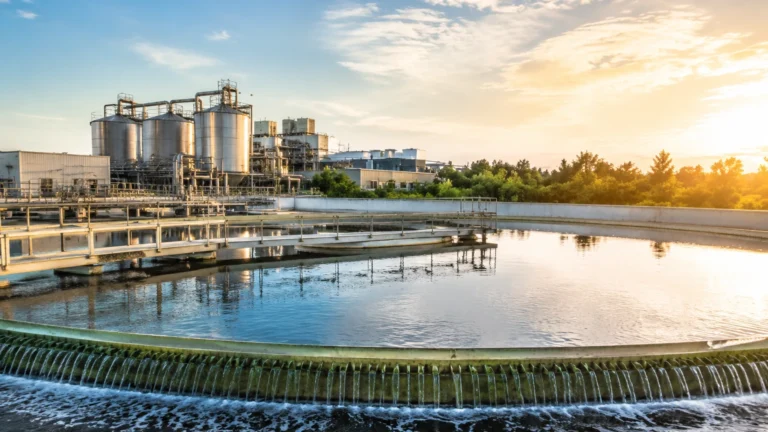
A: Yes, in open-channel applications (like water treatment), an ultrasonic or radar level sensor can be paired with a flume or weir. The transmitter uses a programmed formula to convert the measured head (level) into a flow rate.
Q: How does fluid density affect metering station accuracy?
A: Density is critical for hydrostatic and some flow measurement technologies. If the temperature of the fluid changes, the density changes, which will cause a hydrostatic level sensor to report an incorrect height unless it is compensated by a temperature probe or a second pressure sensor.
Q: Why is 80 GHz radar becoming the standard for metering stations?
A: The higher frequency allows for a much smaller antenna and a narrower beam. This results in better signal focusing, the ability to measure through plastic tank tops, and better performance in vessels with complex internals.
Conclusion
A well-engineered metering station is the foundation of transparency and efficiency in industrial fluid handling. By integrating advanced level measurement technologies—such as radar, ultrasonic, and hydrostatic sensors—operators can ensure that every liter or gallon is accounted for with precision. When selecting instrumentation, it is vital to consider the chemical properties of the media, the physical constraints of the vessel, and the required accuracy of the application. For further technical specifications and to explore a wide range of industrial level measurement solutions, engineers should consult the professional resources available on the Welk Main Page.