Pipeline Metering Skid
Pipeline Metering Skid
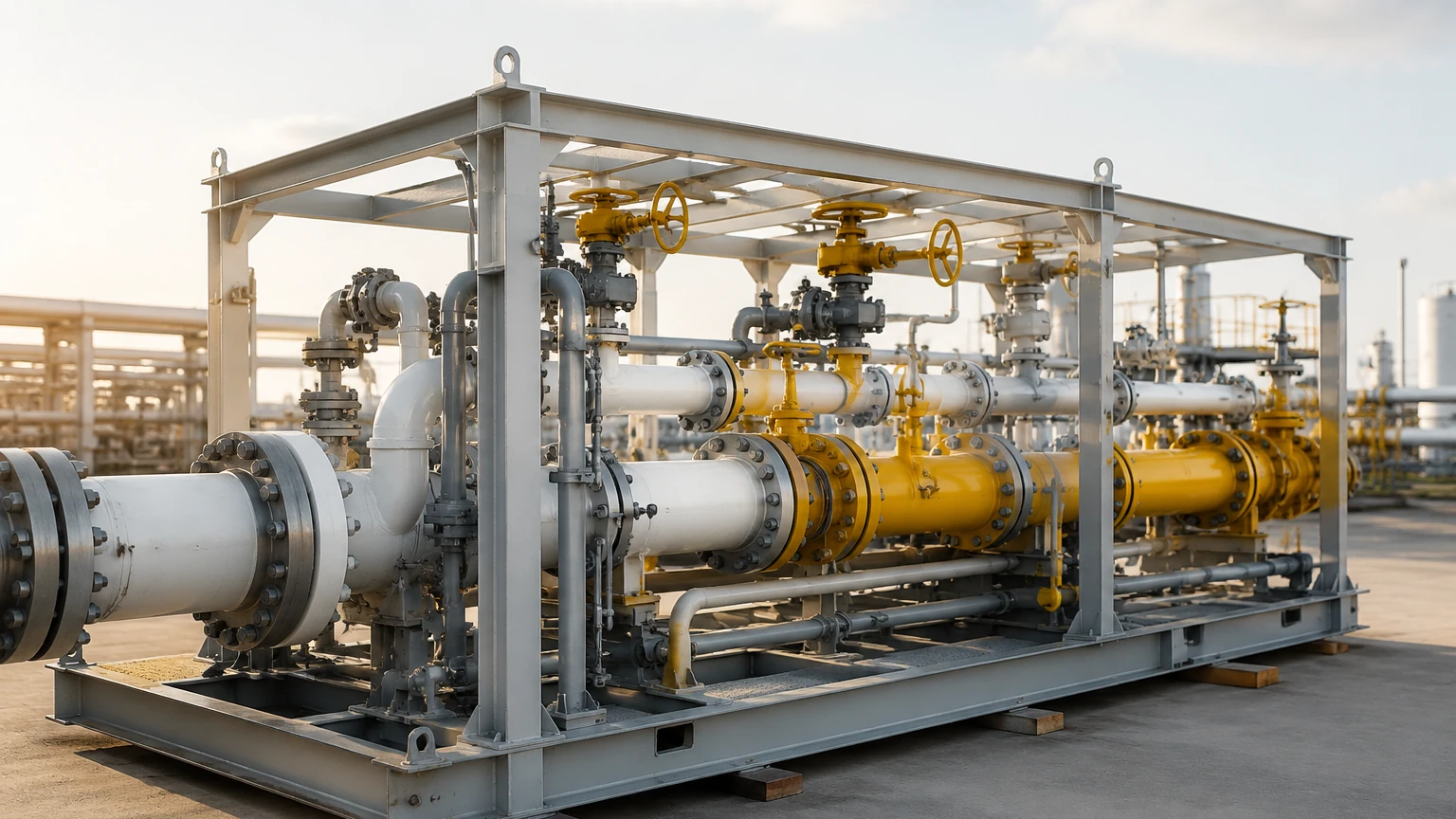
In the midstream and downstream sectors of the oil, gas, and chemical industries, the accurate measurement of fluid transfer is a critical operational requirement. A pipeline metering skid is a specialized, modular system designed to measure the volume, mass, and quality of liquids or gases as they move through a pipeline. These systems, often referred to as custody transfer units, act as the "cash register" for industrial transactions, ensuring that both the buyer and seller have a precise record of the product exchanged.
Beyond fiscal accountability, pipeline metering skids are integral to process automation and leak detection. By integrating various sensors—including flow meters, pressure transmitters, and level measurement instruments—these skids provide real-time data necessary for maintaining pipeline integrity and optimizing throughput. For engineers and facility managers, understanding the underlying measurement principles and selection criteria is essential for deploying a system that meets both regulatory standards and operational goals.
Measurement Principles within the Skid
A pipeline metering skid is rarely a single-instrument solution. It is an assembly of technologies working in concert to provide a compensated measurement. Before selecting a skid configuration, it is vital to understand the primary measurement principles involved.
Flow Measurement Principles
Flow is the primary variable in any metering skid. Common technologies include:
* Coriolis Meters: These measure mass flow directly by detecting the inertia caused by fluid flowing through oscillating tubes. They are highly accurate and independent of fluid properties like viscosity and density.
* Ultrasonic Flow Meters: Utilizing transit-time or Doppler shift principles, these non-intrusive meters are ideal for large-diameter pipelines where pressure drop must be minimized.
* Turbine Meters: These use a rotor that spins at a speed proportional to the fluid velocity. While highly repeatable, they are sensitive to changes in viscosity and require flow conditioning.
Level Measurement Principles
While flow meters measure the moving fluid, level measurement instruments are critical in skids that involve separator vessels, surge tanks, or calibration provers.
* Radar Level Measurement: Non-contact radar level meters emit microwave pulses that reflect off the surface of the liquid. The time-of-flight determines the distance. This technology is preferred for its high accuracy and immunity to changes in pressure or temperature.
* Ultrasonic Level Sensors: Similar to radar but using sound waves, these are cost-effective for atmospheric tanks or water-based applications within the skid periphery.
* Hydrostatic Pressure: Measuring the weight of the liquid column provides a reliable level reading for vented tanks.
Compensation and Quality Measurement
Because fluids expand and contract with temperature and pressure, a metering skid must include transmitters for these variables. A flow computer then uses these inputs to calculate "standard" volume or mass. Additionally, densitometers or sampling systems may be included to verify the chemical composition or water cut of the fluid.
For a comprehensive overview of measurement technologies and how they integrate into industrial automation, you may consult the Main Page of the equipment manufacturer.
Key Components of a Pipeline Metering Skid
A standard skid is built on a structural steel frame to allow for factory testing and easy site installation. The primary components include:
1. Flow Meters: The core measurement device, often installed in redundant "runs" to allow for maintenance without stopping the flow.
2. Flow Conditioners: Used to eliminate turbulence and swirl, ensuring a uniform flow profile before the fluid reaches the meter.
3. Isolation and Control Valves: High-quality valves (often double-block-and-bleed) ensure that the flow can be diverted or stopped for calibration.
4. Level Instruments: Integrated into vapor separators or sumps to prevent gas carry-under or liquid carry-over, which would otherwise bias flow readings.
5. Flow Computer: The "brain" of the skid that collects data from all sensors, performs complex calculations according to API or ISO standards, and generates reports.
6. Piping and Instrumentation: All interconnecting pipes, typically designed to ASME B31.3 standards, along with pressure and temperature gauges.
Selection Criteria for Pipeline Metering Skids
Choosing the right skid requires a detailed analysis of the process conditions and the required level of uncertainty. The following table provides a general guideline for technology selection based on application needs.
Technology Selection Matrix
| Fluid Type | Primary Requirement | Recommended Flow Tech | Recommended Level Tech |
| :— | :— | :— | :— |
| Crude Oil | High Accuracy / Custody Transfer | Coriolis or Ultrasonic | Radar (Non-contact) |
| Natural Gas | High Pressure / Volume | Ultrasonic or Orifice | N/A (Gas phase) |
| Refined Products | Repeatability | Turbine or Coriolis | Radar or Magnetic Gauge |
| Process Water | Cost-effectiveness | Electromagnetic | Ultrasonic or Hydrostatic |
| Aggressive Chemicals | Corrosion Resistance | Magmeter or Coriolis (Exotic) | Radar (PTFE Coated) |
Evaluation Factors
* Fluid Properties: Viscosity, density, corrosivity, and the presence of solids or entrained gas.
* Flow Range (Turndown Ratio): The ratio between the maximum and minimum flow rates the skid can accurately measure.
* Accuracy and Repeatability: Custody transfer typically requires an uncertainty of less than ±0.25% for liquids and ±1.0% for gases.
* Regulatory Compliance: Adherence to standards such as API (American Petroleum Institute), AGA (American Gas Association), or OIML (International Organization of Legal Metrology).
Installation and Engineering Considerations
The performance of a pipeline metering skid is highly dependent on its physical installation and the environment in which it operates.
Piping Layout
Most flow meters require a specific length of straight pipe upstream and downstream (often expressed as multiples of the pipe diameter, e.g., 10D upstream and 5D downstream) to ensure a stable flow profile. If space is limited, flow conditioners must be used. For level instruments mounted on separator vessels, the use of stilling wells or bypass chambers can help mitigate the effects of turbulence or foam.
Environmental Protection
Skids are often located in harsh outdoor environments. Instrumentation must be rated for the appropriate ambient temperature range (e.g., -40°C to +60°C) and protected against moisture ingress. In hazardous areas, all electrical components must carry ATEX, IECEx, or UL certifications for explosion-proof or intrinsically safe operation.
Power and Connectivity
Modern skids are integrated into the facility’s SCADA or DCS systems. Communication protocols such as Modbus RTU, HART, or Foundation Fieldbus are standard. Ensuring a stable power supply, often backed by a UPS (Uninterruptible Power Supply), is critical for preventing data loss during power fluctuations.
Common Risks and Limitations
Despite their advanced design, pipeline metering skids are subject to several operational risks:
* Calibration Drift: Over time, sensors may lose accuracy due to mechanical wear or electronic degradation. Regular "proving" (on-site calibration against a known standard) is required.
* Air/Gas Entrainment: In liquid lines, the presence of gas bubbles can cause significant over-reading in flow meters and erratic signals in ultrasonic level sensors. Air eliminators are often necessary.
* Pressure Drops: Every component in the skid, particularly valves and filters, introduces a pressure drop. Engineers must ensure the system pressure remains above the vapor pressure of the fluid to prevent cavitation.
* Thermal Expansion: In stagnant lines, temperature changes can cause significant pressure buildup. Thermal relief valves are a mandatory safety feature.
Maintenance and Operational Best Practices
To ensure the longevity and accuracy of a pipeline metering skid, a rigorous maintenance schedule should be followed:
1. Verification of Level Sensors: For skids utilizing separators, level instruments should be checked for coating or buildup, especially in heavy oil applications. Radar level meters are generally low-maintenance, but the antenna should be inspected periodically.
2. Filter/Strainer Cleaning: Clogged strainers can cause excessive pressure drop and flow disturbances. Differential pressure gauges across filters should be monitored.
3. Zero-Point Verification: Flow meters should have their zero-point checked during shutdown periods to ensure there is no signal bias.
4. Data Logging Review: Analyzing the flow computer’s audit trail can help identify intermittent issues, such as communication errors or sensor spikes, before they lead to system failure.
Frequently Asked Questions (FAQs)
Q: What is the difference between a metering skid and a pumping skid?
A: A metering skid is focused on the measurement of fluid properties and volume, whereas a pumping skid is designed to provide the mechanical energy required to move the fluid through the pipeline. Many facilities use both in series.
Q: Can one skid handle multiple types of fluids?
A: While some skids are designed for multi-product pipelines (e.g., alternating batches of diesel and gasoline), the instrumentation must be calibrated for the specific physical properties of each fluid. Using a skid for a fluid it was not designed for can result in significant measurement errors.
Q: How often should a pipeline metering skid be calibrated?
A: Calibration frequency is usually dictated by the contract between the buyer and seller or by local regulations. In high-volume custody transfer, this may occur monthly or even weekly using a mobile or permanent pipe prover.
Q: Why is level measurement important in a flow metering skid?
A: Level measurement is used in vapor separators to ensure that no gas enters the liquid flow meters. It is also used in calibration tanks (provers) to accurately determine the volume of fluid used during a test cycle.
By adhering to strict engineering standards and selecting the appropriate measurement technologies, operators can ensure that their pipeline metering skid provides reliable, high-accuracy data for years of service. For those seeking specific level measurement components to integrate into their skid designs, Welk offers a range of radar and ultrasonic solutions tailored for industrial automation.