Plumb Bob Level Sensor
Plumb Bob Level Sensor
In the landscape of industrial inventory management, particularly within the storage of bulk solids, powders, and granules, the plumb bob level sensor remains a definitive standard for reliability. Often referred to as electromechanical level systems or "yo-yo" sensors, these devices provide a physical, mechanical measurement of material levels in silos, bins, and hoppers. While modern non-contact technologies like radar and ultrasonic sensors have advanced significantly, the plumb bob level sensor offers unique advantages in environments characterized by extreme dust, low dielectric constants, or complex material geometries.
For engineers and facility managers, understanding the mechanics, application boundaries, and selection criteria for these sensors is essential for maintaining accurate inventory and preventing process interruptions. This guide explores the technical foundations of plumb bob technology and provides practical insights for its implementation in industrial automation.
Understanding the Measurement Principle
The fundamental operation of a plumb bob level sensor is based on a simple yet highly refined electromechanical process. The system typically consists of a motor-driven cable reel, a weighted sensing bob (the "plumb bob"), and an integrated microprocessor control unit.
The Measurement Cycle
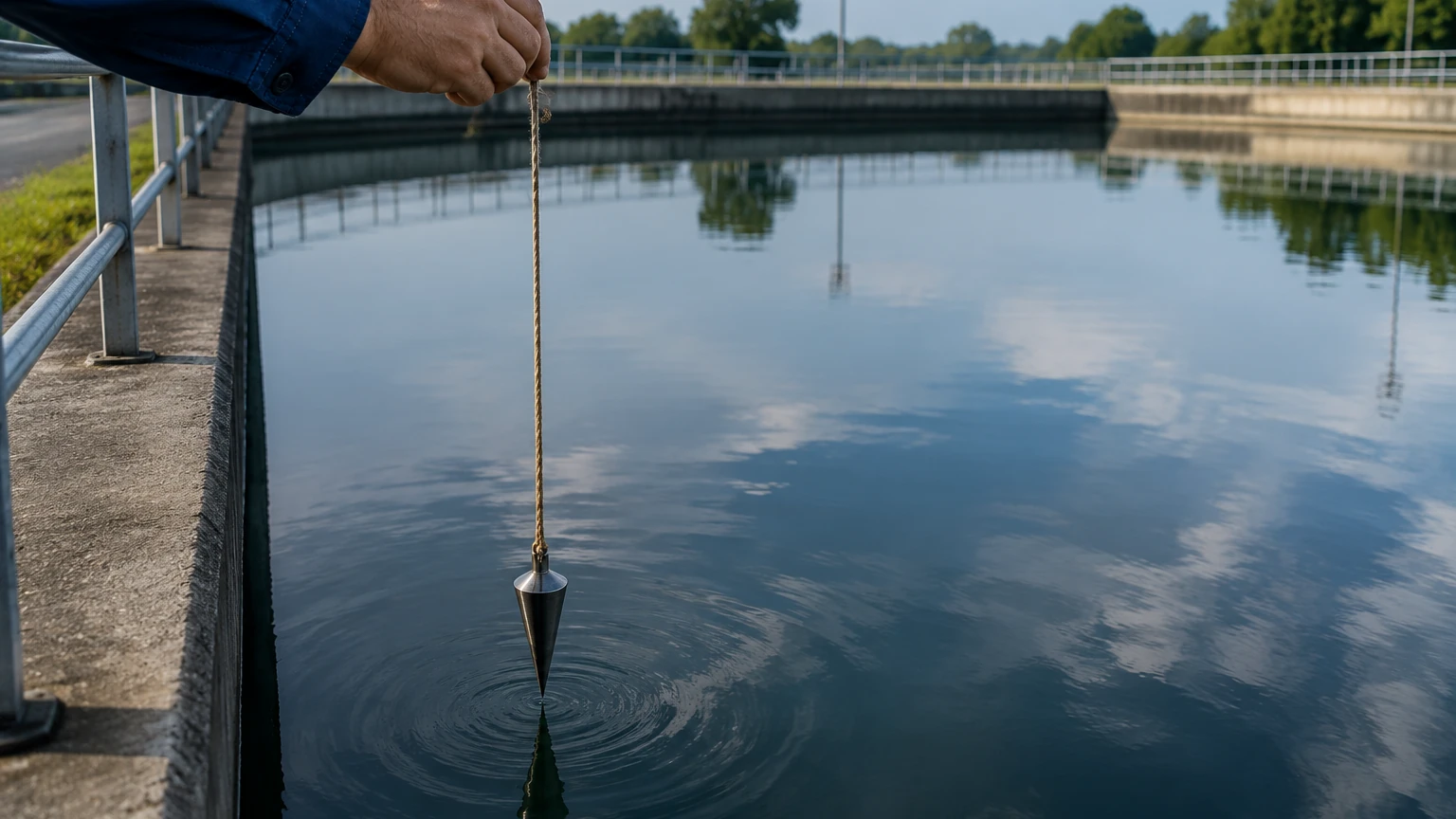
When a measurement is initiated—either manually, via a timer, or through a control system signal—the internal motor releases the cable, lowering the weighted bob from the top of the vessel toward the material surface.
1. Descent: The bob descends at a controlled rate. The microprocessor counts pulses generated by the rotating reel to track the distance traveled.
2. Contact: As soon as the weighted bob touches the surface of the material, the tension on the cable decreases.
3. Detection: A sensitive internal switch or torque sensor detects this change in tension. The motor immediately stops the descent and reverses direction.
4. Retraction: The bob is pulled back up to its home position at the top of the silo.
5. Calculation: The total distance traveled is subtracted from the known height of the vessel (the "distance to zero"). The resulting value represents the current material level or volume.
Signal Output
The data collected during this cycle is converted into standard industrial signals. Most modern units offer a 4-20mA analog output, Modbus RTU, or Profibus communications, allowing for seamless integration into PLC and SCADA systems. Because the measurement is physical, it is unaffected by the dielectric constant of the material, air turbulence, or heavy dust clouds that might otherwise scatter acoustic or electromagnetic waves.
Key Evaluation Criteria for Industrial Applications
Selecting the right plumb bob level sensor requires a detailed analysis of the material properties and the physical environment of the storage vessel. Unlike liquid level measurement, solids present challenges such as uneven surfaces (the cone of repose) and high mechanical stress on the sensing equipment.
Material Density and Particle Size
The weight and shape of the bob must be matched to the material. For heavy aggregates, a heavy stainless steel bob is required to ensure it penetrates any surface crust. For light powders or fine grains, a larger, hollow, or "float" style bob may be necessary to prevent the sensor from sinking too deep into the material, which would result in an inaccurate reading.
Vessel Height and Geometry
Plumb bob sensors are capable of measuring extreme heights, often up to 30 meters (approx. 100 feet) or more. However, the taller the silo, the more critical cable management becomes. High-tensile stainless steel cables are preferred for tall vessels to prevent stretching or snapping under the weight of the bob and the friction of the material.
Environmental Conditions
* Temperature: Standard sensors typically handle process temperatures up to 80°C (176°F), but high-temperature versions with thermal isolators can operate in environments exceeding 200°C (392°F).
* Pressure: While silos are often atmospheric, some chemical processes involve pressurized bins. Specialized seals are required to maintain the integrity of the vessel while allowing the cable to move freely.
* Dust and Noise: One of the primary reasons to select a plumb bob level sensor is its immunity to dust. In cement, flour, or sawdust silos, the air is often too thick for ultrasonic or laser sensors to penetrate. The physical bob simply drops through the dust to find the true surface.
Technical Specifications and Selection Table
When evaluating different models, engineers should compare the mechanical durability and the intelligence of the motor control. The following table provides a general guideline for selecting sensor configurations based on common industrial needs.
| Feature | Standard Duty | Heavy Duty | High Temperature |
| :— | :— | :— | :— |
| Max Measurement Range | 15m (50ft) | 45m (150ft) | 30m (100ft) |
| Cable Material | Nylon Coated Steel | Stainless Steel | Galvanized/Stainless Steel |
| Bob Type | Plastic/Steel Cone | Heavy Steel Spike | Stainless Steel Float |
| Process Temp. | -20°C to 60°C | -40°C to 80°C | Up to 250°C |
| Output Options | 4-20mA, Relay | 4-20mA, Modbus | 4-20mA, Pulse Output |
| Best For | Grain, Plastic Pellets | Cement, Ore, Coal | Fly Ash, Hot Chemicals |
For a comprehensive look at how these specifications translate to specific product models and to Review product options and application support, consulting a specialized manufacturer like Welk ensures that the hardware matches the rigors of the application.
Installation Best Practices for Bulk Solids
The accuracy of a plumb bob level sensor is highly dependent on its placement. Because solids do not level out like liquids, they form a cone when filling (cone of repose) and a depression when discharging.
1. Mounting Location
The sensor should typically be mounted between 1/6th and 1/3rd of the radius from the silo wall. Mounting too close to the center will measure the peak of the cone, overestimating inventory. Mounting too close to the wall may result in the bob getting caught on the silo structure or measuring the lowest point of the discharge funnel.
2. Avoiding Obstructions
Internal structures such as ladders, braces, and fill pipes must be avoided. The path of the bob must be clear during the entire descent. If the bob strikes an internal brace, it will record a false "full" reading and potentially damage the cable.
3. Clear of the Fill Stream
Never install a plumb bob sensor directly in the path of the incoming material. The force of falling solids can snap the cable or bury the bob, leading to a "bob-in-silo" error where the motor is unable to retract the weight.
4. Flange Alignment
Ensure the mounting flange is perfectly horizontal. If the sensor is tilted, the bob will swing as it descends, increasing the risk of it hitting the silo wall or becoming entangled in internal components.
Operational Limitations and Maintenance Requirements
While the plumb bob level sensor is a workhorse of the industry, it is not a "fit and forget" technology. Its mechanical nature necessitates a proactive maintenance schedule.
* Periodic Measurement: Unlike radar, which provides a continuous real-time stream of data, a plumb bob provides a snapshot. Each measurement cycle takes time (depending on the depth) and causes a small amount of wear. For most inventory applications, measuring once every 30 minutes or once an hour is sufficient.
* Mechanical Wear: The cable and the motor brushes are wear items. In high-cycle applications, the cable should be inspected every six months for fraying or kinking. A snapped cable results in the bob being lost in the material, which can damage downstream equipment like screw conveyors or crushers.
* Material Burial: If the silo is filled while the bob is in the middle of a measurement cycle, the bob can be buried. Advanced sensors feature a "buried bob" detection that stops the motor to prevent cable breakage, but the sensor will remain offline until the material level drops.
* Caking and Buildup: In sticky or hygroscopic materials (like sugar or certain chemicals), material can build up on the cable. This increases the diameter of the cable and can cause it to jam in the pulley system. Wiping mechanisms or dust shields are often necessary in these cases.
Frequently Asked Questions (FAQ)
Q: Can a plumb bob level sensor be used in liquids?
A: While technically possible with a float-style bob, it is rarely recommended. Hydrostatic transmitters or ultrasonic sensors are much more efficient for liquids. Plumb bobs are specifically designed for the challenges of solids.
Q: How does the sensor handle the "cone of repose"?
A: The sensor measures the distance to the specific point where the bob touches the surface. To get an accurate volume of the entire silo, the PLC must use an algorithm that accounts for the angle of repose of the specific material and the sensor's offset from the center.
Q: What happens if the cable breaks?
A: Most industrial plumb bob sensors have a "broken cable" alarm. If the motor detects no tension or an unexpected reel count, it will trigger a relay. It is vital to have a screen or grate over the silo outlet to catch the bob if a break occurs.
Q: Is this technology suitable for hazardous (Ex) areas?
A: Yes. Many manufacturers provide explosion-proof enclosures and intrinsically safe electronics, as grain dust and chemical powders are often highly combustible.
Conclusion and Next Steps
The plumb bob level sensor remains a vital tool for industrial level measurement, offering a level of certainty that electronic waves sometimes cannot match in high-dust or low-dielectric environments. By selecting the appropriate bob weight, ensuring correct mounting, and adhering to a mechanical maintenance schedule, facilities can achieve highly accurate inventory tracking for years.
When planning a new installation or upgrading an existing silo, it is important to confirm the specific material characteristics—such as bulk density and moisture content—with your equipment provider. For detailed technical data and to explore a wide range of industrial measurement solutions, visit the Main Page of Welk's product catalog to find the right fit for your specific automation requirements.