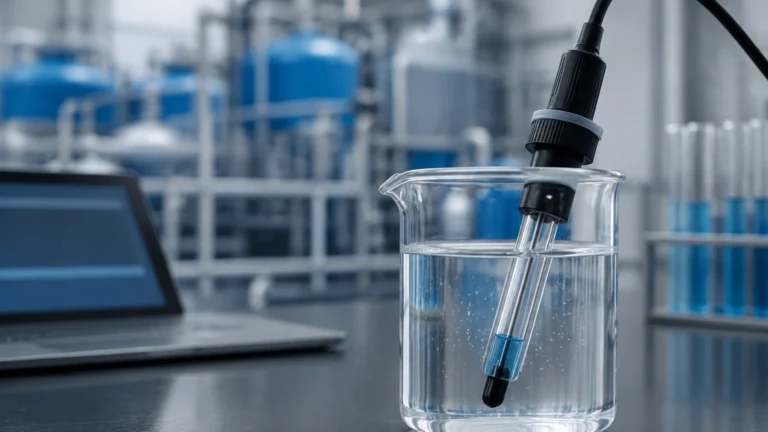
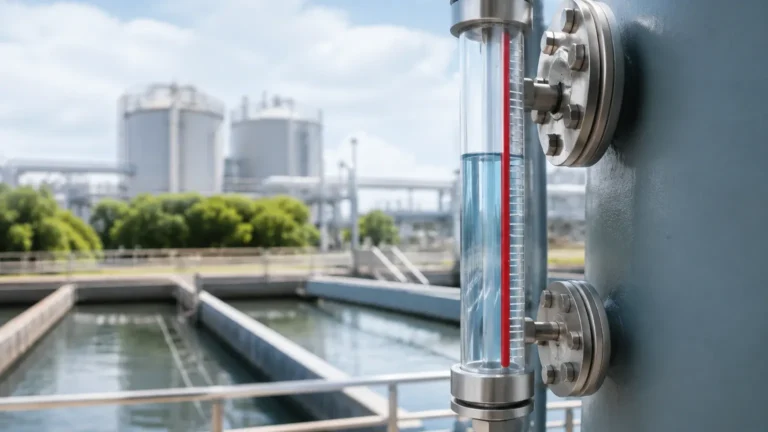
Pressure Measurement Tools
Pressure Measurement Tools
In the landscape of industrial automation and process control, pressure measurement tools serve as the backbone for both safety and efficiency. While these instruments are fundamentally designed to quantify force per unit area, their application in level measurement is one of the most critical functions in modern manufacturing. By utilizing the physical properties of liquids—specifically hydrostatic pressure—engineers can derive accurate level readings in tanks, reservoirs, and deep wells. This guide explores the principles, selection criteria, and practical applications of pressure-based level measurement instrumentation.
Understanding the Principles of Hydrostatic Pressure Measurement
The primary principle governing pressure measurement tools in level applications is the hydrostatic law. This law states that the pressure exerted by a static liquid column is directly proportional to its height, the density of the liquid, and the force of gravity. The mathematical expression is defined as:
P = ρ × g × h
Where:
* P is the hydrostatic pressure (measured in Pascals or Bar).
* ρ (rho) is the density of the liquid (kg/m³).
* g is the acceleration due to gravity (approximately 9.81 m/s²).
* h is the height of the liquid column (meters).
In practical industrial terms, if the density of the fluid remains constant, any change in pressure measured at the bottom of a vessel corresponds directly to a change in the liquid level. This method is highly reliable because it does not depend on the dielectric constant or the surface characteristics of the liquid, unlike some radar or ultrasonic technologies.
Gauge vs. Absolute Pressure
When selecting pressure measurement tools, it is vital to distinguish between gauge and absolute pressure. Most industrial level applications utilize gauge pressure, which is referenced against atmospheric pressure. This is achieved by using a vented cable or a reference port that allows the sensor to "zero out" the weight of the air above the liquid. Absolute pressure sensors, conversely, are referenced against a vacuum and are typically used in specialized vacuum-sealed process vessels.
Common Industrial Pressure Measurement Tools for Level Monitoring
Industrial environments require robust hardware capable of withstanding corrosive media, high temperatures, and mechanical stress. The following tools are the most prevalent in the industry:
1. Submersible Hydrostatic Level Transmitters
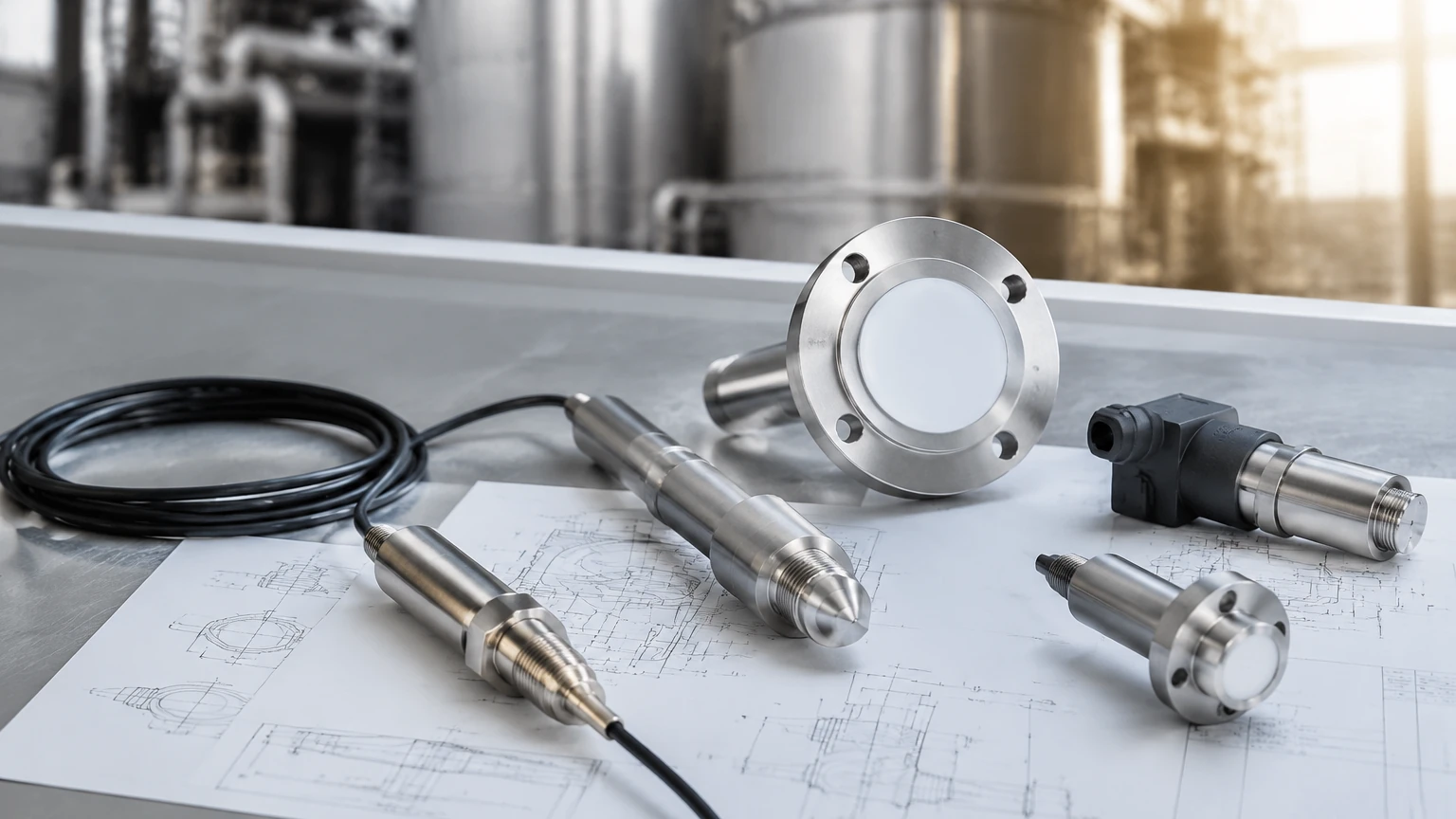
These are specialized pressure measurement tools designed to be lowered directly into the liquid. They consist of a stainless steel or plastic housing containing a sensitive diaphragm. The back of the diaphragm is vented to the atmosphere through a small tube integrated into the signal cable. These are ideal for deep wells, water treatment basins, and large storage tanks where top-mounting is the only option.
2. External Pressure Transmitters (Flange or Threaded)
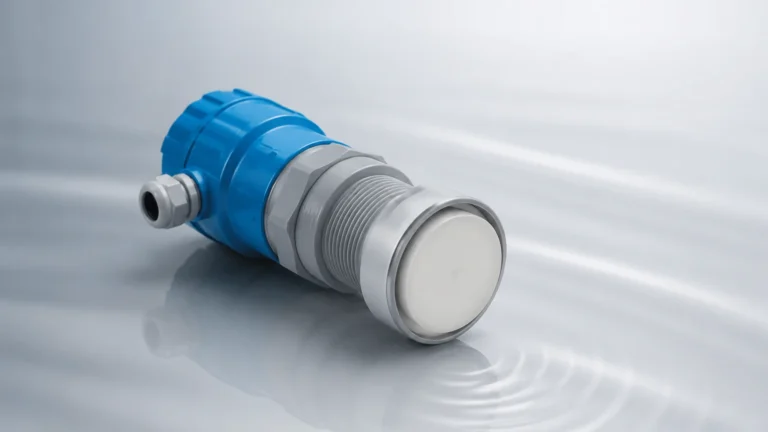
For tanks with bottom or side access, external transmitters are mounted via a threaded NPT/G connection or a flange. These sensors measure the pressure at the mounting point. They are easier to maintain than submersible units because they can be isolated from the process using valves without needing to enter the tank.
3. Differential Pressure (DP) Transmitters
In closed or pressurized vessels, the pressure above the liquid (the headspace) adds to the hydrostatic pressure at the bottom. To obtain an accurate level reading, the headspace pressure must be subtracted. A DP transmitter uses two sensing elements: one at the bottom (high-pressure side) and one at the top (low-pressure side). The instrument calculates the difference, providing a level reading that is independent of the internal tank pressure. For more information on the full range of these instruments, you can visit the Main Page of Welk's product catalog.
Key Selection Criteria for Pressure Measurement Tools
Choosing the right instrument requires a thorough analysis of the process conditions. Failure to account for chemical compatibility or pressure ranges can lead to premature sensor failure or inaccurate data.
Media Compatibility and Wetted Materials
The "wetted parts" of the sensor—the diaphragm and the housing—must be resistant to the liquid being measured.
* Stainless Steel (316L): The standard for water, oils, and mild chemicals.
* Hastelloy C or Tantalum: Used for highly corrosive acids or chlorides.
* Ceramic Diaphragms: Excellent for abrasive slurries or applications requiring high mechanical durability.
Pressure Range and Accuracy
It is essential to select a tool with a pressure range that closely matches the maximum height of the liquid. If a sensor is rated for 10 bar (approx. 100 meters of water) but is used in a 2-meter tank, the resolution and accuracy will be significantly degraded. Most modern pressure measurement tools offer a "turndown ratio," allowing the user to calibrate the 4-20mA output to a specific sub-range of the sensor's total capacity.
Output Signals and Communication
In the era of Industrial IoT, the choice of output signal is critical for integration:
* 4-20mA Analog: The industry standard for long-distance transmission with high noise immunity.
* HART Protocol: Allows digital data to be superimposed on the 4-20mA signal for remote diagnostics and configuration.
* RS485/Modbus: Ideal for connecting multiple sensors to a PLC or SCADA system over a digital bus.
Selection Guide and Comparison Table
The following table provides a high-level comparison to assist in the initial selection of pressure measurement tools for level applications.
| Feature | Submersible Transmitter | External Gauge Transmitter | Differential Pressure (DP) |
| :— | :— | :— | :— |
| Best Use Case | Open wells, reservoirs, sumps | Atmospheric process tanks | Pressurized/Closed vessels |
| Installation | Suspended by cable | Side/Bottom mounting | Dual-port piping/Capillaries |
| Maintenance | Requires pulling cable out | Easy isolation via valves | Complex (requires manifold) |
| Cost | Moderate | Low to Moderate | High |
| Pressure Limit | Limited by cable seal | High | Very High |
| Accuracy | 0.25% to 0.5% FS | 0.1% to 0.25% FS | 0.075% to 0.1% FS |
Installation Best Practices and Considerations
Correct installation is as important as the quality of the pressure measurement tools themselves. Improper mounting can lead to signal drift or physical damage to the sensor.
Atmospheric Compensation
For gauge pressure sensors, the vent tube in the cable must remain unobstructed. If moisture enters the vent tube, it can block the reference pressure or corrode internal electronics. It is recommended to use a bellows-style vent filter or a specialized junction box with a desiccant dryer to prevent moisture ingress.
Turbulence and Mechanical Protection
In tanks with agitators or high-velocity inflow, submersible sensors can swing or be buffeted by the liquid. This movement creates "noise" in the pressure signal. To prevent this, sensors should be installed inside a stilling well—a vertical pipe with small holes that dampens wave action while allowing the liquid level to equalize.
Temperature Effects
While pressure measurement tools are temperature-compensated, extreme fluctuations can still cause zero-shift. If the process liquid is very hot (e.g., steam or hot oil), a chemical seal with a capillary tube should be used. This allows the sensitive electronics of the transmitter to be mounted at a distance from the heat source, using a fill fluid to transmit the pressure.
Limitations and Troubleshooting
While hydrostatic pressure is a robust method for level measurement, it has inherent limitations that engineers must manage:
1. Density Sensitivity: Since $P =
ho gh$, if the density of the liquid changes (due to temperature changes or chemical concentration variations), the level reading will change even if the physical height remains the same. In such cases, a temperature-compensated density calculation or a different technology like radar may be required.
2. Clogging and Sediment: In wastewater or slurry applications, sediment can build up around the diaphragm. Periodic cleaning or the use of a flush-diaphragm design is necessary to ensure the pressure port does not become blocked.
3. Overpressure Events: Sudden pressure spikes (water hammer) can permanently deform the sensing diaphragm. Selecting a sensor with a high overpressure rating (e.g., 3x or 4x the nominal range) provides a safety margin.
Frequently Asked Questions (FAQs)
Q: Can I use a standard pressure gauge for level measurement?
A: Yes, provided the gauge is calibrated for the specific gravity of the liquid. Many gauges feature dual scales showing both pressure (Bar/PSI) and height (Meters/Feet of water).
Q: How often should pressure measurement tools be calibrated?
A: For most industrial applications, an annual calibration check is standard. However, in critical safety loops or highly corrosive environments, semi-annual checks are recommended.
Q: What is the maximum depth a submersible pressure sensor can measure?
A: Standard industrial units can measure up to 200 meters (approx. 20 bar), though specialized deep-well sensors are available for even greater depths. The limitation is usually the structural integrity of the cable and the seal.
Q: Does the shape of the tank affect the pressure reading?
A: No. Hydrostatic pressure depends only on the vertical height of the liquid, not the volume or shape of the container. A pressure sensor at the bottom of a narrow pipe will read the same as one at the bottom of a wide lake, provided the water height is the same.
Conclusion
Pressure measurement tools remain a cornerstone of industrial level sensing due to their simplicity, reliability, and cost-effectiveness. By understanding the underlying physics of hydrostatic pressure and carefully matching the instrument's materials and specifications to the process environment, facilities can achieve precise control over their liquid assets. Whether monitoring a simple water tank or a complex chemical reactor, the right pressure instrumentation ensures operational continuity and safety. For technical support and a detailed look at available measurement solutions, engineers are encouraged to consult the Main Page for comprehensive product specifications and application engineering guides.