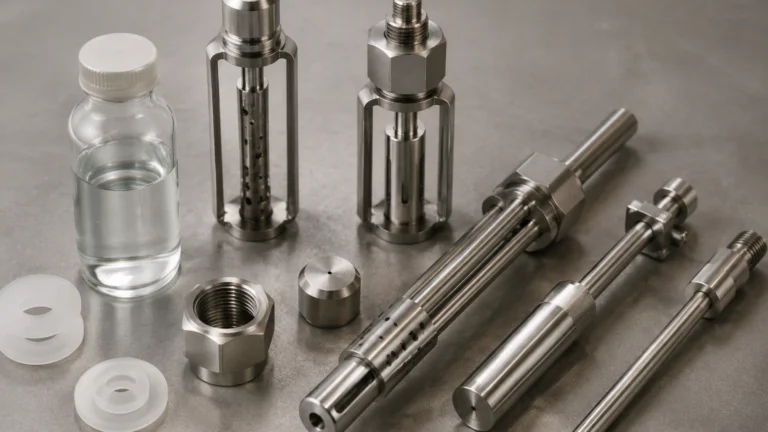
Vega Cyber
Vega Cyber
In the modern industrial landscape, the digital transformation of process automation has shifted level measurement from simple analog signaling to complex, networked data exchange. This evolution has introduced the concept of "Vega Cyber"—a term representing the intersection of high-precision level instrumentation and robust cybersecurity standards. As industrial internet of things (IIoT) integration becomes standard, ensuring that level meters are not only accurate but also secure against unauthorized access is a primary concern for plant engineers and IT security officers alike.
For manufacturers like Welk, providing reliable level measurement solutions involves more than just hardware; it requires an understanding of how data flows from the sensor to the control room. This guide explores the principles of modern level measurement, the security frameworks surrounding digital instrumentation, and how to select the right technology for secure, long-term operation.
Core Measurement Principles: From Radar to Hydrostatic
Before evaluating the security or "cyber" aspects of a sensor, it is essential to understand the physical principles that govern measurement. Different technologies offer varying degrees of compatibility with digital security protocols.
Radar Level Measurement
Radar level meters operate on the Time-of-Flight (ToF) principle. The sensor emits a high-frequency microwave signal (typically in the 26 GHz or 80 GHz range) toward the medium's surface. The signal is reflected back to the antenna. The time it takes for the pulse to travel to the surface and back is directly proportional to the distance.
Modern radar sensors often utilize Frequency Modulated Continuous Wave (FMCW) technology, which allows for higher resolution and better signal-to-noise ratios. These digital signals are processed by onboard microprocessors, which are the primary focus of cybersecurity hardening.
Ultrasonic Level Sensors
Ultrasonic sensors function by emitting sound waves at frequencies above the human hearing range. Like radar, they use the ToF principle. However, because sound requires a medium (air or gas) to travel, the accuracy is affected by temperature fluctuations, vapors, and heavy dust. These sensors are cost-effective for water treatment and simple chemical storage, but they require digital filtering to ignore false echoes from tank internal structures.
Hydrostatic Level Transmitters
Hydrostatic measurement relies on the principle that the pressure at a specific depth in a liquid is proportional to the height of the liquid column above it. A pressure sensor at the bottom of the tank measures the "head pressure." This is a contact-based method that is highly reliable for vented tanks but requires compensation for liquid density changes. From a cyber perspective, these are often integrated via 4-20mA HART protocols, which require specific security considerations during digital handshaking.
Defining the 'Cyber' in Level Instrumentation
The term "Vega Cyber" highlights the industry's shift toward the IEC 62443 standard, which is the international benchmark for cybersecurity in Industrial Automation and Control Systems (IACS). When discussing cyber-secure level meters, we are looking at several critical layers of protection.
Component-Level Security
Modern instruments now feature secure boot processes and encrypted firmware. This ensures that the software running on a radar or ultrasonic sensor cannot be tampered with or replaced by unauthorized third parties. For engineers, this means verifying that the manufacturer provides signed firmware updates.
Communication Security
Most digital level meters now offer wireless configuration via Bluetooth or integration into cloud platforms. "Vega Cyber" principles dictate that these connections must be encrypted. For instance, Bluetooth communication should require a unique PIN and use industry-standard encryption to prevent "man-in-the-middle" attacks where a malicious actor might attempt to change the sensor’s calibration or offset.
Data Integrity
In critical applications like oil and gas or chemical processing, the integrity of the level data is paramount. If a sensor's output is spoofed, it could lead to tank overfills or dry-run pump damage. Secure level meters use digital signatures and checksums to ensure that the value displayed in the PLC (Programmable Logic Controller) matches exactly what the sensor measured.
Key Evaluation Criteria for Secure Level Measurement Systems
When selecting a level measurement solution, such as those found on the Main Page of industrial suppliers, engineers must balance physical application requirements with digital security needs.
1. Media Characteristics: Does the medium have a low dielectric constant (requiring high-frequency radar) or is it a corrosive acid (requiring non-contact ultrasonic or PTFE-coated sensors)?
2. Process Environment: High temperatures (up to 450°C) and high pressures (up to 160 bar) necessitate specific housing materials and seal types, such as FFKM or ceramic.
3. Connectivity Requirements: Will the sensor be part of a local loop (4-20mA), a fieldbus network (Profibus, Foundation Fieldbus), or an IIoT cloud-based inventory system?
4. Security Certification: Does the device meet IEC 62443-4-2 standards? This certification confirms that the device has the necessary security capabilities for its intended use.
Practical Technology Selection Table
The following table provides a comparison of common level measurement technologies and their typical application strengths in a digitally secure environment.
| Technology | Typical Range | Accuracy | Cyber Security Focus | Best Use Case |
| :— | :— | :— | :— | :— |
| 80 GHz Radar | Up to 120m | ±1 mm | Encrypted Bluetooth, Signed Firmware | Small tanks, solids, high precision |
| Ultrasonic | Up to 15m | ±0.25% | PIN-protected local display | Water/Wastewater, open channels |
| Hydrostatic | Up to 200m | ±0.1% | HART Protocol Security | Deep wells, pressurized vessels |
| Guided Wave Radar | Up to 75m | ±2 mm | Interface measurement security | Oil/Water interface, foam layers |
| Magnetic Gauge | Up to 6m | ±5 mm | Physical security, limited cyber risk | High-pressure boilers, visual backup |

Installation Best Practices for Connected Level Sensors
To maintain the "cyber" integrity of a level measurement system, installation must follow strict engineering guidelines. Even the most secure sensor can be compromised by poor network architecture.
* Network Segmentation: Level sensors should be placed on a separate VLAN (Virtual Local Area Network) from the general office network. This prevents a breach in the corporate IT system from reaching the process field devices.
* Physical Protection: For sensors with local displays and adjustment buttons, use lockable covers to prevent unauthorized physical tampering with the zero and span settings.
* Shielding and Grounding: Digital signals (especially RS485/Modbus) are susceptible to electromagnetic interference (EMI). Ensure proper shielding to prevent data corruption, which can sometimes be mistaken for a cyber-attack or sensor failure.
* Default Credentials: Always change default factory passwords and PINs immediately upon installation. This is the most common vulnerability in industrial "cyber" security.
Potential Limitations and Risk Mitigation
While digital and secure level meters offer immense benefits, they are not without limitations. High-frequency radar (80 GHz) can struggle in extremely heavy foam or when the dielectric constant of the material is below 1.4. In these cases, a Guided Wave Radar (GWR) or a displacement-type sensor may be required.
From a security standpoint, the primary risk is "security through obscurity." Relying on the fact that an instrument is in a remote location is no longer sufficient. As more devices connect to the cloud for remote monitoring, the attack surface increases. Regular audits of the sensor network and keeping firmware up to date are necessary tasks for the modern maintenance team.
Frequently Asked Questions (FAQ)
Q: Does a 4-20mA analog signal have cyber risks?
A: A pure 4-20mA signal is analog and generally immune to cyber-attacks. However, most modern 4-20mA sensors use the HART protocol, which overlays a digital signal. If the HART communicator or the control system is compromised, the sensor settings can be changed remotely.
Q: Is Bluetooth configuration safe for industrial plants?
A: Yes, provided the manufacturer uses encrypted communication and mandatory PIN authentication. It allows technicians to configure sensors from a safe distance (e.g., at the base of a tall silo), reducing the risk of falls and exposure to hazardous materials.
Q: How often should I update the firmware on my level meters?
A: Firmware should be updated whenever the manufacturer releases a patch for a known security vulnerability or a critical bug fix. For standard operation, a yearly review of firmware versions is recommended.
Q: Can I use a standard Wi-Fi router for my level sensors?
A: It is not recommended. Industrial-grade gateways and access points offer better environmental protection (IP67/IP68) and more robust security features than consumer-grade hardware.
Conclusion
As the industry moves toward the standards represented by "Vega Cyber," the role of the instrument engineer is expanding to include data security. By choosing reliable hardware from experienced manufacturers like Welk and following established cybersecurity frameworks, facilities can ensure their level measurement data remains accurate, available, and secure. For more information on selecting the right instrument for your specific application, visit the Main Page for technical specifications and support.