Ultrasonic Level Sensor Cost
In the landscape of industrial process control, selecting the right instrumentation requires a balance between technical performance and budgetary constraints. For many engineers and procurement specialists, understanding the ultrasonic level sensor cost is not merely about the sticker price of the device, but the total cost of ownership including installation, maintenance, and reliability.
Ultrasonic Level Meters have become a staple in water treatment, chemical processing, and general manufacturing due to their non-contact nature and versatility. This guide explores the technical principles that drive these costs and provides a framework for evaluating the financial and operational impact of different sensor configurations.
Measurement Principles of Ultrasonic Level Meters
Before analyzing the factors that influence the ultrasonic level sensor cost, it is essential to understand how these devices function. Ultrasonic sensors operate on the "Time of Flight" (ToF) principle.
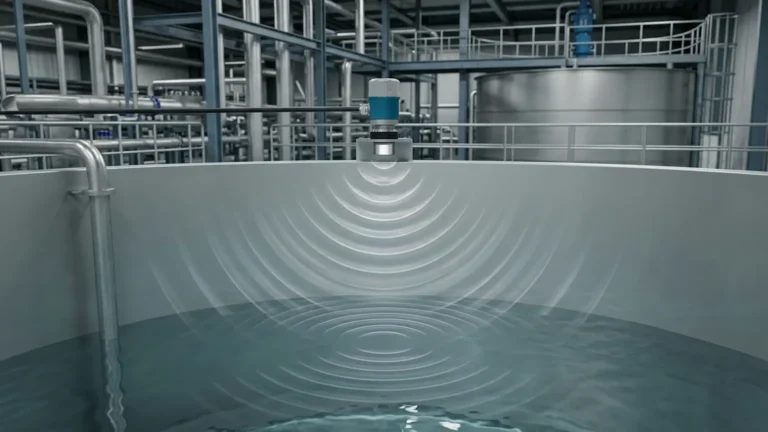
The sensor's transducer emits a high-frequency acoustic pulse (usually between 20 kHz and 200 kHz). This sound wave travels through the air, hits the surface of the medium (liquid or solid), and reflects back to the sensor. The device then measures the time elapsed between the emission of the pulse and the reception of the echo.
The distance is calculated using the formula:
Distance = (Speed of Sound × Time) / 2
Because the speed of sound is affected by air temperature, most professional-grade ultrasonic level meters include an integrated temperature sensor to compensate for these changes, ensuring accuracy across varying environmental conditions. The "level" is then derived by subtracting the measured distance from the total height of the tank or vessel.
The Dead Zone (Blocking Distance)
One critical technical aspect that influences both application and cost is the "dead zone" or blocking distance. This is a small area directly beneath the transducer face where the sensor cannot accurately measure because the transducer is still vibrating from the initial pulse and cannot yet receive the return echo. Higher-quality sensors often have smaller dead zones, which allows for measurement closer to the top of the tank, but this precision typically increases the initial investment.
Factors Influencing Ultrasonic Level Sensor Cost
When evaluating the ultrasonic level sensor cost, several variables dictate the final price point. Understanding these allows project managers to avoid over-specifying for simple applications or under-specifying for hazardous environments.
1. Measuring Range
The maximum distance a sensor can cover is a primary cost driver. Short-range sensors (up to 5 meters) are generally more affordable and use higher frequency pulses. Long-range sensors (capable of reaching 15, 30, or even 70 meters) require more powerful transducers and advanced signal processing to filter out noise over long distances, leading to a higher price.
2. Material Compatibility and Housing
Standard sensors often feature plastic housings (such as ABS or PVC) suitable for water or non-corrosive liquids. However, if the application involves aggressive chemicals, the transducer face or the entire housing may need to be constructed from PVDF (Polyvinylidene fluoride) or PTFE (Teflon). These materials significantly increase the ultrasonic level sensor cost but are necessary for long-term durability.
3. Output and Communication Protocols
A basic 4-20mA analog output is the industry standard and typically represents the entry-level cost. However, modern industrial automation often requires digital communication for remote monitoring and diagnostics. Adding protocols such as RS485 (Modbus), HART, or Profibus will increase the unit cost but can reduce wiring and integration costs in large-scale projects.
4. Environmental Protection and Certifications
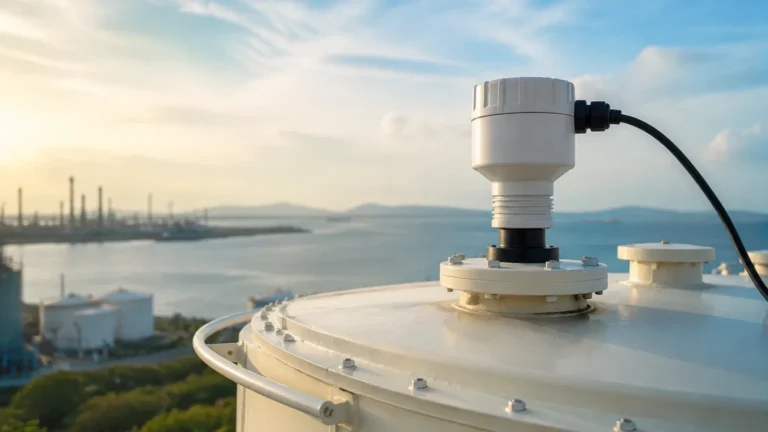
Sensors used in standard indoor environments require basic IP65 or IP66 ratings. In contrast, sensors for outdoor use or wash-down areas need IP68 protection. Furthermore, if the sensor is installed in a location with flammable gases or dust, it must be Explosion-Proof (Ex-rated) or Intrinsically Safe (ATEX/IECEx). These certifications involve rigorous testing and specialized internal components, which can double or triple the base cost of the instrument.
Comparative Selection Table
To assist in the decision-making process, the following table summarizes typical configurations and their relative impact on the ultrasonic level sensor cost.
| Sensor Category | Typical Range | Housing Material | Output Options | Best Application | Relative Cost |
| :— | :— | :— | :— | :— | :— |
| Basic / Economy | 0 – 5 meters | ABS / Plastic | 4-20mA | Open water tanks, sumps | Low |
| Standard Industrial | 0 – 12 meters | PVC / PVDF | 4-20mA, RS485 | Chemical storage, wastewater | Moderate |
| Advanced / Long Range | 0 – 30+ meters | Reinforced Polymers | HART, Modbus, LCD Display | Large silos, reservoirs | High |
| Hazardous Area | 5 – 15 meters | PVDF / Aluminum | Intrinsically Safe / Ex-proof | Oil & Gas, volatile chemicals | Premium |
Installation Considerations and Their Impact on TCO
The initial ultrasonic level sensor cost is only one part of the financial equation. Improper installation can lead to measurement errors, frequent downtime, and premature sensor failure, all of which escalate the Total Cost of Ownership (TCO).
Mounting Position
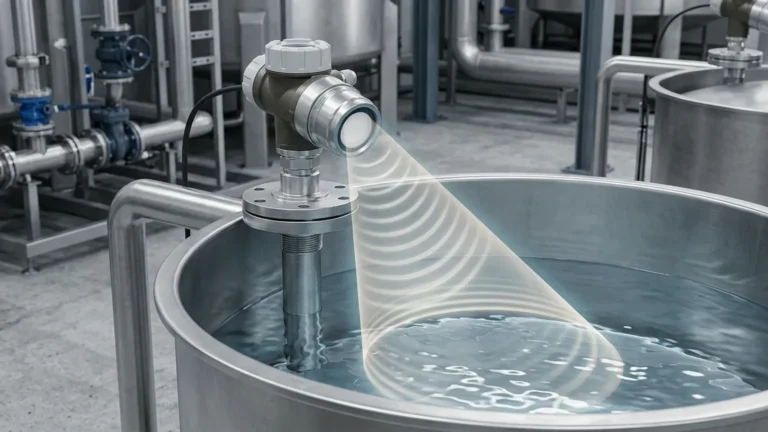
Ultrasonic sensors must be mounted perpendicular to the liquid surface. If the sensor is tilted, the sound wave may reflect away from the transducer rather than back to it, causing a "loss of echo" error. Additionally, the sensor should not be mounted too close to the tank wall (typically at least 200mm to 500mm away, depending on the beam angle) to avoid false reflections from welds or wall build-up.
Avoiding Obstructions
Internal tank structures such as ladders, agitators, or inflow pipes can interfere with the ultrasonic beam. While advanced Ultrasonic Level Meters offer "false echo suppression" software to ignore these fixed obstructions, this feature is usually found in mid-to-high range models. Planning the installation to provide a clear "line of sight" for the acoustic pulse is the most cost-effective strategy.
Temperature and Pressure
Ultrasonic technology is generally limited to atmospheric or near-atmospheric pressure. High pressure significantly alters the density of the air, which changes the speed of sound beyond what standard compensation can handle. Similarly, extreme temperatures can damage the piezoelectric crystals in the transducer. If your process exceeds 80°C or 0.3 MPa, alternative technologies like radar may be more cost-effective in the long run despite a higher initial purchase price.

Limitations and Disadvantages
While ultrasonic sensors are highly effective, they are not a universal solution. Recognizing their limitations helps avoid costly misapplications.
* Foam and Turbulence: Heavy foam on the surface of a liquid absorbs the acoustic pulse rather than reflecting it. If your process involves significant agitation or foaming, an ultrasonic sensor may fail to provide a reading.
* Vacuum Conditions: Sound requires a medium (air or gas) to travel. Therefore, ultrasonic sensors cannot function in a vacuum.
* Dust and Vapor: Dense dust in a silo or heavy steam/vapor in a tank can attenuate the signal. In these cases, the ultrasonic level sensor cost might be wasted, and a high-frequency radar sensor would be a more reliable (though more expensive) choice.
Frequently Asked Questions (FAQs)
Does the accuracy of the sensor affect the cost?
Yes. Most industrial ultrasonic sensors offer an accuracy of approximately 0.25% to 0.5% of the measured range. Sensors requiring higher precision or faster response times for dynamic processes often utilize more sophisticated signal processing algorithms, which contributes to a higher price.
How long do ultrasonic level sensors typically last?
With no moving parts and non-contact operation, a high-quality ultrasonic sensor can last 7 to 10 years or more in a stable environment. Choosing a sensor with a higher IP rating or chemically resistant materials can extend this lifespan, lowering the long-term ultrasonic level sensor cost.
Can I use one sensor for both liquids and solids?
While many sensors are advertised for both, solids (like grain or plastic pellets) often have an uneven surface that scatters the sound wave. Sensors specifically designed for solids usually have higher power and narrower beam angles to compensate for this, which may influence the cost compared to a standard liquid sensor.
Is it cheaper to use an integrated or remote display?
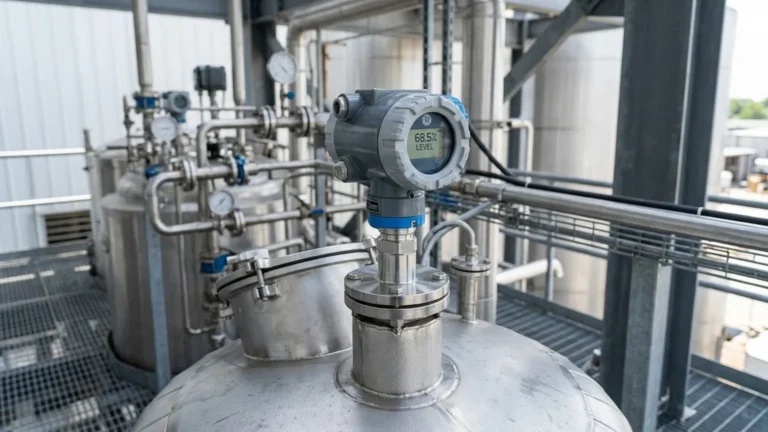
Integrated displays (where the screen is on the sensor head) are convenient for local monitoring but can increase the unit price. Remote displays allow the sensor to be mounted in a hard-to-reach area while the reading is viewed at eye level. Depending on the wiring distance, a remote setup might increase installation labor costs even if the sensor itself is slightly cheaper.
Conclusion
Determining the appropriate ultrasonic level sensor cost for a project requires a thorough analysis of the application’s technical demands. By prioritizing the necessary measuring range, material compatibility, and safety certifications, engineers can select a solution that provides reliable data without unnecessary expenditure.
For most standard industrial applications, the ultrasonic level meter remains one of the most cost-effective and easy-to-maintain technologies available. When balanced against the risks of manual measurement or contact-based mechanical failures, the investment in a high-quality ultrasonic system often pays for itself through improved process efficiency and reduced maintenance requirements. For specific configuration options and technical support in matching a sensor to your budget, you can Review product options and application support to ensure the selected hardware aligns with your operational goals.