Ultrasonic Level Sensor Price
Understanding Ultrasonic Level Sensor Price: A Comprehensive B2B Procurement Guide
In the landscape of industrial automation, selecting the right instrumentation requires a delicate balance between technical specifications and budgetary constraints. When evaluating the ultrasonic level sensor price, procurement managers and engineers must look beyond the initial sticker price to understand the underlying technology, material science, and application-specific features that drive costs.
Ultrasonic Level Meters have become a staple in water treatment, chemical processing, and industrial tank monitoring due to their non-contact nature and reliability. However, the market offers a wide spectrum of pricing—from economy-grade sensors for simple sumps to high-precision, explosion-proof units for hazardous chemical storage. This guide examines the factors influencing cost and provides a framework for selecting the most cost-effective solution for your facility.
Measurement Principle: The Foundation of Value
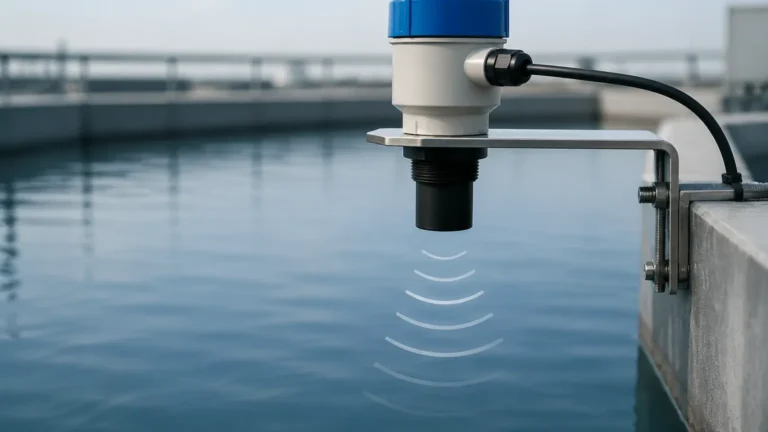
Before analyzing the ultrasonic level sensor price, it is essential to understand how these devices function. Ultrasonic level measurement is based on the "Time-of-Flight" (ToF) principle.
The sensor’s transducer emits a high-frequency ultrasonic pulse (typically between 20 kHz and 200 kHz). This pulse travels through the air, hits the surface of the medium (liquid or solid), and reflects back to the sensor. The device measures the time interval ($t$) between the emission of the pulse and the reception of the echo.
Using the known speed of sound in air—approximately 344 meters per second (1,128 feet per second) at 20°C (68°F)—the internal electronics calculate the distance ($D$) using the formula:
$$D = \frac{c \times t}{2}$$
Where:
* $D$ is the distance to the surface.
* $c$ is the speed of sound.
* $t$ is the elapsed time.
Because the speed of sound varies with air temperature, professional-grade sensors like those from Welk include integrated temperature compensation. This technical necessity is one of the first factors that differentiates a low-cost consumer sensor from a robust industrial instrument.
Key Factors Influencing Ultrasonic Level Sensor Price
When comparing quotes, several technical variables significantly impact the final cost. Understanding these helps in determining whether a higher price point is justified by the application requirements.
1. Measurement Range and Transducer Power
Standard ultrasonic sensors typically cover ranges from 2 meters (6.5 feet) up to 15 meters (49 feet). As the required range increases, the transducer must be larger and more powerful to ensure the return signal is strong enough to be detected over the background noise. Specialized long-range sensors reaching 30 meters (98 feet) or more require advanced signal processing and high-gain transducers, which naturally increases the price.
2. Accuracy and Signal Processing
Entry-level sensors may offer an accuracy of 0.5% to 1.0% of the measured span. High-precision industrial models provide accuracy as tight as 0.2% or 0.25%. Achieving this level of precision requires sophisticated algorithms for "False Echo Suppression." This software allows the sensor to ignore reflections from internal tank obstructions like ladders, agitators, or weld seams. The development and implementation of these digital filtering techniques are reflected in the ultrasonic level sensor price.
3. Material Compatibility and Housing
For water and wastewater applications, standard ABS or PVC housings are often sufficient. However, in the chemical industry, the sensor face and housing must withstand corrosive vapors. Upgrading to PVDF (Polyvinylidene fluoride) or PTFE (Teflon) transducers significantly increases the cost but is mandatory for longevity in aggressive environments.
4. Output Protocols and Connectivity
A basic 4-20mA analog output is the industry standard and usually represents the baseline price. Costs increase as you add digital communication protocols such as:
* HART (Highway Addressable Remote Transducer): Allows for remote configuration and diagnostics.
* RS485/Modbus: Ideal for networking multiple sensors to a central PLC or SCADA system.
* Wireless/IoT: Integration for remote monitoring in locations without existing cabling.
5. Hazardous Area Certifications
If the sensor is to be installed in an environment where explosive gases or dust are present (e.g., oil and gas storage), it must be intrinsically safe or explosion-proof (ATEX, IECEx, or UL Class I Div 1). The engineering, testing, and certification required for these ratings can double the price of a standard industrial unit.
Selection Table: Matching Application to Price Tier
| Application Tier | Typical Range | Key Features | Price Driver |
| :— | :— | :— | :— |
| Economy/Utility | 0.5m – 5m | Plastic housing, 4-20mA output, basic accuracy. | High-volume production, simplified electronics. |
| Standard Industrial | 0.5m – 12m | IP67/IP68 rating, LCD display, temperature compensation. | Robustness and local interface. |
| Chemical/Corrosive | 0.3m – 10m | PVDF/PTFE wetted parts, high chemical resistance. | Specialized material costs. |
| Advanced/Hazardous | 0.3m – 30m+ | ATEX/Ex-proof, HART/Modbus, advanced echo filtering. | Certification and R&D for complex environments. |
Installation Considerations and Their Impact on Cost
While the hardware price is a major factor, the ease of installation also affects the total project budget. Ultrasonic sensors are relatively simple to install, but certain physical constraints must be managed:
* The Dead Zone (Blocking Distance): Every ultrasonic sensor has a "dead zone" directly beneath the transducer (typically 0.2m to 0.5m) where it cannot measure. If your tank must be filled to the very top, you may need to install the sensor on a standpipe or nozzle, which adds to the installation labor and material costs.
* Beam Angle: The ultrasonic pulse spreads out in a cone (usually 5° to 12°). If the tank is narrow or has internal obstructions, a sensor with a narrower beam angle is required. Narrow-beam transducers are generally more expensive to manufacture.
* Mounting Orientation: The sensor must be mounted perfectly perpendicular to the liquid surface. In uneven terrain or rounded tank tops, adjustable mounting brackets may be necessary.

Limitations: When Ultrasonic Might Not Be the Best Value
To ensure a wise investment, it is important to recognize where ultrasonic technology reaches its limits. In these cases, even a low ultrasonic level sensor price represents poor value because the device will not perform reliably:
1. Heavy Foam: Foam absorbs the ultrasonic signal rather than reflecting it, leading to "Loss of Echo" errors.
2. Vacuum Conditions: Sound requires a medium (air) to travel. Ultrasonic sensors cannot function in a vacuum.
3. High Steam/Vapors: Dense steam can change the speed of sound or cause condensation on the sensor face, leading to inaccuracies.
4. Extreme Temperatures: While most sensors handle up to 70°C or 80°C (158°F to 176°F), applications exceeding these limits often require radar level meters, which are unaffected by air temperature but come at a higher price point.
Total Cost of Ownership (TCO)
In a B2B context, the purchase price is only one part of the equation. A low-cost sensor that fails after six months of chemical exposure or requires weekly manual cleaning is far more expensive than a premium Welk sensor designed for the environment.
Consider the following when calculating TCO:
* Maintenance: Does the sensor have a self-cleaning face or software to ignore build-up?
* Downtime: What is the cost to the process if the level reading is lost?
* Calibration: Does the sensor require complex field calibration, or is it "plug-and-play"?
Frequently Asked Questions (FAQ)
Q: Why is there such a large difference in ultrasonic level sensor prices online?
A: Many low-cost sensors found on consumer sites are designed for hobbyist use or simple water tanks. Industrial-grade sensors include electromagnetic interference (EMI) shielding, surge protection, temperature compensation, and high-quality transducers capable of operating 24/7 in harsh conditions.
Q: Can I use an ultrasonic sensor for solids?
A: Yes, but the price may be higher. Solids (like grain or plastic pellets) do not reflect sound as well as liquids and often have uneven surfaces. You will typically need a more powerful sensor with specialized software to get a reliable reading.
Q: How does the integrated display affect the price?
A: An integrated LCD display usually adds a modest amount to the cost but significantly reduces commissioning time, as technicians can calibrate the unit at the tank top without needing a laptop or handheld communicator.
Q: Is a split-type sensor more expensive than an integrated one?
A: Generally, yes. A split-type (where the transducer is separate from the controller/display) requires more cabling and two separate enclosures. However, they are preferred when the measurement point is difficult to access or in high-vibration areas.
Conclusion
Determining the appropriate ultrasonic level sensor price for your project requires a technical audit of your specific needs. By prioritizing accuracy, material compatibility, and necessary certifications, you can avoid the pitfalls of under-specifying (leading to failure) or over-specifying (leading to wasted budget).
Welk provides a range of Ultrasonic Level Meters designed to meet diverse industrial standards while maintaining a competitive cost-to-performance ratio. For complex applications, consulting with a technical expert ensures that the instrument you purchase today remains a reliable asset for years to come.