Ultrasonic Level Sensor vs Radar
Ultrasonic Level Sensor vs Radar: A Practical Engineering Guide for Level Measurement
In the field of industrial process automation, selecting the correct non-contact level measurement technology is critical for operational efficiency, safety, and cost control. Two of the most prevalent technologies used today are ultrasonic and radar. While both serve the primary function of measuring the distance to a liquid or solid surface without physical contact, they operate on fundamentally different physical principles. Choosing between an ultrasonic level sensor vs radar requires a deep understanding of the process environment, the material being measured, and the specific limitations of each technology.
Understanding the Principles of Non-Contact Level Measurement
Before comparing the two technologies, it is essential to understand how they interact with the medium and the surrounding environment.
Ultrasonic Measurement Principle
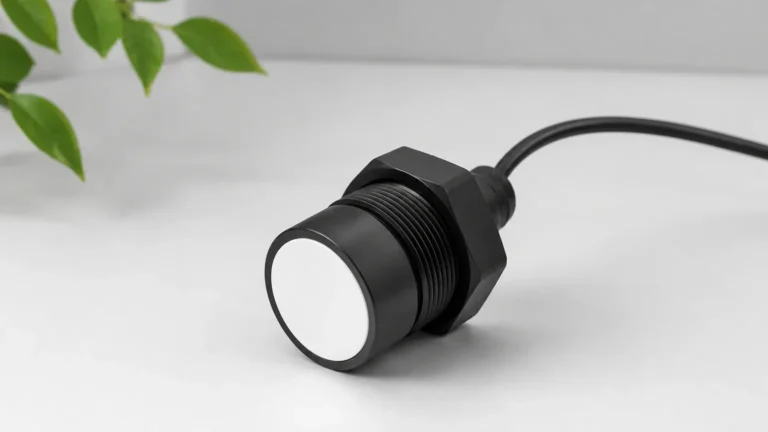
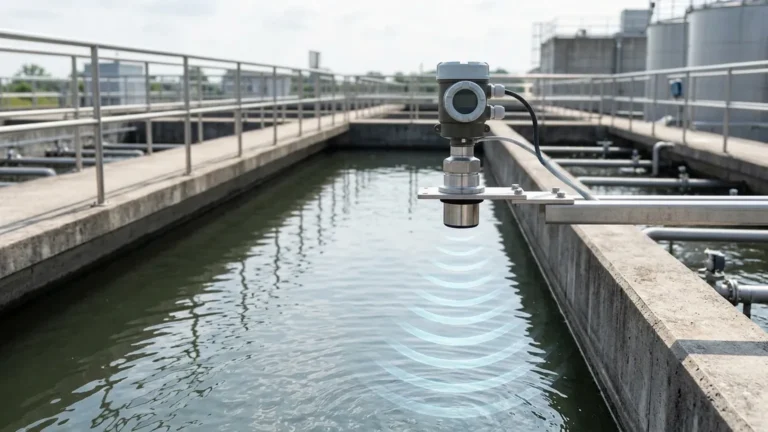
Ultrasonic Level Meters operate using high-frequency sound waves, typically in the range of 20 kHz to 200 kHz. The sensor’s transducer acts as both a transmitter and a receiver. It emits a pulse of sound that travels through the air (or gas) in the tank, reflects off the surface of the material, and returns to the transducer.
The device calculates the distance based on the Time-of-Flight (ToF) principle. Because the speed of sound in air is approximately 343 meters per second at 20°C, the distance is calculated as:
Distance = (Speed of Sound × Time) / 2
Since the speed of sound is highly dependent on air temperature, most modern ultrasonic sensors include an integrated temperature probe to compensate for these variations automatically.
Radar Measurement Principle
Radar (Radio Detection and Ranging) level transmitters use electromagnetic waves, specifically microwaves, usually in the 6 GHz, 26 GHz, or 80 GHz frequency bands. Unlike sound waves, electromagnetic waves do not require a medium to travel; they can operate effectively in a vacuum.
There are two primary types of radar measurement:
1. Pulse Radar: Similar to ultrasonic, it measures the time it takes for a microwave pulse to travel to the surface and back.
2. FMCW (Frequency Modulated Continuous Wave): The sensor emits a continuous signal with a changing frequency. The difference between the emitted frequency and the received frequency is proportional to the distance.
Radar waves travel at the speed of light (approximately 300,000,000 meters per second), making them virtually immune to changes in air temperature or pressure.
Ultrasonic Level Sensor vs Radar: Key Technical Differences
When evaluating an ultrasonic level sensor vs radar, the decision often hinges on the atmospheric conditions within the vessel and the physical properties of the substance being measured.
1. Influence of Atmospheric Conditions
Ultrasonic sensors are sensitive to anything that affects the speed or propagation of sound. This includes:
* Temperature Fluctuations: Significant temperature gradients can cause measurement errors if the sensor cannot compensate accurately.
* Pressure: Ultrasonic sensors generally operate near atmospheric pressure. High pressure increases the density of the gas, which can attenuate the sound signal.
* Vapors and Gases: If the tank contains heavy vapors or gases other than air (e.g., methane or CO2), the speed of sound changes, leading to significant inaccuracies unless the device is calibrated for that specific gas mixture.
* Dust and Steam: Heavy dust or thick steam can scatter sound waves, reducing the signal strength.
Radar, conversely, is largely unaffected by these factors. Electromagnetic waves penetrate dust, steam, and vapors with minimal attenuation, and their speed is constant regardless of temperature or pressure changes.
2. Material Properties (Dielectric Constant vs. Acoustic Reflectivity)
Ultrasonic sensors rely on the "hardness" of the surface to reflect sound. Most liquids and solids reflect sound well. However, light, fluffy solids (like fine powders) may absorb sound waves rather than reflecting them.
Radar sensors rely on the Dielectric Constant (εr) of the material. Materials with a high dielectric constant (like water, εr ≈ 80) reflect radar signals very strongly. Materials with low dielectric constants (like oils or plastic pellets, εr < 2) reflect very little energy, making them harder for radar to detect unless specialized high-frequency or guided-wave radar is used.
3. Turbulence and Foam
Surface turbulence can cause signal scattering for both technologies. However, foam presents a unique challenge. Thick, dense foam often absorbs ultrasonic sound waves completely, causing a loss of signal. Radar can sometimes penetrate thin foam to measure the liquid level underneath, though dense, metallic, or conductive foam may still reflect the radar signal prematurely.
Selection Criteria and Performance Comparison
To assist in the engineering selection process, the following table compares the typical performance specifications of industrial-grade ultrasonic and radar level meters.
| Feature | Ultrasonic Level Meters | Radar Level Meters |
| :— | :— | :— |
| Medium Requirement | Requires air/gas to propagate | Can operate in a vacuum |
| Measurement Range | Typically up to 15–30 meters | Up to 30–100+ meters |
| Accuracy | ±0.25% to ±0.5% of range | ±1 mm to ±3 mm (High precision) |
| Pressure Limits | Usually < 0.3 MPa (3 bar) | Can exceed 10 MPa (100 bar) |
| Temperature Limits | Typically -40°C to 80°C | Up to 450°C (with heat sinks) |
| Cost | Generally lower (Cost-effective) | Generally higher |
| Maintenance | Low (No moving parts) | Low (No moving parts) |
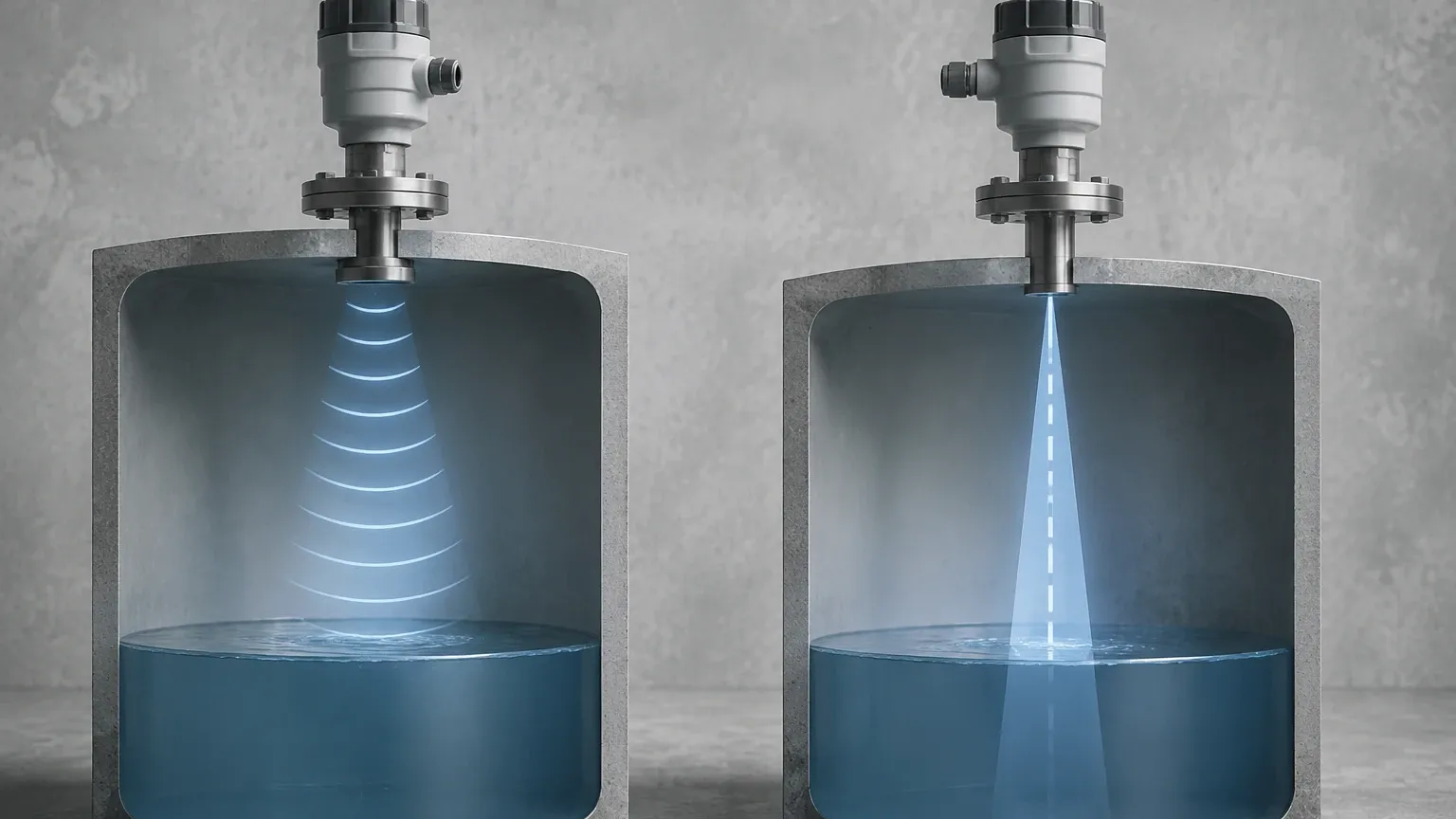
| Beam Angle | Wider (typically 10°–12°) | Narrower (3°–8° at high freq) |
Installation Requirements and Best Practices
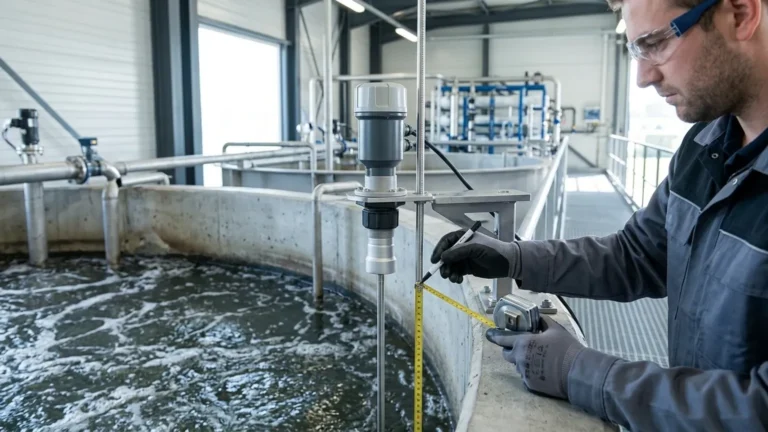
Proper installation is as important as technology selection. Both ultrasonic level sensor vs radar comparisons must account for the physical geometry of the tank.
Blocking Distance (Dead Zone)
Every non-contact sensor has a "blocking distance" or "dead zone" directly beneath the sensor face where it cannot measure. For ultrasonic sensors, this is the time required for the transducer to stop vibrating after transmitting before it can listen for the return echo. This usually ranges from 0.2m to 0.8m depending on the frequency. Radar also has a dead zone, though it is typically smaller (often < 0.1m for high-frequency units).
Beam Angle and Internal Obstructions
The beam of the sensor spreads as it travels. If the beam hits internal tank structures like ladders, agitators, or heating coils, it will create "false echoes."
* Ultrasonic: Because of the wider beam angle, users must ensure the sensor is mounted far enough from the tank wall to avoid interference.
* Radar: High-frequency radar (e.g., 80 GHz) has a very narrow beam, allowing it to be installed in tall, narrow nozzles or in tanks with many internal obstructions without picking up false signals.
Mounting Position
* Avoid the Center: In tanks with domed roofs, do not mount the sensor in the exact center, as this can focus multiple reflections and cause signal noise.
* Avoid the Fill Stream: Never mount a sensor directly above the point where material enters the tank, as the falling product will interfere with the signal.
* Perpendicularity: The sensor face must be installed perfectly perpendicular to the liquid surface to ensure the maximum signal return.
Application-Specific Recommendations
When to Choose Ultrasonic Level Meters
Ultrasonic Level Meters remain the industry standard for many water and wastewater applications. They are highly effective for:
* Open Channel Flow: Measuring level over flumes and weirs.
* Sump and Wet Well Monitoring: Where conditions are relatively stable and cost-efficiency is a priority.
* Chemical Storage: In plastic tanks containing non-fuming acids or bases at ambient temperatures.
When to Choose Radar Level Meters
Radar is the preferred choice for more demanding process environments, including:
* High-Pressure Vessels: Such as boilers or pressurized chemical reactors.
* High-Temperature Processes: Molten metals, hot oils, or bitumen.
* Vacuum Applications: Distillation columns where no air medium exists for sound to travel.
* Materials with Dust or Vapors: Grain silos, cement storage, or solvent tanks where ultrasonic signals would be attenuated.
Limitations and Troubleshooting
Despite their reliability, both technologies have failure modes that engineers must anticipate.
1. Signal Loss due to Turbulence: If the surface is extremely turbulent (e.g., near a high-speed agitator), the signal may bounce away from the receiver. In these cases, a stilling well (a pipe that bypasses the turbulence) may be required for both ultrasonic and radar.
2. Condensation: Moisture buildup on the sensor face can attenuate ultrasonic pulses or refract radar waves. Many sensors now feature "drip-off" antenna designs or PTFE covers to minimize this effect.
3. False Echoes: If a sensor incorrectly identifies a tank brace as the liquid level, most modern transmitters offer "false echo suppression" or "background subtraction" software. The user maps the empty tank, and the software ignores any static reflections at those specific distances.
Frequently Asked Questions
Q: Can I use an ultrasonic sensor for measuring solids?
A: Yes, but with caution. Solids often have an uneven surface (angle of repose) that scatters sound. You should select an ultrasonic sensor specifically designed for solids, which usually has a higher power output and lower frequency to penetrate dust.
Q: Is radar always better than ultrasonic?
A: Not necessarily. While radar is more versatile in extreme conditions, ultrasonic is often more cost-effective for simple water-based applications. If the environment is atmospheric and the liquid is stable, ultrasonic provides excellent accuracy at a lower price point.
Q: How does the dielectric constant affect radar measurement?
A: If the dielectric constant is too low (below 1.4), the radar signal might pass right through the material and reflect off the bottom of the tank instead. In these scenarios, a Guided Wave Radar (GWR), which uses a physical probe to guide the signal, is often a better choice than non-contact radar.
Q: Do these sensors require frequent calibration?
A: No. Both technologies are solid-state and do not suffer from mechanical wear. Once calibrated to the tank dimensions, they typically only require periodic cleaning of the sensor face if the medium is prone to splashing or coating.
In conclusion, the choice between an ultrasonic level sensor vs radar depends on balancing the budget against the technical requirements of the process. For standard water treatment and simple storage, ultrasonic technology offers a reliable and economical solution. For complex industrial processes involving high heat, pressure, or volatile vapors, radar provides the necessary robustness to ensure continuous, accurate measurement.