Ultrasonic Tank Level Sensor Nmea 2000
Ultrasonic Tank Level Sensor NMEA 2000: A Technical Guide to Integration and Selection
In modern industrial and marine automation, the demand for precise, non-contact level measurement has led to the widespread adoption of ultrasonic technology. When integrated with the NMEA 2000 (National Marine Electronics Association) protocol, these sensors provide a robust, digital networking solution for monitoring fluid levels across multiple tanks. This guide explores the technical principles of Ultrasonic Level Meters, the specifics of the NMEA 2000 interface, and the engineering considerations required for successful deployment.
Understanding Ultrasonic Measurement Principles
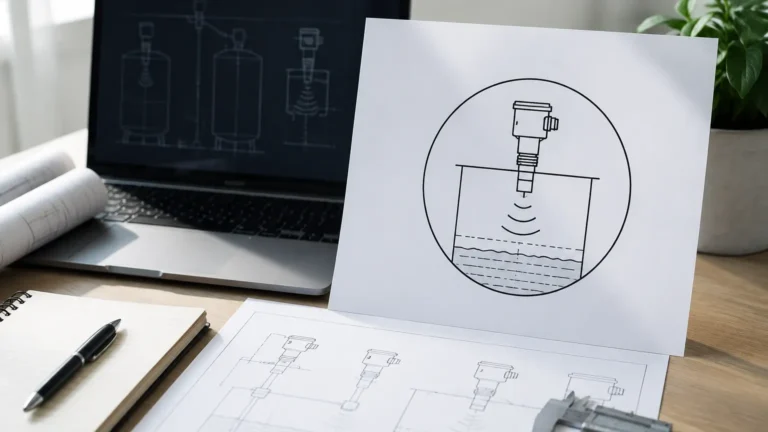
Ultrasonic level measurement is a time-of-flight (ToF) technology. The sensor, typically mounted at the top of a tank, contains a piezoelectric transducer that emits high-frequency sound pulses. These sound waves travel through the air space (ullage) in the tank, reflect off the surface of the medium, and return to the transducer.
The Time-of-Flight Equation
The distance between the sensor and the liquid surface is calculated using the formula:
D = (c × t) / 2
Where:
* D is the distance to the surface.
* c is the speed of sound in the medium (approximately 343 m/s in air at 20°C).
* t is the total time elapsed between the emission of the pulse and the reception of the echo.
The actual level of the fluid is then determined by subtracting the measured distance (D) from the total tank height (H).
Signal Processing and Echo Filtering
Modern industrial sensors, such as those manufactured by Welk, utilize advanced digital signal processing (DSP) to distinguish between the true material echo and false echoes caused by internal tank obstructions like ladders, agitators, or weld seams. This is achieved through "echo masking" or "false echo suppression," where the sensor learns the static profile of an empty tank and ignores signals originating from fixed objects.
The Role of NMEA 2000 in Level Sensing
NMEA 2000 is a plug-and-play communications standard based on the Controller Area Network (CAN bus) technology. While originally designed for marine environments, its robustness and standardized PGN (Parameter Group Number) system make it an attractive option for localized industrial networks requiring multi-node communication over a single backbone.
Advantages of NMEA 2000 for Tank Monitoring
1. Digital Integrity: Unlike traditional 4-20mA analog signals, NMEA 2000 data is digital and less susceptible to electromagnetic interference (EMI) and voltage drops over long cable runs.
2. Network Scalability: A single NMEA 2000 backbone can support multiple sensors (up to 50 nodes in standard configurations). Each ultrasonic tank level sensor nmea 2000 is assigned a unique device instance, allowing a central display or PLC to monitor fuel, water, waste, and chemical tanks simultaneously.
3. Standardized Data: NMEA 2000 uses PGN 127505 (Fluid Level) to transmit data. This PGN includes fields for fluid type (e.g., fuel, fresh water, oil), tank instance, and level percentage, ensuring compatibility between sensors from different manufacturers and various display units.
Key Evaluation Criteria for Selection
When selecting an ultrasonic sensor for an NMEA 2000 network, engineers must look beyond basic compatibility. The following criteria are critical for ensuring long-term reliability in industrial or marine applications.
1. Measurement Range and Dead Zone
Every ultrasonic sensor has a "dead zone" (or blocking distance) directly beneath the transducer where measurements are impossible. This is caused by the time required for the transducer to stop vibrating after emitting a pulse before it can act as a receiver. For a tank level sensor, a small dead zone (typically 10 cm to 20 cm) is preferred to maximize the usable volume of the tank.
2. Beam Angle
The beam angle determines the spread of the ultrasonic pulse. A narrower beam angle (e.g., 5° to 10°) is ideal for tall, narrow tanks or tanks with internal obstructions, as it minimizes the risk of the signal hitting the tank walls.
3. Chemical Compatibility
The transducer face (the wetted part) must be resistant to the vapors present in the tank. Common materials include PVDF (Polyvinylidene fluoride) for corrosive chemicals or PTFE (Polytetrafluoroethylene) for high-purity applications.
4. Temperature Compensation
The speed of sound changes with air temperature (increasing by approximately 0.6 m/s per degree Celsius). High-quality ultrasonic level meters include integrated temperature sensors to automatically adjust the distance calculation, maintaining accuracy across fluctuating environmental conditions.
Technical Selection Table
| Feature | Standard Industrial Sensor | NMEA 2000 Specialized Sensor |
| :— | :— | :— |
| Output Protocol | 4-20mA / Modbus RTU | NMEA 2000 (CAN bus) |
| Connector Type | Terminal Block / M12 | Micro-C (5-pin) |
| Typical Range | 0.25m to 15m | 0.1m to 4m (Tank specific) |
| Accuracy | ±0.25% of range | ±1% to ±2% of volume |
| Power Supply | 12-36V DC | 9-16V DC (via Network) |
| Configuration | Local Display / HART | PGN-based / Proprietary App |
Installation Best Practices
Proper installation is the most significant factor in the performance of an ultrasonic tank level sensor nmea 2000. Failure to follow these guidelines often results in intermittent signal loss or inaccurate readings.
Positioning the Sensor
* Perpendicularity: The sensor must be mounted perfectly perpendicular to the liquid surface. A tilt of even a few degrees can cause the reflected echo to miss the transducer.
* Wall Distance: Avoid mounting the sensor too close to the tank wall. As a rule of thumb, the sensor should be placed at least 1/6th of the tank diameter away from the wall to prevent side-wall interference.
* Inflow Avoidance: Never install the sensor directly above the tank's fill point. The turbulence and bubbles created during filling will scatter the ultrasonic signal.
Mounting Hardware
Use threaded bushings or flanges that match the sensor's specifications. If the tank is made of metal, ensure the mounting is vibration-isolated to prevent "ringing"—where the sensor detects the vibration of the tank itself rather than the fluid level.
Stilling Wells
In applications with heavy surface turbulence or foam, a stilling well (a vertical pipe extending into the fluid) can be used. The pipe acts as a guide for the ultrasonic pulse, providing a calm surface for measurement. The pipe must have a small vent hole at the top to equalize pressure.
Environmental Limitations and Risks
While ultrasonic technology is versatile, it is not a universal solution. Engineers should be aware of the following physical limitations:
1. Vacuum Conditions: Sound waves require a medium (air or gas) to travel. Ultrasonic sensors cannot function in a vacuum.
2. High Pressure: Changes in tank pressure alter the density of the gas through which the sound travels, affecting the speed of sound. While some sensors compensate for this, extreme pressures may require radar-based level measurement.
3. Heavy Foam: Thick foam on the surface of a liquid acts as an acoustic absorber, soaking up the ultrasonic pulse and preventing an echo. If foam is persistent, hydrostatic or radar sensors are often better alternatives.
4. Vapor and Dust: Heavy steam or concentrated chemical vapors can attenuate the signal or change the speed of sound significantly, leading to measurement errors.
Frequently Asked Questions (FAQ)
Q: Can an NMEA 2000 ultrasonic sensor be used for solids like grain or sand?
A: Generally, no. Most NMEA 2000 level sensors are optimized for liquid surfaces. Solids have an "angle of repose" that scatters the ultrasonic signal away from the transducer. Industrial-grade Ultrasonic Level Meters with higher power and specialized algorithms are required for solids.
Q: How do I address multiple tanks on one NMEA 2000 network?
A: Each sensor must be configured with a unique "Instance Number" (e.g., Tank 0, Tank 1, Tank 2). This is usually done via a compatible MFD (Multi-Function Display) or a specialized configuration tool provided by the manufacturer.
Q: Does the sensor require calibration for different fluids?
A: The sensor measures distance to the surface, which is independent of fluid density. However, you must configure the tank's geometry (height and shape) in your display unit to convert that distance into an accurate volume or percentage reading.
Q: What is the maximum cable length for an NMEA 2000 sensor?
A: The maximum length of a single drop cable (the cable from the backbone to the sensor) is 6 meters (20 feet). The total backbone length can reach up to 100 meters, depending on the cable grade and power distribution.
Conclusion
The integration of ultrasonic tank level sensor nmea 2000 technology offers a sophisticated approach to fluid management in both marine and industrial sectors. By understanding the physics of ultrasonic waves and the networking requirements of the NMEA 2000 protocol, engineers can implement systems that are both accurate and easy to maintain. When environmental factors such as foam or vacuum are present, consulting with a specialist like Welk can help determine if ultrasonic is the correct choice or if alternative technologies like radar or hydrostatic pressure would be more appropriate for the specific application.