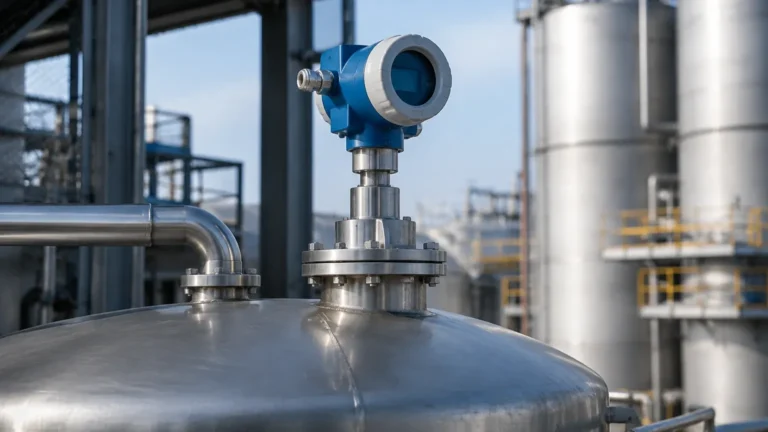
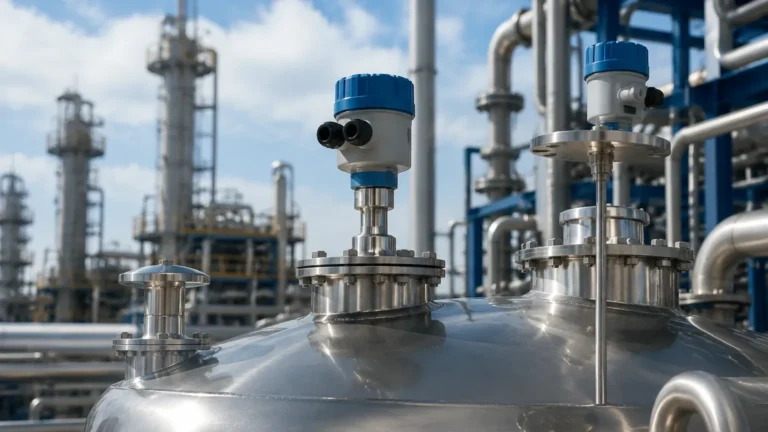
Types of Radar Type Level Transmitter
Types of Radar Type Level Transmitter: A Comprehensive Engineering Guide
In modern industrial automation, precise level measurement is critical for inventory management, process safety, and operational efficiency. Among the various technologies available, radar level measurement has emerged as a gold standard due to its non-contact nature and reliability in harsh environments. Understanding the different types of radar type level transmitter is essential for engineers and procurement specialists to ensure the selected instrument matches the specific demands of their application.
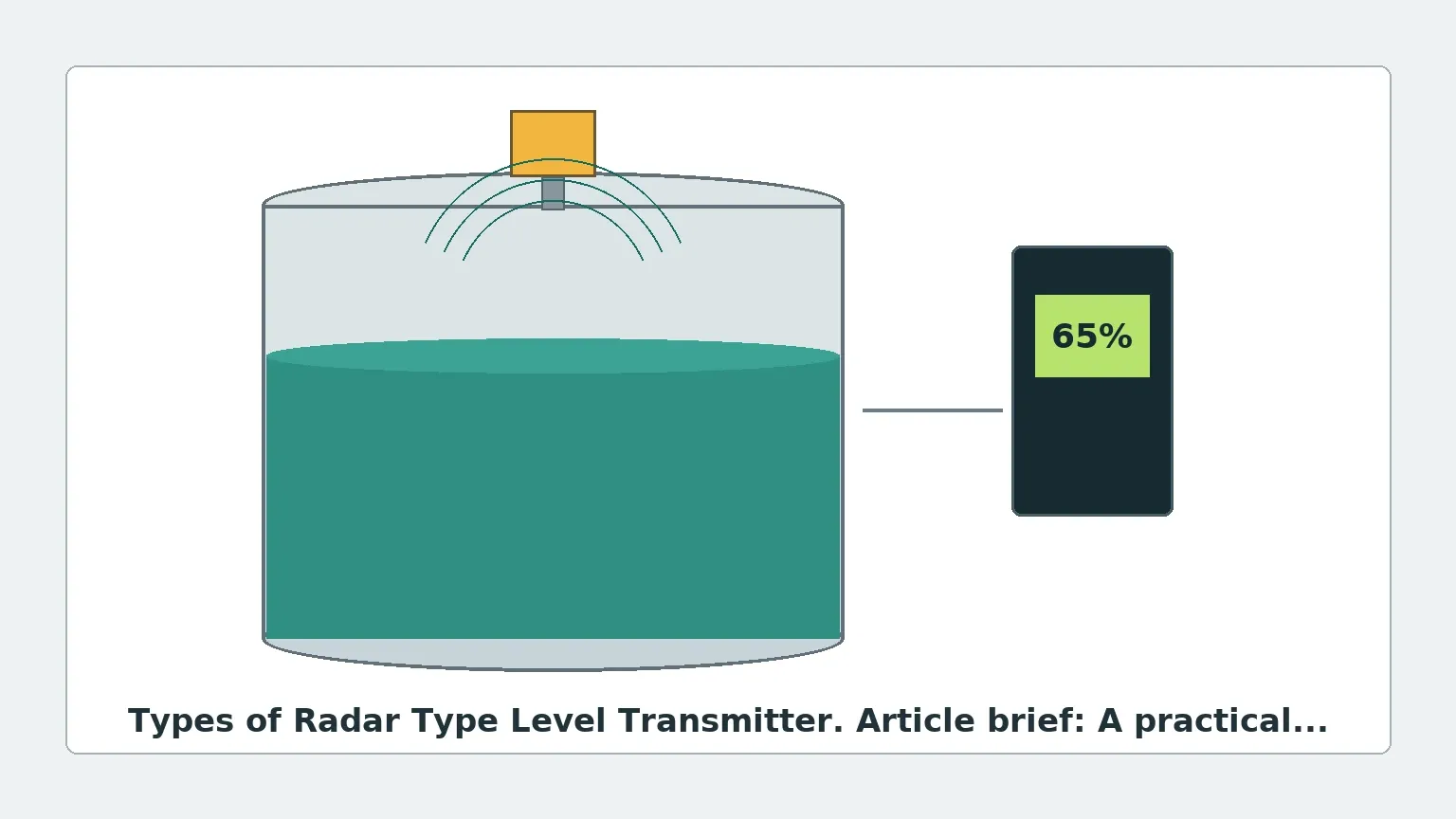
Industrial Radar Level Meters utilize electromagnetic waves to detect the surface of liquids, slurries, or solids. Unlike ultrasonic sensors, which rely on sound waves and are affected by air temperature and pressure, radar waves travel at the speed of light and are largely unaffected by the vapor space composition. This guide explores the underlying principles, technical categories, and selection criteria for these instruments.
Measurement Principles of Radar Level Transmitters
Before categorizing the hardware, it is necessary to understand the two primary methods used to process radar signals: Time of Flight (ToF) and Frequency Modulated Continuous Wave (FMCW).
1. Pulse Radar (Time of Flight)
Pulse radar transmitters emit a high-frequency microwave signal in short, periodic bursts. These pulses reflect off the surface of the medium and return to the sensor antenna. The instrument measures the time interval between transmission and reception. Since the speed of light ($c$) is constant, the distance ($D$) is calculated using the formula:
$$D = \frac{c \times t}{2}$$
Where $t$ is the measured transit time. Pulse radar is known for its lower power consumption and is often used in battery-powered or loop-powered 2-wire systems.
2. Frequency Modulated Continuous Wave (FMCW)
FMCW radar does not send pulses. Instead, it transmits a continuous signal with a frequency that varies linearly over time (a frequency sweep). When the reflected signal is received, it is compared to the signal being transmitted at that exact moment. The difference in frequency ($Δf$) is directly proportional to the distance. FMCW technology generally offers higher accuracy and better signal-to-noise ratios, making it the preferred choice for high-precision custody transfer or complex narrow-tank applications.
Major Types of Radar Type Level Transmitter
Radar transmitters are broadly classified into two categories based on how the signal is transmitted to the medium: Non-contact (Free Space) Radar and Guided Wave Radar (GWR).
Non-Contact Radar (Free Space)
Non-contact radar transmitters mount at the top of a vessel and emit microwaves through the air (or vapor space). They are ideal for corrosive or hygienic applications where the sensor should not touch the process media.
* 6GHz Radar: These use a lower frequency, resulting in a wider beam angle and longer wavelengths. They are highly effective in applications with heavy steam, foam, or turbulence, as the longer waves can penetrate surface disturbances more effectively.
* 26GHz Radar: Often referred to as high-frequency radar, these instruments offer a narrower beam and smaller antenna sizes. They are the versatile "workhorse" of the industry, suitable for most liquid and solid applications in medium-sized tanks.
* 80GHz Radar: The latest evolution in radar technology. The 80GHz frequency allows for an extremely narrow beam angle (often as small as 3°). This precision makes it possible to measure level in tall, narrow silos or tanks with internal obstructions like agitators and heating coils without interference.
Guided Wave Radar (GWR)
Guided Wave Radar is a contact-based technology. The microwave signal is guided along a physical probe (a rod, coaxial tube, or cable) directly to the surface. This method eliminates signal dispersion and is exceptionally effective for media with low dielectric constants or in applications with extreme turbulence and foam. GWR is also widely used for interface measurement (e.g., the boundary between oil and water).
Technical Selection Comparison
The following table provides a comparative overview of the different types of radar transmitters to assist in the initial selection process.
| Feature | 6GHz Non-Contact | 26GHz Non-Contact | 80GHz Non-Contact | Guided Wave Radar (GWR) |
| :— | :— | :— | :— | :— |
| Measurement Range | Up to 30m | Up to 70m | Up to 120m | Up to 75m (cable) |
| Accuracy | ±10mm to ±30mm | ±2mm to ±5mm | ±1mm | ±2mm to ±5mm |
| Beam Angle | Wide (approx. 20°+) | Medium (approx. 8°-12°) | Narrow (approx. 3°) | N/A (signal follows probe) |
| Foam Resistance | Excellent | Moderate | Low | Excellent |
| Dust Resistance | Good | Moderate | Excellent (due to signal strength) | Excellent |
| Best Use Case | Steamy/Turbulent liquids | General process tanks | Narrow silos / High precision | Low dielectric / Interface |
Engineering Considerations for Installation
Proper installation is as critical as selecting the correct transmitter type. Even the most advanced 80GHz radar can fail if physical constraints are ignored.
1. The Blocking Distance (Blind Zone): Every radar sensor has a minimum distance near the antenna where measurement is not possible. This is typically between 50mm and 500mm depending on the model. Ensure the maximum fill level of the tank does not enter this zone.
2. Nozzle Dimensions: The nozzle height and diameter must be considered. For non-contact radar, the antenna should ideally extend slightly beyond the nozzle to prevent "ringing" or false reflections from the nozzle edge.
3. Internal Obstructions: Avoid mounting the transmitter directly above agitators, ladders, or inflow pipes. While modern software can perform "false echo suppression," it is best to provide a clear line of sight to the product surface.
4. Positioning on the Tank: For flat-roof tanks, the sensor should not be mounted in the dead center (to avoid multiple reflections) or too close to the wall (to avoid signal attenuation). A standard rule of thumb is to mount the sensor at 1/4 to 1/6 of the tank diameter from the wall.
Limitations and Application Risks
While radar is highly versatile, engineers must be aware of specific limitations:
* Dielectric Constant (εr): Radar depends on the reflection of waves. Materials with very low dielectric constants (like liquid nitrogen or certain dry powders) reflect very little energy. In these cases, Guided Wave Radar or high-sensitivity 80GHz FMCW units are required.
* Heavy Foam: Dense, thick foam can absorb the radar signal rather than reflecting it. If the foam is conductive, the radar may see the top of the foam as the liquid level. If it is non-conductive, the signal may be lost entirely.
* Vacuum and Pressure: While radar works in a vacuum, the mechanical seal of the transmitter must be rated for the process pressure. High-pressure applications often require specialized ceramic or fused glass seals.
Frequently Asked Questions (FAQ)
Q: Can radar level meters measure solids and liquids with the same sensor?
A: While the underlying principle is the same, the signal processing software and antenna design often differ. Solids require a more robust signal to handle uneven surfaces and dust, whereas liquids require precision to handle ripples or foam.
Q: Is 80GHz always better than 26GHz?
A: Not necessarily. While 80GHz offers a narrower beam, 26GHz is often more cost-effective for simple, wide tanks where high precision is not the primary concern. Additionally, some 26GHz models handle heavy condensation on the antenna better than 80GHz models due to the larger wavelength.
Q: How does Guided Wave Radar handle coating on the probe?
A: GWR is remarkably resilient to coating. As long as the coating is not a bridge between the probe and the tank wall (in coaxial models) or between two rods, the pulse will continue to travel through the coating to the main surface. However, heavy, conductive buildup may eventually degrade the signal.
Conclusion
Selecting from the various types of radar type level transmitter requires a balanced assessment of the media properties, vessel geometry, and environmental conditions. Non-contact radar offers the advantage of zero maintenance and suitability for corrosive substances, while Guided Wave Radar provides unmatched stability in low-dielectric or turbulent applications. By understanding the nuances of frequency, measurement principle, and installation requirements, industrial operators can achieve reliable, long-term level monitoring solutions. For specific technical configurations and model options, engineers should consult detailed product specifications to match the instrument to the process demands.