Level Sensor Non Contact
Level Sensor Non Contact
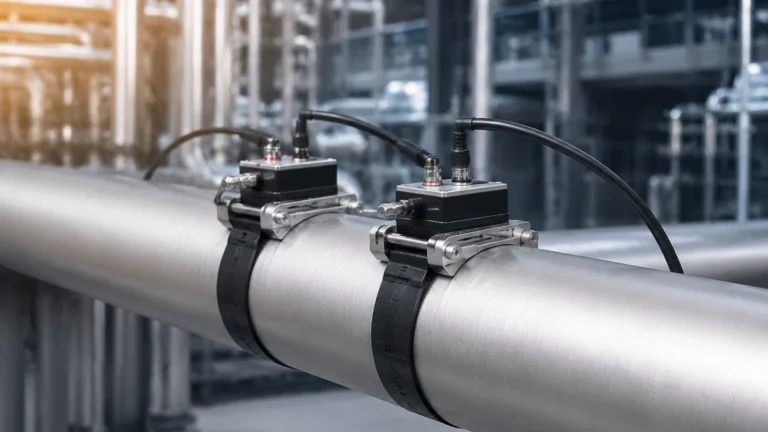
In industrial process control, the ability to measure the level of liquids, slurries, and solids without making physical contact with the medium is a significant advantage. A level sensor non contact approach eliminates many of the maintenance challenges associated with traditional invasive methods, such as mechanical wear, corrosion of probes, and material buildup. By utilizing technologies like ultrasonic waves or radar pulses, these instruments provide reliable data across a wide spectrum of industries, from water treatment to chemical processing.
Selecting the correct non-contact technology requires a deep understanding of the physics behind the measurement and the environmental factors that can influence signal integrity. This guide explores the principles of non-contact level measurement, provides selection criteria, and outlines best practices for installation.
Principles of Non-Contact Level Measurement
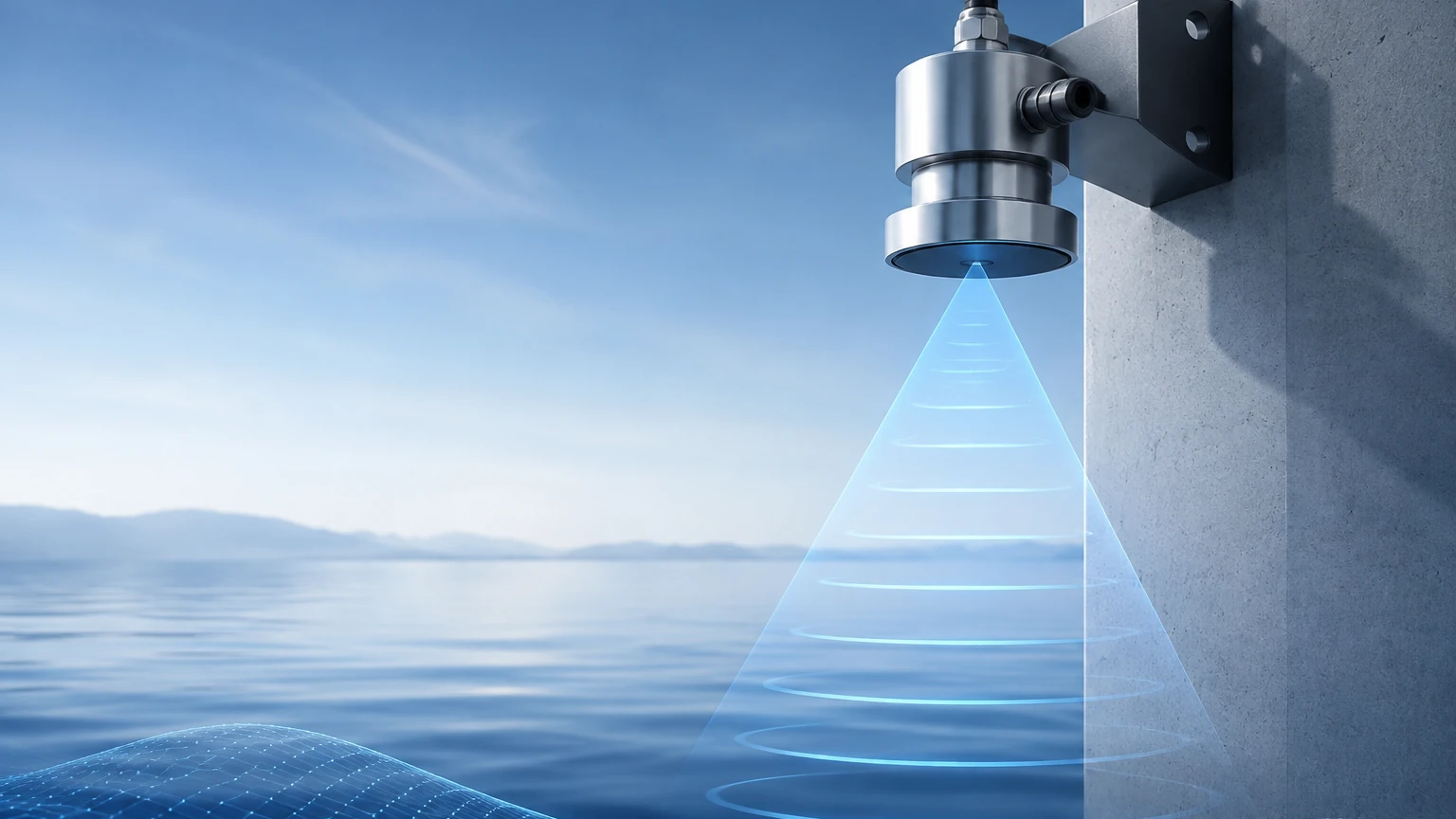
Non-contact level sensors typically operate on the "Time of Flight" (ToF) principle. The sensor emits a signal—either a sound wave or an electromagnetic pulse—which travels through the air or vapor space in a tank, reflects off the surface of the material, and returns to the sensor. By measuring the time elapsed between emission and reception, the instrument calculates the distance to the product surface.
Ultrasonic Level Measurement
Ultrasonic sensors use a piezoelectric transducer to emit high-frequency sound waves (typically between 20 kHz and 200 kHz). These waves travel through the air and reflect off the surface of the medium.
* The Calculation: The distance is calculated using the formula: *Distance = (Speed of Sound × Time) / 2*.
* Environmental Sensitivity: Because sound requires a medium (air or gas) to travel, the speed of sound is affected by air temperature. Most industrial ultrasonic sensors include an integrated temperature sensor to compensate for these changes automatically.
Radar Level Measurement
Radar sensors emit electromagnetic pulses rather than sound. There are two primary types of non-contact radar technology used in industrial applications:
1. Pulse Radar: The sensor sends out a microwave pulse and measures the time it takes to return. This is effective for long-range measurements.
2. FMCW (Frequency Modulated Continuous Wave): The sensor emits a continuous signal with a constantly changing frequency. The difference in frequency between the emitted and received signal is proportional to the distance. FMCW is generally more accurate and provides better signal-to-noise ratios in complex environments.
Unlike ultrasonic waves, radar signals travel at the speed of light and do not require a physical medium. This makes radar immune to temperature fluctuations, vacuum conditions, and high pressure.
Comparative Analysis: Ultrasonic vs. Radar
Choosing between ultrasonic and radar depends on the specific requirements of the application. While ultrasonic sensors are often more cost-effective, radar offers superior performance in challenging atmospheric conditions.
| Feature | Ultrasonic Level Sensors | Radar Level Sensors (Non-Contact) |
| :— | :— | :— |
| Medium of Travel | Sound waves (requires air/gas) | Electromagnetic waves (works in vacuum) |
| Accuracy | ±0.25% to ±0.5% of range | ±1 mm to ±10 mm (Higher precision) |
| Max Range | Typically up to 15m (49 ft) | Up to 30m, 70m, or 120m (393 ft) |
| Pressure Limits | Atmospheric to ~3 bar (43 psi) | Vacuum to 160+ bar (2320+ psi) |
| Temperature Limits | -40°C to 80°C (-40°F to 176°F) | -40°C to 250°C+ (-40°F to 482°F+) |
| Effect of Dust/Vapor | Significant (can block sound) | Minimal (microwaves penetrate dust/vapor) |
| Cost | Lower | Higher |
For a comprehensive look at specific hardware options and technical specifications, engineers can Review product options and application support to match the technology to their specific vessel geometry.
Key Evaluation Criteria for Selection
When specifying a level sensor non contact solution, several factors must be confirmed to ensure long-term reliability.
Dielectric Constant (εr)
For radar sensors, the dielectric constant of the medium is critical. Materials with high dielectric constants (like water, εr ≈ 80) reflect radar signals very well. Materials with low dielectric constants (like oils or plastic pellets, εr < 2) reflect very little energy, requiring more sensitive electronics or specialized high-frequency radar (e.g., 80 GHz) to detect the surface.
Surface Conditions
Turbulence, foam, and waves can scatter the return signal.
* Foam: Heavy, thick foam can absorb ultrasonic and radar signals. In such cases, low-frequency radar may penetrate the foam to see the liquid, while ultrasonic sensors will likely fail.
* Turbulence: Agitators or splashing can cause signal fluctuations. Advanced sensors use software algorithms to filter out these "false echoes."
Tank Geometry and Obstructions
Both ultrasonic and radar sensors have a "beam angle." Any internal structure within this beam—such as ladders, heating coils, or agitator blades—will create a reflection. It is vital to select a sensor with a narrow beam angle or use "false echo suppression" software to map out these fixed obstructions during commissioning.
Installation Considerations and Best Practices
Proper installation is often more important than the technology itself. Even the most advanced level sensor non contact device will fail if positioned incorrectly.
1. The Dead Zone (Blocking Distance): Every non-contact sensor has a minimum distance it cannot measure, located directly below the sensor face. For ultrasonic sensors, this is usually 0.2m to 0.5m. Ensure the maximum expected liquid level does not enter this zone.
2. Mounting Position: The sensor should be mounted perpendicular to the liquid surface. Avoid mounting the sensor in the center of a domed tank, as this can create multiple reflections that confuse the electronics. Likewise, avoid mounting too close to the tank wall (maintain at least 200mm to 500mm distance depending on the beam angle).
3. Nozzle Height: If the sensor is mounted on a standpipe or nozzle, the bottom of the sensor (the transducer face) should ideally extend slightly into the tank. If it is recessed deep within a narrow nozzle, the signal may reflect off the nozzle walls, causing errors.
4. Environmental Shielding: While many sensors are rated for outdoor use, providing a sunshade can prevent extreme temperature fluctuations on the sensor housing, which helps maintain the accuracy of the internal temperature compensation in ultrasonic models.
Limitations of Non-Contact Sensors
While highly versatile, non-contact sensors are not universal solutions.
* Vacuum Applications: Ultrasonic sensors cannot function in a vacuum because sound waves require a medium to travel. Radar is the only non-contact option for vacuum tanks.
* Extreme Steam: Heavy steam can change the speed of sound significantly, leading to errors in ultrasonic measurement. High-frequency radar is generally better, though extremely dense steam may still attenuate the signal.
* Acoustic Noise: In some heavy industrial environments, high-frequency machinery noise can interfere with ultrasonic sensors if the noise frequency overlaps with the sensor’s operating frequency.
Frequently Asked Questions (FAQs)
Q: Can a non-contact level sensor measure through a plastic tank wall?
A: Some radar sensors can measure through the top of a plastic or fiberglass tank without a hole, provided the material is not conductive. Ultrasonic sensors cannot do this, as the sound wave will reflect off the plastic wall rather than passing through it.
Q: How does dust affect the measurement in a grain silo?
A: Dust is a major challenge for ultrasonic sensors because the particles absorb and scatter the sound waves. Radar, particularly 26GHz or 80GHz models, is much more effective in dusty environments as the microwaves pass through the dust clouds to reach the solid surface.
Q: What is the benefit of an 80 GHz radar over a 26 GHz radar?
A: The 80 GHz radar has a much shorter wavelength, allowing for a much narrower beam angle (as small as 3 degrees). This makes it easier to install in tanks with many internal obstructions or in narrow nozzles without interference from the walls.
Q: Do I need to recalibrate the sensor if the liquid changes?
A: For ultrasonic sensors, generally no, as long as the vapor space remains mostly air. For radar, if the dielectric constant of the new liquid is significantly lower, you may need to adjust the sensitivity settings to ensure the sensor can still "see" the surface.
Conclusion
Implementing a level sensor non contact system significantly reduces the total cost of ownership by minimizing manual cleaning and sensor replacement. Whether utilizing the cost-effective nature of ultrasonic technology for water basins or the precision of radar for high-pressure chemical reactors, understanding the application's physical constraints is the key to success. For organizations looking to upgrade their process monitoring, Welk provides a range of industrial-grade instruments designed for high accuracy and durability. To explore the full range of radar, ultrasonic, and other measurement technologies, visit the Main Page for detailed technical documentation and selection guides.