Decibel Meter Ultrasonic
Understanding Decibel Meter Ultrasonic Functionality in Industrial Level Measurement
In the realm of industrial automation, precision and reliability are the cornerstones of efficient process control. Among the various technologies available for monitoring tank levels, Ultrasonic Level Meters have emerged as a preferred non-contact solution. However, for engineers and technicians tasked with optimizing these systems, understanding the acoustic physics—specifically how a decibel meter ultrasonic diagnostic tool or internal signal strength reading functions—is critical for ensuring consistent performance in challenging environments.
This guide explores the relationship between acoustic signal strength (measured in decibels) and the accuracy of ultrasonic level transmitters, providing a technical framework for selection, installation, and troubleshooting.
The Principle of Ultrasonic Level Measurement
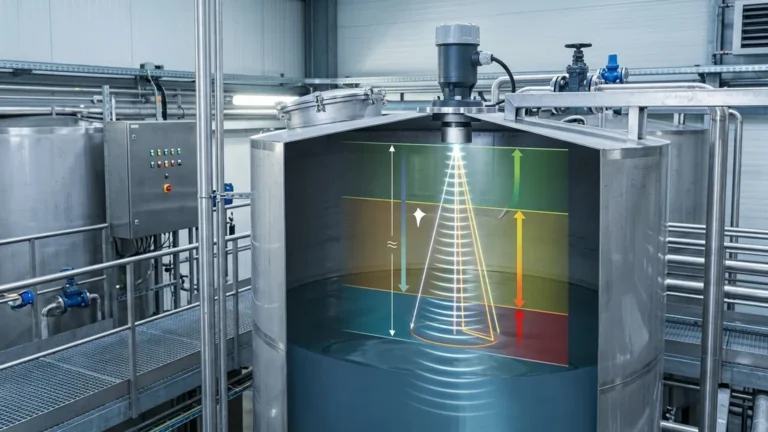
Before diving into the nuances of signal strength and decibels, it is essential to understand the underlying measurement principle. Ultrasonic level sensors operate on the Time-of-Flight (ToF) principle.
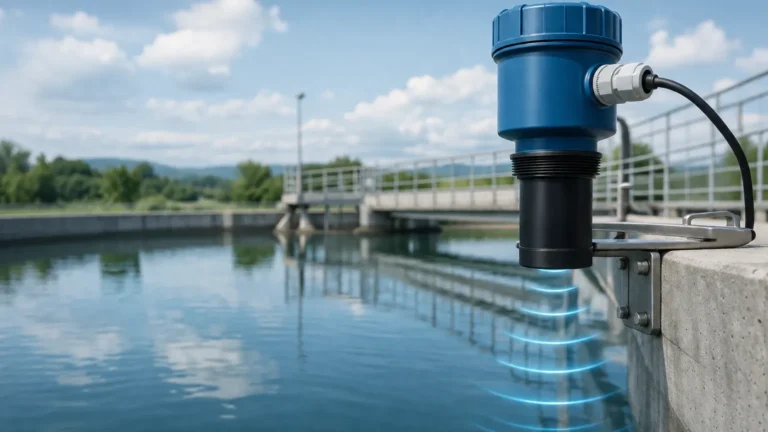
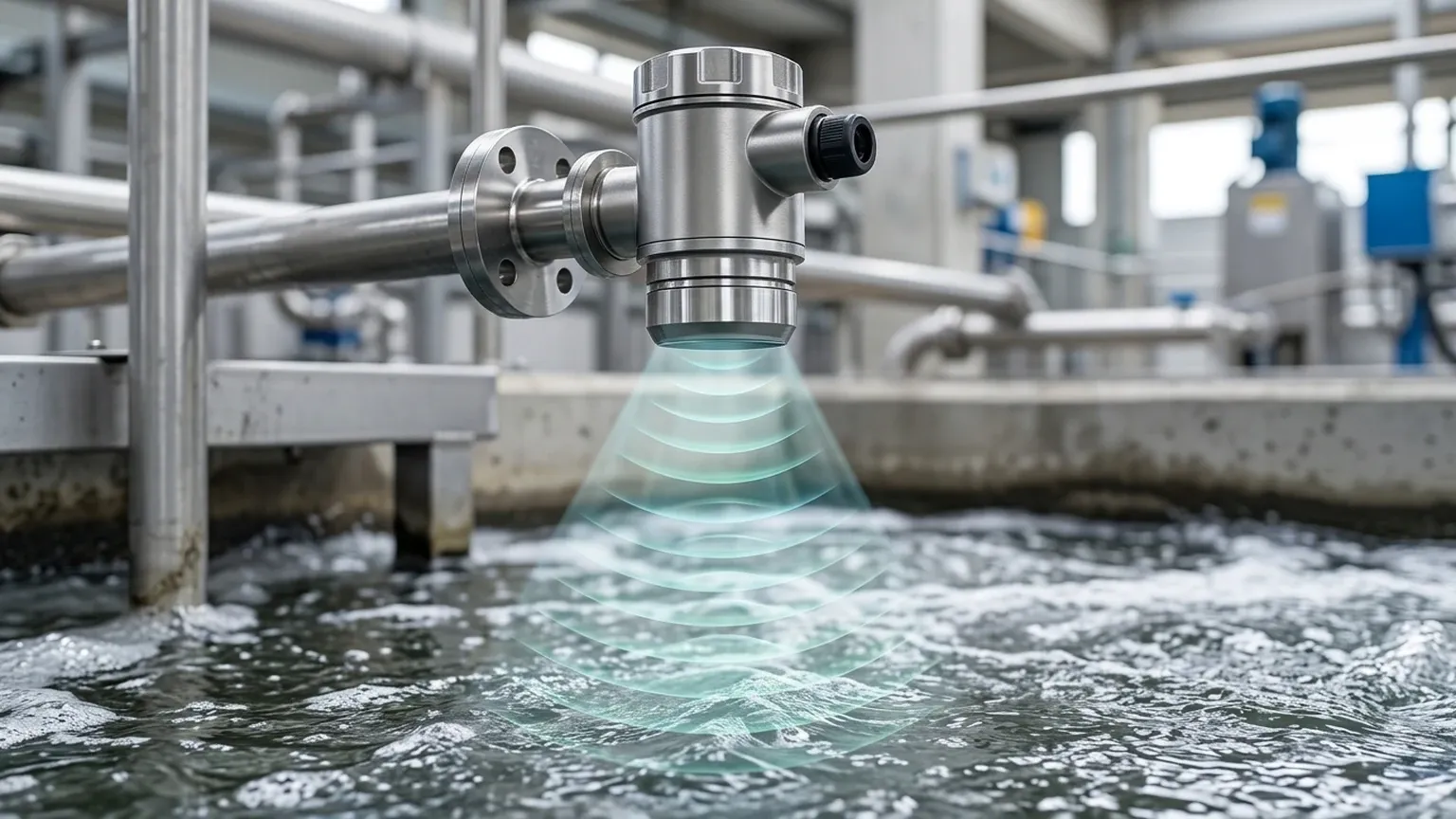
The sensor’s transducer acts as both a transmitter and a receiver. It emits a high-frequency acoustic pulse (typically between 20 kHz and 200 kHz). This sound wave travels through the air space in a vessel, reflects off the surface of the material (liquid or solid), and returns to the transducer.
The distance ($D$) is calculated using the formula:
$$D = \frac{c \times t}{2}$$
Where:
- $c$ is the speed of sound in the medium (approximately 343 m/s in air at 20°C).
- $t$ is the time elapsed between transmission and reception.
Since the speed of sound varies with temperature, professional-grade instruments like those from Welk include integrated temperature compensation to maintain accuracy across fluctuating process conditions.
The Role of the Decibel in Ultrasonic Diagnostics
In acoustics, the decibel (dB) is a logarithmic unit used to express the ratio of a physical quantity to a specified or implied reference level. When discussing a decibel meter ultrasonic context within level measurement, we are primarily concerned with two factors: Echo Strength and Signal-to-Noise Ratio (SNR).
1. Echo Strength (Return Signal Amplitude)
The amplitude of the returning echo is measured in decibels. A "strong" echo typically registers a higher dB value relative to the sensor's noise floor. If the surface is flat and reflective (like water), the return signal is robust. If the surface is turbulent, slanted, or covered in foam, the signal scatters, and the dB level of the return echo drops significantly.
2. The Noise Floor and SNR
Industrial environments are acoustically noisy. Pumps, agitators, and even pneumatic filling systems create ultrasonic noise. A decibel meter ultrasonic diagnostic tool allows an engineer to see the "noise floor." For a reliable level reading, the return echo must be significantly higher than the background noise—usually by at least 10 dB to 20 dB. If the noise floor rises or the signal weakens, the instrument may "lose" the level or provide erratic readings.
Key Evaluation Criteria for Ultrasonic Level Meters
Selecting the right instrument requires more than just knowing the tank height. Engineers must evaluate the following criteria to ensure the acoustic signal remains strong enough for the internal decibel meter to process accurately.
Beam Angle and Spread
Every ultrasonic sensor has a beam angle, typically ranging from 5° to 12°. A narrower beam angle concentrates the acoustic energy, leading to a stronger return signal (higher dB) and better performance in narrow tanks or vessels with internal obstructions like ladders or pipes.
Frequency vs. Range
- High-Frequency (60-200 kHz): Used for short ranges (up to 5 meters). These sensors are smaller and offer higher resolution but are more easily attenuated by dust or steam.
- Low-Frequency (20-40 kHz): Used for long ranges (up to 30 or 40 meters). Lower frequencies penetrate dust and vapor more effectively, maintaining a higher decibel return over long distances.
Material Compatibility
The chemical nature of the stored medium dictates the sensor face material. For corrosive acids, PVDF or PTFE-faced transducers are required to prevent degradation that would otherwise dampen the acoustic pulse and lower the signal-to-noise ratio.
Practical Selection Table
| Application Type | Recommended Range | Frequency | Key Feature | Signal Strength Priority |
| :— | :— | :— | :— | :— |
| Water Storage Tanks | 0.5m – 15m | 40 kHz | Cost-effective, Standard | Moderate |
| Chemical Processing | 0.2m – 10m | 50-60 kHz | PVDF/PTFE Housing | High (due to vapors) |
| Open Channel Flow | 0.1m – 3m | 70-80 kHz | High Resolution | High (precision needed) |
| Solids/Powder Silos | 1m – 30m | 20 kHz | High Power Pulse | Critical (due to dust) |
| Small Buffer Tanks | 0.1m – 5m | 100+ kHz | Narrow Beam | Moderate |
Installation Considerations to Optimize Signal Strength
To ensure the internal decibel meter ultrasonic processing unit receives a clean signal, proper installation is paramount. Even the most advanced Welk ultrasonic level meter will fail if the acoustic path is compromised.
1. The Blocking Distance (Dead Zone)
Every ultrasonic sensor has a "dead zone" directly beneath the transducer where it cannot measure. This is the time required for the transducer crystal to stop vibrating after the pulse is sent. Ensure the maximum liquid level never enters this zone (typically 0.2m to 0.5m depending on the model).
2. Perpendicular Alignment
The sensor must be mounted perpendicular to the liquid surface. A tilt of just a few degrees can cause the acoustic pulse to reflect away from the transducer rather than back to it, resulting in a massive drop in return decibels.
3. Avoiding the Fill Stream
Never mount the sensor directly above the inlet pipe. The falling liquid or solids will create a massive amount of acoustic noise and physically block the signal, leading to a low signal-to-noise ratio and false readings.
4. Standpipe Usage
In tanks with heavy foam or extreme turbulence, a stilling well or standpipe can be used. This pipe acts as a waveguide, protecting the signal from surface disturbances and ensuring a consistent dB return. However, the pipe must be smooth and free of burrs to prevent false echoes.
Limitations and Environmental Factors
While Ultrasonic Level Meters are versatile, they are not universal solutions. Understanding their limitations prevents costly misapplications.
- Vacuum Conditions: Sound cannot travel in a vacuum. Ultrasonic sensors will not work in vessels under full vacuum.
- High Pressure: High-pressure gases change the density of the medium, significantly affecting the speed of sound and signal attenuation.
- Heavy Foam: Some foams are "acoustic absorbers." They soak up the ultrasonic pulse rather than reflecting it. In these cases, the return signal dB may drop below the noise floor, requiring a switch to radar or hydrostatic technology.
- Extreme Temperature Gradients: If there is a significant temperature difference between the sensor and the liquid (e.g., a hot liquid in a cold tank), the resulting air density layers can refract the sound wave, much like a mirage, leading to measurement errors.
Troubleshooting with Signal Diagnostics
Modern digital ultrasonic meters provide diagnostic screens that show the "Echo Profile." When troubleshooting, look for the following:
1. Low Amplitude Echo: If the dB level of the primary echo is low, check for transducer fouling (dust/condensation) or surface foam.
2. Multiple Echoes: This usually indicates the signal is bouncing off the tank walls or internal structures. Adjust the mounting position or use the instrument's "False Echo Suppression" software to ignore these fixed decibel peaks.
3. High Noise Floor: If the decibel meter ultrasonic diagnostic shows a high baseline noise, look for nearby mechanical vibration or high-velocity air movement near the sensor face.
Frequently Asked Questions (FAQ)
Q: Can ultrasonic level meters measure through a closed plastic tank lid?
A: Generally, no. While some specialized low-power sensors can penetrate very thin plastic, standard industrial ultrasonic pulses reflect off the lid itself. The sensor must have a clear "view" of the material inside.
Q: How does dust affect the decibel return of the signal?
A: Heavy dust attenuates the signal by scattering the sound waves. For dusty environments, a lower-frequency sensor (20-30 kHz) is required because longer wavelengths are less affected by small particles.
Q: Is it possible to use an ultrasonic level meter for liquid Interface (e.g., oil over water)?
A: No. Ultrasonic sensors measure the distance to the first reflective surface they encounter. To measure an interface, a guided wave radar or a specialized hydrostatic system is typically required.
Q: What is the difference between a decibel meter and the dB reading on my level transmitter?
A: A standard decibel meter measures ambient sound pressure levels (SPL) in the audible range for safety or environmental monitoring. The dB reading on an ultrasonic level transmitter refers to the electrical gain and the relative strength of the ultrasonic echo used for distance calculation.
Conclusion
Understanding the acoustic dynamics and the importance of signal strength—often monitored via internal decibel meter ultrasonic diagnostics—is essential for any B2B application involving level control. By selecting the correct frequency, ensuring perpendicular mounting, and accounting for environmental factors like foam and temperature, engineers can leverage Ultrasonic Level Meters to provide reliable, non-contact measurement for years of service.
For complex applications, always consult with a technical specialist to review echo profiles and ensure the chosen instrument's decibel range and gain control are suited for the specific process conditions.