Automatic Float Level Switches
Automatic Float Level Switches
In the realm of industrial automation and fluid management, ensuring precise point-level detection is fundamental to operational safety and efficiency. Automatic float level switches represent one of the most established and reliable technologies for monitoring liquid levels in tanks, sumps, and processing vessels. As a critical component in overflow prevention and pump control, these devices provide a binary output (on/off) based on the presence or absence of liquid at a specific elevation.
Professional manufacturers like Welk provide a diverse range of Level Switches designed to withstand the rigorous demands of water treatment, chemical processing, and oil and gas applications. This guide examines the engineering principles, selection criteria, and installation best practices for automatic float level switches to assist technical teams in optimizing their level control systems.
Measurement Principles of Float-Based Level Detection
The operation of automatic float level switches is grounded in Archimedes' principle of buoyancy. The core mechanism involves a float—a buoyant object with a lower density than the process liquid—that moves vertically or pivots as the liquid level changes.
Mechanical vs. Magnetic Actuation
There are two primary methods by which the movement of the float is converted into an electrical signal:
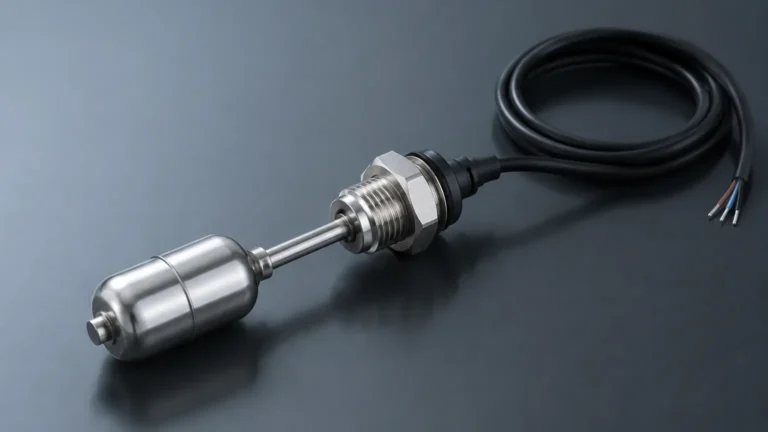
1. Magnetic Reed Switch Actuation: This is the most common design for modern industrial float switches. The float contains an internal permanent magnet. As the float rises or falls along a stationary stem, the magnetic field passes over a hermetically sealed reed switch located inside the stem. The magnetic force causes the reed switch contacts to either close (Normally Open) or open (Normally Closed). This design is highly reliable because the electrical components are completely isolated from the process media.
2. Mechanical Microswitch Actuation: In these designs, the float is typically attached to a lever arm or a cable. As the float moves, it physically toggles a microswitch. Cable-suspended floats often use an internal ball or weight that rolls onto a switch mechanism when the float tilts beyond a certain angle (usually ±45°). These are frequently used in wastewater and sump applications where large level swings are common.
Contact Configurations
Automatic float level switches are typically configured as either Normally Open (NO) or Normally Closed (NC). In an NO configuration, the circuit is open when the float is at its rest position (usually the bottom) and closes as the liquid rises. Conversely, an NC switch opens the circuit as the level rises. Many industrial models offer "Changeover" or SPDT (Single Pole Double Throw) contacts, allowing the user to choose the logic required for their specific control panel or PLC input.
Types of Automatic Float Level Switches
Selecting the correct form factor is essential for long-term reliability. The mechanical design must align with the tank geometry and the nature of the liquid.
1. Vertical Stem-Mounted Float Switches
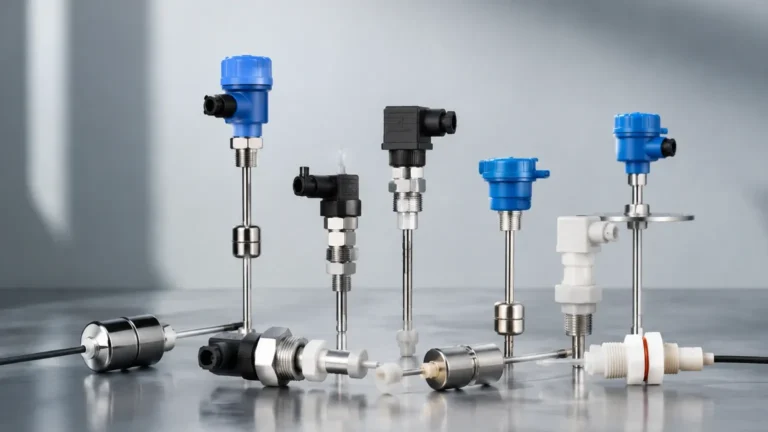
These consist of a rigid stem mounted through the top or bottom of a tank. One or more floats slide up and down the stem. These are ideal for high-precision applications and can support multiple switching points (e.g., low-level alarm, pump start, pump stop, and high-level alarm) on a single stem. They are commonly used in clean water and chemical storage tanks.
2. Side-Mounted (Horizontal) Float Switches
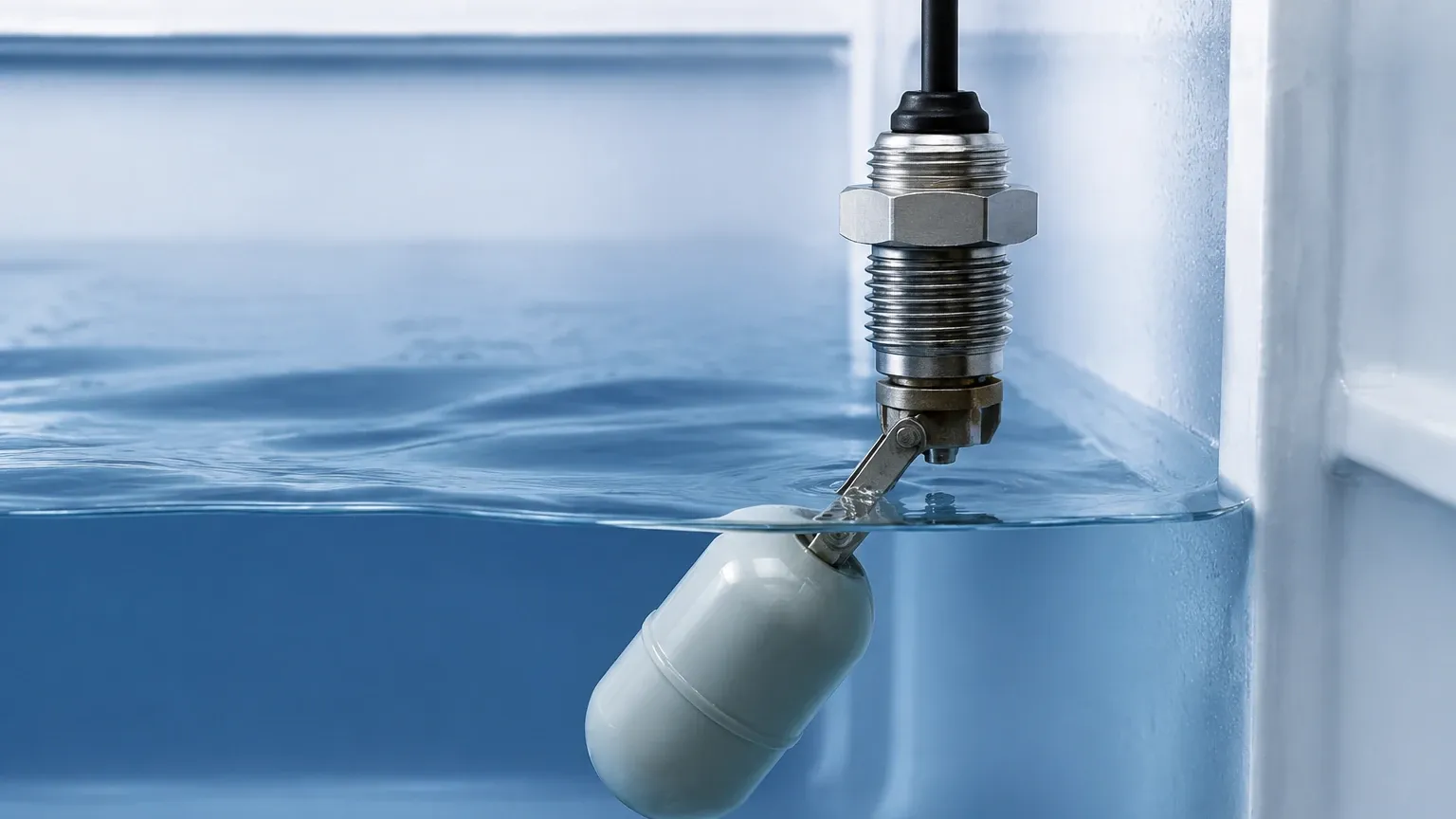
Side-mounted switches are installed through the wall of a vessel. They use a hinged float that pivots up and down. When the liquid reaches the float, it rises, and the hinge mechanism triggers the internal switch. These are excellent for tanks where top access is restricted or for compact equipment where space is at a premium.
3. Cable-Suspended (Float Ball) Switches
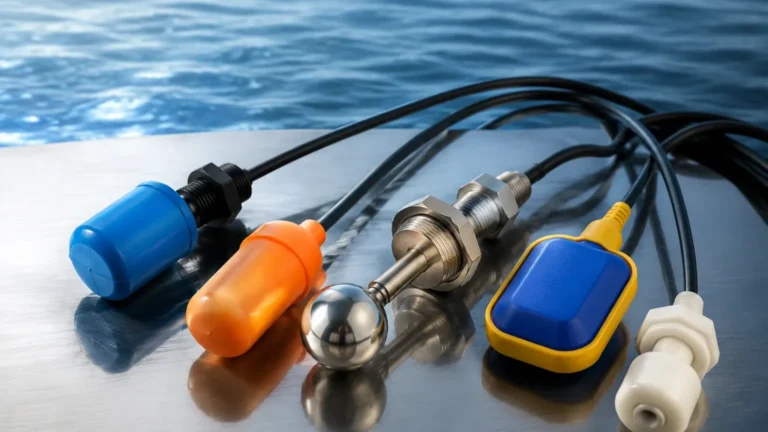
These switches are suspended by their own electrical cable. They are often called "tilt switches." As the liquid level rises, the float tips over, triggering the internal contact. These are the preferred choice for wastewater, sewage, and large open reservoirs because they are less prone to fouling by debris or suspended solids.
Technical Selection Criteria and Material Compatibility
To ensure the longevity of automatic float level switches, several technical parameters must be evaluated during the procurement phase.
Specific Gravity (SG)
For a float to function, its density must be lower than that of the liquid. Most industrial floats are designed for liquids with an SG of 0.80 or higher. If you are measuring light hydrocarbons or specialized oils with an SG of 0.65, a high-buoyancy stainless steel float is required. If the liquid is too light, the float will remain submerged at the bottom, failing to trigger the switch.
Material Selection
The chemical compatibility of the float and stem is paramount.
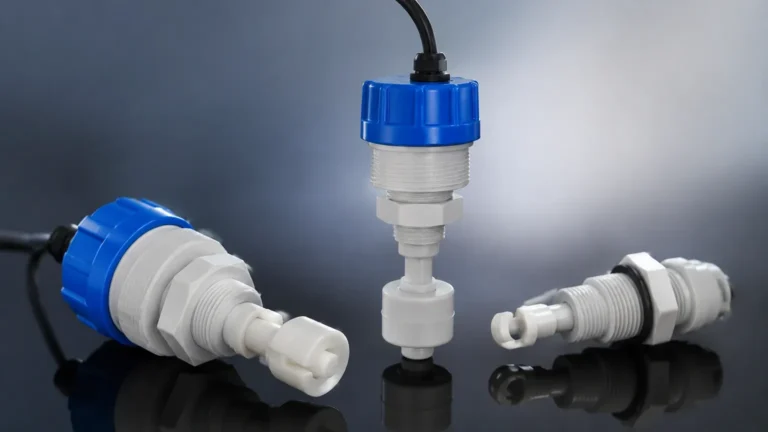
* Polypropylene (PP): Suitable for water, general-purpose applications, and many acidic or alkaline solutions at lower temperatures (up to 80°C).
* Stainless Steel (304 or 316L): Required for high-temperature (up to 200°C), high-pressure (up to 40 bar), or food-grade applications. It is also the standard for oil and gas environments.
* PVDF/PTFE: Used for highly aggressive chemicals and concentrated acids where standard plastics or metals would corrode.
Temperature and Pressure Ratings
Standard plastic float switches are often limited to 80°C and atmospheric pressure. For pressurized boilers or high-temperature chemical reactors, metal float switches are necessary. Always verify the maximum operating pressure; a float that collapses under pressure will lose its buoyancy and fail.
Selection Table: Comparison of Float Switch Technologies
| Feature | Vertical Stem-Mounted | Side-Mounted (Pivoting) | Cable-Suspended (Tilt) |
| :— | :— | :— | :— |
| Best For | High precision, multi-point | Restricted space, OEM equipment | Wastewater, sumps, large tanks |
| Max Temperature | Up to 200°C (Stainless Steel) | Up to 150°C | Typically 60°C – 80°C |
| Max Pressure | Up to 40 bar | Up to 10-20 bar | Atmospheric |
| Solids Handling | Poor (can jam the float) | Fair | Excellent |
| Installation | Top or Bottom mount | Side wall mount | Suspended from top |
| Switching Differential| Fixed/Small | Fixed/Small | Large (Adjustable by cable length) |
Installation Best Practices for Reliable Operation
Correct installation is as important as selecting the right hardware. Failure to follow engineering guidelines often leads to premature mechanical failure or false triggering.
1. Avoid Turbulence: Float switches should not be installed directly in the path of an inlet pipe or near a high-speed agitator. The resulting turbulence can cause the float to chatter, leading to rapid wear of the switch contacts. If turbulence is unavoidable, a stilling well (a perforated pipe surrounding the float) should be used to provide a calm surface for measurement.
2. Clearance and Orientation: Ensure there is sufficient clearance between the float and the tank wall or internal structures (like heating coils or ladders). For vertical switches, the stem must be perfectly plumb. Even a slight tilt can increase friction between the float and the stem, causing it to stick.
3. Wiring and Protection: While many automatic float level switches can handle small loads, it is best practice to use an intermediate relay or a PLC to switch high-current pumps or motors. Direct switching of heavy inductive loads can cause arcing and weld the reed switch contacts together.
4. Cable Weighting: For cable-suspended switches, use a counterweight or a cable clamp to fix the pivot point. This ensures the switch triggers at the exact desired elevation and prevents the cable from tangling with pump hardware.
Limitations and Maintenance Requirements
While automatic float level switches are robust, they are not "set and forget" devices. Engineers should be aware of the following limitations:
* Build-up and Fouling: In liquids that crystallize, contain high fats/oils, or have heavy suspended solids, material can build up on the float or stem. This increases the weight of the float or creates friction, eventually causing the switch to fail in the "on" or "off" position.
* Mechanical Wear: Because these are moving parts, they are subject to mechanical fatigue over millions of cycles. In high-cycle applications, non-contact technologies like ultrasonic or radar may be considered, though they come at a higher price point.
* Viscosity Limits: Highly viscous liquids (like heavy syrups or thick glues) can impede the movement of the float. Generally, float switches are recommended for liquids with viscosities below 500 cP.
Maintenance Checklist:
* Monthly: Visually inspect for any signs of corrosion or chemical attack on the float material.
* Quarterly: Manually lift the float to ensure the switch triggers the alarm or pump as expected.
* Annually: Remove the switch from the tank (if possible) to clean any accumulated scale or debris from the stem and float.
Frequently Asked Questions (FAQ)
Q: Can I use a single float switch to start and stop a pump?
A: A single point float switch only provides one trigger point. To control a pump (start at high, stop at low), you typically need two separate switches or a single cable-suspended switch with a large enough swing range and a latching relay circuit.
Q: What is the difference between a reed switch and a microswitch in a float?
A: Reed switches are hermetically sealed and actuated by magnets, making them ideal for hazardous or dirty environments. Microswitches are mechanical and can often handle higher current loads but are more susceptible to environmental degradation if the float housing is breached.
Q: How do I choose between a plastic and a stainless steel float switch?
A: Choose plastic (PP or PVC) for cost-effective water handling and non-oxidizing acids. Choose stainless steel for high temperatures, high pressures, food-grade requirements, or compatibility with petroleum products.
Q: Can float switches be used in hazardous (Ex) areas?
A: Yes, but they must be rated as "Intrinsically Safe" and used with an approved isolation barrier, or they must be housed in an explosion-proof enclosure. Many stainless steel Level Switches are designed specifically for these environments.
Conclusion
Automatic float level switches remain a cornerstone of industrial level control due to their simplicity, reliability, and cost-effectiveness. By understanding the specific gravity of the media, the chemical environment, and the physical constraints of the installation, engineers can select a solution that provides years of trouble-free service. For complex applications involving aggressive chemicals or high-pressure vessels, consulting with a specialized manufacturer like Welk ensures that the selected instrument meets all safety and performance standards.