Level Switch Datasheet
Level Switch Datasheet
In the realm of industrial process control, the level switch is a fundamental component used to prevent tank overfills, protect pumps from dry running, and manage inventory levels. For engineers, procurement specialists, and maintenance technicians, the level switch datasheet serves as the primary technical contract between the manufacturer and the end-user. It outlines the physical limits, electrical capabilities, and material compatibility of the device, ensuring that the selected instrument can withstand the rigors of the specific application environment.
Selecting the right Level Switches requires a deep dive into these technical documents. A datasheet is more than just a list of features; it is a guide to the operational boundaries of the instrument. This article examines the critical parameters found in a level switch datasheet, explains the underlying measurement principles, and provides a framework for evaluating these specifications against real-world industrial requirements.
Core Measurement Principles and Technologies
Before analyzing a datasheet, it is essential to understand how different level switches function. Each technology has unique strengths and limitations that are reflected in its technical specifications.
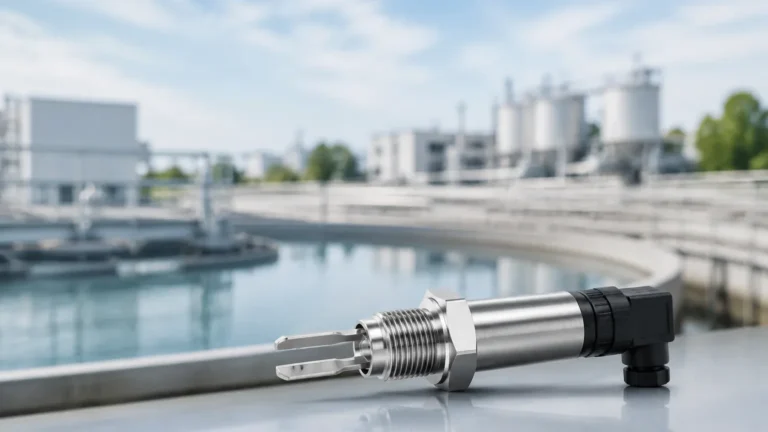
Vibrating Tuning Fork Level Switches
The vibrating or tuning fork level switch utilizes a piezo-electric crystal to vibrate the fork at its natural resonance frequency in the air. When the fork is submerged in a liquid or solid, the frequency changes or the vibration is damped. The internal electronics detect this shift and trigger a switch output. These are highly reliable for liquids and granulates and are often preferred because they are unaffected by flow, turbulence, or bubbles.
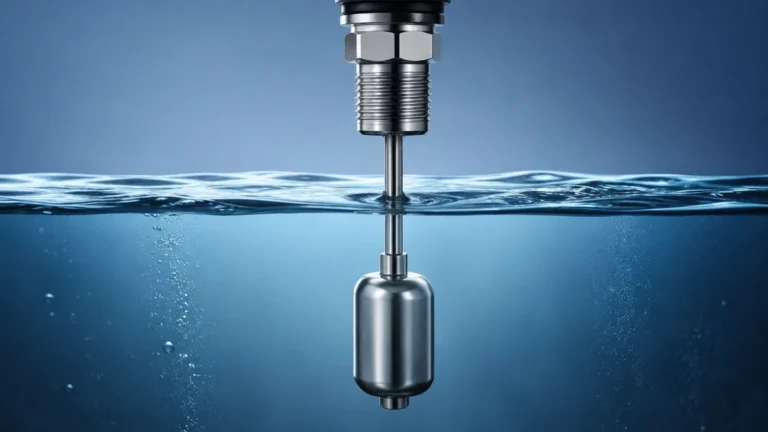
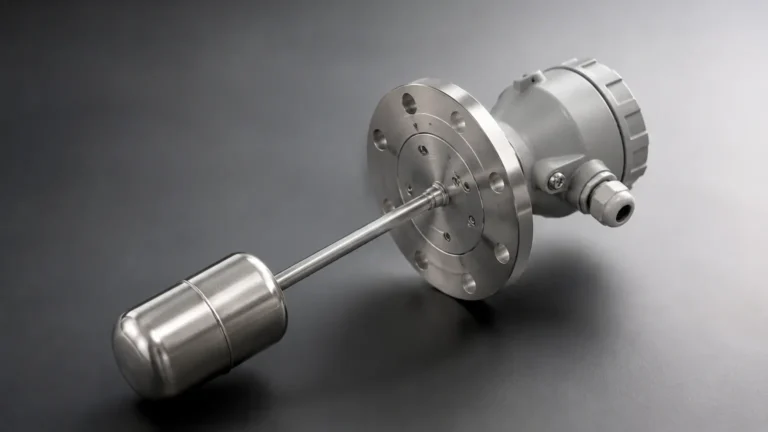
Float Level Switches
Operating on the principle of buoyancy, a float containing a magnet moves along a stem as the liquid level rises or falls. The magnet actuates a reed switch located inside the stem. These are mechanical devices that require no power to operate the sensing element itself, making them a cost-effective solution for clean, non-coating liquids.
Capacitance Level Switches
Capacitive sensors measure the change in electrical capacitance between the probe and the tank wall (or a reference probe). As the material level changes, the dielectric constant in the gap changes, altering the capacitance. These switches are versatile but require calibration and are sensitive to changes in the material's moisture content or dielectric properties.
Ultrasonic Level Switches
Ultrasonic switches use a pair of crystals (transmitter and receiver) separated by a gap. When liquid fills the gap, ultrasonic waves pass through easily; when air is present, the waves are attenuated. This non-contact or gap-contact method is excellent for hazardous or corrosive chemicals where mechanical movement is undesirable.
Key Technical Specifications to Evaluate
When reviewing a level switch datasheet, several technical parameters dictate whether the device is fit for purpose. Engineers must cross-reference these with the process conditions.
1. Wetted Materials and Chemical Compatibility
The datasheet will list the materials used for the parts of the switch that come into contact with the process medium (the "wetted parts"). Common materials include:
* Stainless Steel (304 or 316L): Standard for water, oil, and mild chemicals.
* PTFE/PFA Coating: Used for highly aggressive acids or bases.
* Polypropylene (PP) or PVC: Common in water treatment and plastic tank applications.
2. Process Pressure and Temperature
Every level switch has a maximum operating pressure (measured in bar or PSI) and a temperature range (measured in °C). Exceeding these limits can lead to seal failure or electronic malfunction. For example, a high-temperature tuning fork switch might be rated up to 250°C, while a standard float switch might only handle up to 100°C.
3. Electrical Output and Supply
Industrial level switches typically offer various output options:
* Relay (SPDT/DPDT): Used for direct control of pumps or valves.
* Transistor (PNP/NPN): Common in PLC integration for high-speed switching.
* Two-wire (8/16mA): Often used in intrinsically safe loops.
The datasheet will also specify the supply voltage, typically 24V DC or 220V AC.
4. Ingress Protection (IP) and Hazardous Area Ratings
For outdoor or wash-down environments, an IP65, IP67, or IP68 rating is necessary. If the switch is installed in a location with explosive gases or dust, the datasheet must confirm ATEX, IECEx, or UL explosion-proof certifications.
Selection Table: Comparing Level Switch Technologies
The following table provides a general comparison of common level switch types based on typical datasheet parameters.
| Technology | Medium Type | Viscosity Limit | Pressure Max (Typical) | Key Advantage |
| :— | :— | :— | :— | :— |
| Tuning Fork | Liquid / Solids | Up to 10,000 cP | 64 bar | Maintenance-free, no calibration |
| Float | Clean Liquids | Low | 40 bar | Simple, no power required for sensor |
| Capacitance | Liquid / Solids | Moderate | 100 bar | High pressure/temperature capability |
| Ultrasonic | Liquids | Low to Moderate | 20 bar | No moving parts, reliable in chemicals |
| Optical | Clean Liquids | Very Low | 50 bar | Extremely compact size |
Installation Considerations and Best Practices
Correct installation is as vital as correct selection. A level switch datasheet usually includes a section on mounting orientations and clearances.
* Orientation: Most tuning fork and capacitive switches can be mounted horizontally or vertically. However, float switches are often restricted to vertical mounting to allow the float to move freely with gravity.
* Turbulence and Agitation: If the tank has an agitator, the switch should be installed behind a baffle or in a stilling well to prevent mechanical damage or false triggering caused by splashing.
* Nozzle Length: For side-mounted switches, the nozzle length must be shorter than the switch's "dead zone" or inactive length to ensure the sensing element is fully immersed in the process medium.
* Cable Entry: Always point cable entries downward to prevent moisture from entering the housing via the conduit. Using a drip loop is a standard industry best practice.

Operational Limitations and Common Risks
No single level switch technology is universal. Understanding the limitations noted in the documentation prevents premature field failures.
1. Build-up and Coating: Capacitance switches and tuning forks can struggle if the medium is highly viscous or prone to hardening on the probe. In such cases, a "coat-reject" capacitance switch or a high-frequency tuning fork is required.
2. Foam and Aeration: Ultrasonic and optical switches may fail to detect the true liquid level if a thick layer of foam is present, as the foam absorbs the signal or scatters the light. Tuning forks are generally more resistant to foam.
3. Specific Gravity: Float switches rely on the density of the liquid. If the liquid's specific gravity is lower than the float's design (e.g., < 0.5), the float will not rise. This is a critical check on the datasheet for oil and gas applications.
4. Dielectric Constant: For capacitance switches, if the dielectric constant ($\\varepsilon_r$) of the material is too low (e.g., some hydrocarbons), the sensor may not detect a sufficient change in capacitance to trigger the switch.
Frequently Asked Questions (FAQs)
Q: What is the difference between an SPDT and DPDT relay output in a level switch?
A: An SPDT (Single Pole Double Throw) relay has one set of contacts to switch one circuit. A DPDT (Double Pole Double Throw) has two independent sets of contacts, allowing you to switch two separate circuits (e.g., a pump and a remote alarm) simultaneously.
Q: How do I choose the correct insertion length?
A: The insertion length (often denoted as 'L' on a datasheet) should be chosen based on the desired switching point. For high-level alarms, a short insertion is used. For low-level protection, a longer probe or an extension cable/rod is necessary to reach the bottom of the tank.
Q: Can a level switch datasheet specify a "dead band"?
A: Yes. The dead band, or hysteresis, is the difference between the point where the switch activates and the point where it deactivates. This prevents "chattering" (rapid cycling) of the relay if the liquid surface is wavy or turbulent.
Q: Are there level switches that work with both liquids and solids?
A: Yes, vibrating tuning fork switches are frequently designed in two versions: one for liquids and one for bulk solids (like powders or grains). The datasheet will specify the minimum density required for the switch to function correctly.
Conclusion
A comprehensive review of a level switch datasheet is the most effective way to mitigate risk in industrial level control. By matching the process temperature, pressure, chemical properties, and electrical requirements to the instrument's specifications, engineers can ensure long-term reliability and safety. Whether you are managing a water treatment facility or a complex chemical reactor, the data provided in these documents is the foundation of a successful automation strategy. For those seeking specific models and detailed technical documentation, exploring a wide range of Level Switches will provide the necessary options to meet diverse industrial challenges.