Krohne Level Switches
Krohne Level Switches
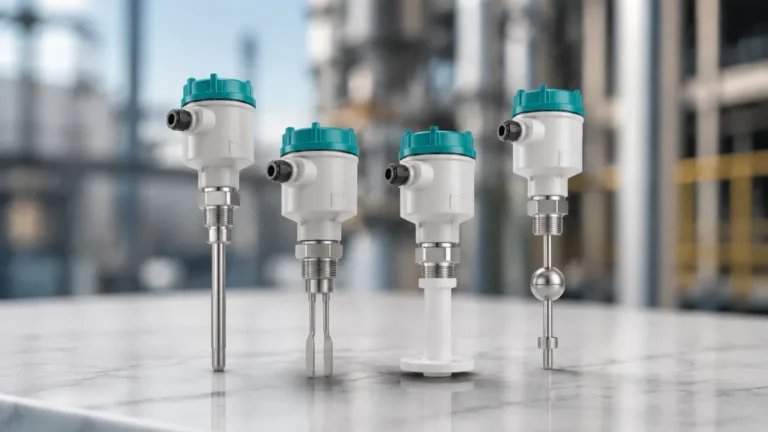
In the landscape of industrial automation, point level detection serves as a critical safeguard for process safety and efficiency. Among the various manufacturers in this sector, Krohne has established a significant presence with its OPTISWITCH series. Understanding the technical nuances of Krohne level switches, as well as the broader category of Level Switches, is essential for engineers tasked with specifying instrumentation for liquid, solid, or slurry applications.
Level switches are discrete sensors designed to detect the presence or absence of a medium at a specific height within a vessel. Unlike continuous level transmitters, which provide a constant output of the level percentage or volume, switches act as triggers for alarms, pump control, or emergency shutdown systems. This article explores the measurement principles, selection criteria, and installation best practices associated with Krohne level switches and comparable industrial solutions.
Measurement Principles of Point Level Detection
Before selecting a specific model, it is vital to understand the underlying physics that allow these devices to function. Krohne level switches primarily utilize vibrating, capacitive, and microwave technologies to achieve reliable switching.
Vibrating Fork Technology (Vibration)
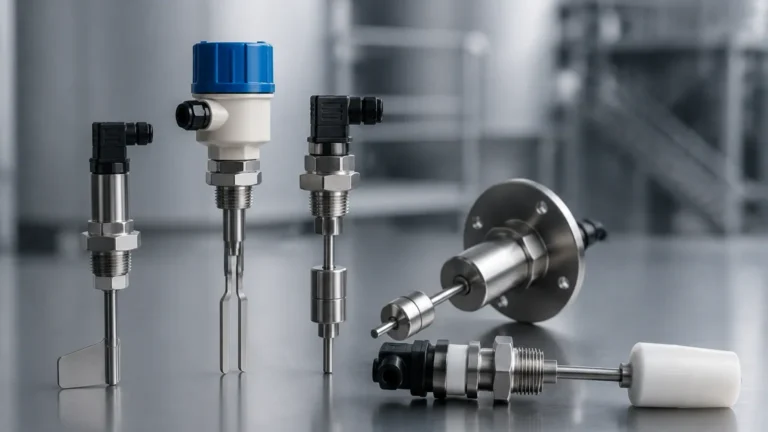
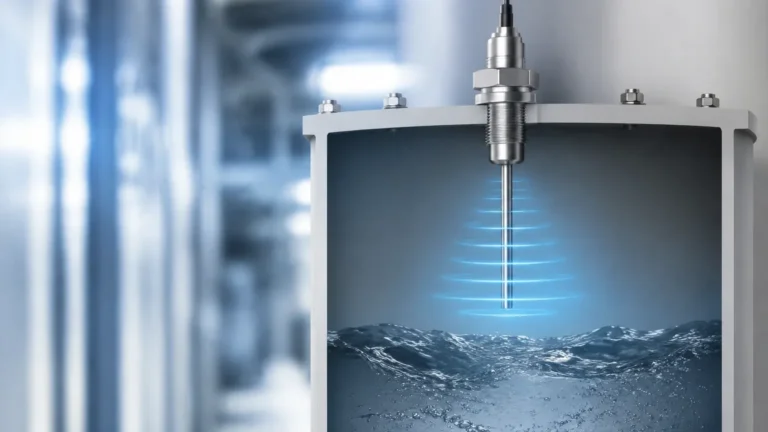
This is perhaps the most common principle used in the OPTISWITCH series. A tuning fork is piezoelectrically energized and vibrates at its mechanical resonance frequency in air. When the fork is immersed in a liquid or covered by a solid, the frequency shifts or the amplitude is dampened. The internal electronics detect this change and convert it into a switching command.
* Advantages: Independent of the dielectric constant, density (within limits), and pressure of the medium.
* Applications: Overfill protection and dry-run protection for pumps.
Capacitive Level Switching
Capacitive switches measure the change in electrical capacitance between a probe and the tank wall (or a reference electrode). As the medium displaces air around the probe, the capacitance increases due to the higher dielectric constant ($ε_r$) of the material compared to air.
* Advantages: No moving parts, suitable for hygienic applications.
* Limitations: Can be sensitive to buildup or coating on the probe if not properly compensated.
Microwave Barrier
Used primarily for bulk solids, microwave barriers consist of a transmitter and a receiver. A high-frequency microwave signal is sent across the vessel. If the signal is attenuated or blocked by the material, the switch is triggered. This is a non-contact method, making it ideal for abrasive or extremely hot materials.
Evaluating Krohne Level Switches in Industrial Contexts
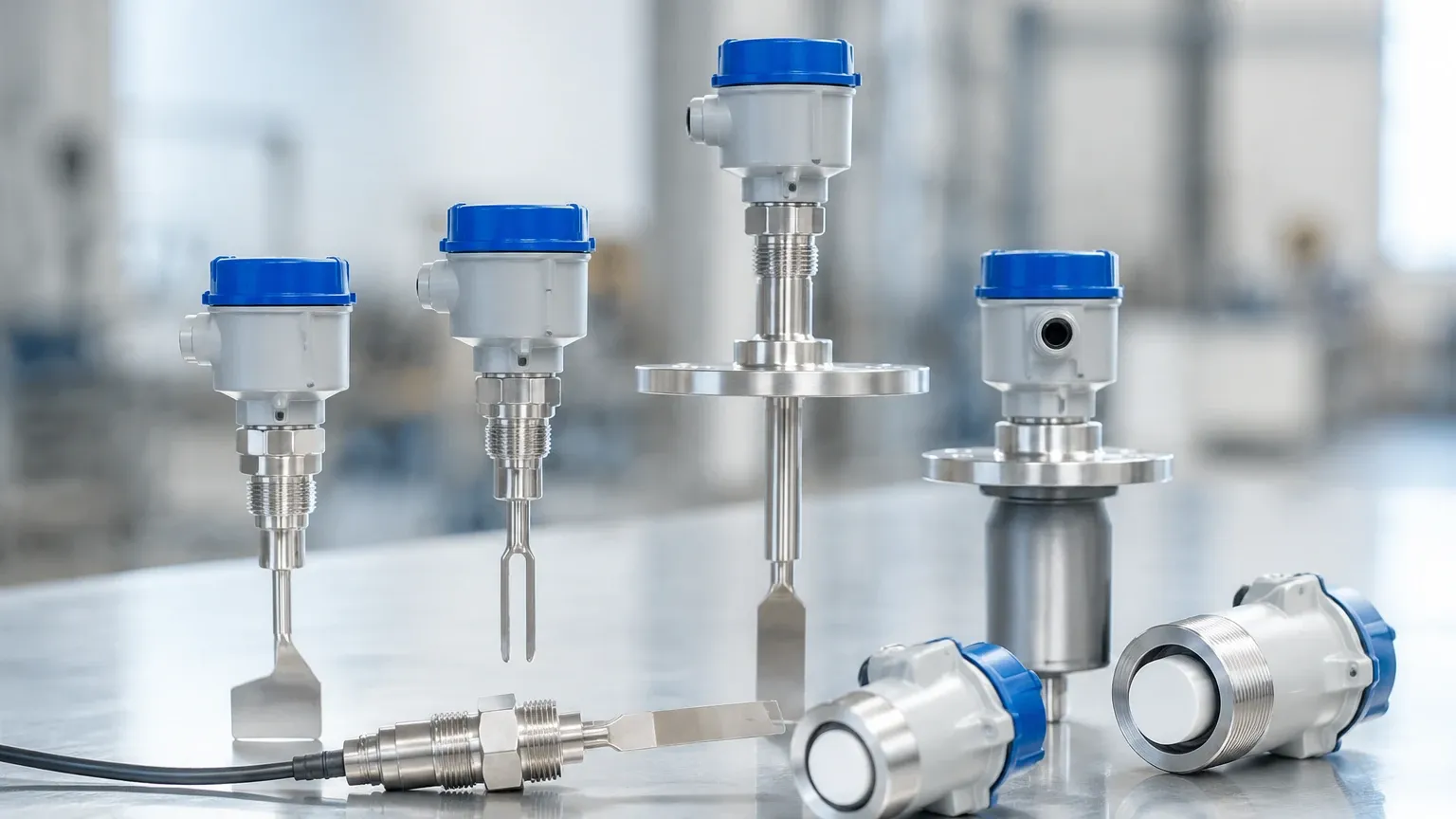
Krohne level switches are often categorized by their application suitability—liquids versus solids. The OPTISWITCH 4000 and 5000 series are typically geared toward liquid applications, while the 3000 series often handles bulk solids.
Liquid Applications
For liquids, the primary concern is often viscosity and the potential for foam. Vibrating forks are highly effective here because they are largely unaffected by bubbles or turbulence. In chemical processing, where media might be corrosive, these switches are available in various materials, including stainless steel (316L), Hastelloy, or coated versions like PFA.
Solid and Powder Applications
When dealing with powders, grains, or aggregates, the mechanical stress on the sensor is a primary factor. Krohne level switches for solids often utilize a more robust vibrating rod or fork design capable of withstanding the weight and abrasiveness of the material. In these environments, the "krohne level switches" are evaluated based on their ability to ignore dust clouds while still detecting the actual material level.
Practical Selection Table
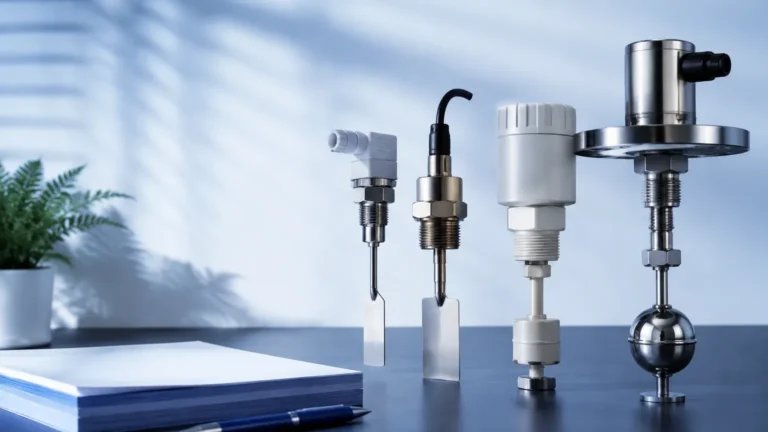
The following table provides a comparison of common point level technologies used by Krohne and other professional manufacturers like Welk to assist in the selection process.
| Technology | Typical Media | Max Pressure (approx.) | Max Temperature | Key Benefit |
| :— | :— | :— | :— | :— |
| Vibrating Fork | Liquids, light solids | 64 bar (928 psi) | -50°C to +250°C | High reliability, no calibration |
| Capacitive | Liquids, pastes, solids | 25 bar (362 psi) | -40°C to +200°C | Compact, hygienic options |
| Microwave Barrier | Bulk solids, opaque liquids | N/A (Non-contact) | Up to +1000°C (with windows) | Non-contact, through-wall detection |
| Conductive | Conductive liquids | 10 bar (145 psi) | Up to +100°C | Extremely cost-effective |
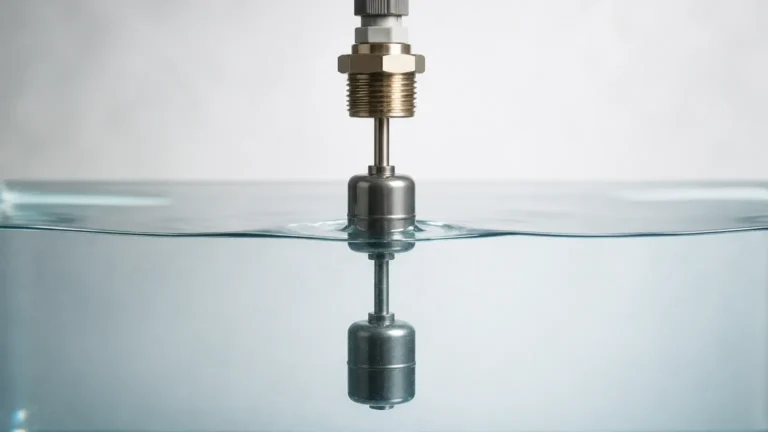
| Displacer/Float | Clean liquids | 40 bar (580 psi) | Up to +150°C | Simple mechanical operation |
Installation Considerations and Best Practices
Proper installation is the most significant factor in preventing false triggers or sensor failure. When installing Krohne level switches or similar industrial units, engineers should adhere to the following guidelines:
1. Avoid the Fill Stream: Never install a level switch directly in the path of the incoming material. The force of the falling liquid or solid can damage the sensor or cause constant false alarms.
2. Orientation: For vibrating forks in liquid, horizontal installation is common. However, the forks should be oriented so that the liquid can easily drain off them, preventing "bridging" where a drop of liquid stays between the tines and keeps the switch active.
3. Nozzle Length: Ensure the probe or fork extends far enough into the vessel. If the nozzle is too long and the sensor is recessed, material can build up in the dead space, leading to inaccurate readings.
4. Turbulence and Agitators: In tanks with mixers, switches should be placed away from the agitator blades. If turbulence is high, a stilling well or a switch with a delay function may be required to prevent "chattering" (rapid cycling of the relay).
Limitations and Common Risks
While krohne level switches are engineered for high performance, certain conditions present risks to any point level device:
* Heavy Buildup: In applications like wastewater or thick resins, material can coat the sensor. While some capacitive and vibrating switches have "active shield" or frequency-shift technology to ignore light coating, heavy, conductive buildup will eventually cause a permanent "covered" signal.
* Dielectric Constant ($ε_r$): For capacitive switches, if the medium has a dielectric constant too close to air (typically $ε_r < 1.5$), the sensor may struggle to detect the interface.
* Mechanical Wear: In abrasive solid applications (like mining or cement), the vibrating elements can wear down over time, changing their resonance frequency and requiring replacement.
Why Quality Engineering Matters
In B2B environments, the cost of a level switch is negligible compared to the cost of a tank overfill or a pump running dry. Choosing a reputable brand ensures that the device meets international standards such as ATEX/IECEx for hazardous areas or SIL (Safety Integrity Level) ratings for functional safety. Krohne level switches are often specified in SIL2 and SIL3 loops, providing documented reliability for critical safety functions.
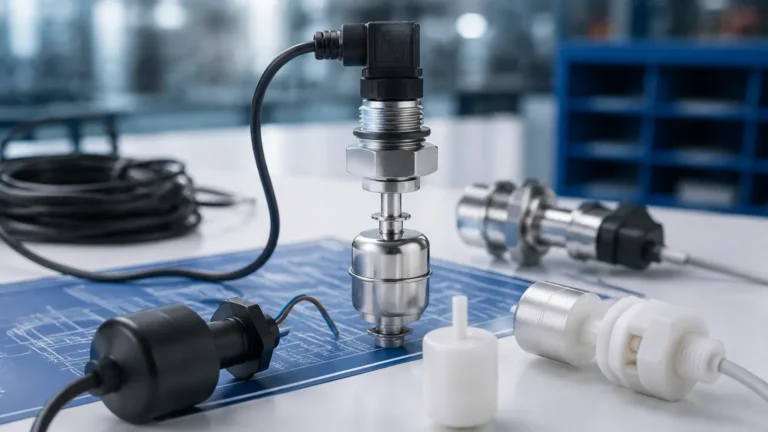
For many industrial applications, professional manufacturers like Welk offer a range of Level Switches that provide the same high-accuracy detection and robust construction required for water treatment, chemical processing, and oil and gas automation. These solutions often provide a cost-effective alternative while maintaining strict quality control and customization options for OEM/ODM requirements.
Frequently Asked Questions (FAQ)
Q: Can a vibrating fork switch be used in highly aerated liquids?
A: It depends on the density of the aerated mixture. If the density drops significantly below the switch's minimum density rating (typically 0.5 g/cm³ or 0.7 g/cm³), the switch may not be able to distinguish between the liquid and air.
Q: Do Krohne level switches require regular calibration?
A: Most vibrating fork switches are "plug and play" and do not require calibration. Capacitive switches may require a one-time calibration to the specific dielectric constant of the medium during commissioning.
Q: How do I handle foam in my tank?
A: If you want to detect the liquid and ignore the foam, a vibrating fork is usually the best choice. If you need to detect the foam itself, a capacitive switch with adjusted sensitivity is more appropriate.
Q: What is the maximum distance a switch can be from the control cabinet?
A: This depends on the output type. A standard relay output or a 4-20mA loop can typically run several hundred meters. However, for digital signals or low-voltage DC switches, cable resistance and interference should be calculated for runs exceeding 100 meters.
By carefully matching the measurement principle to the specific properties of the medium and the vessel environment, engineers can ensure that their level switches provide years of maintenance-free operation.