9 Switches
9 Switches
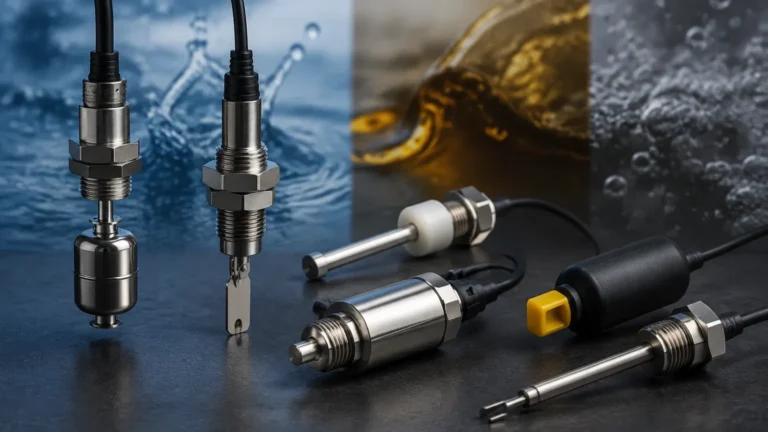
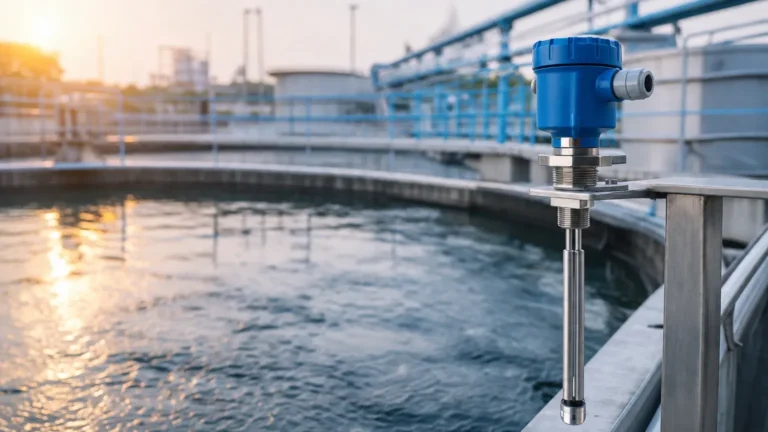
In the landscape of industrial automation and process control, point level detection serves as a critical safeguard for inventory management, overfill prevention, and pump protection. Unlike continuous level transmitters that provide a real-time percentage of tank volume, level switches are designed to trigger a discrete output—typically a relay or transistor signal—when a substance reaches a specific height.
Selecting the correct technology among the various available 9 switches commonly used in industry requires a deep understanding of the physical properties of the media, the environmental conditions of the vessel, and the mechanical constraints of the installation. This guide provides a technical overview of the nine primary level switch technologies, their operating principles, and practical selection criteria for engineering applications.
1. Float Level Switches
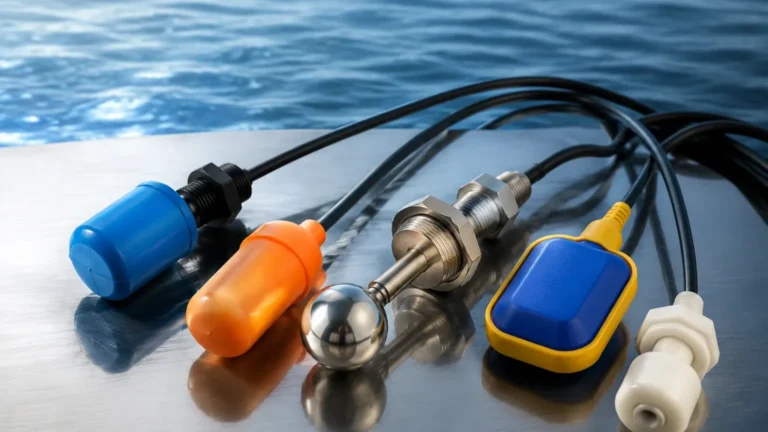
Float level switches are perhaps the most traditional and widely recognized form of point level detection. They operate based on the principle of buoyancy.
Measurement Principle
A float, which is less dense than the liquid media, resides on the surface. As the liquid level rises or falls, the float moves accordingly. Inside the float or the stem, a permanent magnet is housed. When the float reaches a predetermined position, the magnetic field actuates a hermetically sealed reed switch located within the stationary stem. This completes or breaks an electrical circuit.
Applications and Limitations
These switches are ideal for clean, non-coating liquids like water, oils, and chemicals. However, they are mechanical in nature. Moving parts are susceptible to wear, and the float can become stuck if the liquid contains high levels of particulates or if the media is highly viscous.
2. Tuning Fork (Vibrating) Level Switches
Tuning fork switches, also known as vibrating level switches, are robust solid-state devices used for both liquids and granulated solids.
Measurement Principle
The sensor consists of two tines (the fork) that are piezoelectrically vibrated at their natural resonant frequency in free air. When the tines are submerged in the media, the frequency of vibration shifts or the amplitude is dampened. The internal electronics detect this change and switch the output state.
Applications and Limitations
This technology is highly versatile because it is largely unaffected by flow, turbulence, bubbles, or foam. It is a preferred choice for high-level alarms in food and beverage processing or chemical storage. While they are resistant to minor buildup, heavy coating on the tines can eventually lead to false readings.
3. Capacitance Level Switches
Capacitance switches are frequently used in applications involving high temperatures and pressures where mechanical switches might fail.
Measurement Principle
The switch acts as one plate of a capacitor, and the vessel wall (or a second probe) acts as the other. The media between them serves as the dielectric. As the level rises and covers the probe, the dielectric constant changes, significantly increasing the measured capacitance. Once the capacitance crosses a calibrated threshold, the switch triggers.
Applications and Limitations
Capacitance switches excel in detecting powders, granules, and liquids. They are particularly useful for interface detection (e.g., oil and water). The primary challenge is the "coating effect"; if a conductive material sticks to the probe, the switch may stay in the "on" state even after the level has dropped. Modern units often include active shield technology to mitigate this.
4. Conductivity Level Switches
Conductivity switches are a cost-effective solution for point level detection in conductive liquids.
Measurement Principle
These switches use a low-voltage, low-current power source applied between two or more electrodes. When the conductive liquid (such as water or acids) touches the electrodes, it completes an electrical circuit through the liquid itself. This change in resistance is detected by a controller.
Applications and Limitations
They are commonly used in boiler water level control and wastewater sumps. The main limitation is that they cannot be used with non-conductive liquids like hydrocarbons or deionized water. Additionally, the electrodes are subject to corrosion and must be compatible with the chemical nature of the media.
5. Optical Level Switches
Optical switches offer a compact, non-mechanical solution for liquid detection, often used in leak detection and small tanks.
Measurement Principle
The sensor contains an infrared LED and a light receiver. These components are housed within a plastic or glass prism at the tip of the sensor. When the tip is in air, the IR light reflects internally within the prism back to the receiver. When liquid covers the tip, the light refracts into the liquid, and the receiver detects a loss of signal, triggering the switch.
Applications and Limitations
Optical switches are excellent for clean liquids and are very small (often 1/2" NPT or smaller). They are not suitable for liquids that leave a thick film on the prism or for applications where heavy ambient light might interfere with the sensor, though most industrial versions use pulsed light to prevent this.
6. Rotary Paddle Level Switches
Specifically designed for bulk solids, rotary paddle switches are a staple in silos and hoppers.
Measurement Principle
A low-speed electric motor drives a rotating paddle. When the level of the solid material (such as grain, sand, or plastic pellets) rises to the height of the paddle, it creates mechanical resistance. This resistance causes the motor to stall or shift on its mounting, which then trips a microswitch to signal the level state.
Applications and Limitations
These are highly reliable for heavy materials but require careful selection of paddle shapes based on the bulk density of the media. They are mechanical and can suffer from motor burnout if the material is extremely abrasive or if the unit is not designed for continuous stall conditions.
7. Displacer Level Switches
Displacer switches are often confused with float switches, but they operate on a different physical principle: Archimedes' Principle of Buoyancy.
Measurement Principle
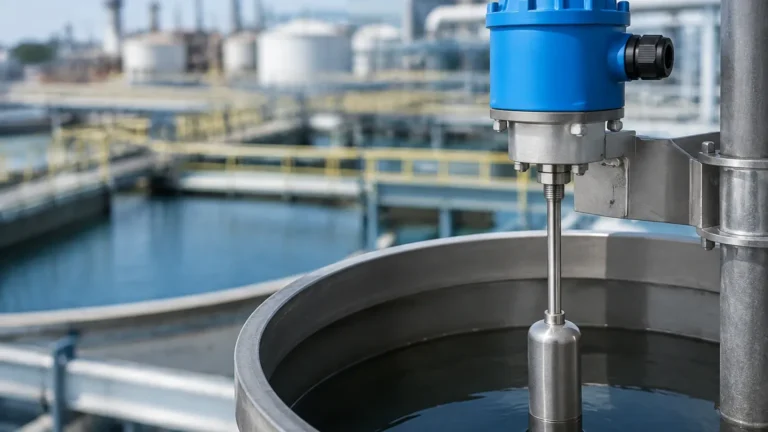
Instead of a light float, a heavy "displacer" (usually a weighted cylinder) is suspended from a spring. The displacer is heavier than the liquid. As the liquid rises, the buoyant force reduces the apparent weight of the displacer, allowing the spring to retract. This movement is used to actuate the switch mechanism.
Applications and Limitations
Displacers are favored in high-pressure, high-temperature refinery and power plant applications. They are more stable than floats in turbulent conditions. However, they are physically larger and more expensive to install, often requiring external cages or chambers.

8. Ultrasonic Point Level Switches
Ultrasonic switches provide a non-contact or gap-style solution for liquid detection.
Measurement Principle
In a gap-style ultrasonic switch, two piezoelectric crystals are mounted on opposite sides of a small gap. One crystal transmits an ultrasonic signal, and the other receives it. When the gap is filled with liquid, the sound waves travel efficiently to the receiver. When the gap is empty (filled with air), the signal is too weak to reach the receiver.
Applications and Limitations
These are excellent for hazardous chemicals as they have no moving parts. They are generally unaffected by the dielectric constant or conductivity of the liquid. However, they can be sensitive to heavy aeration or high-viscosity liquids that might bridge the gap.
9. Magnetic Level Switches (Bypass Type)
While often part of a larger system, magnetic switches are essential for external tank monitoring.
Measurement Principle
These are typically used in conjunction with a magnetic level gauge (bypass chamber). A float inside the chamber contains a high-intensity magnet. As the float moves with the liquid level, it passes a switch mounted on the outside of the chamber. The magnetic field passes through the non-magnetic chamber wall to actuate the switch.
Applications and Limitations
This setup is ideal for lethal or toxic media because the switch is completely isolated from the process fluid. The limitation is the requirement for a bypass chamber, which increases the installation footprint and cost.
—
Selection Criteria for Level Switches
Choosing between these 9 switches requires a systematic evaluation of the process environment. The following table provides a quick reference for technology selection based on common industrial variables.
| Technology | Media Type | Temp. Range | Pressure Range | Viscosity Tolerance |
| :— | :— | :— | :— | :— |
| Float | Clean Liquids | Moderate | Low to Medium | Low |
| Tuning Fork | Liquids/Solids | High | High | Medium |
| Capacitance | Liquids/Solids | Very High | Very High | High (with Shield) |
| Conductivity | Conductive Liq. | Moderate | Medium | Low |
| Optical | Clean Liquids | Moderate | Medium | Low |
| Rotary | Bulk Solids | Moderate | Low | N/A |
| Displacer | Liquids | High | Very High | Medium |
| Ultrasonic | Liquids | Moderate | Medium | Medium |
| Magnetic | Liquids | High | High | Low |
When evaluating Level Switches, engineers must prioritize the chemical compatibility of the wetted materials. Standard materials include 316 Stainless Steel, PP, PVC, and PTFE. For high-pressure steam applications, specialized alloys and ceramic seals are often required.
Installation and Maintenance Considerations
Proper installation is as critical as technology selection. For any of the 9 switches mentioned, consider the following:
1. Mounting Orientation: Some switches, like tuning forks, can be mounted horizontally or vertically. Others, like rotary paddles, are typically side-mounted. Ensure the mounting position does not create a "dead zone" where material can accumulate.
2. Turbulence and Agitation: If the tank has an agitator, mechanical switches like floats or displacers may require a stilling well to prevent damage or false triggers.
3. Electrical Integration: Most industrial level switches offer a variety of outputs, including SPDT relays, DPDT relays, or PNP/NPN transistors. Ensure the power supply (AC or DC) and load capacity match your PLC or control system requirements.
4. Calibration: While many modern switches (like tuning forks) are "plug-and-play," capacitance switches require calibration to the specific dielectric constant of the media and the geometry of the tank.
Common Risks and Limitations
Despite the advancements in sensor technology, certain conditions pose risks to all point level detection methods:
* Build-up and Fouling: Even non-contact or vibration-based sensors can fail if enough material accumulates on the sensing element. Regular inspection cycles are necessary in "dirty" applications.
* Foam and Bubbles: Optical and ultrasonic switches can be fooled by surface foam. In these instances, tuning forks or displacers are usually more reliable.
* Specific Gravity Changes: Float and displacer switches are calibrated for a specific density. If the process involves different fluids with varying densities, the switch point may shift significantly.
Frequently Asked Questions (FAQ)
Q: Can I use a tuning fork switch for both high-level and low-level detection?
A: Yes, but the orientation and fail-safe settings must be adjusted. For high-level, the switch should be "Fail-Safe High" (normally energized), and for low-level, "Fail-Safe Low."
Q: What is the advantage of a non-contact switch?
A: Non-contact switches (or those with minimal contact like optical) reduce the risk of corrosion and mechanical failure, leading to lower long-term maintenance costs.
Q: How do I handle level switching in a pressurized tank?
A: Capacitance and displacer switches are traditionally the best performers in high-pressure environments (up to 200 bar or more), provided the housing and seals are rated accordingly.
Conclusion
The selection of a point level detection system is a balance between reliability, cost, and process compatibility. Whether you are managing a simple water storage tank or a complex chemical reactor, understanding the nuances of these 9 switches ensures that your automation system remains safe and efficient. For detailed technical specifications and customized configurations, it is recommended to consult with a specialist to match the instrument to your specific industrial requirements.