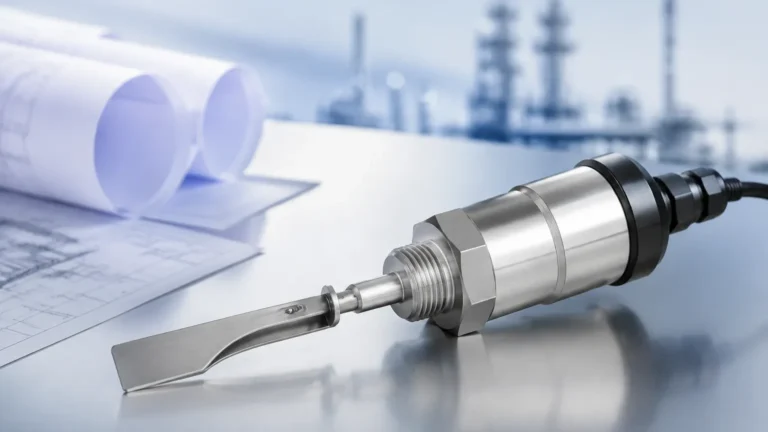
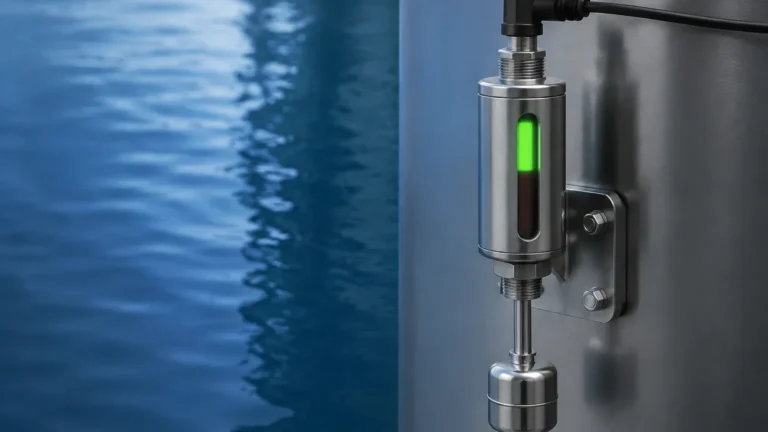
Baumer Level Switches
Baumer Level Switches
In industrial process automation, point level detection serves as a critical safeguard against tank overflows, dry-run conditions in pumps, and phase separation errors. Among the various technologies available to process engineers, Baumer level switches have established a significant presence, particularly through their implementation of frequency sweep technology. This article provides a technical overview of the principles, selection criteria, and installation requirements for these instruments, intended for engineers and system integrators seeking reliable level measurement solutions.
Understanding Point Level Detection Principles
Before selecting a specific instrument, it is essential to understand the physical principles that govern level switching. Unlike continuous level measurement, which provides a constant 4-20mA or digital output representing the fluid level, level switches are designed to trigger a discrete output at a specific point.
Frequency Sweep Technology
Frequency sweep is the core technology behind the modern series of Baumer level switches, often marketed under the CleverLevel brand. The sensor emits a high-frequency signal into the medium. The electronics measure the change in the phase shift or the resonant frequency, which is influenced by the dielectric constant ($ε_r$) of the material surrounding the sensor tip. Because different materials (air, foam, oil, water) have distinct dielectric properties, the sensor can be tuned to ignore foam or buildup and only trigger when the actual liquid level reaches the probe.
Vibrating Fork (Tuning Fork)
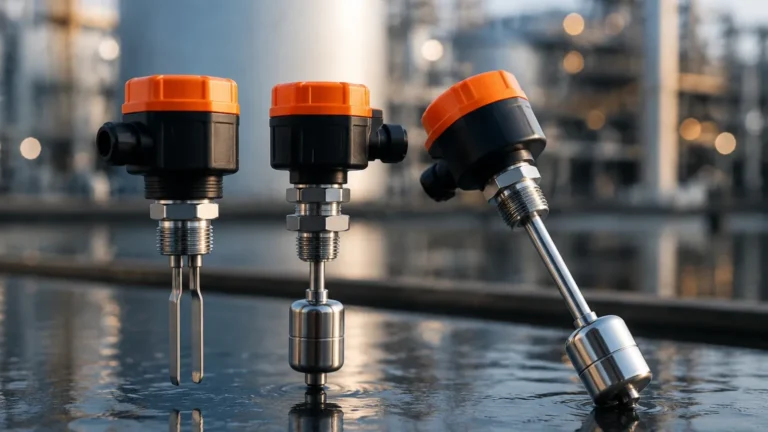
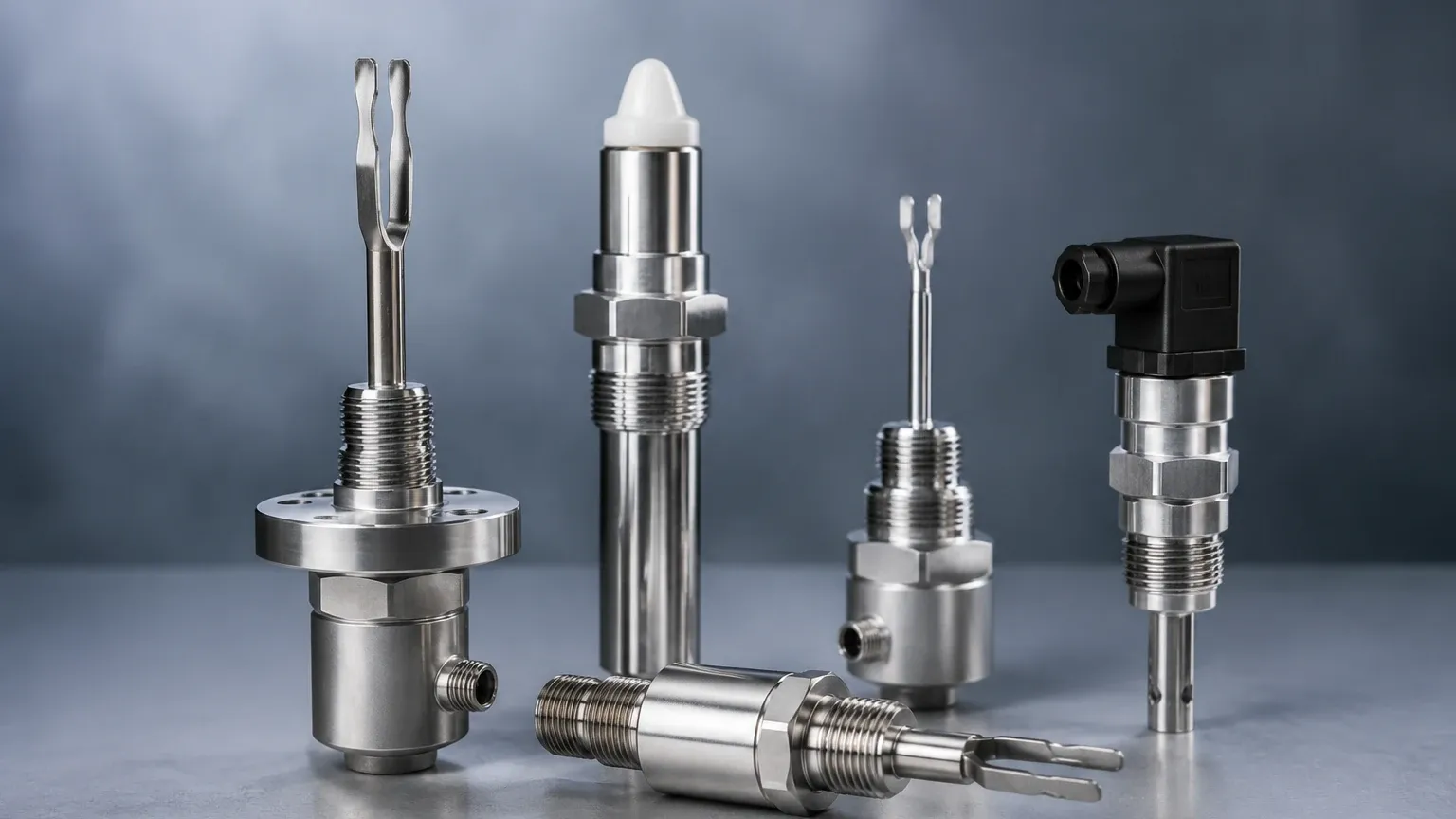
This principle relies on a piezo-electrically energized fork that vibrates at its mechanical resonance frequency in air. When the fork is immersed in a liquid, the frequency drops due to the increased density of the medium. This frequency shift is detected and converted into a switching signal. This method is highly reliable for liquids with consistent density but can be susceptible to heavy viscous buildup or aeration.
Capacitive Sensing
Capacitive switches measure the change in capacitance between a probe and the tank wall (or a reference electrode). As the medium covers the probe, the dielectric constant changes, increasing the measured capacitance. While cost-effective, capacitive switches often require recalibration if the media properties change significantly.
Technological Specializations in Baumer Level Switches
Baumer has focused heavily on the "CleverLevel" series (specifically the LBFH and LBFS models), which utilize frequency sweep technology to overcome the limitations of traditional vibrating forks.
Media Versatility and Foam Suppression
One of the primary challenges in industries like food and beverage or chemical processing is the presence of foam. A standard vibrating fork or a simple capacitive switch may trigger prematurely when contact is made with foam. Baumer level switches using frequency sweep can be programmed to "see through" foam, triggering only when the sensor is fully submerged in the liquid phase. This is achieved by setting a specific switching threshold based on the dielectric constant of the target fluid.
Hybrid Sensing and IO-Link Integration
Modern iterations of these switches include IO-Link capabilities. This allows for more than just a simple "on/off" signal. Engineers can extract secondary data, such as the internal temperature of the sensor or the specific dielectric value of the medium. This data is invaluable for predictive maintenance and for identifying changes in product composition or cleaning agent concentration during CIP (Clean-in-Place) cycles.
Key Evaluation Criteria for Industrial Applications
Selecting the appropriate level switch requires a detailed analysis of the process environment. As a professional manufacturer, Welk emphasizes that no single technology fits every application. When evaluating Level Switches, consider the following parameters:
1. Media Properties
* Dielectric Constant (ε_r): Low dielectric media like oils (ε_r ≈ 2) require more sensitive sensors than water-based media (ε_r ≈ 80).
* Viscosity and Adhesion: If the medium is honey-like or prone to crystallization, a flush-mounted sensor is preferable to a vibrating fork to prevent false triggers caused by material "bridging."
* Conductivity: Conductivity affects capacitive sensors significantly but has less impact on frequency sweep or mechanical vibration switches.
2. Process Conditions
* Temperature: Standard industrial switches operate up to 85°C or 100°C. For steam sterilization (SIP) or high-temperature chemical reactions, specialized versions rated up to 200°C are required.
* Pressure: Sensors must withstand the maximum possible tank pressure, often ranging from -1 bar (vacuum) to 100 bar in high-pressure reactors.
* Turbulence and Agitation: In tanks with high-speed mixers, a mechanical fork may be subject to fatigue or physical damage, making a solid-state frequency sweep sensor a more durable choice.
Selection Guide and Comparative Analysis
The following table provides a general comparison of technologies often found within the Baumer portfolio and broader industrial level measurement markets.
| Feature | Frequency Sweep (CleverLevel) | Vibrating Fork | Capacitive Switch |
| :— | :— | :— | :— |
| Best For | Foam suppression, viscous media | General liquid detection | Low-cost, non-critical apps |
| Buildup Immunity | High (adjustable threshold) | Moderate | Low |
| Moving Parts | None | Yes (vibration) | None |
| Hygienic Design | Excellent (flush mount) | Moderate | Good |
| Response Time | < 0.1 seconds | 0.5 to 1.0 seconds | 0.2 to 0.5 seconds |
| Typical Pressure | Up to 100 bar | Up to 64 bar | Up to 25 bar |
Installation Best Practices and Engineering Considerations
Correct installation is as vital as sensor selection. Even the most advanced Baumer level switches will fail if the physical mounting ignores fluid dynamics.
Orientation and Positioning
* Side Mounting: This is the most common for high/low-level alarms. Ensure the sensor is tilted slightly downward (approx. 20 degrees) in viscous applications to allow the medium to drain off the sensor tip.
* Top Mounting: Used for overfill protection. If the tank has an agitator, ensure the probe length does not interfere with the blades and is positioned away from the filling inlet to avoid false triggers from splashing.
* Pipe Mounting: For pump dry-run protection, the switch should be installed in the suction line. Ensure the sensor tip is fully immersed in the flow path.
Process Connections and Hygiene
In the pharmaceutical and food industries, the "dead space" between the sensor and the tank wall must be minimized to prevent bacterial growth. Baumer offers various hygienic adapters (e.g., Tri-Clamp, Varivent, or G1/2" hygienic). Using a flush-mounted sensor ensures that the cleaning spray during a CIP cycle reaches the entire sensor surface.
Wiring and Signal Output
Most industrial level switches utilize a DC power supply (12-30V DC) and provide a PNP or NPN transistor output. For integration into older PLC systems, relay outputs may be required, though these are becoming less common in favor of digital protocols like IO-Link which simplify commissioning through remote parameterization.
Limitations and Operational Risks
While frequency sweep technology is highly advanced, it is not infallible. Engineers should be aware of the following risks:
1. Extreme Coating: While frequency sweep handles thin films well, a thick, hardened crust of material (e.g., dried cement or heavy resins) can eventually insulate the sensor tip to the point where it cannot detect the change in the surrounding medium.
2. Media Changes: If a switch is calibrated for a specific oil and the process is switched to a water-based solution without updating the threshold, the sensor may trigger incorrectly or fail to trigger at all.
3. Electromagnetic Interference (EMI): In environments with high-power variable frequency drives (VFDs) or poorly shielded heavy machinery, signal noise can interfere with the high-frequency sweep. Ensuring proper grounding and using shielded cables is mandatory.
Frequently Asked Questions (FAQs)
Q: Can Baumer level switches detect the interface between two liquids?
A: Yes. Because frequency sweep technology measures the dielectric constant, it can be tuned to trigger only when it encounters the higher dielectric of water while ignoring the lower dielectric of an oil layer sitting on top.
Q: How do I calibrate the sensor for a difficult medium?
A: Most modern Baumer switches can be calibrated via a "teach-in" wire or through IO-Link software. You simply submerge the sensor in the medium and trigger the teach command; the sensor then automatically calculates the optimal switching point.
Q: Is maintenance required for these switches?
A: Since solid-state switches like the CleverLevel series have no moving parts, they require very little maintenance. Periodic visual inspections for sensor tip erosion (in abrasive media) and verifying the integrity of the process seal are recommended.
Q: Can these sensors be used in hazardous areas?
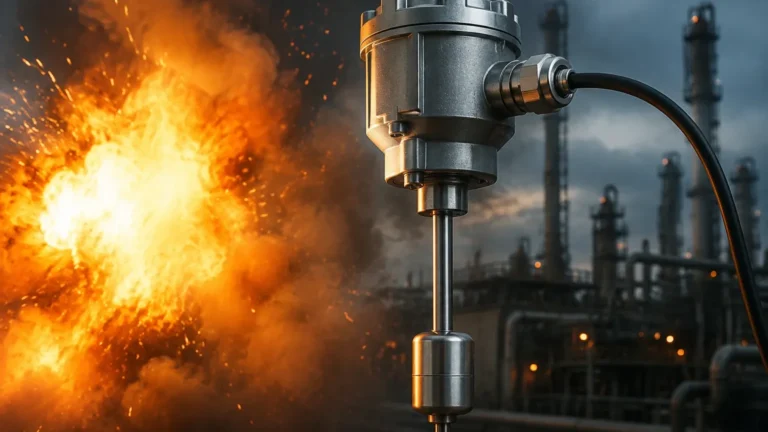
A: Yes, specific models are available with ATEX, IECEx, and CSA certifications for use in explosive gas or dust atmospheres. These typically require the use of an intrinsic safety barrier.
For engineers looking to implement robust point level control, understanding these technical nuances ensures long-term system reliability. Whether utilizing specialized Baumer level switches or exploring the comprehensive range of Level Switches provided by manufacturers like Welk, matching the sensor technology to the specific dielectric and physical properties of the media remains the foundation of successful process instrumentation.