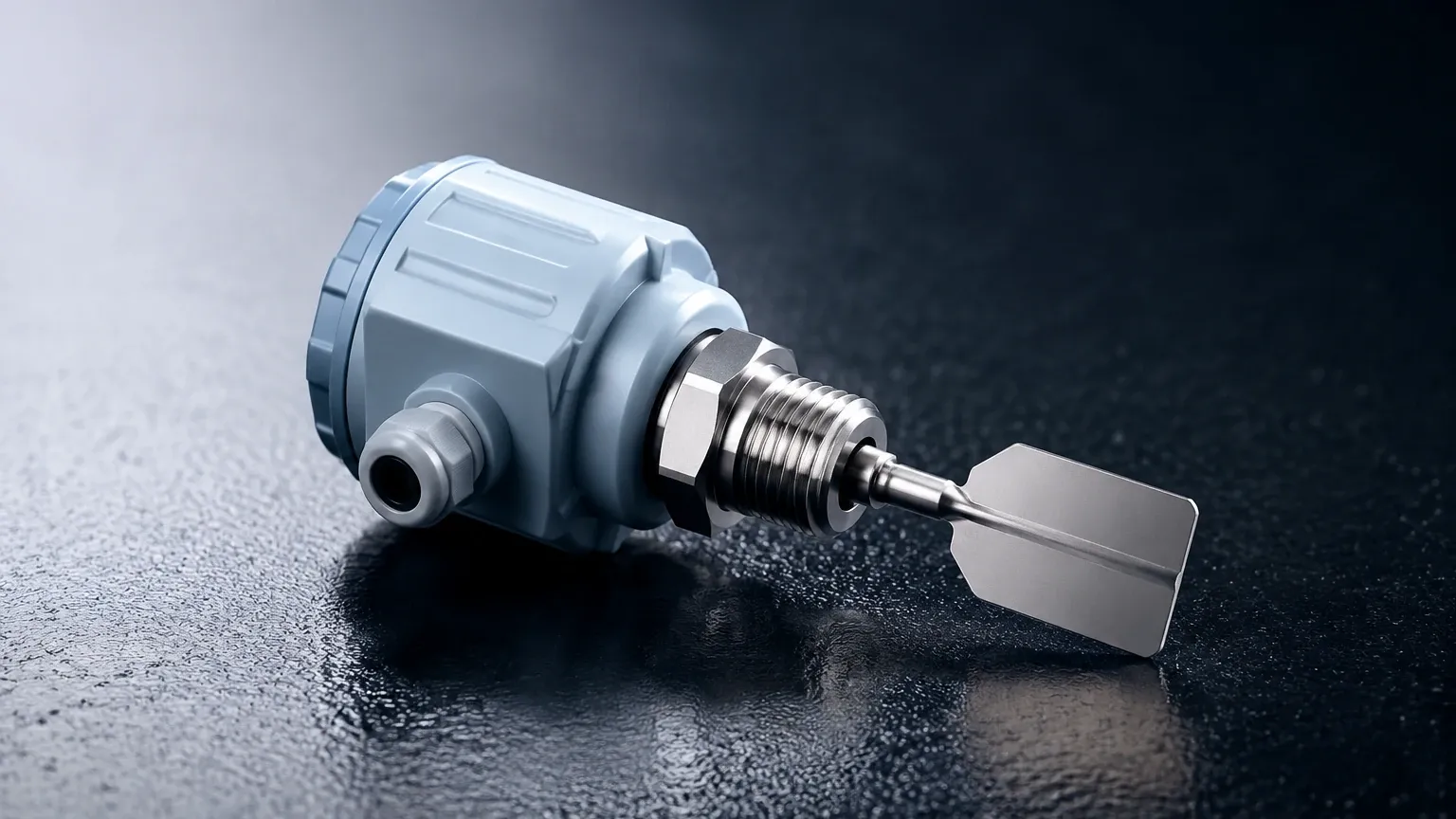
Burkert Level Switch 8111
Burkert Level Switch 8111
In the field of industrial process automation, point level detection is a critical requirement for ensuring safety, preventing overflows, and protecting equipment from dry-running. The Burkert Level Switch 8111 is a specialized vibrating level switch designed for liquid applications. As an engineering reference, it is essential to understand the underlying physics, technical specifications, and installation requirements of this technology to determine its suitability for specific industrial environments.
This guide examines the Burkert 8111 within the broader context of Level Switches, providing technical insights into its operation and how it compares to other measurement solutions offered by manufacturers like Welk.
The Principle of Vibrating Level Measurement
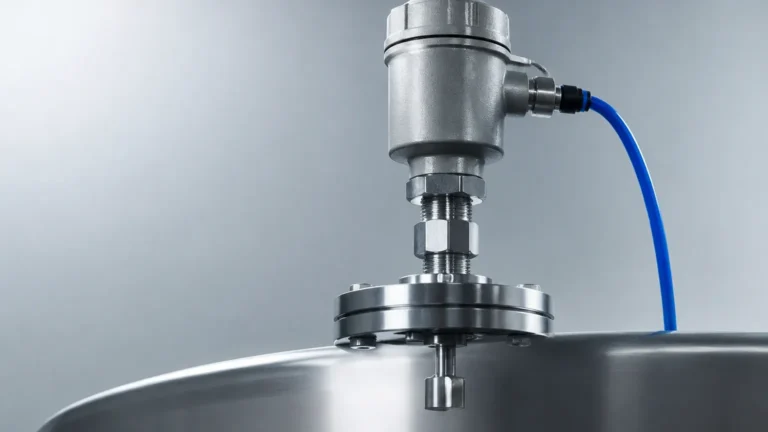
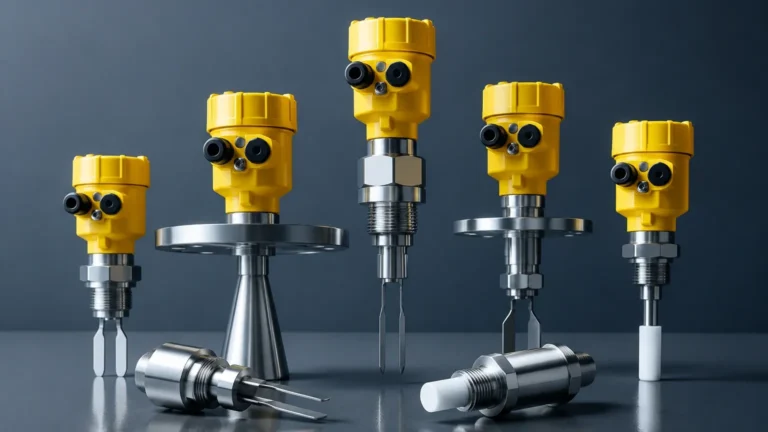
Before selecting a specific model like the Burkert 8111, engineers must understand the vibrating fork principle. This technology, often referred to as a "tuning fork" sensor, relies on the mechanical resonance of a metal fork-shaped element.
Piezoelectric Excitation
The device contains a piezoelectric crystal assembly located within the sensor housing. When an electrical voltage is applied, the crystal undergoes physical deformation, causing the tuning fork to vibrate at its natural resonance frequency in the air. This frequency is typically around 1,200 Hz for many industrial models.
Frequency Shift Detection
When the vibrating fork comes into contact with a liquid medium, the frequency of vibration changes. The density of the liquid dampens the movement, causing the resonance frequency to drop. The internal electronics continuously monitor this frequency. Once the shift crosses a predefined threshold, the device triggers a switching state (e.g., from "open" to "closed").
Advantages of the Principle
* Media Independence: Unlike capacitive sensors, vibrating switches are largely unaffected by the dielectric constant of the liquid.
* No Calibration: Because the switch reacts to physical damping rather than electrical properties, it generally does not require calibration for different liquids.
* Reliability: The lack of moving parts (other than the microscopic vibration) reduces mechanical wear and tear.
Technical Specifications of the Burkert 8111
The Burkert Type 8111 is designed for high-reliability applications. It is constructed to withstand demanding process conditions, including high pressures and varying temperatures.
Material Construction
The wetted parts are typically manufactured from 316L stainless steel (1.4404/1.4435), which provides excellent corrosion resistance for most water treatment and chemical applications. The housing is available in plastic (PBT), stainless steel, or aluminum, depending on the environmental requirements of the installation site.
Process Parameters
* Temperature Range: Standard versions operate between -50°C and +150°C (-58°F to +302°F).
* Pressure Range: The sensor can typically withstand process pressures from vacuum up to 64 bar (928 psi).
* Viscosity: It is suitable for liquids with a viscosity up to 10,000 mm²/s.
* Density: The medium must have a minimum density of 0.7 g/cm³ (with options for lower density detection in specific configurations).
Electrical Outputs
The 8111 offers several electronic output options to interface with Programmable Logic Controllers (PLCs) or direct loads:
1. Transistor (PNP/NPN): Ideal for high-speed switching and direct PLC integration.
2. Relay (DPDT): Used for switching higher currents or providing dry contact signals.
3. Two-wire (Contactless): Designed for series connection with a load, similar to a standard proximity switch.
4. NAMUR: Specifically for intrinsically safe applications in hazardous (Ex) zones.
Selection Criteria and Practical Tables
Choosing the right level switch requires an evaluation of the process media and the physical constraints of the vessel. While the Burkert 8111 is a robust choice, engineers should compare it against general industrial Level Switches to ensure the best fit for the application.
Comparison Table: Level Switch Technologies
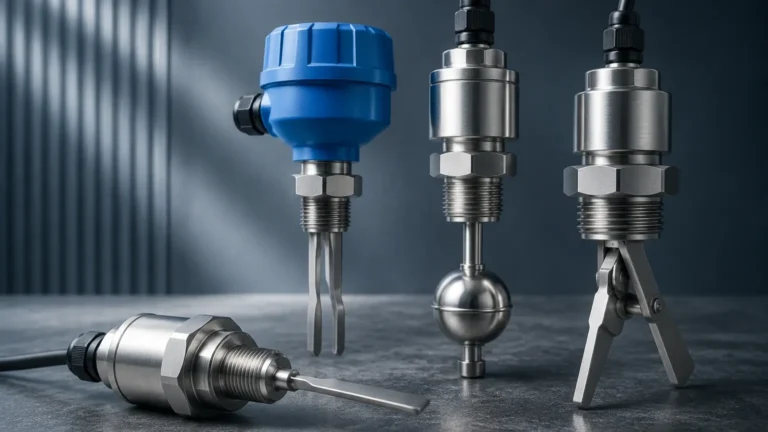
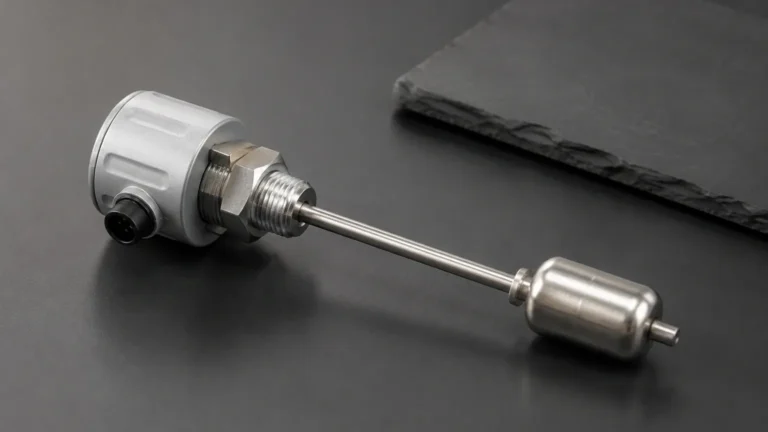
| Feature | Vibrating Fork (e.g., 8111) | Ultrasonic Switch | Float Switch | Capacitive Switch |
| :— | :— | :— | :— | :— |
| Media Type | Liquids | Liquids/Solids | Clean Liquids | Liquids/Solids |
| Moving Parts | No (Vibratory) | No | Yes | No |
| Affected by Foam | Minimal | High | Minimal | High |
| Affected by Coating | Moderate | High | High | Very High |
| Maintenance | Low | Low | Medium | Medium |
| Primary Use | Overfill/Dry Run | Non-contact Point | Simple Tank Level | Interface Detection |
Media Compatibility Considerations
* Turbulence: Vibrating forks are highly resistant to turbulence and bubbles, making them superior to ultrasonic switches in agitated tanks.
* Aerated Liquids: If the liquid contains a high volume of gas bubbles, the density may drop below the detection threshold, leading to false switching.
* Solid Content: Small suspended solids generally do not affect the fork, but large fibrous materials can wrap around the tines and cause a mechanical bridge, resulting in a false "full" signal.
Installation and Mounting Guidelines
Proper installation is critical to the longevity and accuracy of the Burkert level switch 8111. Failure to follow orientation guidelines can lead to sediment buildup or air entrapment.
Orientation
* Top Mounting: The switch is installed vertically. This is common for high-level alarms. Ensure the fork tines are oriented so that the liquid can drain freely when the level drops.
* Side Mounting: The switch is installed horizontally. In this configuration, the tines should be oriented vertically (one above the other) rather than side-by-side. This prevents liquid from being trapped between the tines due to surface tension, which would cause a false positive.
Avoiding Obstructions
The fork must be positioned away from the tank's filling stream. The kinetic energy of an incoming liquid stream can cause mechanical stress on the fork or lead to premature switching. If the switch must be near an inlet, a protective baffle plate should be installed.
Nozzle Length
When mounting in a nozzle (a pipe extension from the tank), the fork must protrude completely into the vessel. If the fork is recessed within a narrow nozzle, viscous liquids or solids may accumulate in the dead space, preventing the fork from vibrating freely or causing it to remain "covered" even when the tank is empty.
Limitations and Risks
While the Burkert level switch 8111 is versatile, it is not a universal solution. Engineers must be aware of the following limitations:
1. Heavy Coating: While the vibration helps shed some material, extremely sticky or dehydrating media (like certain resins or thick syrups) can create a permanent coating that dampens the vibration, leading to a permanent "covered" signal.
2. Granular Solids: This specific model is optimized for liquids. Using it in heavy bulk solids can lead to mechanical damage to the fork tines due to the weight and impact of the material.
3. Cavitation: In high-flow piping applications, cavitation near the fork can cause erratic switching signals.
Maintenance and Troubleshooting
One of the primary benefits of vibrating level switches is their low maintenance requirement. However, periodic checks are recommended in critical safety loops.
Visual Inspection
During scheduled shutdowns, the fork should be inspected for signs of corrosion, erosion, or material buildup. Even 316L stainless steel can suffer from pitting in certain chloride-rich environments.
Functional Testing
Most modern electronics in the 8111 series include a self-test function or a status LED. A green LED typically indicates the unit is powered and the fork is vibrating correctly, while a red LED or an extinguished LED indicates a fault or a covered state.
Troubleshooting Common Issues
* Switch remains "Full" when tank is empty: Check for material bridging between the fork tines. Check if the tines are bent.
* Switch remains "Empty" when tank is full: Verify that the liquid density meets the minimum requirement (0.7 g/cm³). Check the power supply and wiring polarity.
* Intermittent Switching: This is often caused by heavy foam or mounting the switch too close to an agitator or filling inlet.
Conclusion for Process Engineers
The Burkert level switch 8111 represents a reliable, mid-to-high-end solution for point level detection in liquid processes. Its vibration-based principle offers a significant advantage over mechanical float switches and capacitive sensors in applications involving foam, turbulence, or varying liquid properties.
For facilities looking for a wide range of industrial measurement tools, exploring various Level Switches is recommended. Manufacturers like Welk provide a comprehensive portfolio of radar, ultrasonic, and hydrostatic sensors that can complement vibrating switches to create a complete level control strategy. When selecting a switch, always confirm the chemical compatibility of the wetted materials, the minimum density of the medium, and the specific electrical output required for your control system.
Frequently Asked Questions (FAQ)
Q: Can the Burkert 8111 be used to detect the interface between oil and water?
A: Generally, no. Vibrating switches detect the presence or absence of a liquid based on density damping. Since both oil and water will dampen the fork, the switch will trigger regardless of which liquid is present. For interface detection, capacitive or hydrostatic sensors are usually preferred.
Q: Is it possible to shorten the fork tines if they are too long for my pipe?
A: No. The length and mass of the fork tines are precisely calibrated to achieve a specific resonance frequency. Cutting or grinding the tines will change the frequency and render the device inoperable.
Q: Does the switch work in pressurized tanks?
A: Yes, the 8111 is rated for pressures up to 64 bar, making it suitable for pressurized storage tanks and boiler feed systems, provided the temperature limits are respected.
Q: How does the 8111 handle high-viscosity liquids?
A: It can handle viscosities up to 10,000 mm²/s. However, as viscosity increases, the time it takes for the liquid to drain off the fork increases, which may introduce a delay in the "switch off" signal when the level drops.