Vega Level Switches
Vega Level Switches
In industrial process automation, point level detection serves as a critical safeguard for inventory management, overfill prevention, and pump protection. Among the leading technologies in this sector, level switches provide discrete output signals—typically a relay or transistor switch—when a substance reaches a predefined height within a vessel. This guide examines the technical landscape of Vega level switches, their underlying measurement principles, and the engineering criteria required to select the appropriate instrument for liquid or bulk solid applications.
Understanding Point Level Detection
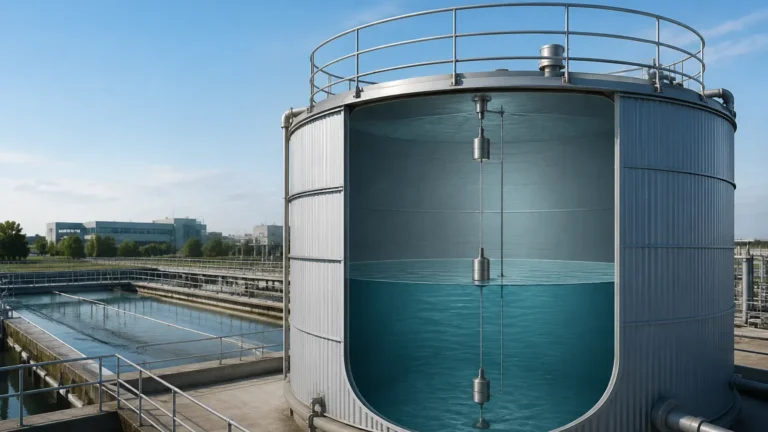
Point level detection differs from continuous level measurement in its fundamental objective. While continuous sensors provide a real-time percentage or distance reading, a level switch is designed to trigger at a specific location. This is essential for safety-instrumented systems (SIS), where a high-high (HH) level switch may be used to prevent a tank overflow, or a low-low (LL) switch may be used to prevent a pump from running dry.
Vega level switches are categorized by their sensing technology, which includes vibrating, capacitive, conductive, and microwave barriers. Choosing between these depends heavily on the physical properties of the media, such as density, dielectric constant, conductivity, and the presence of turbulence or foam.
Measurement Principles of Industrial Level Switches
Before selecting a specific model, it is necessary to understand how different sensing technologies interact with the process medium. For those seeking a broad range of high-performance industrial options, reviewing various Level Switches can provide a baseline for comparison against specialized brand offerings.
Vibrating Level Switches (Tuning Fork)
This technology utilizes a piezo-electric drive to energize a tuning fork at its natural resonance frequency. When the fork is covered by a liquid or solid, the frequency changes or the vibration is dampened. This change is detected by the integrated electronics and converted into a switching command.
* Liquids: The frequency shift is the primary indicator. It is largely independent of the chemical properties of the liquid.
* Solids: The damping of the amplitude is used to detect the presence of bulk materials.
Capacitive Level Switches
Capacitive sensors treat the probe and the tank wall (or a second reference probe) as the two plates of a capacitor. The process medium acts as the dielectric. As the level rises and covers the probe, the capacitance increases because the dielectric constant ($ε_r$) of most materials is higher than that of air. This change in capacitance is measured to determine the switch state.
Conductive Level Switches
This is a simple, cost-effective method for conductive liquids. A small electrical current flows between two electrodes (or an electrode and the tank wall) when they are bridged by the liquid. This technology is limited to liquids with a minimum conductivity, typically $>10 μS/cm$.
Technical Overview of Vega Level Switches
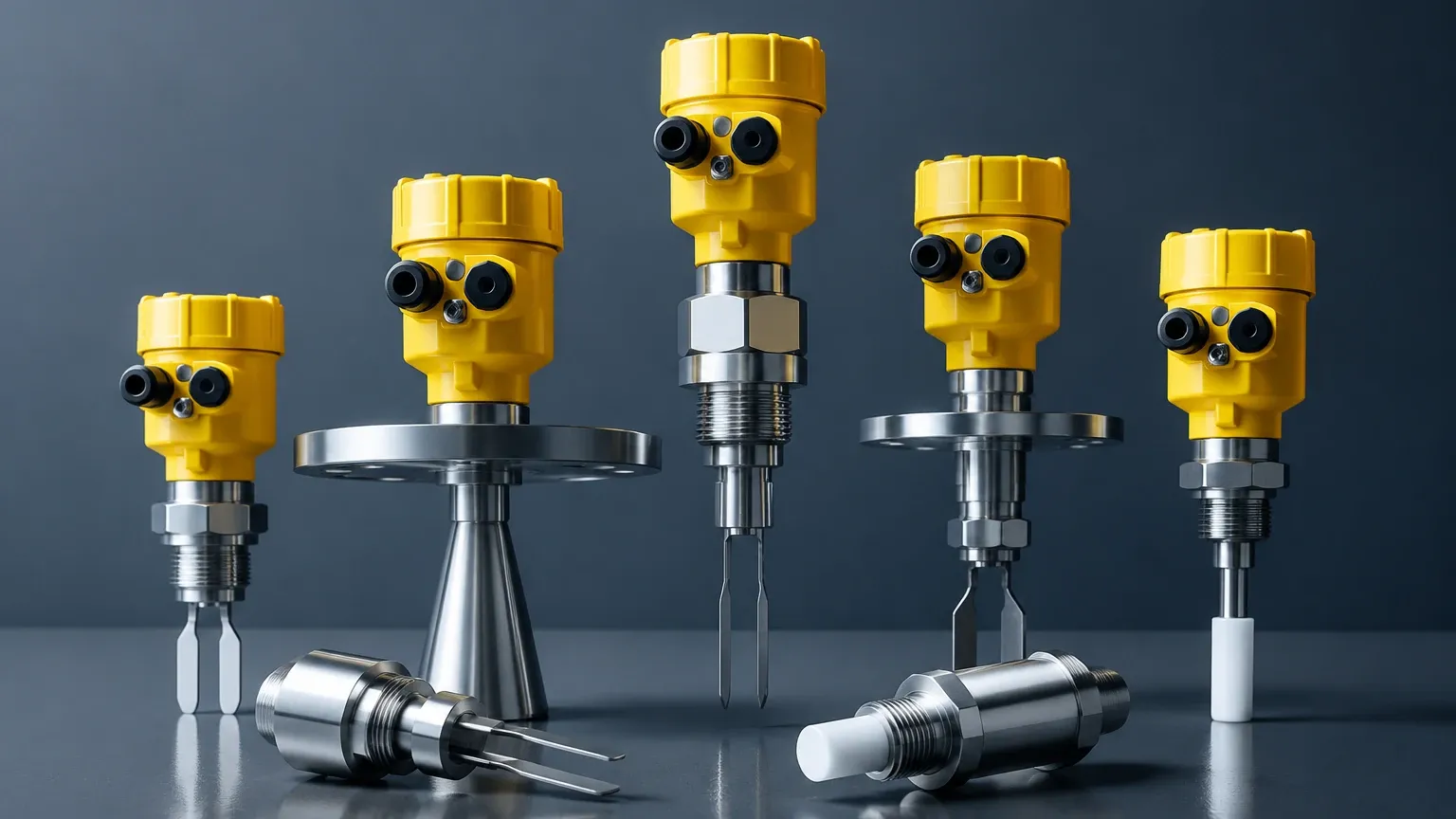
Vega classifies its point level sensors into several distinct product families, each optimized for specific media and environmental conditions. The "vega level switches" portfolio is primarily divided into the VEGASWING, VEGAVIB, VEGAWAVE, and VEGACAP series.
VEGASWING (Vibrating Liquid Switches)
The VEGASWING series is the industry standard for liquid point level detection.
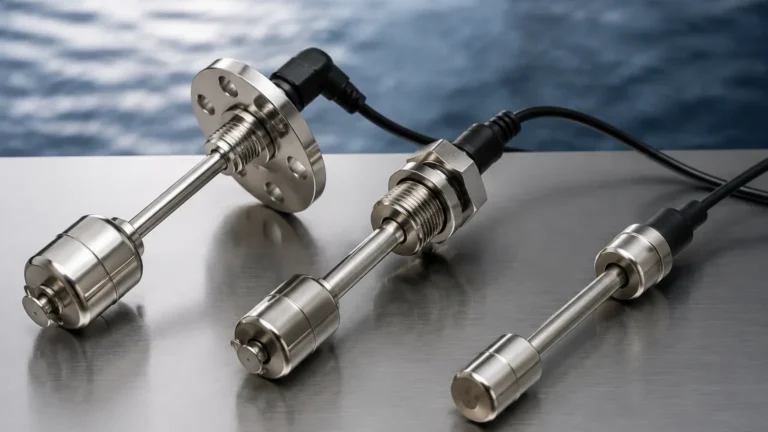
* VEGASWING 51/53: Compact versions often used in pipes or small tanks for pump protection.
* VEGASWING 61/63: Robust instruments for heavy-duty process vessels, capable of operating in temperatures from -50 °C to +250 °C and pressures up to 64 bar (6.4 MPa).
VEGAVIB and VEGAWAVE (Vibrating Solid Switches)
These are designed for bulk solids. The VEGAVIB uses a single vibrating rod, which is less prone to material buildup between fork tines, making it ideal for granular materials. The VEGAWAVE uses a robust tuning fork design suited for fine powders and dust-like materials.
VEGACAP (Capacitive Switches)
The VEGACAP series is used when the medium might be highly adhesive or when the temperature and pressure exceed the limits of vibrating sensors. They are particularly effective in non-conductive liquids and aggressive chemicals, provided the dielectric constant remains relatively stable.
VEGAPOINT (Capacitive/Microwave for Hygiene)
A newer generation of sensors designed for the food, beverage, and pharmaceutical industries. These feature small process fittings and are designed to ignore foam and buildup, focusing only on the presence of the actual liquid or solid.
Selection Criteria for Process Applications
Selecting the correct level switch requires a detailed analysis of the process environment. Engineers should use the following table as a preliminary screening tool:
| Feature | Vibrating (Liquid) | Vibrating (Solid) | Capacitive | Conductive |
| :— | :— | :— | :— | :— |
| Media State | Liquid | Powder/Granules | Liquid/Solid | Conductive Liquid |
| Density Range | >0.5 g/cm³ | >0.008 g/cm³ | N/A | N/A |
| Viscosity | Up to 10,000 mPa·s | N/A | High | Low |
| Build-up | Moderate tolerance | High (Rod type) | High (Active shield) | Low tolerance |
| Foam | Generally ignores | N/A | May detect | Detects if conductive |
| Pressure Max | 64 bar | 16 bar | 100+ bar | 25 bar |
Key Evaluation Factors:
1. Media Density: Vibrating forks require a minimum density to dampen the vibration effectively. If the density is too low (e.g., light foams), the switch may not trigger.
2. Dielectric Constant (ε_r): For capacitive switches, the difference between the ε_r of the air and the medium must be sufficient. Water (ε_r ≈ 80) is easy to detect, while certain oils (ε_r ≈ 2) require more sensitive electronics.
3. Process Temperature: High-temperature applications (up to 400 °C) often necessitate capacitive probes with ceramic insulators rather than vibrating forks.
Installation and Mounting Guidelines
Proper installation is paramount to the reliability of any level switch. Incorrect positioning can lead to false triggers or mechanical failure.
Orientation and Positioning
* Side Mounting: Common for high or low-level alarms. The probe should be tilted slightly downward (approx. 20°) in solids applications to prevent material from resting on the sensor surface.
* Top Mounting: Used for high-level detection. Ensure the probe length is correctly specified to reach the desired switch point.
* Avoid Filling Stream: Never install a level switch directly in the path of the incoming material. The force of the falling product can damage the probe or cause constant false alarms.
Nozzle Considerations
When using vibrating level switches, the nozzle length should not exceed the length of the fork tines. If the tines are recessed inside a long nozzle, material can become trapped, causing the sensor to remain in a "covered" state even when the tank level has dropped.
Electrical Wiring
Most industrial level switches offer multiple output options:
* Relay (DPDT): For direct switching of pumps or valves.
* Transistor (PNP/NPN): For PLC integration.
* Two-wire (8/16mA): For hazardous areas where intrinsic safety is required.
* Contactless Electronic Switch: For high-frequency switching and long life.
Limitations and Operational Risks
While Vega level switches are highly engineered, they are not universal solutions. Engineers must be aware of the following risks:
* Bridging and Buildup: In sticky solids or viscous liquids, material can bridge the gap between tuning fork tines. While some electronics can compensate for a thin coating, heavy buildup will eventually cause a permanent fault.
* Turbulence: In tanks with high-speed agitators, the mechanical stress on a long probe can lead to fatigue failure. In these cases, a reinforced rod or a protective shield may be necessary.
* Abrasive Media: High-velocity granules can erode the metal tines of a vibrating switch, changing its natural frequency and eventually rendering it inoperable. For these environments, capacitive probes with abrasion-resistant coatings are preferred.
* Gas Bubbles: In liquids, significant aeration can lower the effective density below the switch's threshold, preventing it from detecting the liquid level.
Frequently Asked Questions (FAQ)
Q: Can a vibrating level switch be used for foam detection?
A: Standard vibrating forks are designed to ignore foam and only detect the liquid phase. However, if the foam is extremely dense, it may cause a switch. If foam detection is specifically required, a capacitive sensor with adjusted sensitivity is usually a better choice.
Q: Is calibration required for Vega level switches?
A: Vibrating level switches (VEGASWING) generally do not require calibration; they are plug-and-play. Capacitive switches (VEGACAP) usually require a "full/empty" adjustment to calibrate the electronics to the specific dielectric properties of the medium and the vessel geometry.
Q: What is the benefit of a single-rod vibrating switch over a tuning fork?
A: The single-rod design (like the VEGAVIB) is much less likely to trap material or "bridge." This makes it superior for bulk solids that are prone to sticking or have larger grain sizes.
Q: How do I handle level switching in hazardous (Ex) zones?
A: Ensure the switch is specified with the appropriate ATEX, IECEx, or FM approvals. This often involves using an intrinsically safe (Ex-i) version of the sensor paired with an isolated barrier in the control cabinet.
By carefully matching the sensor technology to the physical properties of the process medium and adhering to strict installation standards, industrial operators can ensure high levels of safety and efficiency. Whether utilizing specialized vega level switches or other high-quality Level Switches, the goal remains the same: accurate, repeatable, and maintenance-free point level detection.