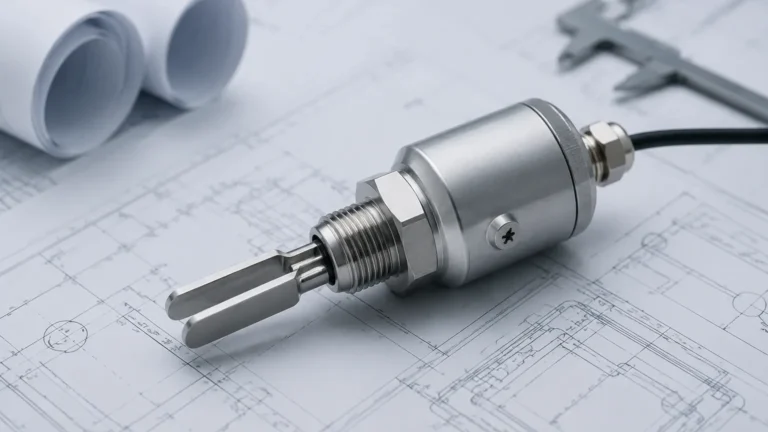
Level Switch 8110
Level Switch 8110
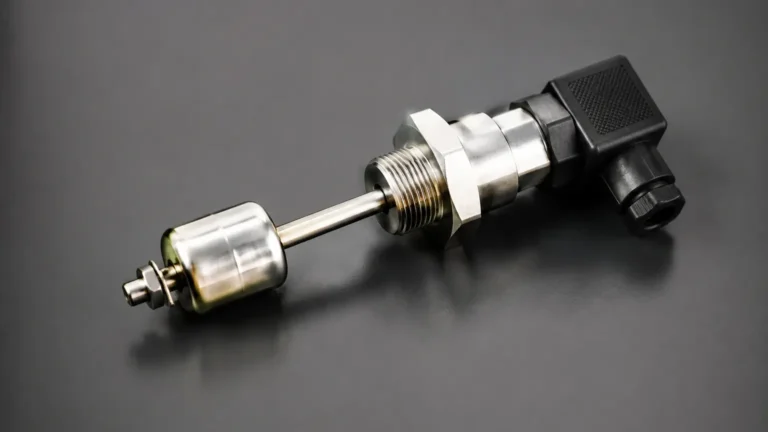
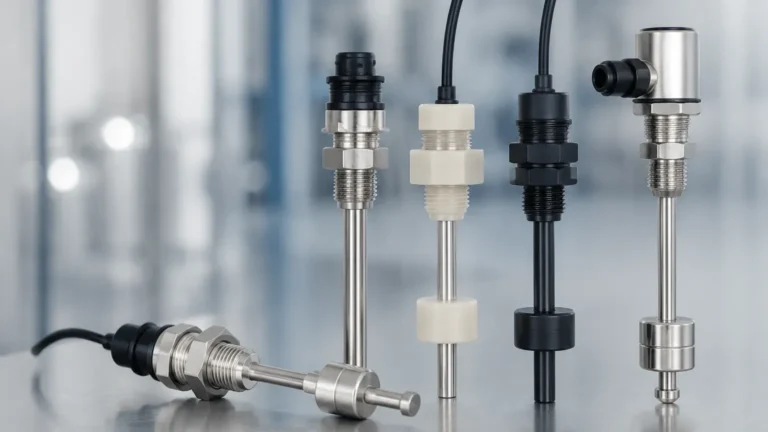
In industrial process automation, point level detection serves as a critical safety and operational layer. Among the various technologies available, the level switch 8110 has established itself as a standard for liquid applications. This vibrating level switch, often referred to as a tuning fork sensor, provides a reliable method for detecting the presence or absence of liquids in tanks, pipes, and vessels. As a specialized manufacturer, Welk provides high-performance Level Switches designed to meet the rigorous demands of modern industrial environments.
Understanding the technical nuances of the 8110 series is essential for engineers and plant managers who require precise overfill protection or dry-run prevention. This guide explores the measurement principles, technical specifications, and practical application considerations for this essential instrument.
Measurement Principle: The Vibrating Fork Technology
The level switch 8110 operates on the principle of frequency shift. At the heart of the device is a tuning fork—a pair of metal tines—that is piezoelectrically energized. These tines are driven to vibrate at their mechanical resonance frequency in the air.
Piezoelectric Excitation
Inside the sensor housing, a piezoelectric crystal is subjected to an alternating electric current, causing it to expand and contract. This mechanical energy is transferred to the fork tines. When the tines are in the air (the "empty" state), they vibrate at a high, stable frequency (typically around 1,000 Hz to 1,200 Hz depending on the specific model design).
Frequency Shift Detection
When the liquid medium reaches the level of the fork and submerses the tines, the density of the liquid dampens the vibration. This immersion causes the resonance frequency to drop significantly. The integrated electronics of the 8110 monitor this frequency change in real-time. Once the frequency falls below a predefined threshold, the electronics trigger a switching command.
Because this method relies on physical damping rather than electrical properties, the level switch 8110 is largely unaffected by the chemical or physical properties of the liquid, such as dielectric constant, conductivity, or turbulence. This makes it a more versatile choice than capacitive or conductive sensors in many scenarios.
Technical Specifications and Evaluation Criteria
When evaluating the level switch 8110 for a specific project, engineers must look beyond the basic function and consider the materials and environmental tolerances. The 8110 is typically characterized by its compact design, making it suitable for installation in tight spaces or small-diameter pipes.
Material Composition
Standard models are usually constructed from 316L stainless steel (1.4404/1.4435). This material offers excellent corrosion resistance for water treatment and general chemical applications. For more aggressive media, specialized coatings or high-alloy materials may be required.
Pressure and Temperature Ranges
* Process Pressure: Most 8110 units are rated for pressures ranging from -1 bar to 64 bar (-14.5 psi to 928 psi), allowing for use in both vacuum and high-pressure vessels.
* Process Temperature: Standard operating temperatures typically range from -40°C to +150°C (-40°F to +302°F). High-temperature variants are often available for specialized steam or hot oil applications.
Selection Table: Comparing Technology Options
| Feature | Level Switch 8110 (Vibrating) | Float Switch | Ultrasonic Switch |
| :— | :— | :— | :— |
| Moving Parts | None (Solid-state) | Yes (Mechanical) | None |
| Media Density | Min. 0.5 g/cm³ | High dependency | Low dependency |
| Foam Sensitivity | Low | High | High |
| Build-up Resistance| Moderate | Low | Moderate |
| Maintenance | Very Low | Moderate | Low |
| Installation | Any orientation | Vertical/Horizontal | Vertical |
Key Applications for the Level Switch 8110
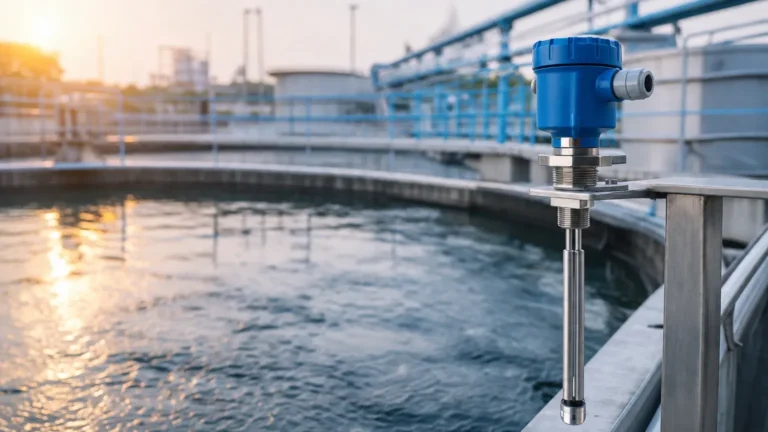
The versatility of the level switch 8110 allows it to be used across diverse industries. Its primary role is to act as a point level indicator for liquids with a density greater than 0.5 g/cm³.
Overfill Protection
In the chemical and oil and gas sectors, preventing tank overfills is a primary safety requirement. The 8110 is often used as a secondary safety high-level alarm. If the primary continuous level transmitter fails, the 8110 provides a redundant, independent signal to shut down inlet valves or trigger an emergency alarm.
Pump Dry-Run Protection
Centrifugal pumps can be severely damaged if they operate without fluid. Installing an 8110 in the suction line or at the bottom of a supply tank ensures the pump is automatically deactivated if the liquid level drops below the minimum threshold, protecting expensive equipment from cavitation and thermal damage.
Leak Detection
Due to its compact size, the 8110 is frequently installed in double-walled tanks or containment bunds. It remains in the "empty" state until a leak occurs, at which point the presence of liquid triggers the switch to alert operators of a primary containment failure.
Installation Guidelines and Considerations
Proper installation is paramount to the reliability of any level switch. For the level switch 8110, several engineering factors must be considered during the design phase.
Orientation and Positioning
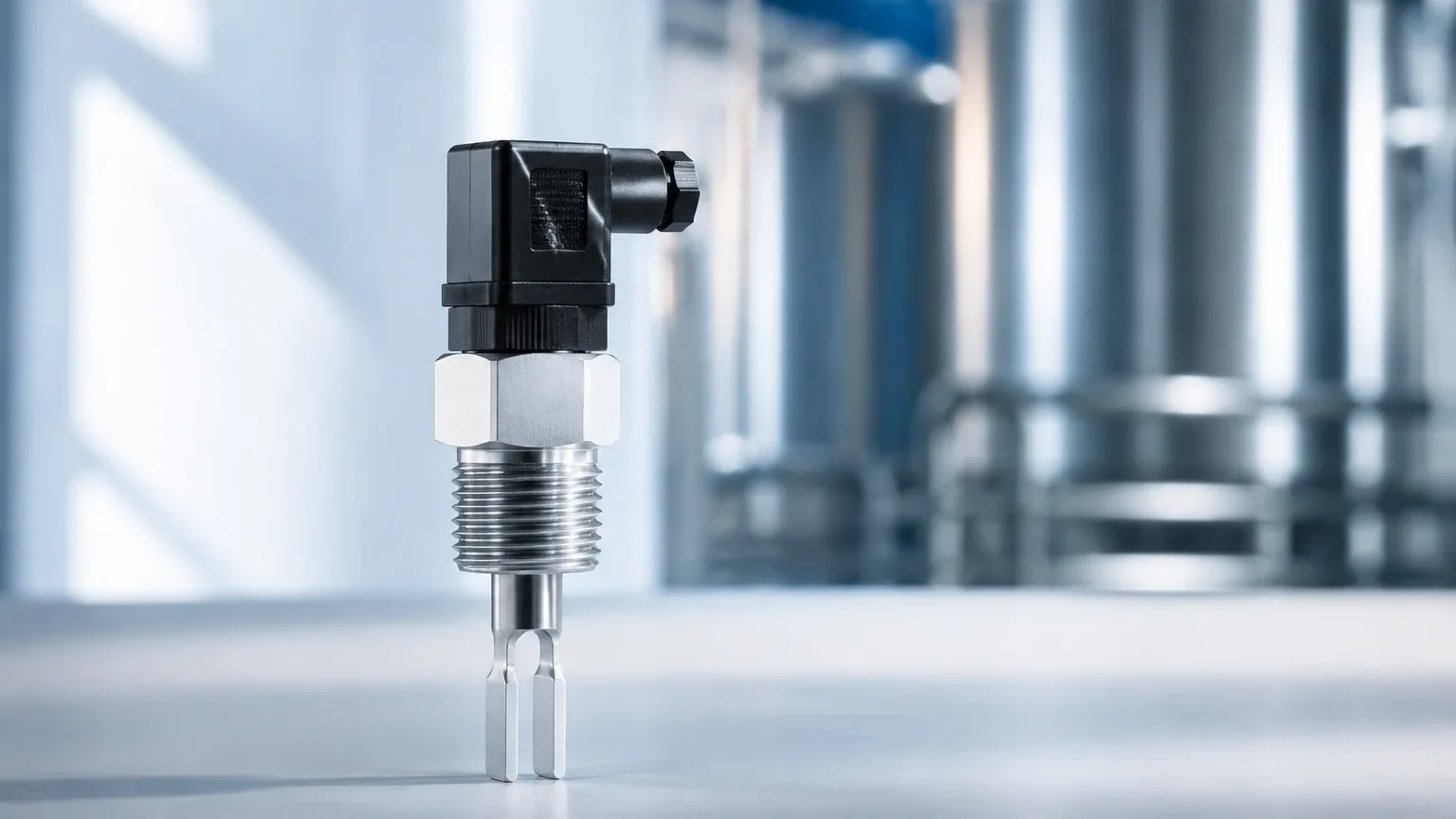
The 8110 can be mounted in any orientation—top-down, side-mounted, or bottom-up. However, side mounting is most common for point level detection. When mounting horizontally, the tines should be oriented so that the liquid can easily drain off them. Most units include a marking (usually a notch or a dot) on the hexagonal process connection to indicate the orientation of the tines. Ensuring the tines are vertical (side-by-side) prevents liquid from pooling between them, which could cause a false "full" reading.
Avoiding Flow and Turbulence
If the sensor is installed in a pipe or near a tank inlet, it should not be placed directly in the path of the incoming flow. High-velocity liquid hitting the tines can cause mechanical wear or false frequency shifts. If installation in a flow path is unavoidable, a protective baffle or shield should be installed to divert the direct impact of the liquid.
Wiring and Output Options
The level switch 8110 is typically available with various electronic outputs, including:
* Transistor (PNP/NPN): Ideal for direct connection to a PLC.
* Relay (DPDT): Suitable for switching higher loads or providing dry contacts for alarm systems.
* Two-wire (Contactless): Designed for series connection with a load, similar to a standard proximity switch.
Limitations and Risks
While the level switch 8110 is highly robust, it is not a universal solution for every application. Engineers should be aware of the following limitations:
1. High Viscosity and Coating: Extremely viscous liquids (like heavy resins or molasses) may cling to the tines. If the material creates a bridge between the two tines, the sensor may stay in the "covered" state even after the tank is emptied. In these cases, a different technology or a larger fork design might be necessary.
2. Solids and Slurries: While designed for liquids, the 8110 can handle small amounts of suspended solids. However, large chunks or fibrous materials can become wedged between the tines, physically preventing vibration and causing a fault.
3. Aerated Liquids: If a liquid is heavily aerated (essentially a foam), the density may drop below the sensor's minimum detection threshold (typically 0.5 to 0.7 g/cm³), leading to a failure to detect the level.
Maintenance and Troubleshooting
One of the greatest advantages of the 8110 series is that it requires virtually no maintenance because it has no moving parts to wear out or jam. However, periodic checks are recommended as part of a plant's safety protocol.
* Visual Inspection: During scheduled shutdowns, inspect the tines for signs of corrosion, erosion, or material build-up.
* Functional Test: Most modern 8110 switches include a test magnet or a button on the electronics module that allows the user to simulate a covered state. This verifies that the electronics and the output relay are functioning correctly.
* Troubleshooting False Alarms: If the switch indicates a full state when the tank is empty, check for material bridging between the tines. Cleaning the fork with a soft brush or a compatible solvent usually resolves the issue.
Frequently Asked Questions (FAQ)
Q: Can the level switch 8110 be used in hygienic applications?
A: Yes, many versions of the 8110 are available with polished stainless steel surfaces and hygienic process connections (such as Tri-Clamp or Varivent) to meet food, beverage, and pharmaceutical standards.
Q: Does the orientation of the fork matter?
A: Yes. For horizontal installation, the tines should be positioned so that the flat surfaces are vertical. This ensures that the liquid drains away from the gap between the tines when the level drops.
Q: Is it possible to adjust the sensitivity of the 8110?
A: Some models feature a sensitivity switch on the electronics insert, allowing the user to choose between different density ranges (e.g., >0.5 g/cm³ or >0.7 g/cm³). This is useful when dealing with light oils or heavily aerated liquids.
Q: Can it detect the interface between two liquids?
A: Generally, no. The 8110 is a point level switch designed to detect the presence of liquid versus gas. For interface detection (e.g., oil on top of water), specialized Level Switches or continuous measurement probes are required.
Conclusion
The level switch 8110 remains a cornerstone of industrial level control due to its reliability, ease of installation, and independence from media properties. By understanding the piezoelectric vibration principle and adhering to proper installation practices, facilities can ensure long-term, maintenance-free operation. For projects requiring high-quality instrumentation, Welk offers a comprehensive range of solutions tailored to specific industrial needs. Before selecting a device, always confirm the process temperature, pressure, and media density to ensure the chosen 8110 configuration is optimized for your application.