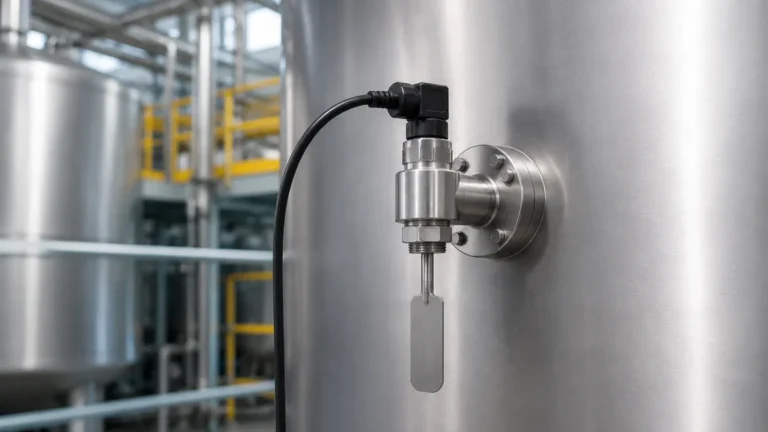
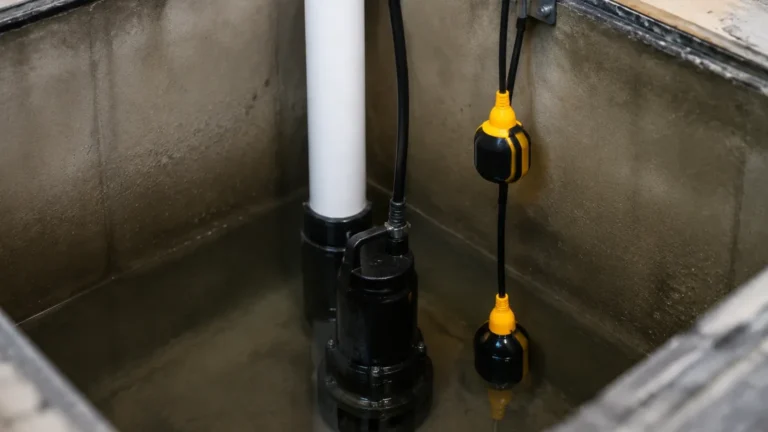
Level Switch Fork Type
Level Switch Fork Type
In the field of industrial automation and process control, point-level detection is a critical requirement for safety, inventory management, and pump protection. Among the various technologies available, the level switch fork type—commonly known as a vibrating fork level switch—has emerged as one of the most reliable and versatile solutions. This instrument is designed to detect the presence or absence of liquids or granulated solids at a specific height within a vessel, tank, or pipe.
Unlike traditional float switches that rely on mechanical movement or capacitive sensors that depend on the dielectric constant of the medium, the level switch fork type utilizes the principle of frequency shift. This makes it largely immune to changes in temperature, pressure, foam, or the electrical properties of the material being measured. This guide provides a detailed technical overview of how these instruments operate, how to select the correct model, and the best practices for installation in industrial environments.
Measurement Principles: The Physics of Vibration
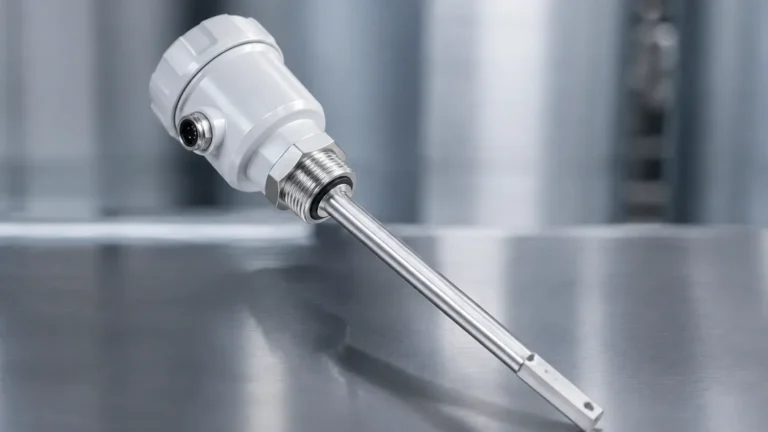
To understand why the level switch fork type is so effective, one must look at the underlying physics of its operation. The core of the device consists of two metallic tines (the "fork") that are driven into vibration by an internal piezoelectric crystal assembly.
Resonant Frequency
In a dry state (when the tines are surrounded by air), the fork vibrates at its natural resonant frequency. For liquid applications, this frequency is typically around 1,000 Hz to 1,200 Hz. For solid or powder applications, the frequency is often lower, around 100 Hz to 150 Hz, to accommodate the different damping characteristics of granular materials.
The Frequency Shift
When the medium (liquid or solid) rises and covers the tines, the physical mass of the material dampens the vibration. This causes a significant shift in the vibration frequency. An internal electronic circuit continuously monitors this frequency. Once the frequency drops below a pre-defined threshold, the electronics interpret this as the "covered" state and trigger an output signal, such as a relay contact, a transistor switch (PNP/NPN), or a change in current.
Advantages of the Principle
Because the sensor relies on mechanical vibration rather than electrical conductivity or buoyancy, it offers several distinct advantages:
- Density Sensitivity: It can detect very light liquids or powders as long as there is enough mass to change the frequency.
- Turbulence Resistance: It is not easily affected by splashing or surface agitation.
- Foam Rejection: Many fork designs can be tuned to ignore light foam and only trigger when the actual liquid level reaches the tines.
Key Components and Construction
A professional-grade Level Switches fork type assembly consists of three primary sections:
1. The Sensor Head (The Fork): Usually manufactured from Stainless Steel 316L for corrosion resistance. For highly aggressive chemicals, specialized coatings like PFA (Perfluoroalkoxy) or ECTFE (Halar) are applied to protect the metal.
2. The Process Connection: This is the interface between the sensor and the tank. Common options include threaded connections (G1", G3/4", or NPT) and various flange sizes (DN25, DN50, etc.) to meet pressure requirements.
3. The Housing and Electronics: The housing, typically made of aluminum alloy or stainless steel, contains the piezoelectric drive and the signal processing unit. It is rated for environmental protection (e.g., IP66 or IP67) and may include ATEX/IECEx certifications for explosive atmospheres.
Technical Selection Criteria
Choosing the right level switch fork type requires a thorough understanding of the process conditions. The following table provides a comparison of selection factors for different industrial applications.
Selection Table for Fork Type Level Switches
| Parameter | Liquid Applications | Solid/Powder Applications |
| :— | :— | :— |
| Minimum Density | Typically > 0.5 g/cm³ (options for 0.4 g/cm³) | Typically > 0.01 g/cm³ |
| Viscosity Limit | Up to 10,000 mm²/s (cSt) | N/A (Granule size matters) |
| Max Pressure | Up to 64 bar (6.4 MPa) | Up to 10 bar (1.0 MPa) |
| Max Temperature | -50°C to +150°C (Standard) | -40°C to +150°C (Standard) |
| Typical Media | Water, oils, acids, alkalis, fuels | Flour, cement, sand, plastic pellets |
| Output Options | Relay, PNP/NPN, 2-wire AC/DC | Relay, PNP/NPN |
Installation Considerations and Best Practices
Proper installation is paramount to ensuring the longevity and accuracy of a level switch fork type. Engineers must consider the flow of material and the physical orientation of the sensor.
Orientation
- For Liquids: The sensor can be installed horizontally (side of the tank) or vertically (top or bottom). When installed horizontally, the tines should be oriented so that the flat surfaces are vertical. This prevents liquid from "bridging" between the tines, which could cause a false trigger as the level recedes.
- For Solids: Vertical installation from the top is preferred. If side-mounted, a protective shield or "baffle" is often recommended above the fork to protect it from the direct impact of falling material during filling cycles.
Flow and Turbulence
Avoid installing the switch directly in the path of the inlet flow. If the tines are subjected to constant high-velocity impact, they may suffer from mechanical fatigue or provide erratic readings. If the tank has an agitator, the switch should be placed in a location where the mechanical stress from the moving fluid is minimized.
Build-up and Coating
While the vibrating action of the fork provides a degree of self-cleaning, extremely viscous or "sticky" materials can eventually build up between the tines. If the material hardens, it may prevent the fork from vibrating even when the tank is empty. In such cases, choosing a fork with a wider tine gap or a specialized coating is necessary.

Limitations of the Technology
While the level switch fork type is highly versatile, it is not suitable for every application:
- Extremely High Viscosity: If a liquid is so thick that it behaves like a solid paste (e.g., heavy molasses or thick sludge), the fork may remain damped even after the level drops.
- Large Granules: In solid applications, if the particle size is larger than the gap between the tines (e.g., large rocks or wood chips), the material can become physically wedged, leading to a permanent "covered" signal.
- Vacuum Applications: While they work in pressure, some ultra-low vacuum applications can interfere with the acoustic properties of the vibration, though this is rare in standard industrial processes.
Maintenance and Troubleshooting
One of the primary reasons for the popularity of the level switch fork type is its low maintenance requirement. Since there are no moving parts like pivots or hinges, mechanical wear is non-existent. However, periodic checks are recommended:
1. Visual Inspection: Check for corrosion on the tines or physical damage from debris.
2. Cleaning: If the medium is prone to scaling or crystallization, the tines should be cleaned periodically to ensure the resonant frequency remains within the calibrated range.
3. Electronic Testing: Most modern switches, such as those manufactured by Welk, include a local LED indicator (Green for power, Red/Yellow for switch status). A manual test magnet or button is often provided to simulate a covered state for loop testing.
Frequently Asked Questions (FAQ)
Q: Can a liquid level switch fork type be used for powders?
A: Generally, no. Liquid forks vibrate at a much higher frequency. Powders require a lower frequency and a different fork geometry to ensure the material provides enough damping to trigger the electronics. Always use a dedicated solids version for powders.
Q: Does the dielectric constant of the liquid affect the measurement?
A: No. This is a mechanical measurement. Whether the liquid is conductive (like water) or non-conductive (like oil), the level switch fork type will function correctly as long as the density is sufficient.
Q: What happens if there is heavy foam on the surface?
A: Standard vibrating forks are designed to ignore low-density foam. They will only trigger when the tines are immersed in the actual liquid. This makes them superior to ultrasonic or capacitive switches in foaming applications.
Q: Can the fork be shortened or lengthened in the field?
A: No. The fork length and mass are precisely calibrated to achieve a specific resonant frequency. Cutting or welding the tines will destroy the instrument's ability to function. If a different length is required, an extended tube version must be ordered from the manufacturer.
Conclusion
The level switch fork type represents a robust, "fit-and-forget" solution for point-level detection across the water treatment, chemical, and food and beverage industries. By understanding the density and viscosity of the process medium, and following strict installation guidelines regarding orientation and flow, engineers can implement a safety system that protects equipment and prevents environmental spills. For those seeking high-performance industrial measurement tools, exploring the range of Level Switches is the first step toward optimizing process reliability.