Level Sensor Zigbee
Level Sensor Zigbee
In the landscape of industrial automation and the Internet of Things (IoT), the demand for wireless data transmission has grown significantly. A level sensor zigbee configuration offers a specialized solution for monitoring liquid and solid levels in environments where traditional cabling is either cost-prohibitive or physically impractical. By utilizing the Zigbee protocol—a low-power, wireless mesh network standard based on IEEE 802.15.4—engineers can deploy dense networks of sensors that communicate reliably over short to medium distances.
For process engineers and facility managers, understanding the integration of Zigbee technology with level measurement instruments is essential for optimizing inventory management, water treatment, and chemical processing. This guide examines the measurement principles, selection criteria, and practical installation requirements for Zigbee-enabled level sensors and their relationship with traditional point-level controls.
Measurement Principles for Wireless Level Sensors
Before selecting a wireless protocol like Zigbee, it is critical to understand the underlying measurement physics of the sensor. The Zigbee component serves only as the communication layer; the accuracy and reliability of the data depend on the sensing technology employed.
Ultrasonic Level Measurement
Ultrasonic sensors operate on the time-of-flight principle. The sensor emits high-frequency sound waves that travel through the air, bounce off the surface of the medium, and return to the transducer. The time taken for the echo to return is proportional to the distance. In a level sensor zigbee setup, the onboard microprocessor calculates the level and transmits the digital value via the Zigbee mesh.
* Pros: Non-contact, cost-effective for water-based liquids.
* Cons: Sensitive to foam, heavy steam, and vacuum conditions.
Radar (FMCW and Pulse) Level Measurement
Radar sensors use electromagnetic waves (typically in the 26GHz or 80GHz range). Like ultrasonic sensors, they measure time-of-flight, but since they use radio waves rather than sound, they are unaffected by air temperature fluctuations, pressure, or dust. This makes them ideal for volatile chemicals or silos containing bulk solids.
* Pros: Extremely accurate, works in high-pressure/temperature environments.
* Cons: Higher initial cost compared to ultrasonic.
Hydrostatic Pressure Measurement
Hydrostatic sensors are contact-based. They are submerged at the bottom of a tank and measure the pressure exerted by the liquid column above them. This pressure is directly proportional to the liquid height and density. The data is then converted into a signal and sent through a Zigbee gateway.
* Pros: Simple installation for deep wells or vented tanks.
* Cons: Requires contact with the medium; density changes affect accuracy.
Point Level Detection and Wireless Integration
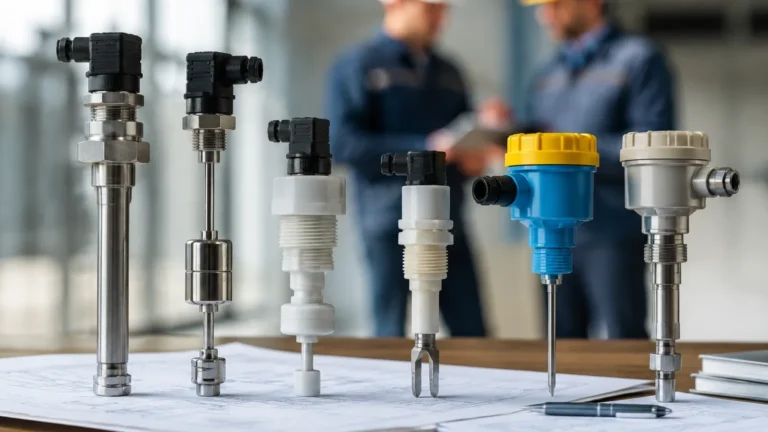
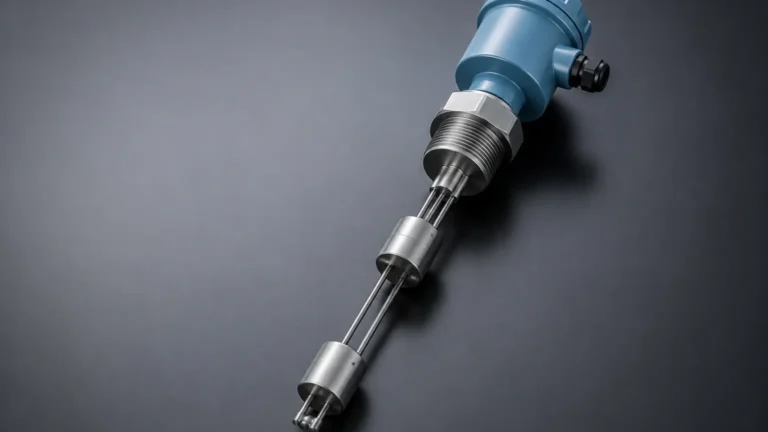
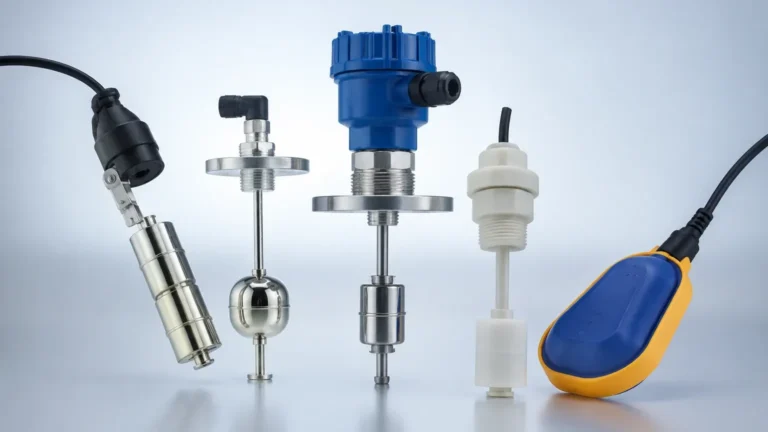
While continuous sensors provide real-time level data, industrial safety often requires discrete alerts. Level Switches are frequently used alongside continuous Zigbee sensors to provide redundant high-level or low-level alarms. In a wireless ecosystem, these switches can be integrated with Zigbee transmitters to alert operators immediately if a critical threshold is reached, preventing overflows or pump dry-runs.
Zigbee vs. Other Wireless Protocols
When evaluating a level sensor zigbee solution, it is helpful to compare it against other common wireless standards used in industrial settings.
| Feature | Zigbee | LoRaWAN | Wi-Fi | 4G/5G (Cellular) |
| :— | :— | :— | :— | :— |
| Topology | Mesh | Star | Star | Star |
| Power Consumption | Very Low | Ultra-Low | High | Moderate/High |
| Range (Line of Sight) | 10m – 100m | 2km – 15km | 30m – 100m | Global (via towers) |
| Data Rate | 250 kbps | 0.3 – 50 kbps | Up to 1 Gbps | High |
| Best Use Case | Dense local sensor networks | Remote, wide-area monitoring | High-bandwidth video/data | Moving assets/Remote sites |
Zigbee’s primary advantage in level measurement is its mesh networking capability. In a mesh, each sensor node can act as a router, passing data from distant sensors back to the central gateway. This self-healing property ensures that if one node fails, the data finds an alternative path, which is vital in complex industrial plants with metal obstructions.
Selection Criteria for Level Sensor Zigbee Systems
Choosing the right hardware requires a balance between the physical properties of the medium and the requirements of the wireless network.
1. Battery Life and Power Management
Most Zigbee level sensors are battery-powered to maintain their wireless advantage. Engineers should confirm the reporting interval. For example, a sensor reporting every 15 minutes may last 3–5 years on a standard lithium battery, whereas a sensor reporting every 10 seconds may deplete the battery in months. Look for sensors with "sleep modes" that only wake up to measure and transmit.
2. Network Density and Range
Zigbee operates primarily on the 2.4 GHz ISM band. While this is globally license-free, it has limited penetration through thick concrete or metal walls. If the tanks are located inside a reinforced structure, you may need to install Zigbee repeaters or ensure that the mesh is dense enough to relay signals around obstacles.
3. Environmental Compatibility
Industrial level sensors must withstand harsh conditions. Ensure the sensor housing meets IP67 or IP68 standards for moisture protection. For chemical tanks, the wetted materials (such as PTFE, PVDF, or Stainless Steel) must be compatible with the stored substance. If the sensor is used in explosive atmospheres (e.g., oil and gas), it must carry ATEX or IECEx intrinsic safety certifications.
4. Integration with Existing Systems
Confirm that the Zigbee gateway supports standard industrial protocols like Modbus TCP, MQTT, or OPC UA. This allows the level data to be seamlessly integrated into a PLC (Programmable Logic Controller) or SCADA system for process control.
Practical Selection Table
| Application | Recommended Sensor Type | Communication | Key Consideration |
| :— | :— | :— | :— |
| Water Storage Tanks | Ultrasonic | Zigbee Mesh | Avoid if heavy foam is present. |
| Chemical Processing | Radar (Non-contact) | Zigbee Mesh | Check chemical compatibility of the flange/face. |
| Fuel/Oil Tanks | Hydrostatic | Zigbee Mesh | Requires intrinsic safety (IS) rating. |
| Grain Silos | Radar (High Frequency) | Zigbee Mesh | Dust penetration is critical. |
| High-Level Alarm | Level Switches | Wired or Zigbee | Essential for overfill prevention. |
Installation Considerations and Best Practices
Successful deployment of a level sensor zigbee network depends as much on physical placement as it does on software configuration.
Antenna Orientation and Signal Path
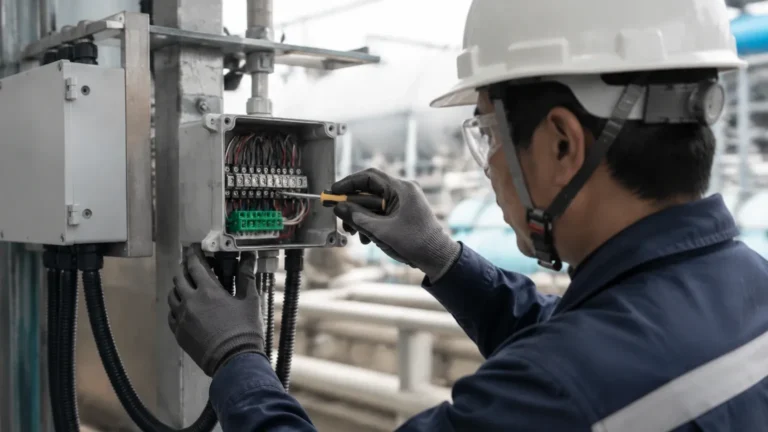
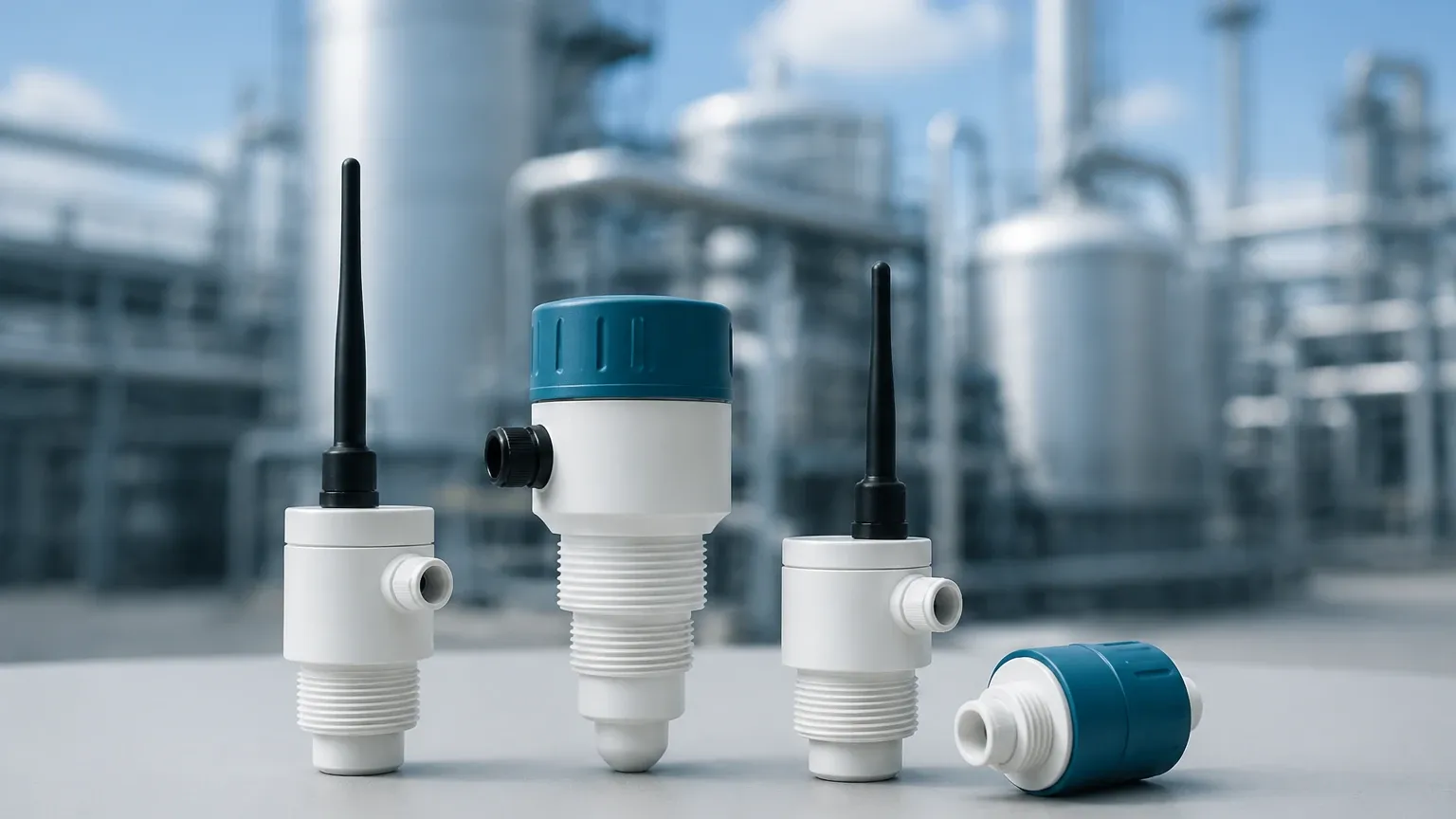
For Zigbee sensors, the antenna should ideally be positioned away from large metal surfaces. If the sensor is mounted on a metal tank nozzle, the signal may be attenuated. Using an external antenna or ensuring a clear line of sight to the nearest mesh router can significantly improve reliability.
Avoiding Internal Obstructions
For ultrasonic and radar sensors, the "beam angle" is a critical factor. Ensure the sensor is not mounted too close to the tank wall or near internal structures like ladders, agitators, or inflow pipes. These can cause false echoes. Most modern sensors allow for "false echo suppression" via software, but proper physical placement remains the best practice.
Gateway Placement
The Zigbee gateway (the coordinator) should be placed in a central location, ideally at a higher elevation than the sensors. In large facilities, multiple gateways may be required to cover the entire site, or dedicated Zigbee routers (mains-powered) should be placed at strategic intervals to strengthen the mesh.
Limitations and Risks
While Zigbee is a robust protocol, it is not a "one-size-fits-all" solution. Engineers should be aware of the following limitations:
* 2.4 GHz Congestion: Since Wi-Fi and Bluetooth also operate on the 2.4 GHz band, interference can occur in radio-congested environments. Zigbee uses clear channel assessment to mitigate this, but it is a factor to monitor.
* Bandwidth Constraints: Zigbee is designed for small packets of data (level readings, temperature, battery status). It cannot handle high-speed data or video.
* Latency: In a large mesh network with many "hops," there may be a slight delay (milliseconds to seconds) in data transmission. For high-speed safety shutdowns, a hard-wired level switch is often preferred over a wireless sensor.
Frequently Asked Questions (FAQ)
Q: How many sensors can I connect to a single Zigbee gateway?
A: Theoretically, a Zigbee network can support over 65,000 nodes. However, for industrial reliability and low latency, most engineers limit a single gateway to 50–100 nodes depending on the reporting frequency and mesh depth.
Q: What is the typical range between two Zigbee nodes?
A: Indoors, the range is typically 10 to 30 meters (33 to 100 feet) depending on walls and machinery. Outdoors with a clear line of sight, it can reach up to 100 meters (328 feet).
Q: Can I use a level sensor zigbee for custody transfer?
A: Generally, no. Custody transfer (buying/selling fluids based on level) requires extremely high-precision radar or mechanical gauges with specific legal certifications. Zigbee sensors are typically used for process monitoring and inventory management.
Q: What happens if the Zigbee network goes down?
A: Most industrial Zigbee sensors have local data logging capabilities. Once the network is restored, the sensor can upload the buffered data. However, for critical control loops, a wired backup or a dedicated Level Switches system is recommended to maintain safety.
Conclusion
The implementation of a level sensor zigbee system provides a flexible, scalable, and cost-effective method for industrial level monitoring. By understanding the strengths of the mesh network and selecting the appropriate sensing technology—whether ultrasonic, radar, or hydrostatic—facilities can achieve high-resolution data without the infrastructure burden of traditional wiring. When combined with reliable point-level controls like level switches, Zigbee-enabled sensors form a comprehensive solution for modern industrial automation.