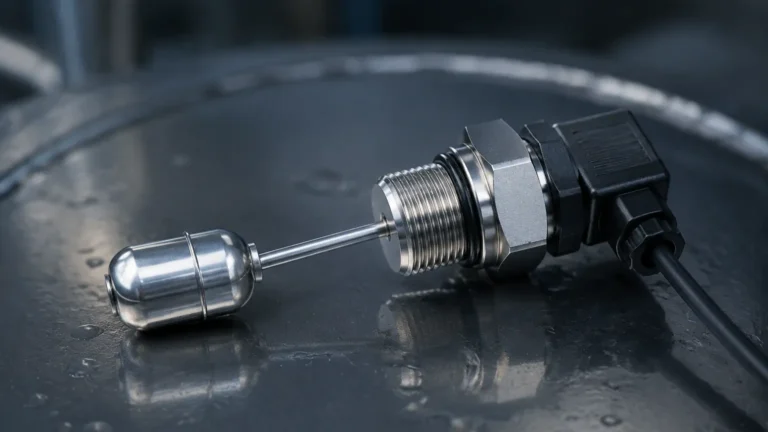
Level Switch 8110 Burkert
Level Switch 8110 Burkert
In industrial process automation, point level detection serves as a critical safety and operational layer. Among the various technologies available, the vibrating level switch—often referred to as a tuning fork sensor—is widely regarded for its reliability in liquid applications. The level switch 8110 burkert is a prominent example of this technology, designed for high-level or low-level alarm functions and dry-run protection.
For engineers and procurement professionals, understanding the underlying physics, technical specifications, and installation constraints of these devices is essential for ensuring long-term system integrity. This guide provides a technical deep dive into the 8110 series and how it fits into the broader landscape of industrial Level Switches.
Understanding the Vibrating Tuning Fork Principle
The level switch 8110 burkert operates on the principle of a vibrating fork. This technology is classified as a "point level" measurement because it detects the presence or absence of a medium at a specific height, rather than providing a continuous 0–100% level reading.
The Piezoelectric Drive
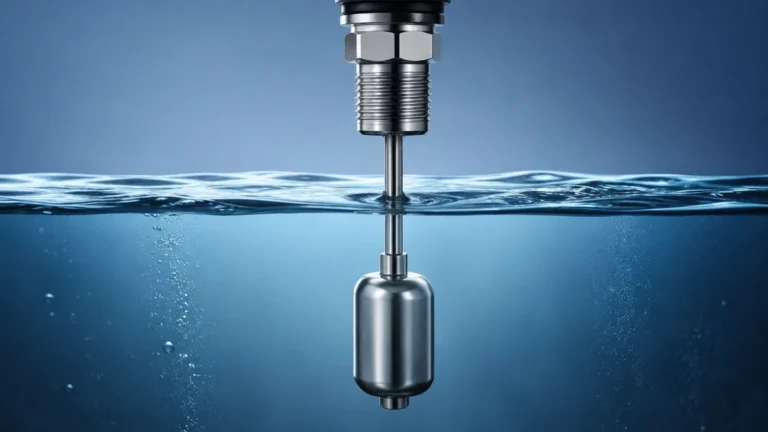
Inside the sensor housing, a piezoelectric crystal is used to excite the tuning fork at its mechanical resonance frequency. In air, the fork vibrates freely at a high frequency. When the fork becomes submerged in a liquid, the density of the medium dampens the vibration, causing the frequency to drop.
Frequency Shift Detection
The integrated electronics continuously monitor this frequency. Once the frequency shift crosses a predefined threshold, the device changes its switching state. This method is highly advantageous because it does not rely on the electrical properties of the liquid, such as dielectric constant or conductivity. As long as the medium has sufficient density to dampen the vibration, the switch will function reliably.
Technical Overview of the Level Switch 8110 Burkert
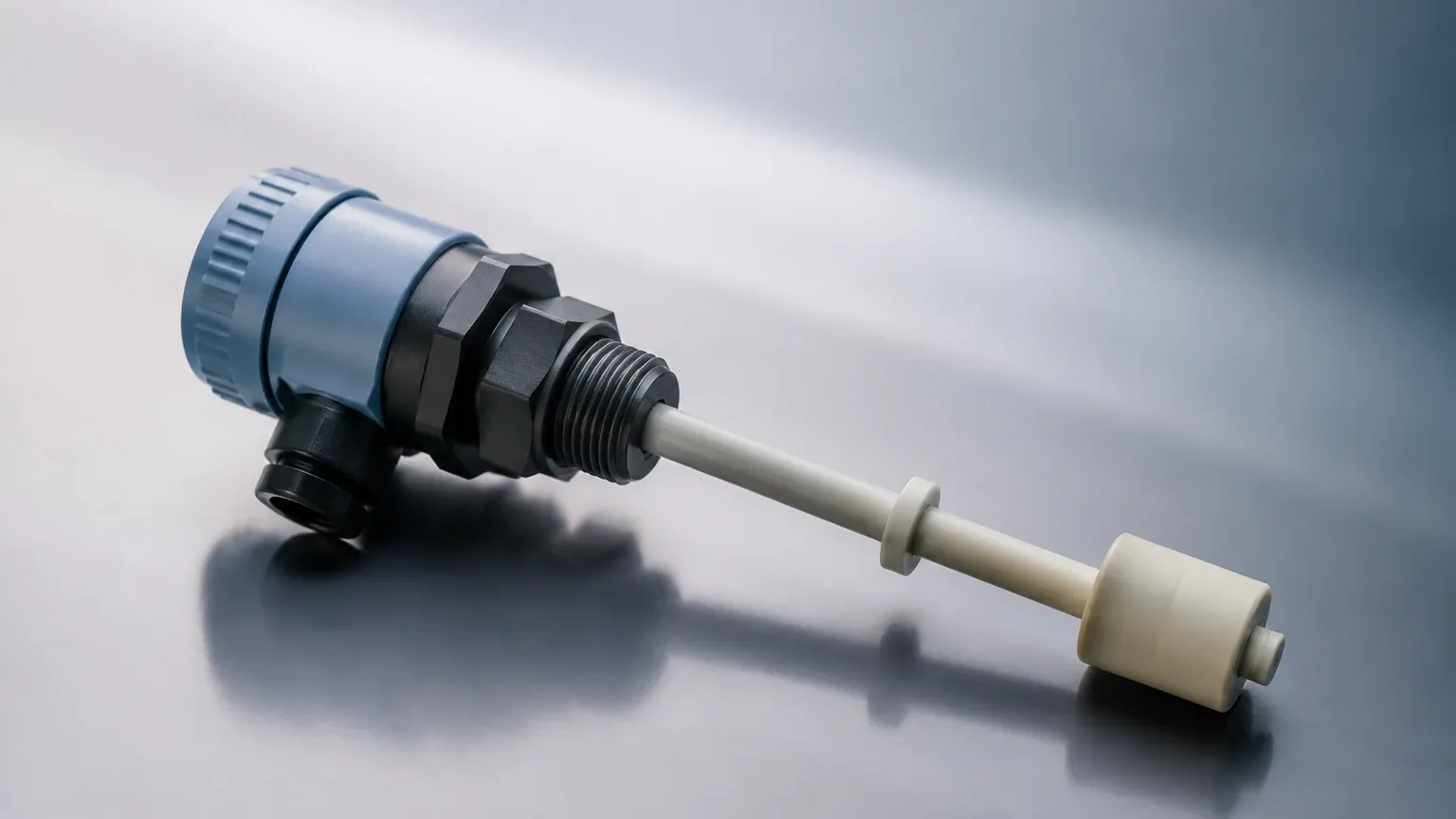
The 8110 is engineered as a compact, liquid-only level switch. It is frequently selected for applications where space is limited or where traditional float switches might fail due to mechanical sticking or turbulence.
Material Construction
The wetted parts are typically constructed from 316L stainless steel (1.4404/1.4435), providing excellent resistance to corrosion in water treatment and mild chemical environments. The housing is often made of plastic (PPS) or stainless steel, depending on the specific variant and environmental requirements.
Key Specifications
* Media Density: Generally requires a minimum density of 0.7 g/cm³ (700 kg/m³).
* Process Temperature: Standard ranges typically cover -40°C to +100°C (-40°F to +212°F).
* Process Pressure: Capable of operating in environments from vacuum up to 64 bar (928 psi), depending on the process connection.
* Viscosity: Can handle liquids with viscosities up to 10,000 mm²/s, though high-viscosity fluids may require specific mounting orientations to ensure the medium drains off the forks.
Electrical Outputs
The device is available with several output configurations to interface with PLCs (Programmable Logic Controllers) or direct loads:
1. Transistor (PNP/NPN): Ideal for direct connection to digital PLC inputs.
2. Contactless Electronic Switch: Often used for switching AC/DC loads in series.
3. IO-Link: Modern versions support IO-Link for enhanced diagnostics and remote parameterization.
Key Selection Criteria for Industrial Level Switches
When specifying a level switch 8110 burkert or a similar vibrating fork sensor, engineers must evaluate several environmental and process factors. The following table compares common point-level technologies used in the industry.
| Technology | Best For | Limitations | Maintenance Needs |
| :— | :— | :— | :— |
| Vibrating Fork (8110) | Low-viscosity liquids, turbulent surfaces, bubbles. | Not for highly viscous or sticky media. | Low; no moving parts. |
| Float Switch | Simple water tanks, non-critical low-cost apps. | Moving parts can jam; sensitive to turbulence. | High; prone to scaling/sticking. |
| Ultrasonic Switch | Non-contact detection, aggressive chemicals. | Affected by heavy foam and vapor. | Low; non-contact. |
| Capacitive Switch | Powders, granules, and liquids. | Sensitive to coating/build-up on the probe. | Moderate; requires calibration. |
Density and Viscosity Considerations
The most critical factor for the 8110 is the density of the liquid. If the medium is too light (e.g., certain liquefied gases), the frequency shift may be too small to trigger the switch. Similarly, if the liquid is extremely viscous (like heavy molasses), it may "bridge" the two tines of the fork, causing a false positive signal even after the level has dropped.
Installation and Mounting Best Practices
Proper installation is the difference between a reliable safety system and a source of constant nuisance alarms. For the level switch 8110 burkert, the following engineering guidelines should be followed:
Orientation
* Top Mounting: The sensor is installed vertically. This is common for high-level overfill protection. Ensure the fork tines are oriented so that the liquid can easily drain off when the level recedes.
* Side Mounting: The sensor is installed horizontally through the tank wall. In this configuration, the tines should be oriented vertically (one above the other) to prevent the liquid from resting on the flat surface of the forks, which could cause a delay in switching.
Avoiding Interference
* Inflow Streams: Never install the switch directly in the path of a filling pipe. The force of the incoming liquid can cause mechanical stress or false triggers.
* Agitators and Bubbles: While vibrating forks are more resistant to turbulence than floats, they should still be positioned away from heavy cavitation or agitator blades to prevent physical damage.
Weld-in Sockets and Threads
The 8110 typically uses standard G or NPT threads. For hygienic applications in the food or pharmaceutical sectors, specific weld-in adapters are required to ensure a flush-mounted, bacteria-free seal.
Common Applications and Process Limitations
Applications
1. Overfill Prevention: Acting as a redundant safety switch to prevent tank overflows in water treatment plants.
2. Dry-Run Protection: Installed in pipelines to ensure pumps do not run without fluid, which would lead to overheating and seal failure.
3. Leak Detection: Placed in collection sumps or double-walled tanks to detect the presence of escaped process fluids.
Limitations
Despite its versatility, the level switch 8110 burkert is not a universal solution. It should not be used in the following scenarios:
* Bulk Solids: This specific model is tuned for liquid densities. For powders or grains, a dedicated solids vibrating switch with larger, more robust tines is required.
* Heavy Coating: If the process fluid crystallizes or leaves a thick, hard coating on the forks, the vibration will be permanently dampened, leading to a permanent "covered" signal.
* Extreme Aeration: If the liquid is essentially a light foam with very low density, the sensor may not detect it.
Maintenance and Troubleshooting Guide
Because vibrating Level Switches have no moving parts, they are largely maintenance-free. However, periodic checks are recommended in critical safety loops.
Visual Inspection
During scheduled shutdowns, inspect the fork tines for signs of corrosion, pitting, or material build-up. Even a small amount of hard scale can change the mass of the fork and affect its resonance.
Functional Testing
Most modern switches include a test function or a magnetic trigger point on the housing. By holding a magnet to the designated area, the electronics simulate a "covered" state, allowing the operator to verify that the PLC and downstream alarms are responding correctly.
Troubleshooting Common Issues
* Switch won't trigger: Check if the liquid density is below 0.7 g/cm³. Ensure the power supply matches the requirements (typically 10–35V DC for transistor versions).
* False alarms: This is often caused by "bridging" between the tines. Clean the sensor and consider mounting it at a slight downward angle to encourage drainage.
* LED Error Codes: If the device features a status LED, a red flashing light usually indicates a hardware failure or a vibration frequency that is out of the valid range (possibly due to severe damage to the forks).
Frequently Asked Questions (FAQs)
Q: Can the level switch 8110 burkert be used in explosive atmospheres?
A: Yes, specific versions of the 8110 are available with ATEX or IECEx certifications for use in hazardous areas. Always check the nameplate for the specific Ex rating before installation.
Q: Does the sensor require calibration for different liquids?
A: No. One of the primary benefits of tuning fork technology is that it is factory-calibrated. It detects a density change and does not need to be adjusted when switching between water, oil, or chemicals, provided they meet the minimum density requirement.
Q: What is the typical response time?
A: The switching delay is usually very short, typically under 500 milliseconds for the submerged transition and under 1 second for the uncovered transition. Some models allow for an adjustable delay to prevent "chattering" caused by waves or splashing.
Q: Is it compatible with CIP (Clean-in-Place) processes?
A: Yes, the 316L stainless steel construction and high-temperature rating (up to 100°C or higher for short durations) make it compatible with standard CIP cycles in many industrial environments.
By selecting the appropriate configuration of the level switch 8110 burkert and following standard engineering practices for installation, facilities can achieve highly reliable point level control. For more complex applications involving solids or non-contact requirements, exploring the full range of industrial Level Switches is recommended to find the optimal technological match.