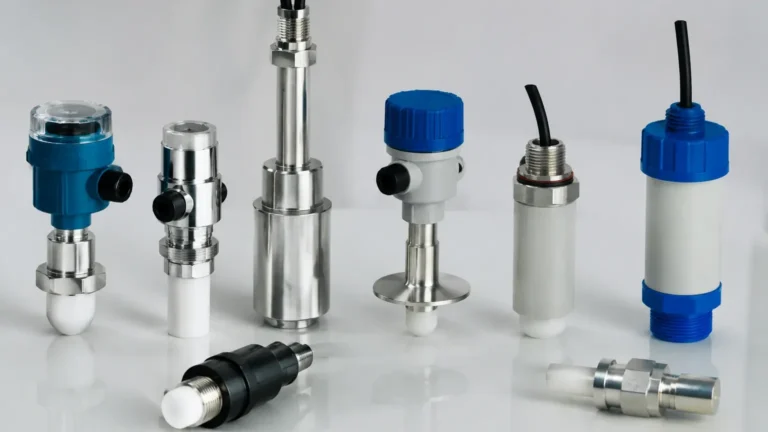
Level Switch for Tank
Level Switch for Tank
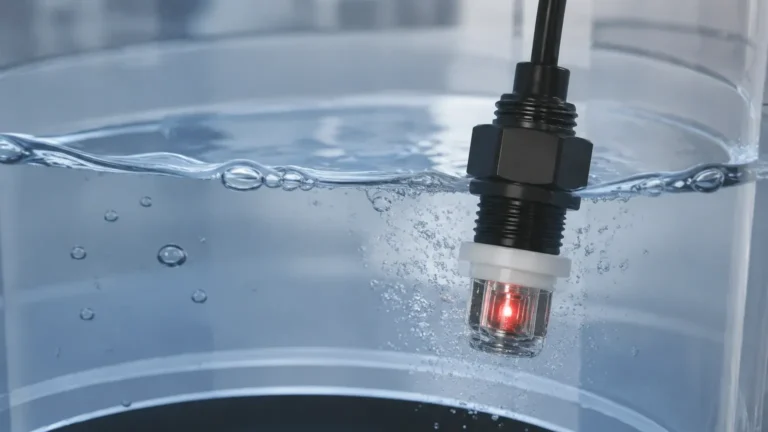
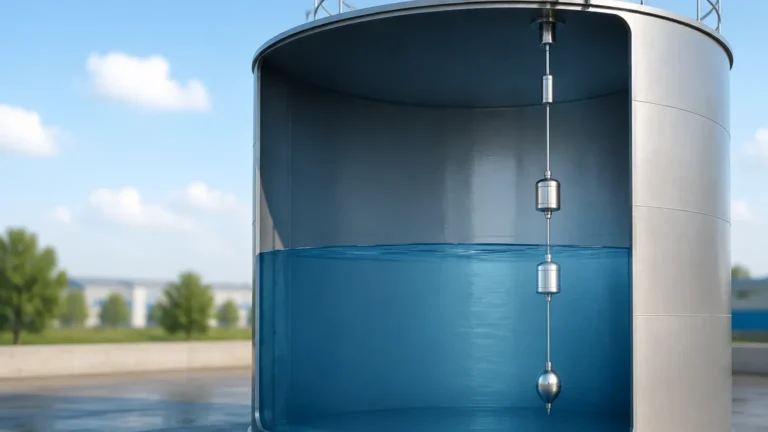
In industrial process control, the reliable detection of liquid or solid levels at specific points is critical for operational safety and efficiency. A level switch for tank applications serves as a point-level sensor, triggering an electrical signal when the material reaches a predefined height. Unlike continuous level transmitters that provide real-time tracking of the entire volume, level switches are primarily utilized for alarm functions, such as high-level overfill prevention or low-level pump protection.
Selecting the appropriate Level Switches requires a deep understanding of the physical properties of the media, the environmental conditions within the vessel, and the mechanical requirements of the installation. This guide explores the fundamental measurement principles, selection criteria, and practical engineering considerations for deploying level switches in industrial tanks.
Measurement Principles of Level Switches
Before selecting a device, engineers must understand how different sensing technologies interact with the stored material. Each principle offers distinct advantages depending on whether the media is a liquid, a slurry, or a bulk solid.
1. Float and Displacement Principles
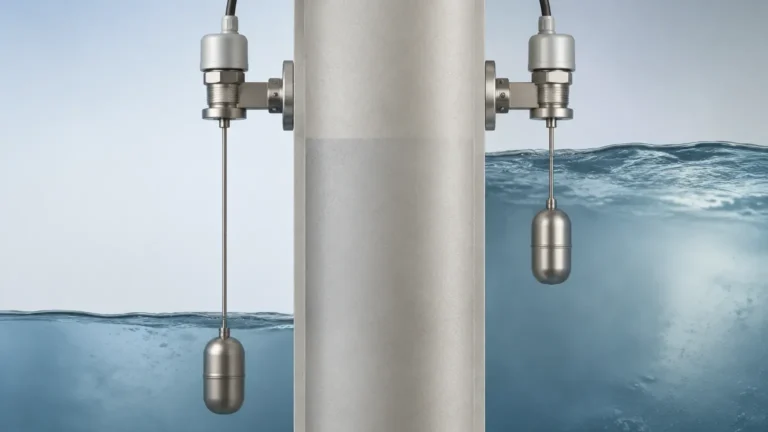
Float-type switches operate on the principle of buoyancy. A float containing a magnet moves with the liquid level. When the float reaches a specific point, the magnetic field actuates a reed switch or a microswitch located within the stem or housing.
Displacement switches, by contrast, use a weighted sensor (displacer) that is heavier than the liquid. As the liquid rises and covers the displacer, the weight of the displacer decreases by the weight of the displaced liquid (Archimedes' principle). This change in apparent weight triggers the switching mechanism. These are robust but generally limited to clean, non-coating liquids.
2. Vibrating (Tuning Fork) Principle
Vibrating level switches utilize a fork-shaped sensor that is vibrated at its natural resonant frequency by internal piezoelectric crystals. When the fork is immersed in the media (liquid or solid), the frequency of vibration changes or stops. The internal electronics detect this frequency shift and convert it into a switching signal. This technology is highly versatile because it is largely unaffected by the physical properties of the liquid, such as pressure, temperature, or conductivity.
3. Capacitance Principle
Capacitance switches treat the tank and the sensor probe as two plates of a capacitor. The material in the tank acts as the dielectric. As the level rises and displaces air (which has a low dielectric constant) with the process media (which has a higher dielectric constant), the capacitance of the system changes. Once the capacitance reaches a set threshold, the switch is triggered. This method is effective for both liquids and solids but requires calibration based on the specific dielectric constant of the material.
4. Conductive Principle
Designed specifically for conductive liquids, these switches use low-voltage electrodes. When the liquid touches the electrode, it completes an electrical circuit between the probe and the tank wall (or a reference electrode). This is a cost-effective solution for water treatment and chemical dosing, though it cannot be used with flammable liquids or non-conductive oils.
5. Ultrasonic Point Level Principle
Ultrasonic switches use a pair of crystals (a transmitter and a receiver) separated by a small gap. When the gap is filled with air, the ultrasonic signal cannot reach the receiver. When liquid fills the gap, the signal is transmitted across, triggering the switch. These are ideal for high-viscosity liquids where mechanical floats might stick.
Selecting the Right Level Switch for Tank Applications
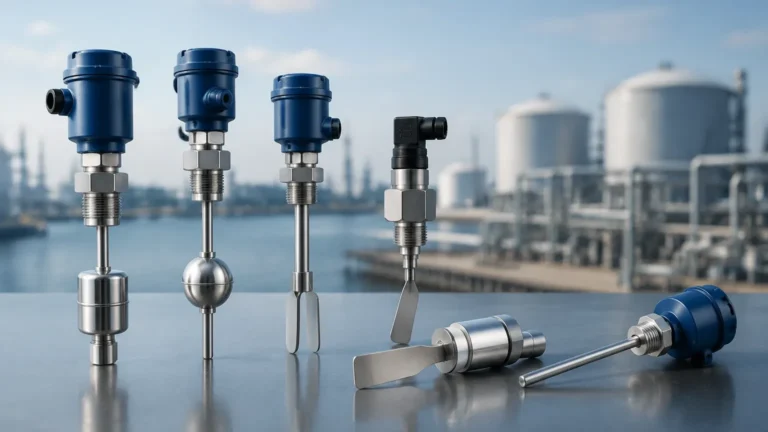
Choosing a level switch for tank use involves matching the instrument's capabilities to the process environment. The following table provides a comparison of common technologies used in industrial settings.
Selection Table: Level Switch Technologies
| Technology | Typical Media | Max Temperature | Max Pressure | Key Advantage |
| :— | :— | :— | :— | :— |
| Float Switch | Clean Liquids | 150°C | 40 bar | Simple, no power required |
| Vibrating Fork | Liquids/Powders | 250°C | 64 bar | Immune to foam and bubbles |
| Capacitance | Slurries/Solids | 400°C | 100 bar | Handles high temp/pressure |
| Conductive | Conductive Liquids | 100°C | 10 bar | Very low cost, simple setup |
| Rotary Paddle | Bulk Solids | 200°C | Atmospheric | Reliable for heavy powders |
| Ultrasonic | Viscous Liquids | 150°C | 40 bar | No moving parts, compact |
When evaluating these options, consider the following factors:
* Media Density: Float switches require the float to be less dense than the liquid. If the density varies significantly, the switch point may drift.
* Viscosity and Coating: For materials that leave a residue (like honey or heavy oil), vibrating forks or capacitance switches with "active shield" technology are preferred to prevent false triggers from build-up.
* Chemical Compatibility: The wetted parts (316L Stainless Steel, PTFE, PP, or Hastelloy) must be resistant to the corrosive nature of the tank contents.
Installation Guidelines and Best Practices
The reliability of a level switch is often determined by its placement and installation method. Even the most advanced sensor will fail if subjected to mechanical stress or improper positioning.
Mounting Orientation
Level switches can typically be mounted horizontally (through the side of the tank) or vertically (from the top).
* Side Mounting: Ideal for high or low-level alarms where a specific point must be monitored precisely. Ensure the switch is not placed directly in the path of the tank's inlet flow to avoid mechanical damage.
* Top Mounting: Preferred for deep tanks or when side access is restricted. Vertical switches often use extended rods or cables to reach the desired switch point.
Avoiding Interference
* Turbulence: In tanks with agitators or high-velocity filling, use a stilling well to protect the switch from mechanical surge and prevent "chattering" (rapid cycling of the switch).
* Dead Zones: Ensure the switch is installed far enough away from the tank wall to avoid interference (especially for capacitance and ultrasonic types).
* Build-up: For vibrating forks, the tines should be oriented so that liquid can easily drain off them, preventing the "bridge effect" where material gets stuck between the forks.
Wiring and Safety
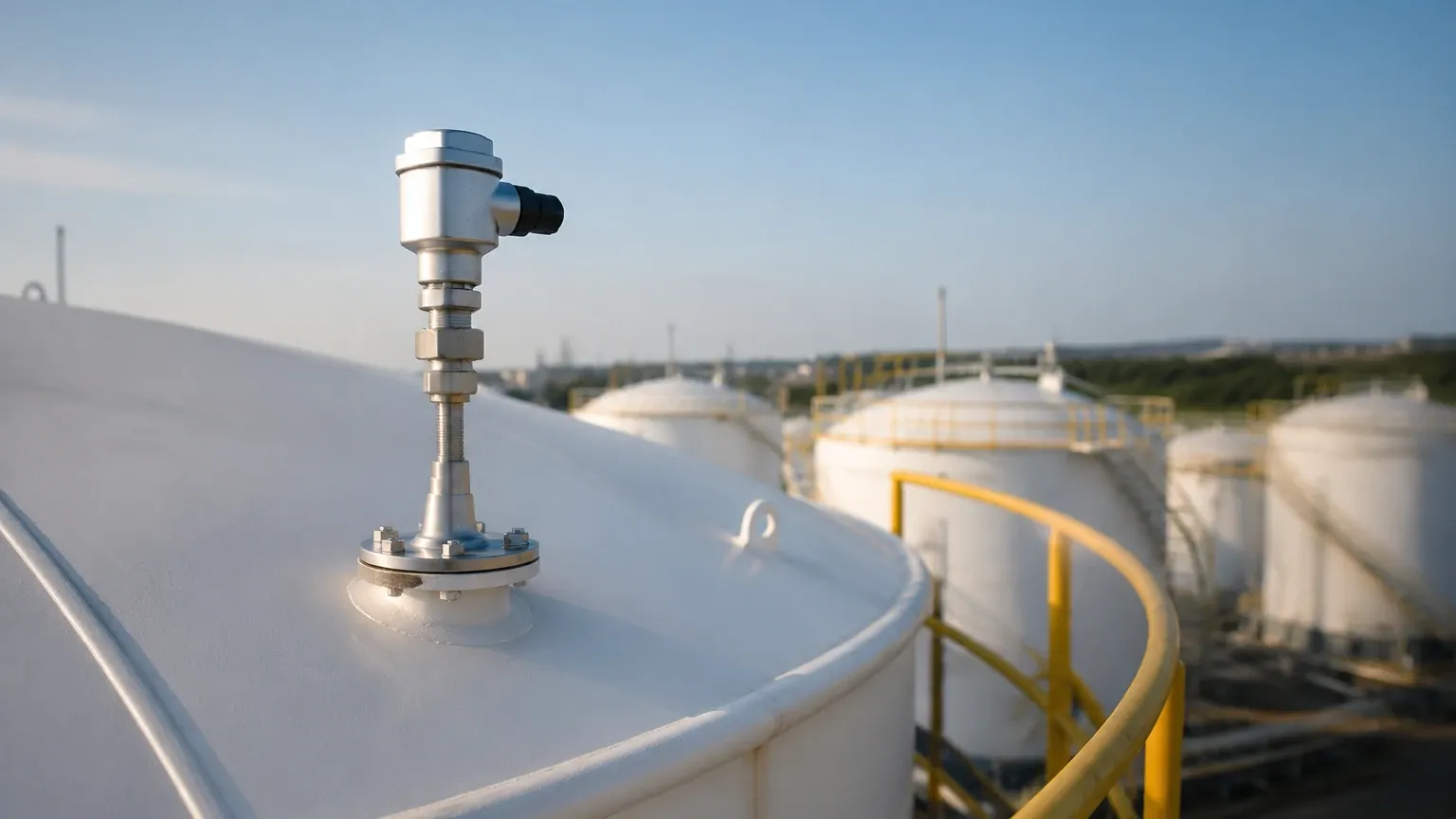
In hazardous environments (oil and gas, chemical processing), level switches must be rated as intrinsically safe or explosion-proof. Always use a cable gland that maintains the IP rating of the housing to prevent moisture ingress, which is a leading cause of electronic failure in outdoor tank farms.
Limitations and Operational Risks
While level switches are indispensable, they are not without limitations. Engineers should be aware of the following risks:
1. Mechanical Fatigue: Float switches and rotary paddles have moving parts that eventually wear out. In high-cycle applications, solid-state technologies like vibrating forks are more reliable.
2. Material Build-up: If a switch is used with a sticky substance, the material may coat the sensor. If the coating becomes thick enough, the switch may stay in the "covered" state even when the tank is empty.
3. Dielectric Shifts: Capacitance switches are sensitive to changes in the material's dielectric constant. If a tank is used for different chemicals interchangeably, the switch may require recalibration for each new batch.
4. Foam Interference: Some technologies, such as standard ultrasonic or certain float designs, may struggle with thick foam layers, either triggering prematurely or failing to detect the liquid surface beneath the foam.
Frequently Asked Questions (FAQs)
Q: Can a level switch be used for continuous level monitoring?
A: No. A level switch is a binary device (On/Off). If you need to know the exact percentage of volume in a tank at all times, you should use a radar level meter or an ultrasonic level sensor.
Q: What is the difference between a NORMALLY OPEN (NO) and NORMALLY CLOSED (NC) contact?
A: A Normally Open contact remains open (no current flow) until the level reaches the switch. A Normally Closed contact remains closed until the level reaches the switch. For safety-critical applications like overfill prevention, NC is often preferred because a power failure or broken wire will trigger a fail-safe alarm.
Q: How do I handle high-temperature applications?
A: For temperatures exceeding 150°C, look for switches with remote electronics or cooling fins. Capacitance switches are generally the most robust choice for extreme thermal environments, capable of operating up to 400°C.
Q: Is it necessary to calibrate a vibrating fork switch?
A: Generally, no. Most modern vibrating level switches are "plug and play" and do not require calibration for different liquids, provided the density of the liquid is within the manufacturer's specified range (usually >0.5 g/cm³).
Conclusion
Selecting the right level switch for tank management is a balance of understanding the process media and the physical constraints of the vessel. By prioritizing technologies that match the viscosity, temperature, and pressure of the application, and following rigorous installation standards, operators can ensure long-term reliability and safety. For those managing complex industrial inventories, integrating high-quality switches is the first step in preventing costly spills and equipment damage.