Level Switch Japan
Level Switch Japan
In the landscape of industrial automation and process control, level switches serve as the primary line of defense for overfill protection, pump control, and dry-run prevention. For engineering professionals and procurement specialists navigating the requirements of a level switch japan implementation, understanding the technical nuances of these devices is essential. The Japanese industrial sector, known for its rigorous quality standards and precision engineering, demands instrumentation that can withstand demanding environments while providing repeatable, fail-safe performance.
Level switches are discrete sensors that detect the presence or absence of a liquid or solid at a specific point within a vessel. Unlike continuous level transmitters that provide a constant output of the volume or height, a level switch provides a binary signal (on/off) to a control system. This article examines the core measurement principles, selection criteria, and technical considerations for deploying level switches in high-specification industrial environments.
Measurement Principles of Level Switches
Before selecting a specific model, it is necessary to understand the physical principles that govern how different level switches operate. Each technology has specific strengths and limitations based on the physical properties of the media being measured.
Vibrating Tuning Fork Level Switches
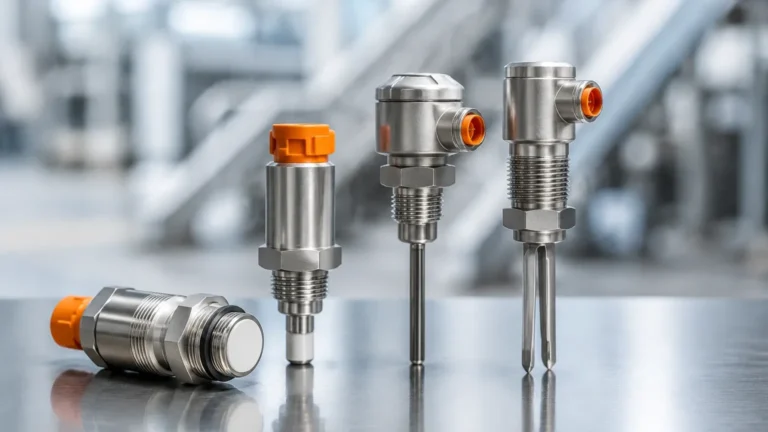
These switches utilize a sensing element shaped like a tuning fork that is vibrated at its natural resonant frequency by a piezoelectric crystal. When the fork is immersed in a liquid or covered by a solid, the frequency of vibration changes. The internal electronics detect this frequency shift and trigger the switch output. This technology is highly reliable because it is largely unaffected by changes in flow, turbulence, bubbles, or foam.
Float Level Switches
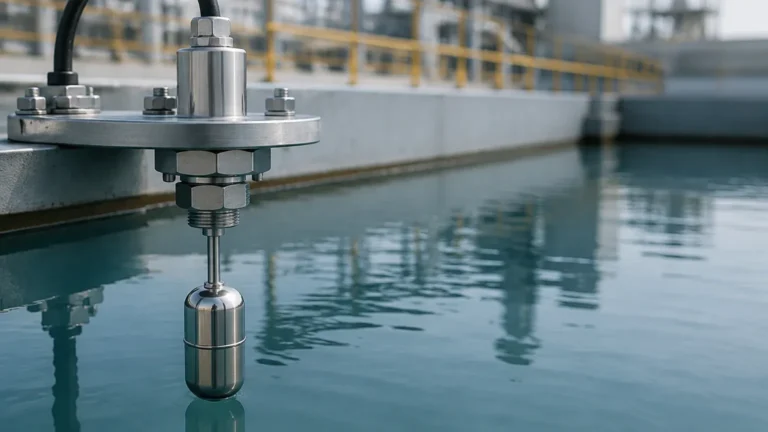
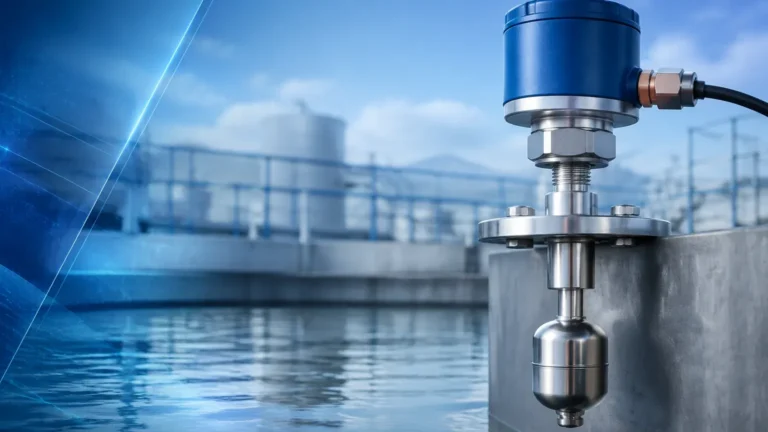
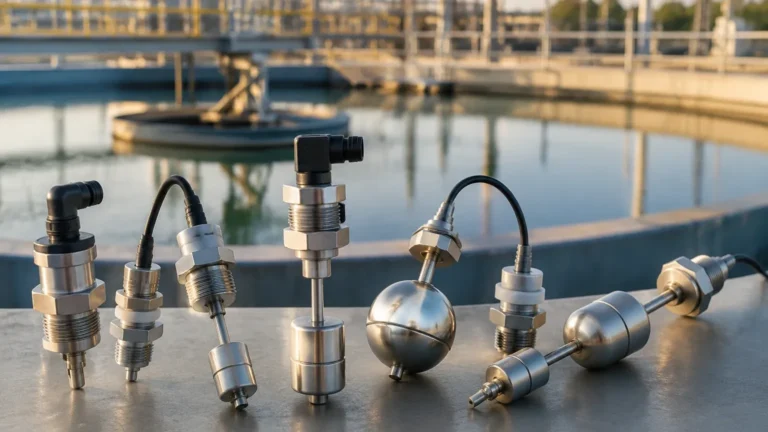
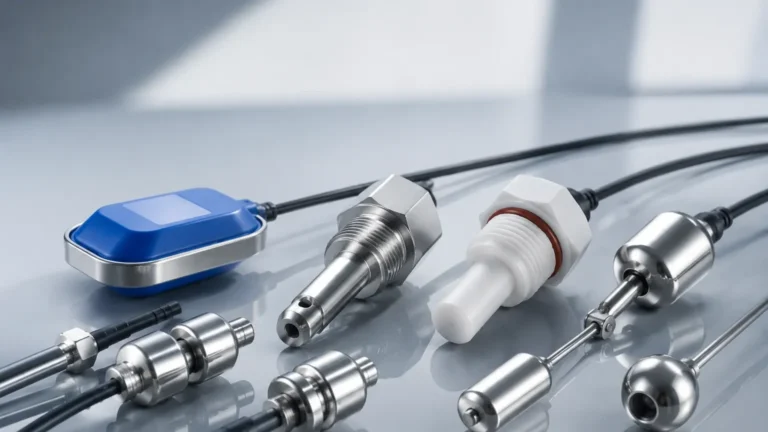
Operating on the principle of buoyancy, a float containing an internal magnet moves up and down a stem as the liquid level changes. Inside the stem, a reed switch is positioned at a specific set point. When the float reaches this point, the magnetic field closes or opens the reed switch. These are simple, cost-effective solutions for clean liquids but can be prone to mechanical failure if the media is viscous or contains debris that could jam the moving float.
Capacitance Level Switches
Capacitive sensors measure the change in electrical capacitance between the probe and the tank wall (or a reference electrode). As the media covers the probe, the dielectric constant changes, altering the capacitance. These switches are excellent for both liquids and solids, though they often require calibration to the specific dielectric constant of the material and can be sensitive to coating or buildup on the probe.
Rotary Paddle Switches
Primarily used for bulk solids and powders, a small electric motor slowly rotates a paddle. When the material reaches the paddle, it creates resistance, stalling the motor and activating the switch. These are robust for silos and bins but are strictly limited to solid materials.
Hydrostatic and Pressure-Based Switches
While often used for continuous measurement, pressure switches can be configured to trigger at specific hydrostatic heads. These are frequently used in water treatment and deep-well applications where top-mounting a sensor is not feasible.
Level Switch Japan: Market Requirements and Standards
When sourcing a level switch japan, engineers must account for specific regional standards and environmental conditions. The Japanese industrial market often adheres to JIS (Japanese Industrial Standards) for mechanical connections and electrical safety.
1. Thread and Flange Standards: While NPT threads are common globally, many Japanese installations utilize PT (ISO 7/1) tapered threads or JIS flanges (such as 10K or 20K ratings). Ensuring compatibility with existing pipework is a critical first step in procurement.
2. Hazardous Area Certifications: For applications in the chemical or oil and gas sectors, switches must often carry TIIS (Technology Institution of Industrial Safety) certification for explosion-proof requirements, alongside international standards like ATEX or IECEx.
3. Seismic Resilience: Given the geographical reality of Japan, instrumentation must be mounted securely to withstand vibration and seismic activity. This often influences the choice of housing materials and mounting brackets.
4. Environmental Protection: High humidity and coastal salt-spray conditions require housings with high IP ratings (IP66, IP67, or IP68) and corrosion-resistant materials like 316L stainless steel or specialized plastics.
Technical Selection Criteria
Choosing the correct Level Switches involves more than just identifying the media. The following table provides a practical guide for technology selection based on application parameters.
| Media Type | Recommended Technology | Key Advantage | Limitation |
| :— | :— | :— | :— |
| Clean Liquids | Float Switch | Low cost, simple installation | Sensitive to debris/viscosity |
| Viscous Liquids | Vibrating Tuning Fork | Unaffected by coating | Higher initial cost |
| Corrosive Chemicals | Capacitance (PTFE Coated) | No moving parts | Requires dielectric stability |
| Bulk Solids/Powders | Rotary Paddle | Robust for heavy materials | Mechanical wear over time |
| High-Pressure Steam | Magnetic Level Gauge Switch | Isolated from process media | Requires external bypass chamber |
| Aerated Liquids/Foam | Ultrasonic Gap Switch | Ignores foam layers | Sensitive to heavy turbulence |
Process Temperature and Pressure
Standard level switches are typically rated for temperatures up to 80°C or 100°C. However, in industrial boilers or chemical reactors, temperatures can exceed 250°C. In these cases, high-temperature extensions or ceramic insulators are required to protect the electronics. Similarly, pressure ratings must be verified; while most vibrating forks can handle up to 40 bar (4.0 MPa), high-pressure variants are necessary for specialized process vessels.
Installation Considerations and Best Practices
Proper installation is as important as technology selection. Even the most advanced level switch japan will fail if positioned incorrectly within the tank.
* Avoid Turbulence: Do not install switches directly under a fill pipe. The falling liquid can cause false triggers or mechanical damage. If the switch must be near an inlet, use a baffle plate to protect the sensor.
* Orientation: For vibrating forks, the tines should be oriented so that the liquid can easily drain off them. Horizontal installation is common, but the tines must be vertical (on edge) rather than flat to prevent material buildup.
* Dead Zones: Be aware of the "dead zone" or the minimum distance the media must be from the process connection to trigger the switch. This is particularly relevant in small tanks or narrow pipes.
* Wiring and Conduits: Always use a drip loop in the cabling to prevent moisture from traveling down the wire and into the sensor housing. In Japanese facilities, ensuring the cable gland matches the local conduit standard is vital for maintaining the IP rating.

Limitations and Common Challenges
While level switches are highly reliable, they are not universal solutions. Engineers should be aware of the following challenges:
* Material Buildup: In applications involving wastewater or slurries, material can accumulate on the sensing element. While vibrating forks have some self-cleaning properties, heavy scaling will eventually dampen the vibration and cause a fault.
* Dielectric Changes: Capacitance switches may struggle if the moisture content of a solid changes significantly or if the liquid composition fluctuates, as this alters the dielectric constant used for detection.
* Mechanical Wear: Any switch with moving parts (floats, paddles) has a finite mechanical life. In high-cycle applications, non-contact or solid-state vibrating switches are preferred to reduce maintenance intervals.
Frequently Asked Questions (FAQ)
Q: Can a level switch be used for continuous level monitoring?
No. A level switch only detects the level at a specific point. For continuous monitoring (0-100% full), a radar, ultrasonic, or hydrostatic level transmitter is required.
Q: What is the difference between an NO and NC contact in a level switch?
NO (Normally Open) means the circuit is open when the switch is not activated. NC (Normally Closed) means the circuit is closed. Most industrial switches allow the user to select the fail-safe mode (High or Low) to ensure the system defaults to a safe state if power is lost.
Q: How do I handle foam in a liquid level application?
Vibrating tuning forks are generally the best choice for ignoring foam, as they require the density of the liquid to change the vibration frequency. Ultrasonic gap switches are also effective but more expensive.
Q: Are there specific certifications required for level switches used in Japan?
While many international brands are used, TIIS certification is often required for explosive atmospheres. For food and beverage applications, compliance with local health and safety regulations regarding wetted materials (like food-grade stainless steel) is mandatory.
Conclusion
Selecting a level switch japan requires a balanced evaluation of the physical process properties, the environmental conditions of the facility, and the specific regulatory standards of the Japanese market. By understanding the measurement principles—from the mechanical simplicity of float switches to the advanced electronics of vibrating forks—engineers can implement solutions that enhance safety and operational efficiency. Whether for water treatment, chemical processing, or industrial automation, the right level switch is a fundamental component of a robust process control strategy. For those seeking specific hardware configurations or customized OEM/ODM solutions, it is recommended to Review product options and application support to ensure the selected instrumentation meets the exact requirements of the intended application.