Level Switch Oil Tank
Level Switch Oil Tank
In industrial fluid management, the reliable detection of liquid levels in oil storage and processing vessels is a fundamental requirement for operational safety and efficiency. A level switch oil tank system serves as a critical point-level detection mechanism, designed to prevent overfill conditions, protect pumps from dry running, and trigger automated replenishment cycles. Unlike continuous level transmitters that provide a constant percentage of volume, level switches provide discrete signals at specific heights, acting as the primary line of defense in automated control loops.
Selecting the appropriate Level Switches for oil applications requires an understanding of the physical properties of the medium—such as viscosity, dielectric constant, and temperature—as well as the specific environmental conditions of the tank, including pressure and hazardous area classifications.
Measurement Principles for Oil Level Detection
Before selecting a device, it is essential to understand the underlying physical principles that allow a sensor to distinguish between the presence of oil and air (or vapor).
Float-Based Level Switches
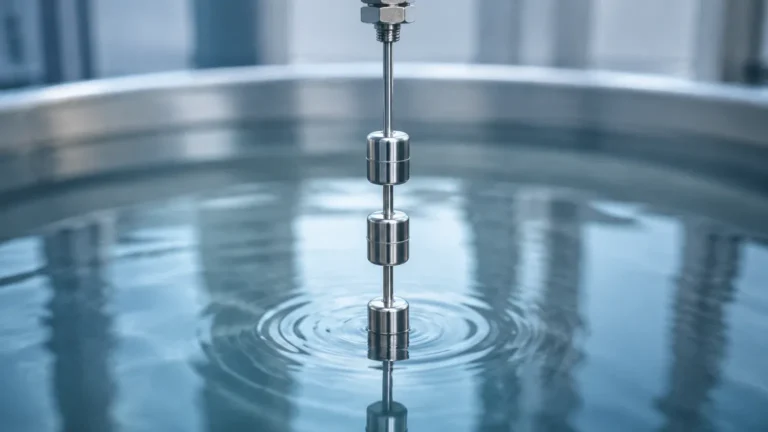
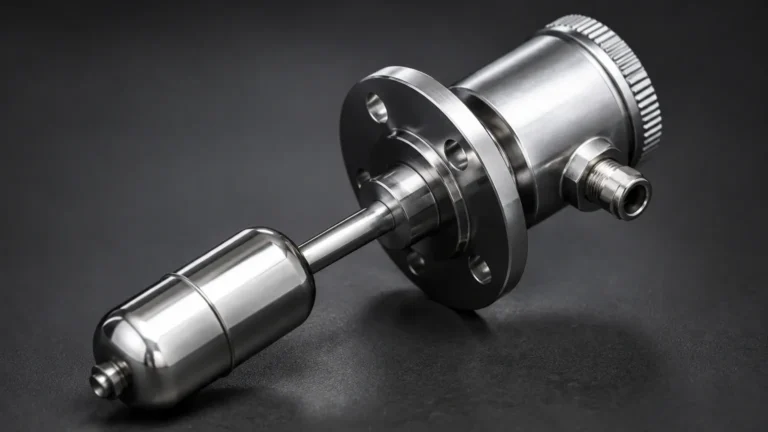
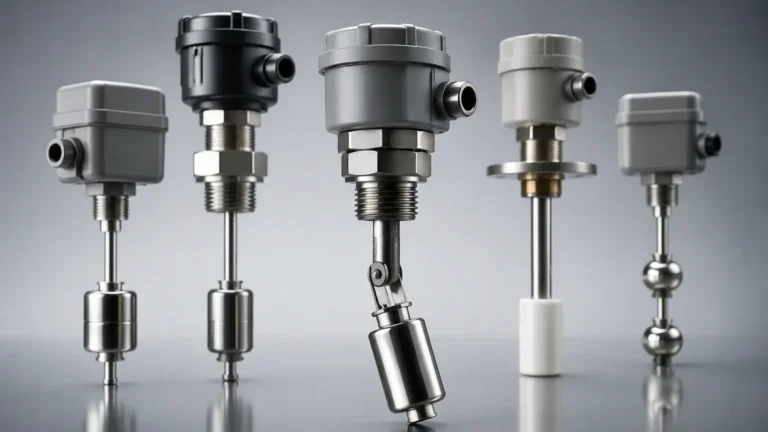
Float switches operate on the principle of buoyancy. A float, containing an internal magnet, moves vertically along a stem or pivots on a hinge as the oil level rises or falls. Within the stem or housing, a hermetically sealed reed switch is positioned at a predetermined set point. When the magnet in the float reaches this point, the magnetic field causes the reed switch contacts to open or close. This technology is widely favored for its simplicity and the fact that it does not require external power to operate the sensing element itself.
Vibrating Tuning Fork Switches
The tuning fork or vibrating level switch utilizes a piezoelectric crystal to energize a metal fork at its natural resonant frequency in the air. When the fork is immersed in oil, the frequency of vibration shifts or the amplitude is dampened. An electronic circuit detects this change and converts it into a switching signal. This method is highly resistant to changes in the oil's dielectric constant, temperature, or pressure, making it ideal for varying oil grades.
Capacitance Level Switches
Capacitance sensors treat the oil and the tank wall (or a reference probe) as two plates of a capacitor. Because oils typically have a low dielectric constant (εr ≈ 2.1 to 2.5) compared to air (εr ≈ 1.0), the sensor can detect the change in capacitance when the probe is covered. These switches are effective but may require calibration for specific oil types to ensure the sensitivity threshold is correctly set above the base capacitance of the empty tank.
Optical Level Switches
Optical switches use an infrared LED and a light receiver housed within a prism. When the sensor is in air, the infrared light is reflected internally within the prism back to the receiver. When immersed in oil, the light is refracted into the liquid, causing the receiver to lose the signal and trigger the switch. These are extremely compact and have no moving parts, though they can be sensitive to heavy coating or sludge buildup.
Technical Selection Criteria for Oil Tanks
When specifying a level switch oil tank solution, engineers must evaluate several technical parameters to ensure long-term reliability.
1. Oil Viscosity and Coating
Heavy fuel oils (HFO) or crude oils can be highly viscous and prone to leaving a thick film on the sensor. In these environments, mechanical float switches may stick, and optical sensors may become obscured. Vibrating tuning forks with specialized "anti-coating" electronics or large-diameter floats are generally preferred for high-viscosity applications.
2. Dielectric Constant
For electronic switches like capacitance or conductivity (though conductivity is rarely used for non-conductive oils), the dielectric constant is the defining factor. Most refined oils are non-conductive and have low dielectric constants. Ensure the chosen level switch is rated for fluids with εr < 2.5.
3. Temperature and Pressure
Oil storage can range from ambient temperature hydraulic reservoirs to heated bitumen tanks. Standard switches often handle up to 80°C (176°F), but high-temperature variants with cooling fins or ceramic seals are required for processes exceeding 150°C (302°F). Pressure ratings must also match the tank's design, especially in pressurized lubrication systems where pressures may exceed 10 bar (145 psi).
4. Hazardous Area Compliance
Since many oils are flammable or stored in environments with explosive vapors, level switches must often carry ATEX, IECEx, or UL explosion-proof certifications. This involves using flameproof enclosures or intrinsically safe (IS) barriers to prevent electrical sparks from igniting the atmosphere.
Comparison of Oil Level Switch Technologies
| Technology | Best Application | Advantages | Limitations |
| :— | :— | :— | :— |
| Magnetic Float | Clean refined oils, diesel | Low cost, no power needed for sensing | Moving parts can stick in dirty oil |
| Tuning Fork | High viscosity, pump protection | Reliable, ignores foam/bubbles | Higher cost than basic floats |
| Capacitance | Interface detection (oil/water) | No moving parts, adjustable | Requires calibration for different oils |
| Optical | Small reservoirs, OEM equipment | Very compact, fast response | Sensitive to coating/sludge |
| Ultrasonic (Point) | Non-contact requirements | No contact with medium | Sensitive to heavy vapor or foam |
Installation Considerations for Oil Tanks
Proper installation is as critical as the selection of the technology itself. Failure to account for tank internal geometry can lead to false triggers or mechanical failure.
* Turbulence and Agitation: If the oil tank has an agitator or high-velocity return lines, the level switch should be installed away from the turbulence. For float switches, a stilling well (a perforated pipe) can be used to dampen surface movement.
* Mounting Orientation: Switches can be side-mounted (horizontal) or top-mounted (vertical). Vertical mounting is often preferred for high-level alarms to keep the electrical housing away from potential leak points at the bottom of the tank.
* Nozzle Length: For tuning fork or optical switches, ensure the sensing element extends fully into the tank. If the mounting nozzle is too long, oil may become trapped in the nozzle, preventing the sensor from resetting when the level drops.
* Avoid Suction Zones: Do not install the switch directly above a pump suction intake, as the resulting vortex can cause the switch to toggle rapidly (chatter).

Common Risks and Limitations
While level switches are robust, they are not immune to specific oil-industry challenges:
1. Paraffin Buildup: In crude oil applications, paraffin wax can precipitate out and coat the sensor. This is particularly problematic for tuning forks if the wax bridges the gap between the tines. Regular steam cleaning or the use of heated probes may be necessary.
2. Compatibility of Materials: Ensure the wetted parts (typically Stainless Steel 304 or 316) are compatible with any additives in the oil. For corrosive chemical oils, plastic coatings like PTFE or PVDF may be required.
3. Electrical Noise: In industrial automation environments, long cable runs for level switches can pick up electromagnetic interference (EMI). Using shielded cables and ensuring proper grounding of the tank and sensor housing is vital for signal integrity.
Maintenance and Verification
A level switch oil tank system should be part of a routine maintenance schedule, especially if it serves as a High-High (HH) safety shutdown.
* Proof Testing: Periodically manually lift the float or immerse the sensor in a sample of the oil to verify the relay trips and the control system receives the signal.
* Visual Inspection: Check for signs of corrosion on the housing and ensure that cable glands remain sealed to prevent moisture ingress, which is a leading cause of switch failure in outdoor tank farms.
* Cleaning: For optical and capacitance sensors, wipe the sensing face to remove any accumulated film that could cause signal attenuation.
Frequently Asked Questions (FAQ)
Q: Can I use a conductivity level switch for oil?
A: No. Conductivity switches require a conductive liquid (usually water-based) to complete an electrical circuit. Oils are insulators (non-conductive), so a conductivity switch will not detect them.
Q: What is the best level switch for a diesel fuel tank?
A: For standard diesel storage, a magnetic float switch or a tuning fork switch is generally the most cost-effective and reliable choice. If the tank is small or space is limited, an optical switch is also suitable.
Q: How do I handle oil/water interface detection?
A: Detecting the boundary between oil and settled water requires a sensor sensitive to the difference in dielectric constant or conductivity. Capacitance probes are frequently used for this purpose, as the dielectric constant of water (εr ≈ 80) is significantly higher than that of oil (εr ≈ 2).
Q: Is a stilling well necessary for all oil tanks?
A: No, only if there is significant surface turbulence, splashing, or if you are using a float switch in a tank with an agitator. Most electronic switches (tuning fork, ultrasonic) can handle moderate turbulence through electronic dampening (delay timers).
Q: What are the typical output types for these switches?
A: Most industrial level switches provide a SPDT (Single Pole Double Throw) or DPDT relay output. Others may provide a transistor output (PNP/NPN) or a two-wire current loop (8/16mA) for integration into a PLC or DCS.
By carefully matching the sensor technology to the specific characteristics of the oil and the mechanical constraints of the tank, operators can ensure a highly reliable level switch oil tank installation that protects both assets and the environment.