Level Switch Omron 61f G
Level Switch Omron 61f G
In the realm of industrial automation and fluid management, the ability to accurately detect liquid levels is fundamental to process safety and efficiency. Among the various technologies available, the conductive level control method remains a staple for water-based applications. A prominent example of this technology is the level switch Omron 61f g, a floatless level controller designed for automatic water supply and drainage control.
As a professional manufacturer of industrial level measurement instruments, Welk provides a broad spectrum of Level Switches and sensors that complement or serve as robust alternatives to traditional conductive controllers. Understanding the specific mechanics of the Omron 61F-G series, alongside broader level sensing principles, is essential for engineers and facility managers tasked with maintaining reliable plant operations.
Understanding Conductive Level Control Principles
Before selecting or installing a level switch omron 61f g, it is critical to understand the underlying measurement principle. Conductive level switches operate by using the liquid itself as part of an electrical circuit.
The Conductive Mechanism
A low-voltage AC current is applied to a set of electrodes (probes) submerged in a tank. When the conductive liquid reaches the level of the electrodes, it completes the circuit between the common electrode and the high or low-level electrodes. The controller—such as the 61F-G—detects this change in resistance and triggers an internal relay to open or close a pump, valve, or alarm.
Why AC Current?
Unlike DC systems, which can cause electrolysis and rapid corrosion of the electrodes, conductive level switches use AC current. This prevents the migration of ions and minimizes the buildup of scale on the probe surfaces, extending the lifespan of the sensing elements.
Medium Requirements
For this technology to function, the liquid must be conductive. It is ideal for water, wastewater, and dilute chemical solutions. However, it is unsuitable for non-conductive liquids like oils, pure distilled water, or highly concentrated alcohols.
Technical Overview of the Omron 61F-G Series
The Omron 61F-G is a classic "Basic Type" controller within the 61F family. It is primarily used for single- or two-point level control. In a typical configuration, it manages a pump to keep a tank filled or to drain a pit once it reaches a certain threshold.
Key Specifications of the 61F-G
* Supply Voltage: Commonly available in 110V AC or 220V AC (50/60 Hz).
* Inter-electrode Voltage: 8V AC (ensuring safety and preventing electrolysis).
* Control Output: Relay contact (5A at 250V AC).
* Response Time: Typically 80 ms for operation and 160 ms for release.
* Ambient Temperature: -10°C to +55°C.
Model Variations
While the "G" model is the standard for water supply/drainage, other variants exist for specific needs:
* 61F-G1: Designed for automatic water supply with an idling prevention feature.
* 61F-G2: Used for automatic water supply and drainage with a high-level alarm.
* 61F-G3/G4: Advanced models for multi-pump control or specific industrial logic.
Industrial Applications for Floatless Level Controllers
The level switch omron 61f g and similar conductive systems are widely deployed across industries due to their lack of moving parts, which reduces mechanical failure compared to traditional float switches.
1. Water Treatment Plants: Controlling the levels in filtration tanks and chemical dosing pits.
2. Building Services: Managing water levels in roof tanks and basement sumps for high-rise buildings.
3. Boiler Feed Systems: Ensuring that water levels in feed tanks remain within safe operating limits to prevent dry firing.
4. Cooling Towers: Maintaining the water basin level to ensure efficient heat exchange.
5. Industrial Sump Drainage: Automatically activating submersible pumps when wastewater reaches a critical height.
Selection Criteria: Choosing the Right Level Switch Technology
Selecting the correct level switch requires an evaluation of the process media and the environmental conditions. While the Omron 61F-G is excellent for general water applications, other technologies provided by Welk may be more suitable for aggressive chemicals or non-conductive fluids.
Comparison Table: Level Switch Technologies
| Technology | Suitable Media | Max Temperature | Conductivity Required? | Moving Parts? |
| :— | :— | :— | :— | :— |
| Conductive (61F-G) | Water, Wastewater | Up to 70°C (Probe dependent) | Yes | No |
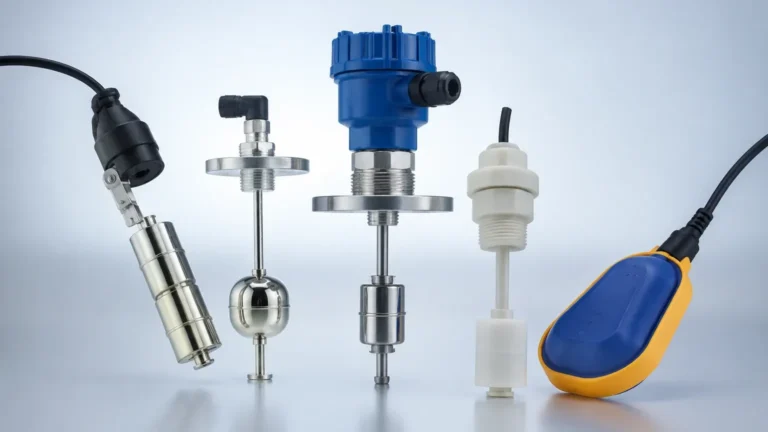
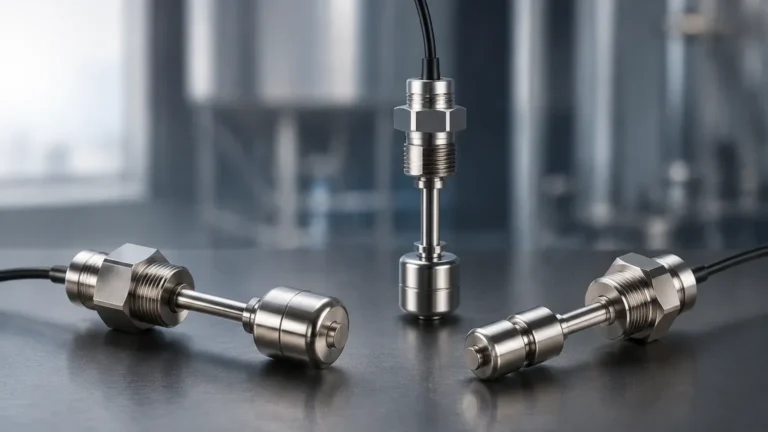
| Float Switch | Oils, Water, Chemicals | Up to 150°C | No | Yes |
| Tuning Fork | Powders, Slurries, Liquids | Up to 250°C | No | No |
| Capacitive | High-viscosity liquids | Up to 200°C | No | No |
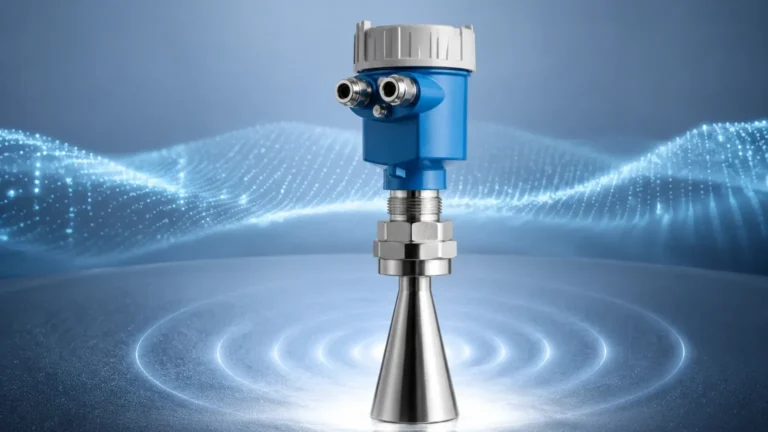
| Radar (Non-contact) | All liquids/solids | Up to 450°C | No | No |
For applications involving high pressure or temperatures exceeding 100°C, engineers often transition from conductive probes to magnetic level gauges or tuning fork level switches. You can Review product options and application support to determine which technology aligns with your specific pressure and temperature ratings.
Installation Guidelines and Wiring for the 61F-G
Proper installation of the level switch omron 61f g is paramount to preventing "chattering" (rapid cycling of the relay) and ensuring long-term reliability.
Electrode Configuration
A standard 61F-G setup for automatic drainage typically uses three electrodes:
1. E1 (High Level): The point where the pump starts.
2. E2 (Low Level): The point where the pump stops.
3. E3 (Common): The reference electrode, which must be the longest and always in contact with the liquid.
Wiring Considerations
* Distance: The distance between the controller and the electrodes should generally not exceed 100 meters to avoid the effects of cable capacitance, which can lead to false triggering.
* Separation: Power lines and electrode signal lines should be run in separate conduits to prevent electromagnetic interference.
* Grounding: The E3 (Common) electrode should be properly grounded to the tank wall if the tank is metallic.
Electrode Holders
Using a proper electrode holder (such as the Omron PS-3S) is essential. These holders provide the necessary insulation between the probes and the tank mounting point. For outdoor tanks, ensure the holder is protected from rain and debris to prevent short-circuiting across the terminals.
Limitations and Maintenance of Conductive Systems
While the level switch omron 61f g is highly reliable, it is not a "fit and forget" solution in all environments. Maintenance personnel should be aware of the following:
1. Coating and Fouling
In wastewater applications, fats, oils, and greases (FOG) can coat the electrodes. Since these substances are non-conductive, a thick coating can insulate the probe, preventing it from detecting the liquid level. Regular cleaning of the probes with a non-abrasive cloth is recommended.
2. Turbulence
If the electrodes are installed near a high-flow inlet, the splashing and turbulence can cause the relay to cycle rapidly. In such cases, a "stilling well" (a perforated pipe around the electrodes) should be installed to provide a calm surface for measurement.
3. Conductivity Changes
If the process involves mixing different liquids, the conductivity may drop below the sensitivity threshold of the 61F-G. Standard models usually have a sensing resistance of 0 to 4 kΩ. For low-conductivity liquids, high-sensitivity versions (61F-GH) must be used.
4. Atmospheric Condensation
In humid environments, condensation can form on the electrode holder terminals, creating a high-resistance path between electrodes. This may cause the controller to "think" there is liquid present when there is not. Using holders with protective covers or applying anti-condensation heaters in the control panel can mitigate this.
Frequently Asked Questions
Q: Can I use the Omron 61F-G for oil level detection?
A: No. Oils are non-conductive. For oil levels, a float switch, capacitive sensor, or ultrasonic level meter is required.
Q: What is the maximum length the electrodes can be?
A: While the electrodes can technically be several meters long, they must be supported by spacers every 1 meter to prevent them from touching each other due to liquid movement.
Q: How do I test if the 61F-G controller is working?
A: With the power on, you can simulate a liquid level by shorting the E1 and E3 terminals (and E2 and E3) with a jumper wire. If the relay clicks and the output state changes, the controller is functioning correctly.
Q: Can the 61F-G be used in pressurized tanks?
A: The controller itself is mounted in a control panel, but the electrodes must be rated for the tank pressure. Standard electrode holders are typically designed for atmospheric pressure. For pressurized vessels, specialized hermetic electrode glands are necessary.
Conclusion
The level switch omron 61f g remains a benchmark for simple, effective conductive level control in water-based industrial processes. By understanding its wiring, the necessity of liquid conductivity, and the importance of proper electrode placement, engineers can implement a highly reliable level management system. However, for more complex media or extreme process conditions, exploring the wider range of industrial Level Switches—including ultrasonic, radar, and tuning fork varieties—ensures that the chosen solution is perfectly matched to the application's demands.